The Counterfeit Coin Detector Patent Archive
In 1855, a storekeeper who took a twenty-dollar gold piece across the counter was conducting an act of faith. The coin might be genuine. It might be a shell of real gold wrapped around a slug of platinum-adjusted base metal, worth a fraction of its face. It might have been drilled, plugged, filed, or "sweated" in acid. The United States ran on hard money, and hard money could lie.
This site collects the machines built to catch it lying. They are mostly small, mostly brass, and mostly forgotten: rocking balances that a coin had to tip just so; gauges with slots milled to the thousandth of an inch, on the theory that a counterfeiter could fake weight or size but not both at once; and later, when coins started feeding machines instead of merchants, the hidden testers inside vending equipment — magnets to pluck out steel slugs, knife edges to sort the light from the lawful.
Collectors know the famous ones — Allender's gauge of 1855, made for the gold coinage of a country three years from a financial panic, and Maranville's detector that followed it. But the patent record holds dozens more that never made it to a store counter, each one an argument about exactly how a genuine coin behaves and a bet that physics could be made to sit in judgment on money.
The drawings are the best part, and they are all here, at full size, free forever: they were made by the United States government, and they belong to you.
◉ Begin here
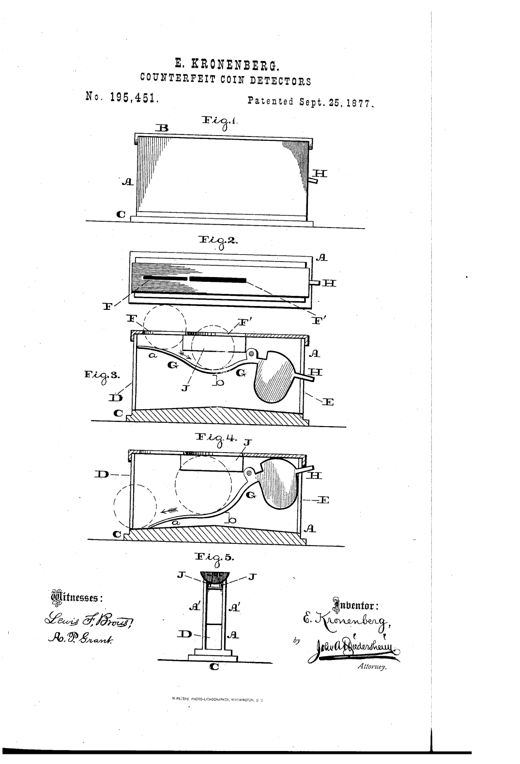 IMPROVEMENT IN COUNTERFEIT-COIN DETECTERSEdward Kronenberg · September 25, 1877
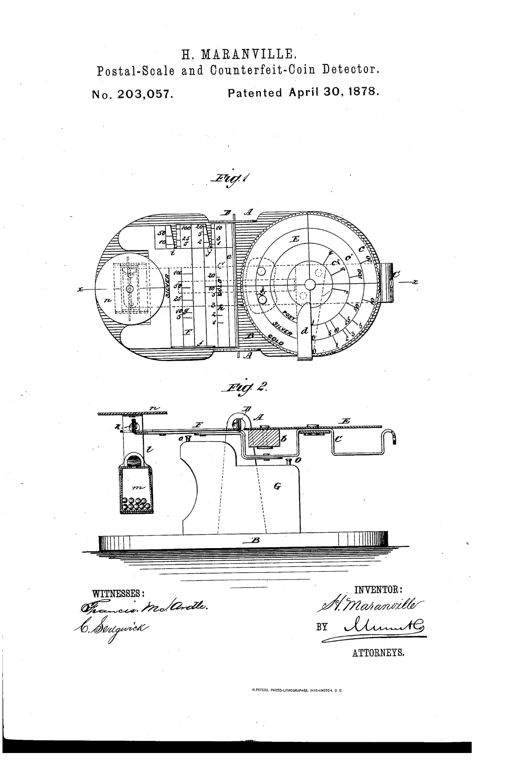 IMPROVEMENT IN POSTAL-SCALE AND COUNTERFEIT-COIN DETECTER.Harvey Maranville · April 30, 1878
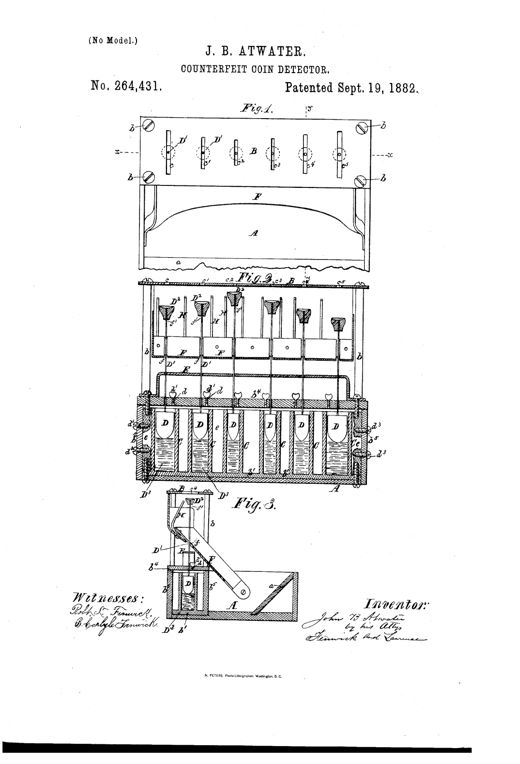 COUNTERFEIT-COIN DETECTOR.John B. Atwater · September 19, 1882
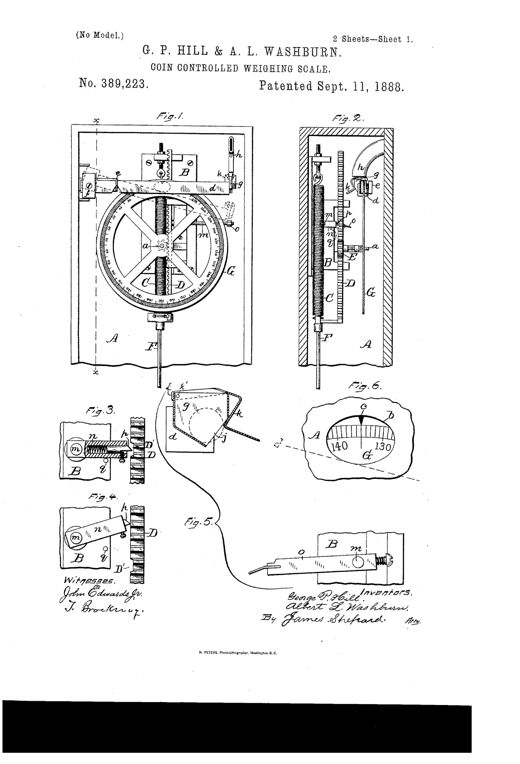 COIN-CONTROLLED WEIGHING-SCALEGeorge P. Hill and Albert L. Washburn · September 11, 1888
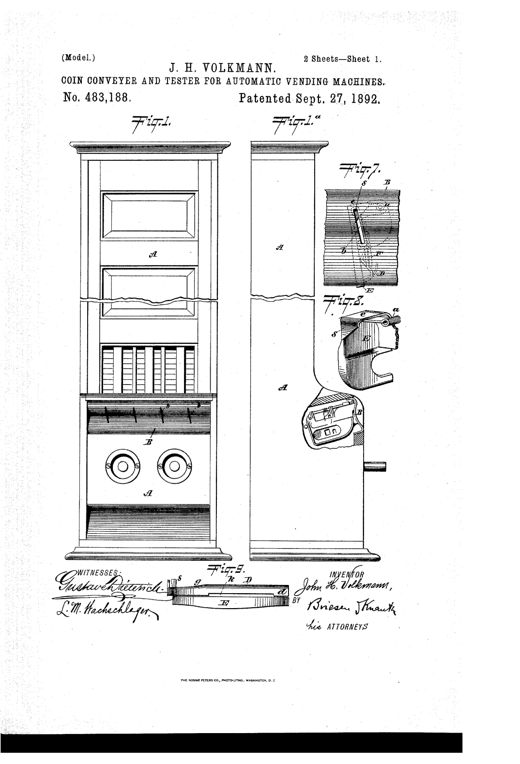 COIN CONVEYER AND TESTER FOR AUTOMATIC VENDING-MACHINES.John H. Volkmann · September 27, 1892
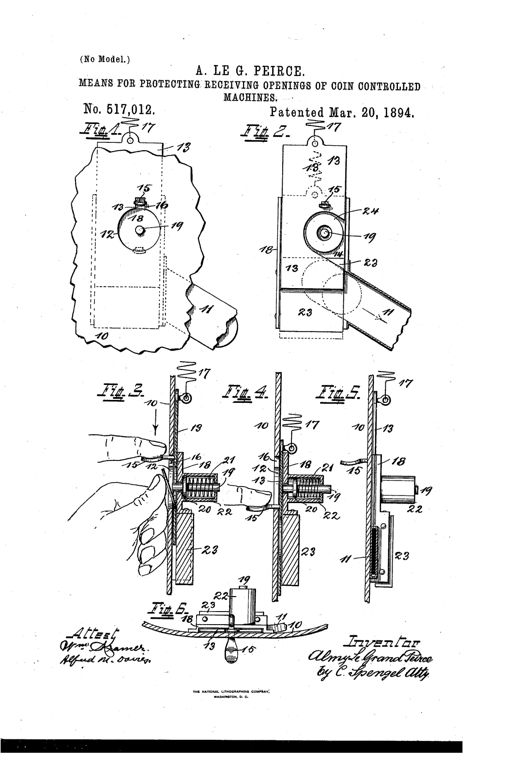 MEANS FOR PROTECTING RECEIVING-OPENINGS OF COIN-CONTROLLED MACHINES.Almy Le Grand Peirce · March 20, 1894
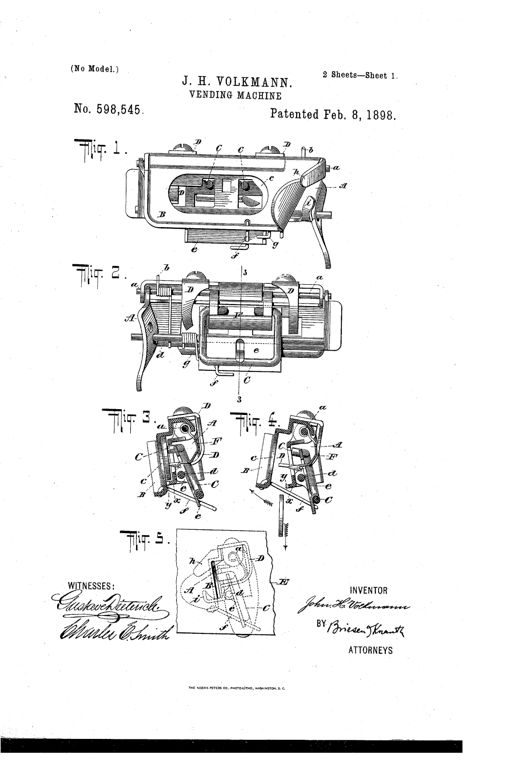 VENDING-MACHINEJohn H. Volkmann · February 8, 1898