COUNTERFEIT-COIN DETECTOR.
Six cylinders of mercury replace the counterweight: buoyancy as a coin scale
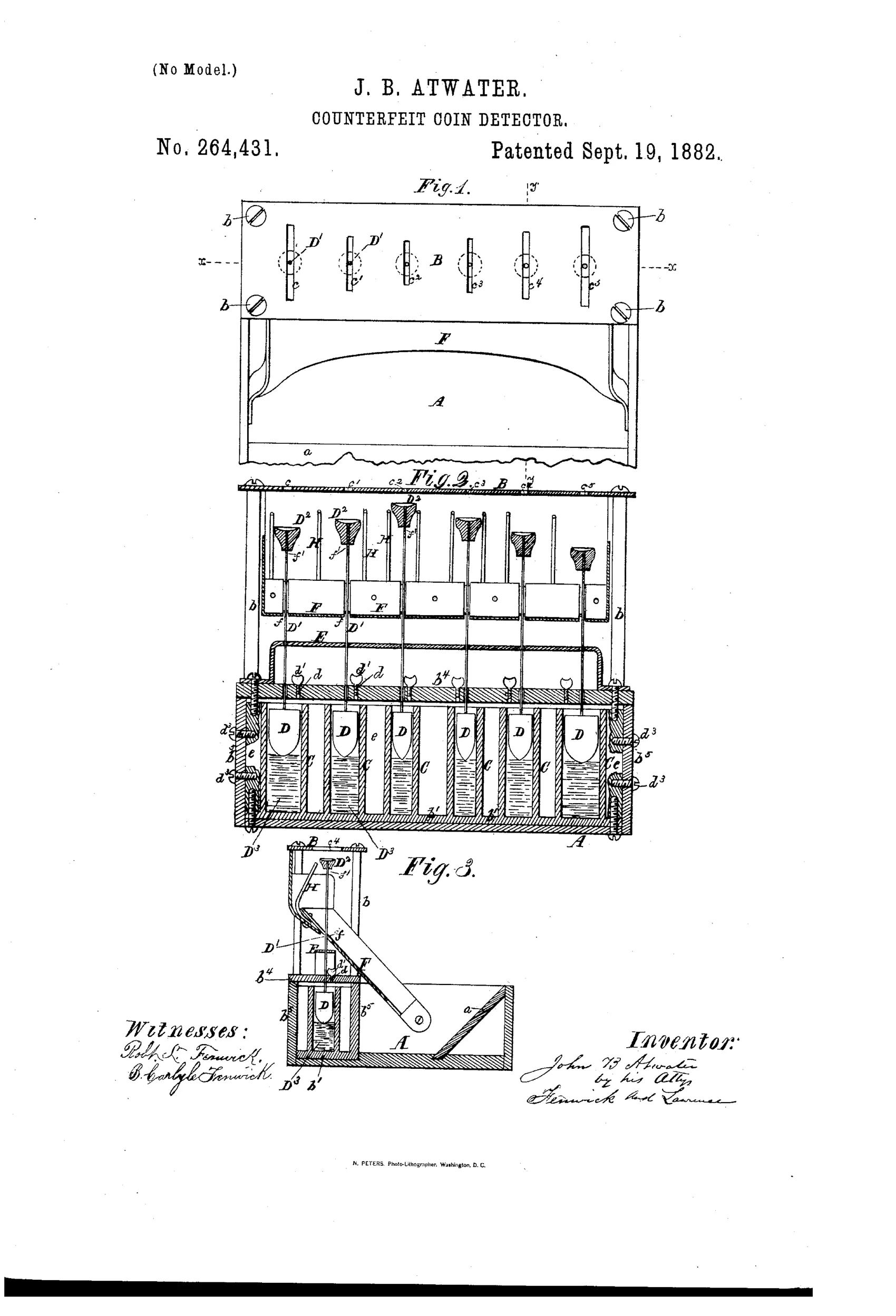
Machine that weighs and measures coins for authenticity
◉ How it works
A slotted measuring table admits coins only if their diameter and thickness match standard gold or silver coins. Coins passing through rest on trays mounted atop conical floats that sit in quicksilver-filled cylinders sized to each denomination. Genuine coins of proper weight depress the float and tray, sliding through and down an inclined apron into a receiving box, guided by overhanging rods. Underweight or overweight (but correctly sized) coins fail to sink the float fully and remain trapped, revealing counterfeits or coins of wrong metal.
◉ What was claimed
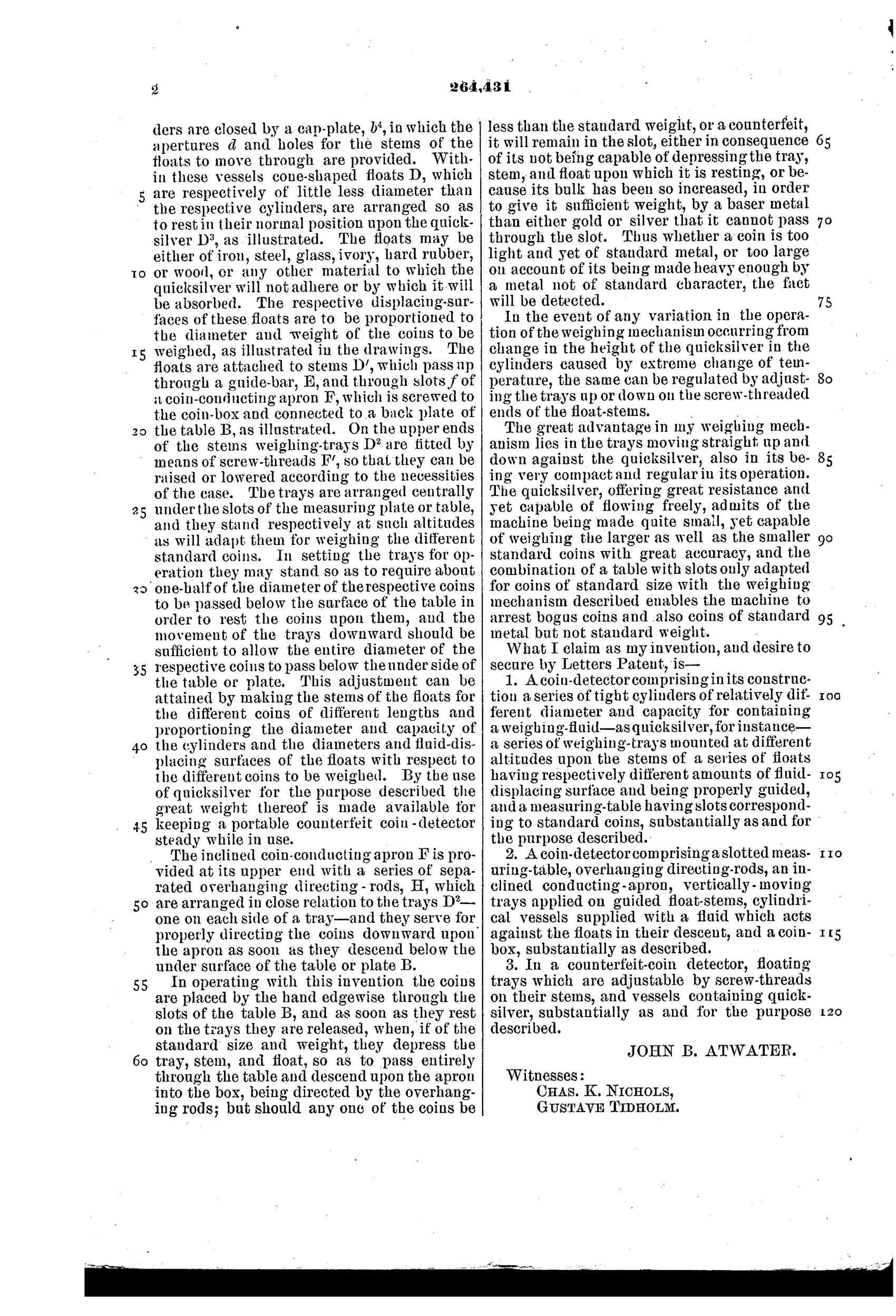
“1. A coin-detector comprising in its construction a series of tight cylinders of relatively different diameter and capacity for containing a weighing-fluid—as quicksilver, for instance—a series of weighing-trays mounted at different altitudes upon the stems of a series of floats having respectively different amounts of fluid-displacing surface and being properly guided, and a measuring-table having slots corresponding to standard coins, substantially as and for the purpose described.”
In plain English: The device combines cylinders of mercury with floating, adjustable-height trays under a slotted sizing table, so that only coins of the correct size and weight pass through.
◉ In the inventor’s words
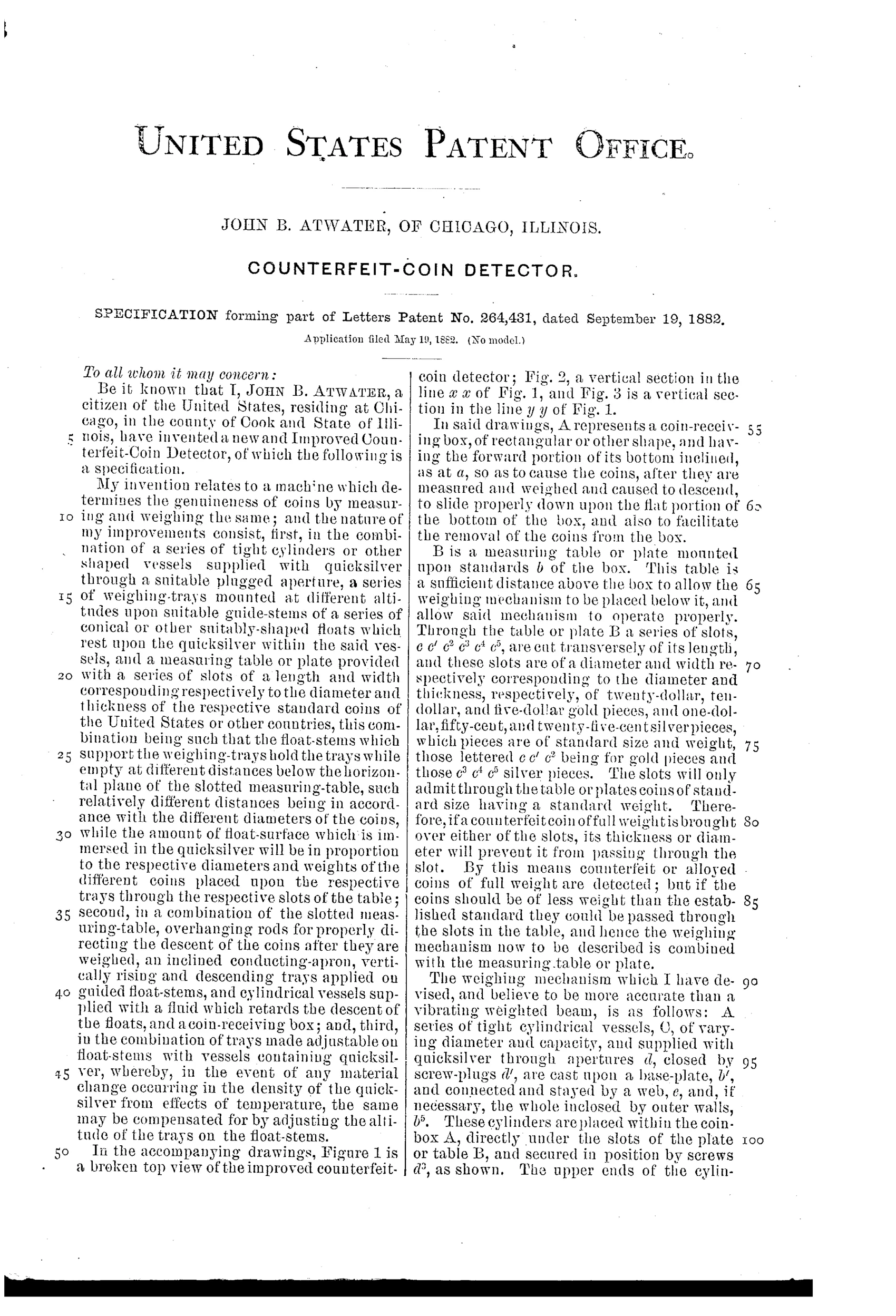
“By the use of quicksilver for the purpose described the great weight thereof is made available for keeping a portable counterfeit coin-detector steady while in use.”— John B. Atwater, from the specification
Paper patent — likely never produced
The cost and hazard of a mercury-filled multi-cylinder instrument argue against production, and no example or advertisement is known to me; a surviving specimen would overturn this.
◉ Commentary
Most detectors of this era balance a coin against a calibrated brass counterweight on a rocking beam. Atwater throws the beam away entirely. Each denomination gets its own cylinder of quicksilver with a conical float riding in it; the coin drops through a sizing slot onto a tray atop the float, and only a coin of full standard weight pushes the float down far enough to clear the coin through to the receiving box. A filled or cast counterfeit — right diameter, wrong weight — sits stranded on its tray in plain view. It is a genuinely different answer to the same question Allender asked in 1855, using specific displacement instead of leverage.
The drawing rewards a close look. Fig. 2 shows the cylinders are of relatively different diameters, because a double eagle needs a very different displacement than a dime, and the trays sit at staggered heights on the float stems. Atwater even argues the mercury's dead weight is a feature — it anchors the portable device on the counter. That's a salesman's virtue made of a chemist's problem.
And there lies the trouble: six open reservoirs of mercury in a shopkeeper's box, subject to spillage, oxide skin on the surface, and floats sticking to fouled mercury walls. The rocking-beam detectors were cheap, dry, and pocketable. This is clever hydrostatics chasing a problem the brass rockers had already solved more robustly.
Commentary by Claude, The Counterfeit Coin Detector Patent Archive’s resident enthusiast