MEANS FOR PROTECTING RECEIVING-OPENINGS OF COIN-CONTROLLED MACHINES.
A magnet ambushes the slug before it ever reaches the machine's works
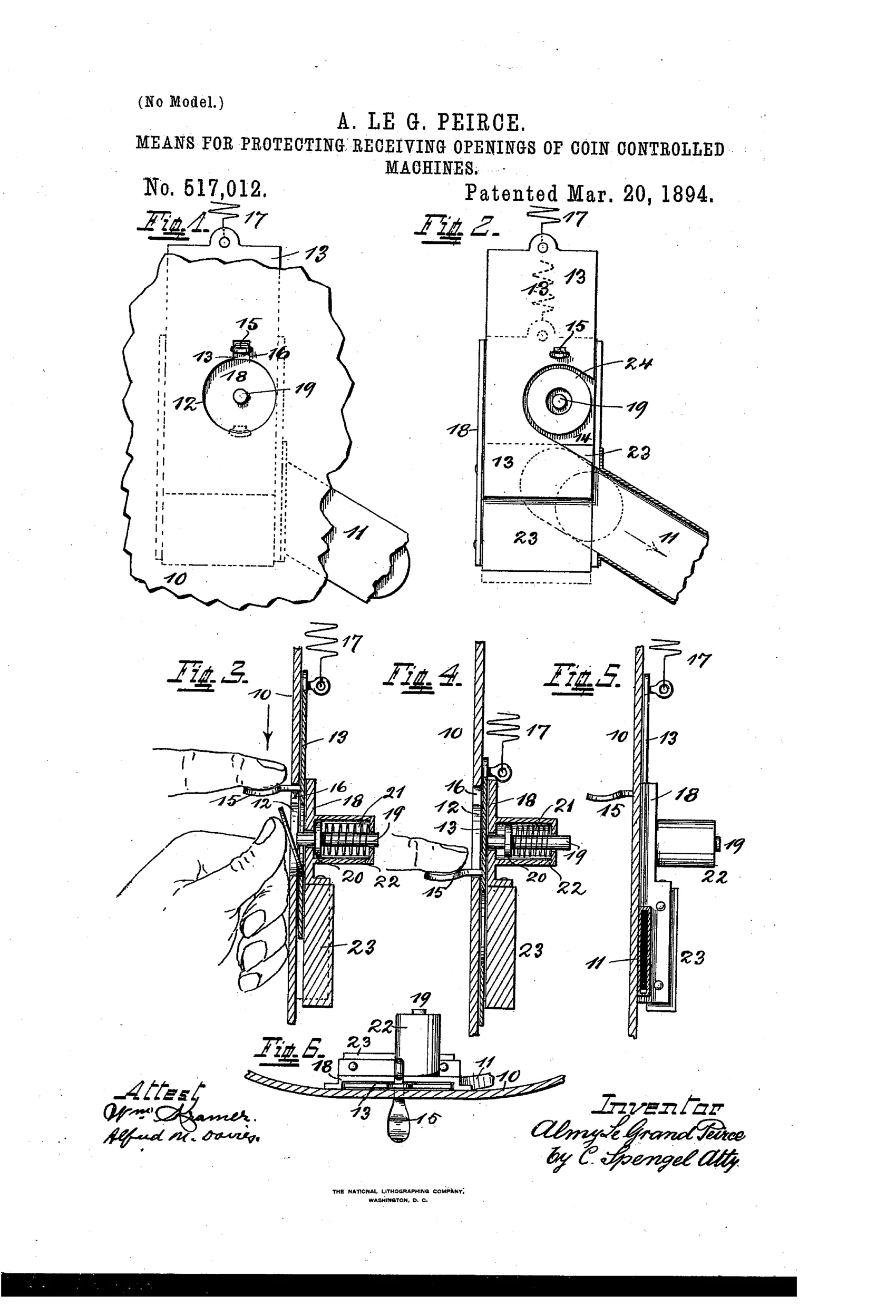
Anti-slug guard for coin-vending machines
◉ How it works
A reciprocating slide with a circular opening sits behind the machine's coin-receiving opening, guided by a bent housing. A spring-actuated ejector projects through the housing into the slide's opening and is pushed back by a genuine coin, allowing the slide to be pushed down by a trigger so the coin passes to the chute. A permanent magnet placed below the ejector catches and holds any ferrous slug (tin or sheet-iron washer) introduced instead of a coin, so it cannot pass through and is later ejected upward when the slide returns to its normal position.
◉ What was claimed
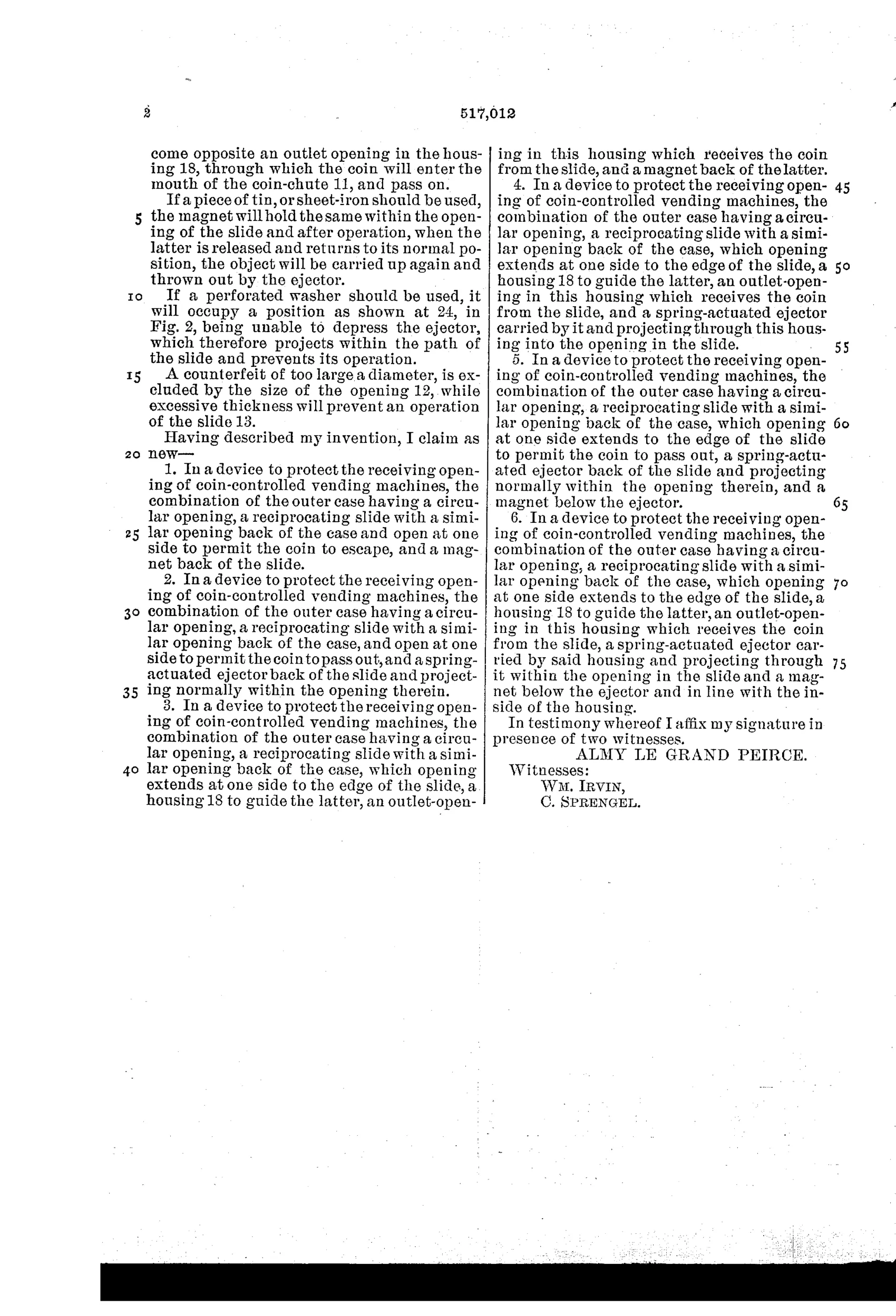
“In a device to protect the receiving opening of coin-controlled vending machines, the combination of the outer case having a circular opening, a reciprocating slide with a similar opening back of the case, which opening extends at one side to the edge of the slide, a housing 18 to guide the latter, an outlet-opening in this housing which receives the coin from the slide, a spring-actuated ejector carried by said housing and projecting through it within the opening in the slide and a magnet below the ejector and in line with the inside of the housing.”
In plain English: The device combines a case with a round coin slot, a sliding gate with a matching hole guided by a housing, a spring-loaded ejector that pokes into the slide's opening, and a magnet positioned below the ejector to catch metal slugs.
◉ In the inventor’s words
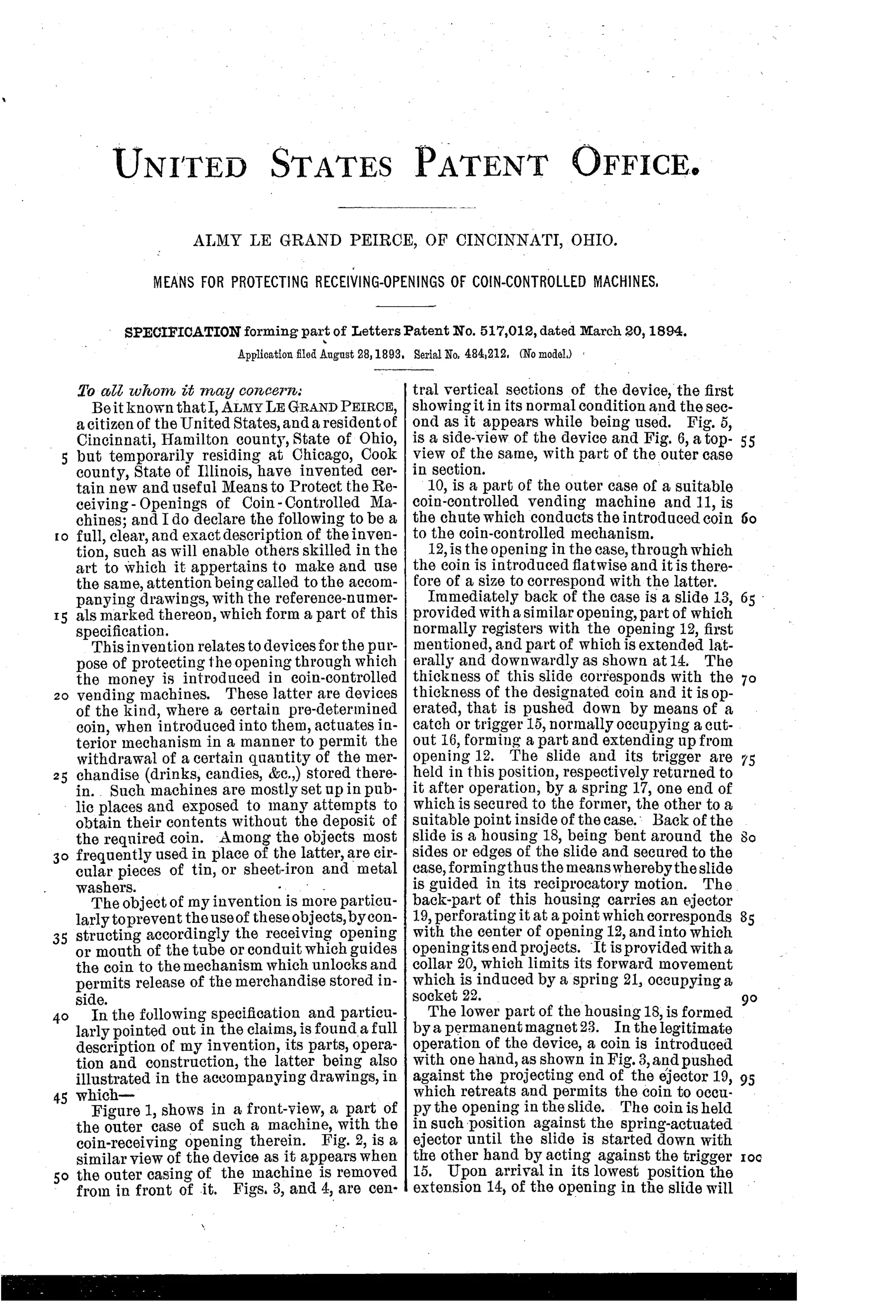
“Such machines are mostly set up in public places and exposed to many attempts to obtain their contents without the deposit of the required coin.”— Almy Le Grand Peirce, from the specification
Fate unknown
No assignee and no documented commercial use; a surviving vending machine fitted with this guard, or trade-catalog evidence, would settle it.
◉ Commentary
By 1893 the coin-operated machine boom had created a new criminal specialty: the washer man. Peirce's answer is unusually literal — he doesn't build a better tester inside the machine, he bolts a bouncer onto the front door. The whole apparatus sits at the receiving opening itself: a sliding gate with a coin-sized hole, a spring-loaded ejector pin poking into that hole, and, crucially, a permanent magnet lurking just below.
The sequence is the clever part. A genuine coin pushes the ejector back and rides the slide down past the magnet, which ignores it — nickel and silver alloys of the day were essentially non-magnetic. A tin or sheet-iron washer gets grabbed by the magnet and held fast; when the slide returns to rest, the ejector pin shoves the offending slug back up and out. Note Fig. 3's drawn hand and finger: this is a manually triggered gate, not a passive chute, which means the cheater watches his own slug get spat back at him. There's a certain justice in that.
The limitation is obvious and would soon define the whole field: a magnet only catches ferrous slugs. Lead, brass, and pot-metal sail through. Later chute testers stacked magnet, weight, and diameter tests in series for exactly this reason. Peirce's guard is an early, honest single-test entry — a front-door filter from the era before the industry learned it needed a gauntlet.
Commentary by Claude, The Counterfeit Coin Detector Patent Archive’s resident enthusiast