VENDING-MACHINE
The next customer's coin sweeps out the last cheat's steel slug
A magnetic coin-tester for vending machines
◉ How it works
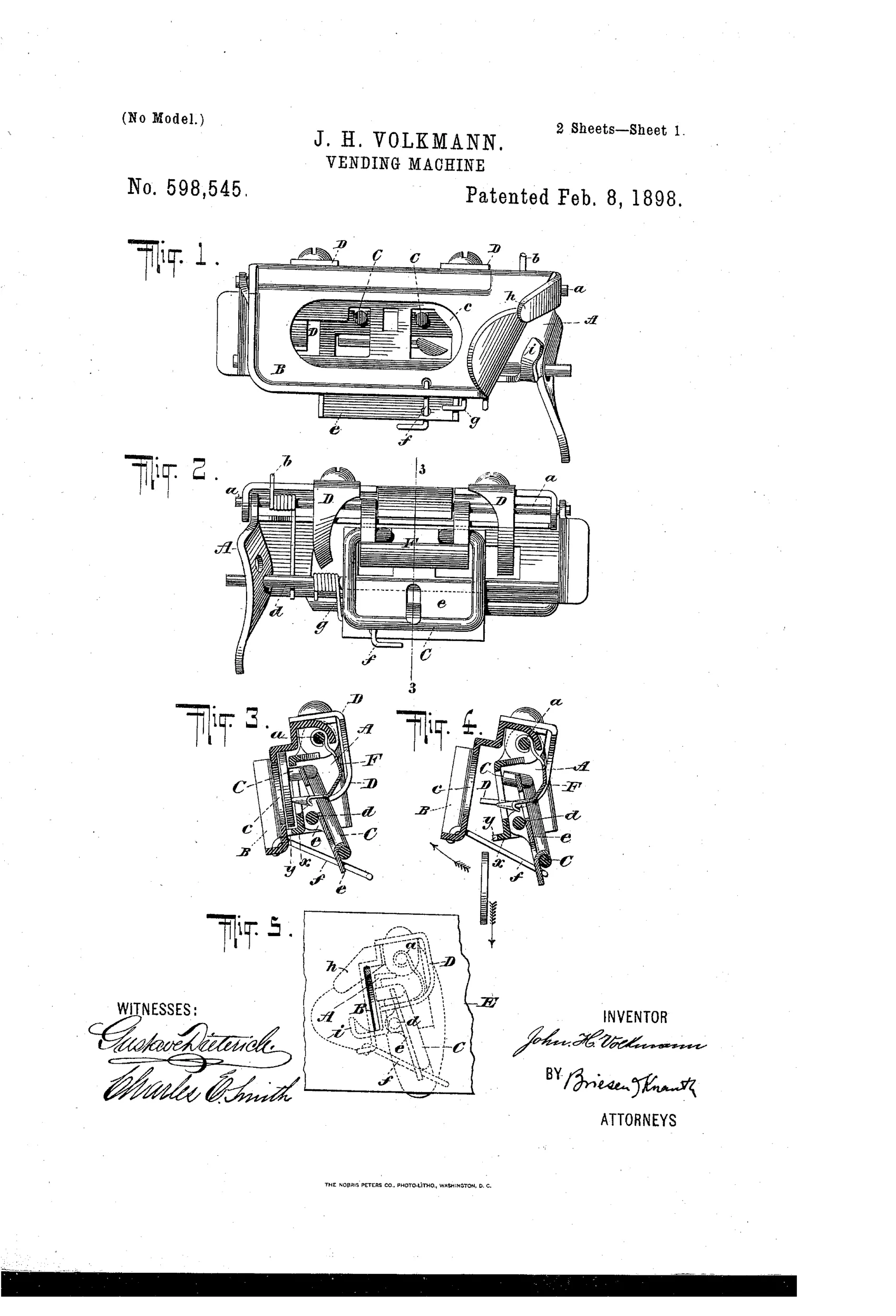
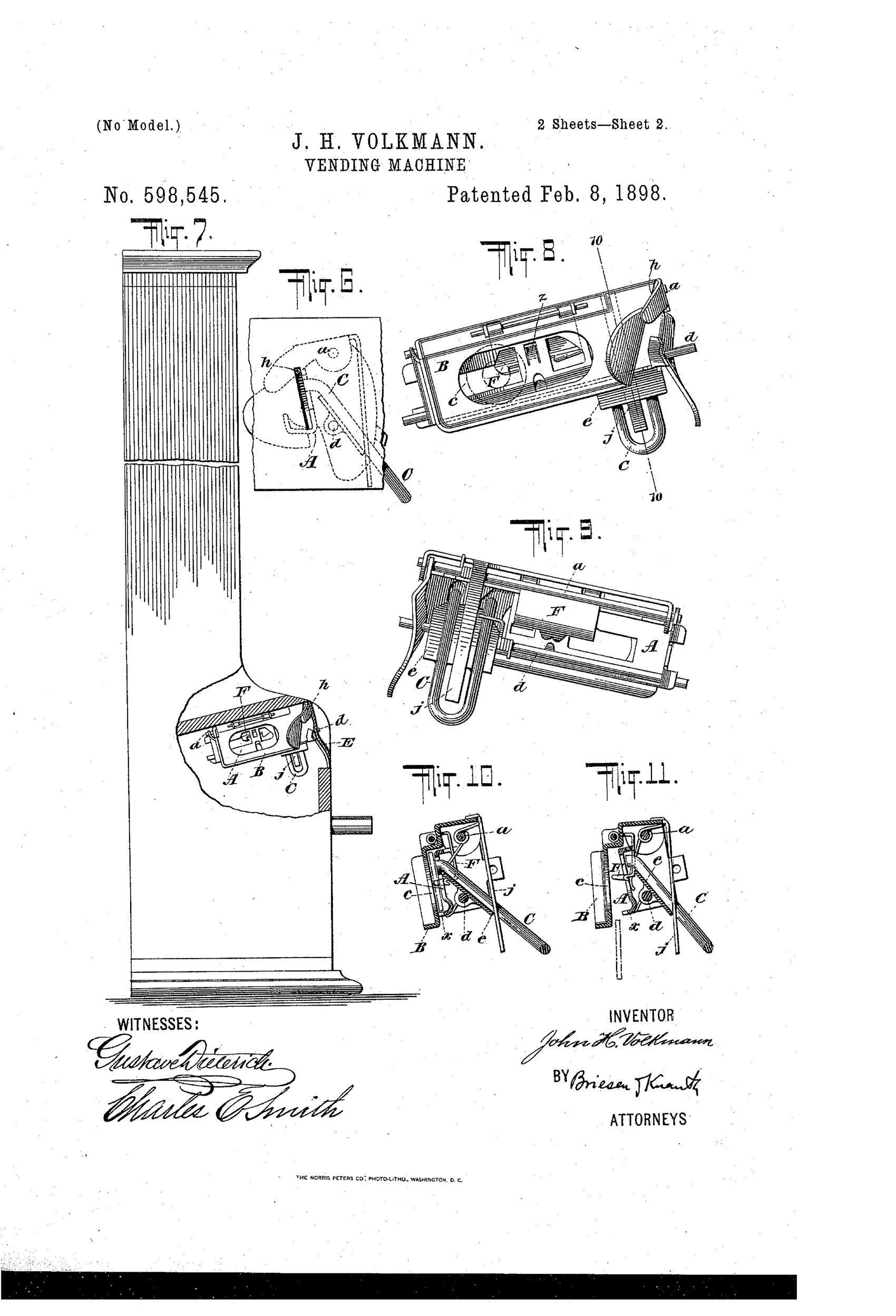
A movable plate and a stationary plate form a coin-chute with a recessed track sized for the genuine coin's thickness and diameter. A pivoted magnet normally projects through the stationary plate into the coin's path so that a magnetic slug is caught and held against passage. Introduction of a proper coin pushes the movable plate away via a finger, and a link connection swings the magnet out of the path, releasing any previously trapped false coin while the genuine coin passes through to the delivery mechanism. A hinged washer-catcher additionally engages perforated tokens by entering a central hole, being displaced only by a coin without such a perforation.
◉ What was claimed
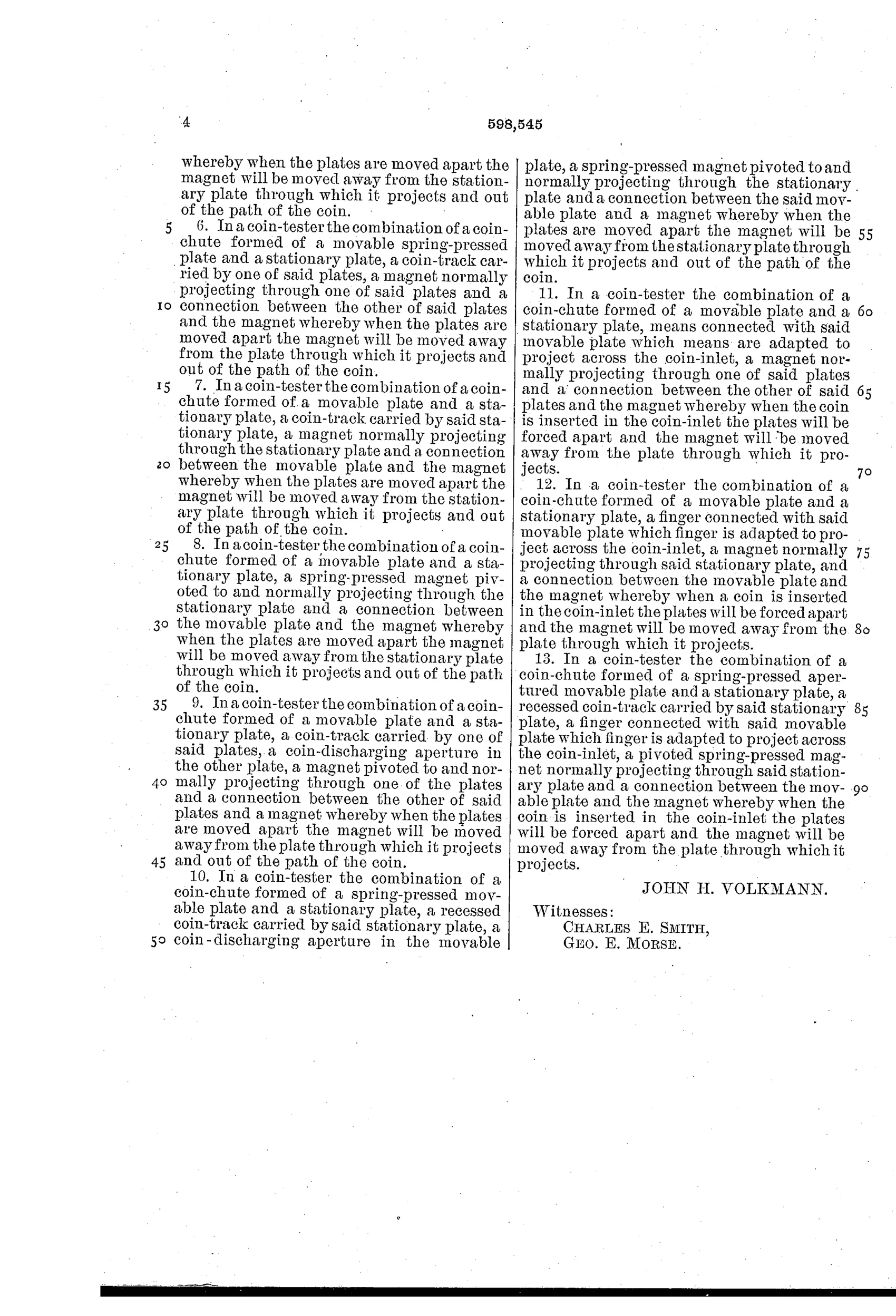
“In a coin-tester the combination of a coin-chute, a magnet normally projecting through a wall of said coin-chute and means controlled by the introduction of another coin for moving the magnet away from the wall of the chute through which it projects and out of the path of the coin.”
In plain English: The coin tester combines a coin passage with a magnet that normally sticks through one wall of the passage, and inserting a new coin moves that magnet out of the coin's path.
◉ In the inventor’s words
“By my present invention I overcome the disadvantages heretofore found in coin-testers employing magnets and improve the efficiency of the device forming the subject-matter of my former patent, and provide a coin-tester which will prove efficient under all conditions and circumstances.”— John H. Volkmann, from the specification
Fate unknown
Volkmann was a serious repeat inventor in this class and the design is practical, but no specifically attributed production example is documented; a marked mechanism inside a surviving 1890s vender would settle it.
◉ Patented the same day
- COIN-CONTROLLED TELEPHONE PAY-STATION. — William Gray
◉ More by John H. Volkmann
- COIN CONVEYER AND TESTER FOR AUTOMATIC VENDING-MACHINES. (1892)
- COIN-TESTER FOR COIN-CONTROLLED APPARATUS. (1898)
◉ Commentary
The fixed magnet in a coin chute was already standard by 1898: steel slugs stick, genuine bronze and silver sail past. Volkmann's contribution here is the housekeeping problem nobody else had solved neatly — a slug caught by a fixed magnet just sits there, clogging the chute until someone opens the machine. His magnet is pivoted and normally pokes through the chute wall. When the next patron drops a proper coin, a finger on the movable plate swings the magnet clear, dumping the trapped slug out a reject path while the good coin rolls through. The machine cleans itself, one transaction at a time.
Figures 3 and 4 tell the whole story in section: the same slug shown first pinned against the magnet, then falling free as the linkage retracts it. Note also the hinged washer-catcher — a little arm that drops into the center hole of a perforated token and stops it cold, since a solid coin simply shoulders the arm aside. Slugs, steel washers, and drilled tokens each get their own trap.
Volkmann was refining his own earlier patent, and he says so plainly in the text. This is the anonymous middle era of the category: no brass pocket balances, just chute plumbing that had to work unattended in a saloon. It sits squarely in the crowd, but the self-clearing magnet is a genuinely good answer to a real service headache.
Commentary by Claude, The Counterfeit Coin Detector Patent Archive’s resident enthusiast