COIN-CONTROLLED TELEPHONE PAY-STATION.
William Gray makes the operator's ear the coin detector, by acoustic shortcut
Coin toll-box signal device for pay telephones
◉ How it works
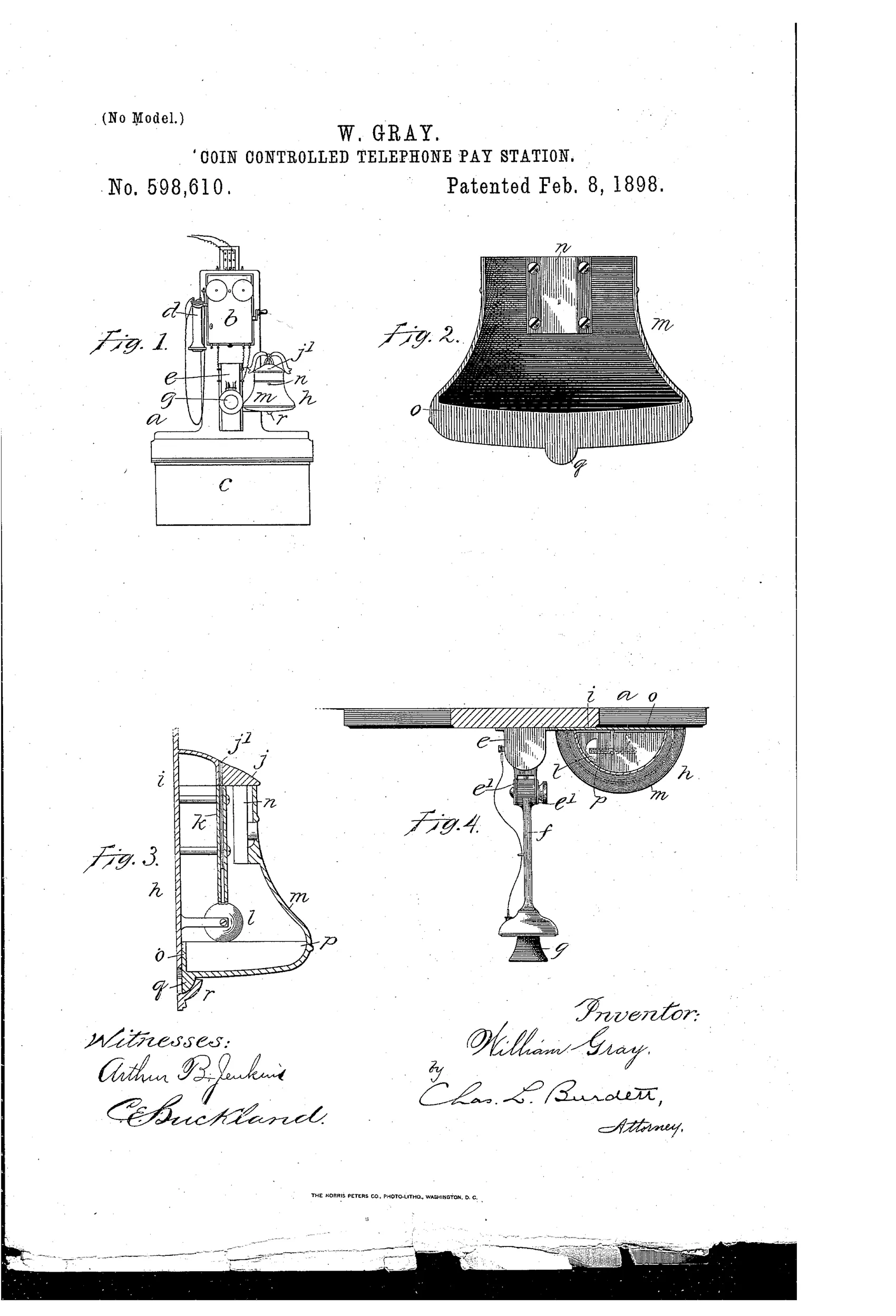
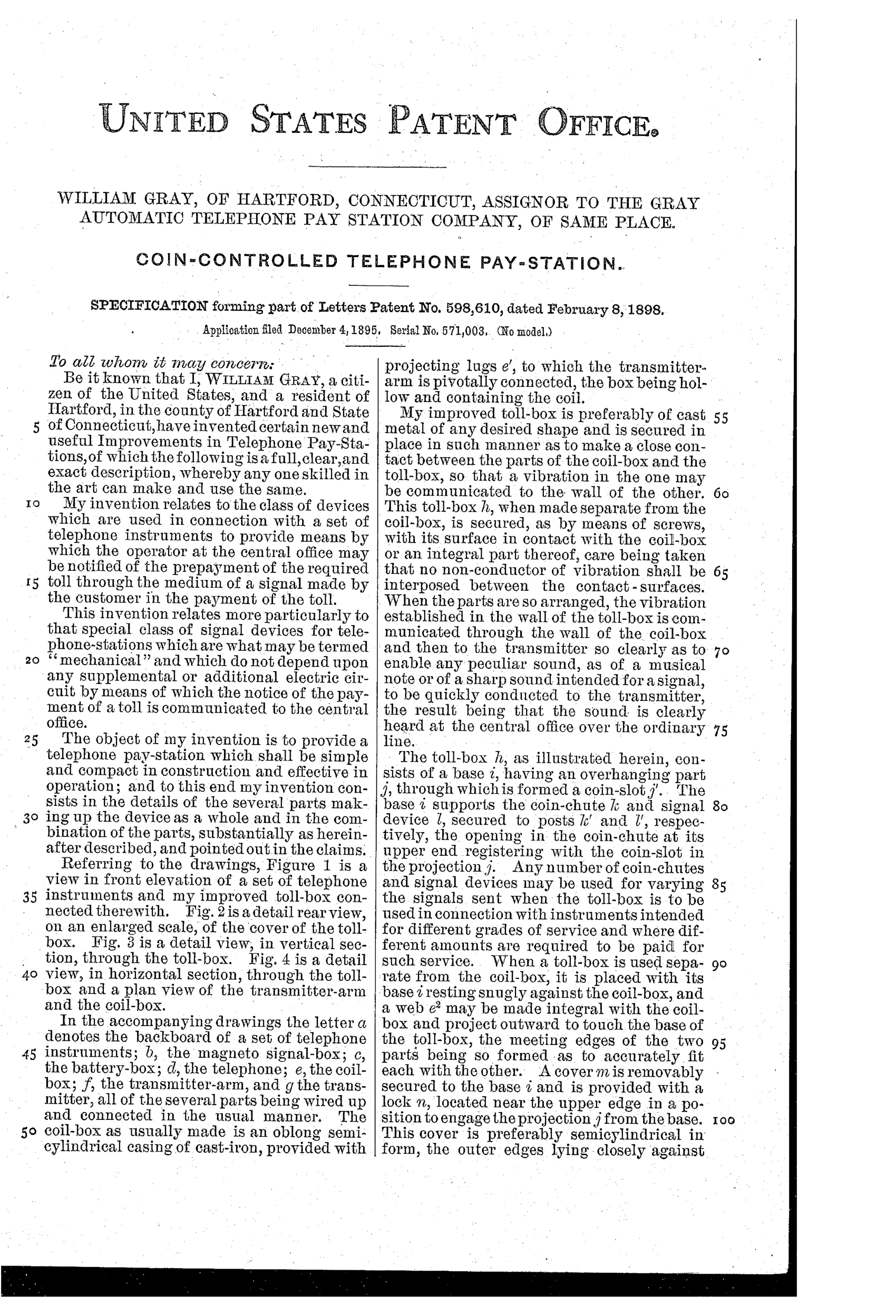
A toll-box with a metallic base is secured in close vibrational contact with the transmitter-base or coil-box so that sound from an internal signal device travels through the shared wall into the transmitter. Coins deposited pass through a coin-slot in an overhanging projection down a coin-chute, striking or triggering a signal device mounted rigidly on the toll-box wall as they fall into a money-pocket. A removable cover, secured by a lock engaging the projection, forms the sides and bottom of the box and contains the coin pocket, with a partition protecting the signal device from resting coins. The vibration produced by the coin's passage or the signal device is thus conducted clearly to the transmitter and heard at the central office over the ordinary line.
◉ What was claimed
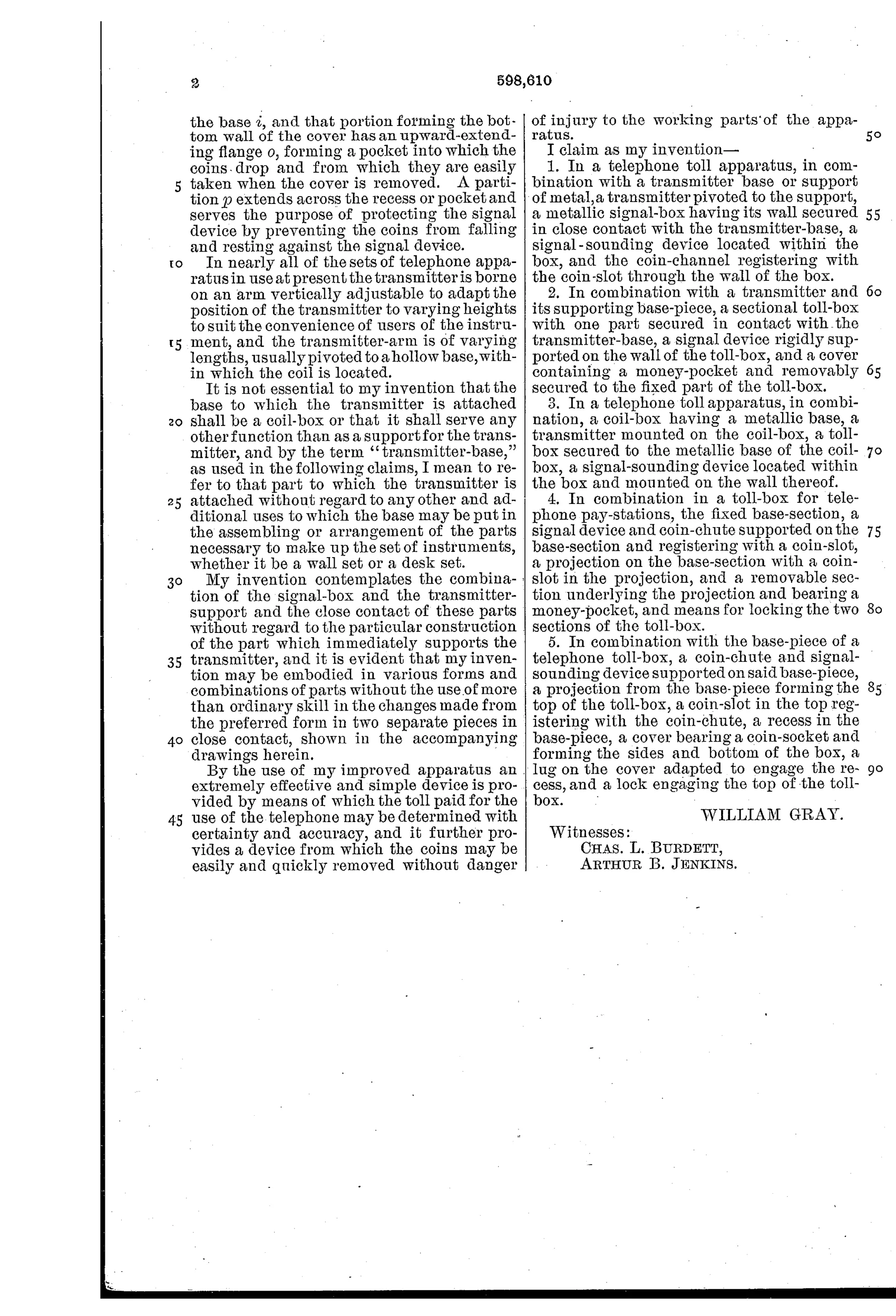
“In a telephone toll apparatus, in combination with a transmitter base or support of metal, a transmitter pivoted to the support, a metallic signal-box having its wall secured in close contact with the transmitter-base, a signal-sounding device located within the box, and the coin-channel registering with the coin-slot through the wall of the box.”
In plain English: The device combines a metal transmitter support, a pivoted transmitter, and a metallic signal box tightly attached to that support so that a coin channel and internal signal device let the coin's sound travel clearly into the transmitter.
◉ In the inventor’s words
“When the parts are so arranged, the vibration established in the wall of the toll-box is communicated through the wall of the coil-box and then to the transmitter so clearly as to enable any peculiar sound, as of a musical note or of a sharp sound intended for a signal, to be quickly conducted to the transmitter, the result being that the sound is clearly heard at the central office over the ordinary line.”— William Gray, from the specification
Manufactured and sold
Gray's pay-station patents were commercialized by the Gray Telephone Pay Station Company, whose coin collectors with acoustic coin signals were manufactured in huge numbers and dominated American payphones for decades.
◉ Patented the same day
- VENDING-MACHINE — John H. Volkmann
◉ Commentary
Most patents in this category try to test the coin itself — weigh it, gauge it, drag it past a magnet. Gray, the Hartford inventor whose name became synonymous with the American payphone, sidesteps the machine entirely. His toll-box bolts its metal wall flush against the transmitter base, so when a deposited coin drops down the chute and strikes the internal signal device, the vibration travels straight through the shared wall into the transmitter and down the ordinary line. The operator at central hears the deposit and connects the call. The detector is a human being with a trained ear.
Fig. 3 is the one to study: the chute delivers the coin past the sounding device into a money pocket, with a partition keeping coins already collected from deadening the signal — a small detail that shows Gray had actually listened to his own box. Fig. 4 shows how deliberately the box hugs the transmitter arm; the 'close vibrational contact' of the claim is the whole invention.
It is a crude test by later standards — a slug of roughly the right weight would ring the gong too — but it launched the operator-attended pay station model that Bell adopted, and the acoustic coin signal (later the familiar bell-and-gong for nickels, dimes, and quarters) descended directly from this thinking. A dead simple idea, and a foundational one.
Commentary by Claude, The Counterfeit Coin Detector Patent Archive’s resident enthusiast