COIN CONVEYER AND TESTER FOR AUTOMATIC VENDING-MACHINES.
A spring-loaded finger that pokes through washers to catch the oldest slug trick
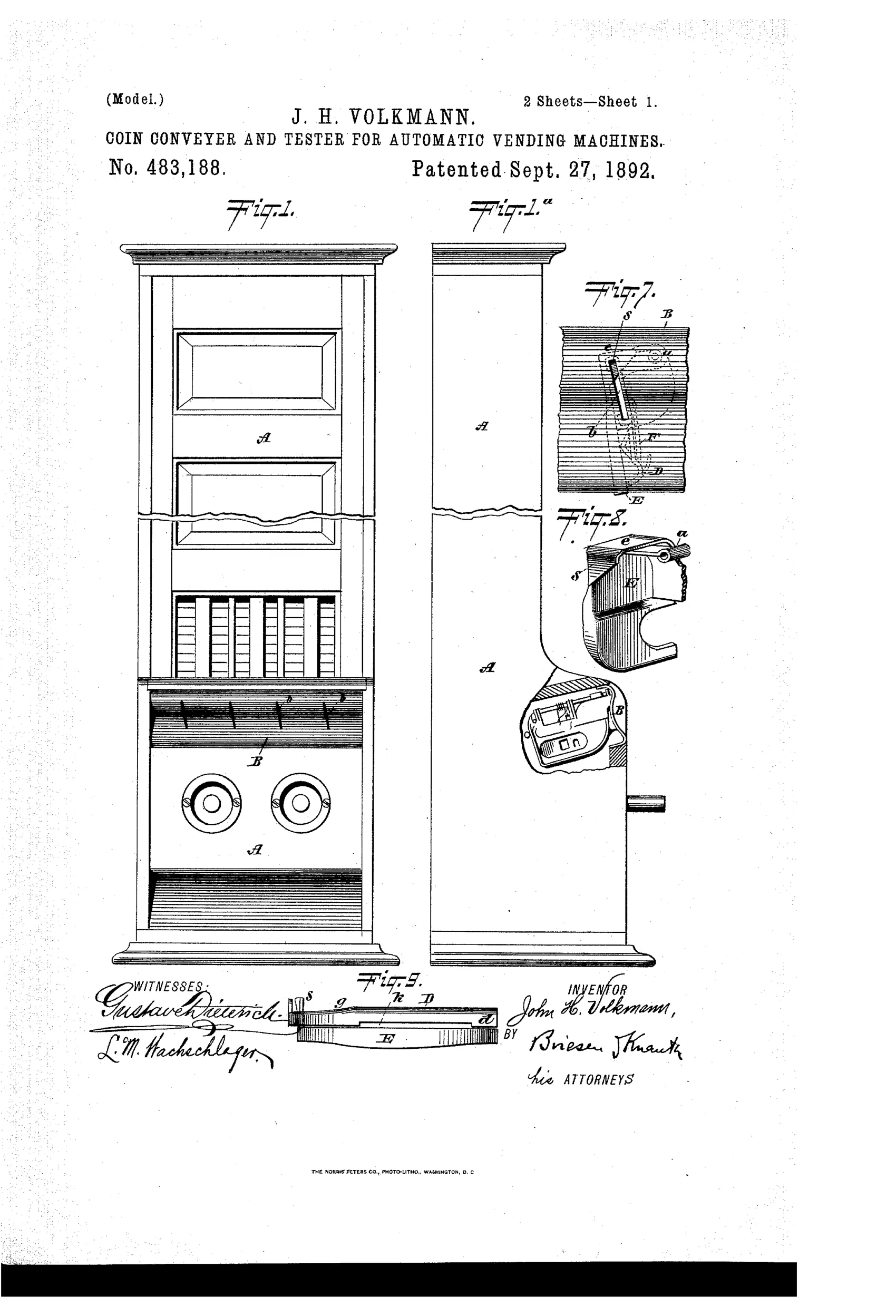
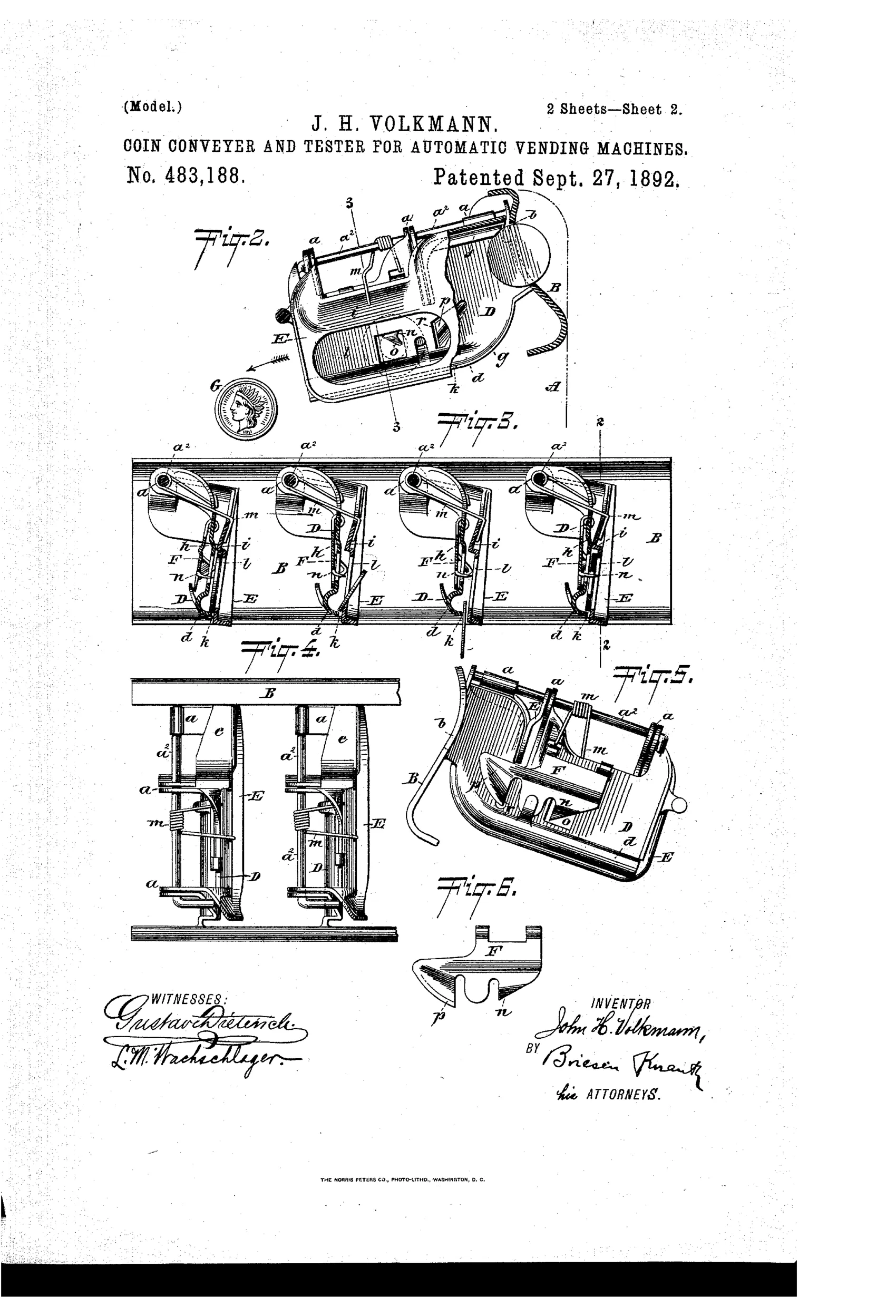
Coin detector and conveyer for vending machines
◉ How it works
A coin dropped through a slot in the front plate B travels between two facing plates, one fixed (D) and one hinged and spring-pressed (E), which lean the coin against the movable plate as it descends. A beveled projection on plate E is struck by the upper edge of a correctly sized coin, swinging plate E away from D so the coin can pass down a guiding rail to the delivery chute. A separate pivoted washer-arrester plate F, with a spring-loaded finger and toe, rides against the coin's edge; if the coin is perforated (a washer or slug) the finger pierces the hole and arrests it, while solid coins push the finger aside and pass through. Coins that are too thin fall through a slit in the rail, coins too large are clamped by internal ribs, and coins too small drop out through an opening in the movable plate, so only a coin of the correct size, thickness, and solidity reaches the vending mechanism.
◉ What was claimed
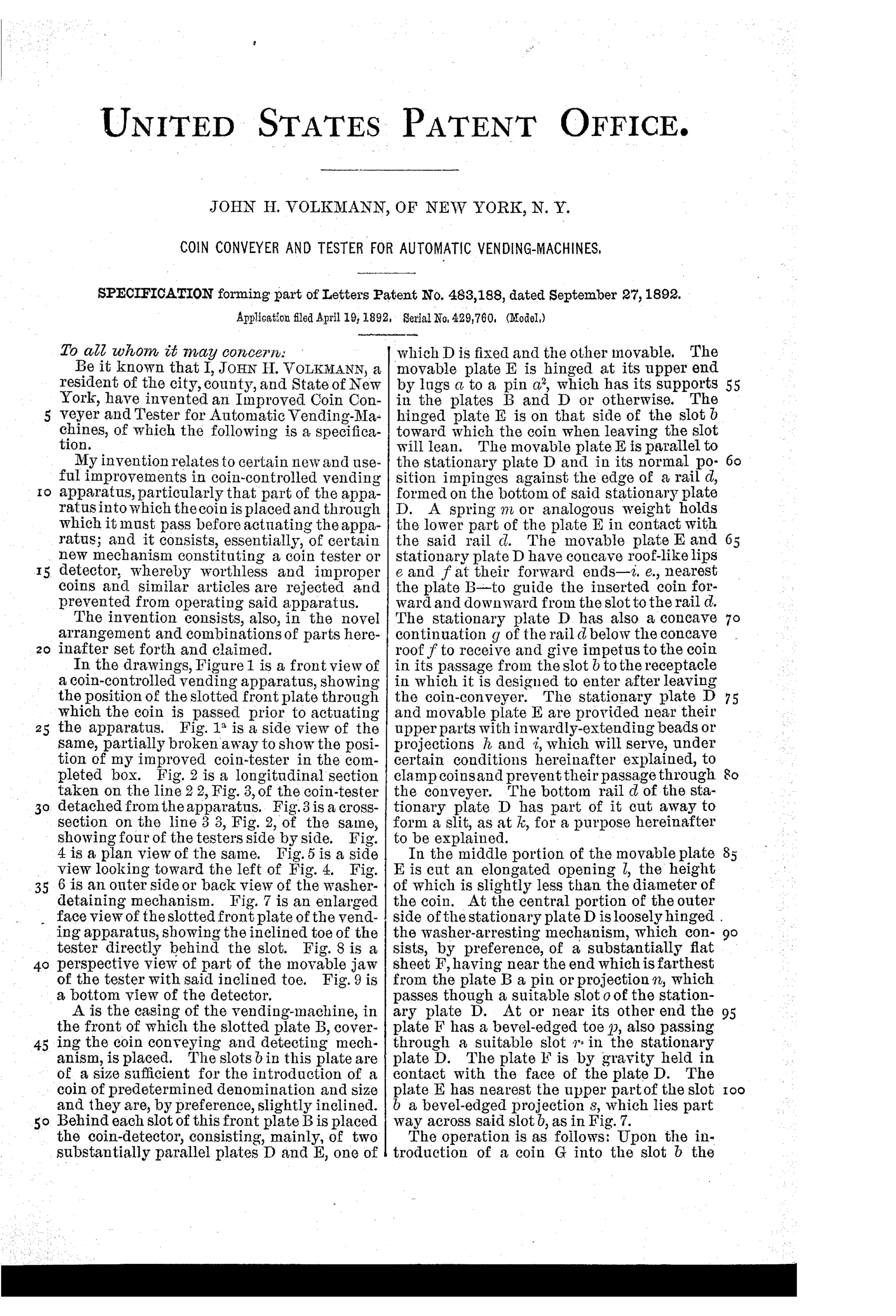
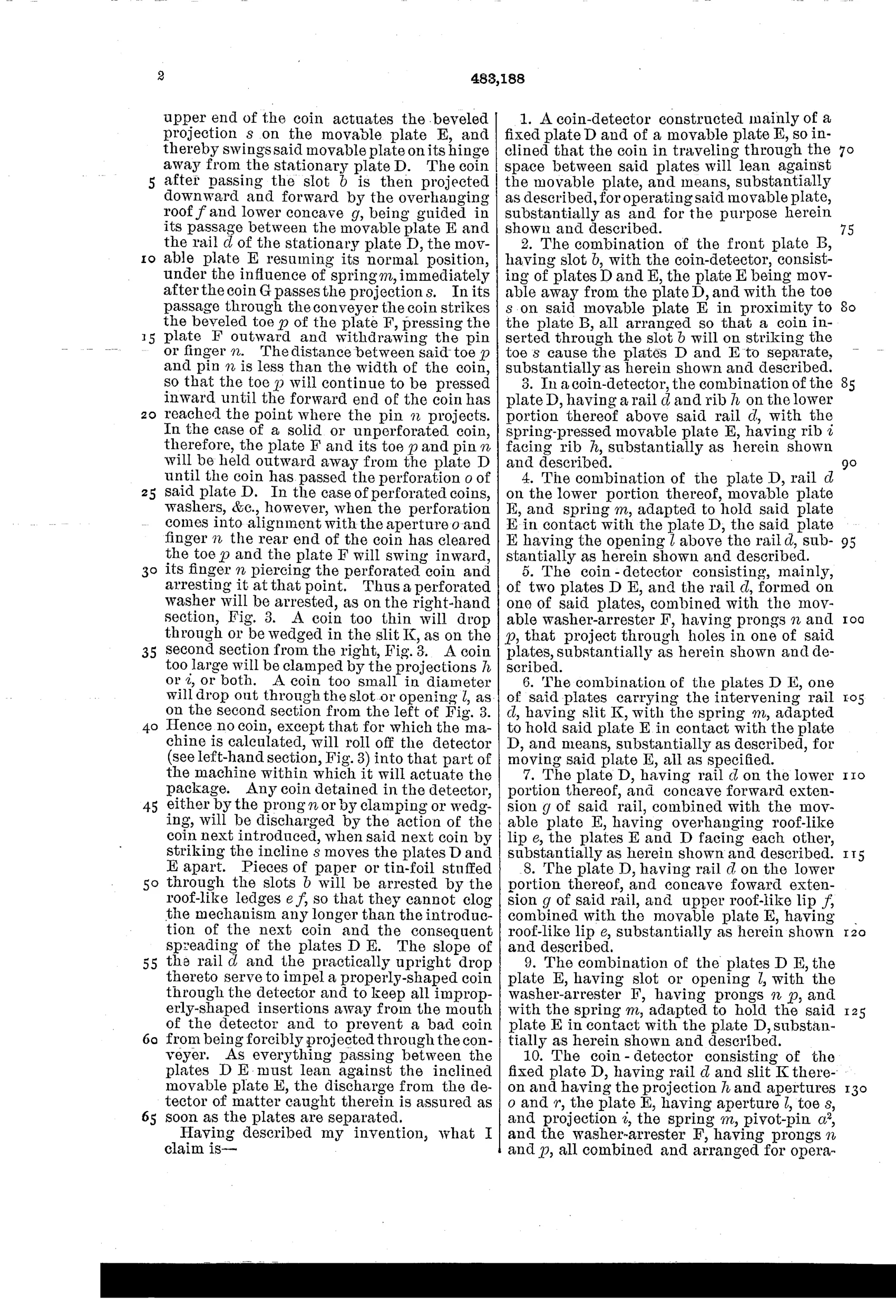
“A coin-detector constructed mainly of a fixed plate D and of a movable plate E, so inclined that the coin in traveling through the space between said plates will lean against the movable plate, and means, substantially as described, for operating said movable plate, substantially as and for the purpose herein shown and described.”
In plain English: A coin tester made of a fixed plate and a tilted, spring-operated movable plate that a passing coin leans against, with a mechanism to swing the movable plate open to let a good coin through.
◉ In the inventor’s words
“Hence no coin, except that for which the machine is calculated, will roll off the detector (see left-hand section, Fig. 3) into that part of the machine within which it will actuate the package.”— John H. Volkmann, from the specification
Fate unknown
Chute testers of this era were absorbed anonymously into vending cabinets; only a surviving machine with this mechanism or trade records would settle whether Volkmann's was built.
◉ Commentary
By 1892 the vending trade had learned its first hard lesson: the American public would feed a coin slot anything round. Volkmann's answer is a gauntlet rather than a single test. The coin drops between a fixed plate and a spring-pressed hinged one, leaning against the movable plate as it falls. Too thin, and it slips through a slit in the guide rail; too small, and it escapes through an opening in the movable plate itself; too large, and internal ribs simply clamp it. Only a coin of the right diameter and thickness strikes the beveled toe that swings the gate open.
The part worth lingering on is the washer-arrester, plate F with its spring-loaded finger riding along the coin's edge. A solid coin shoulders the finger aside; a washer lets the finger drop into its hole and hang the impostor mid-chute. Washers were the cheapest slug of the era, and most sizing gauges passed them happily — this is one of the earlier patents to attack the hole directly rather than the weight.
Fig. 3 repays a look: four testers ganged side by side, one per denomination, which tells you Volkmann was thinking about a real multi-column machine, not a parlor curiosity. Like nearly all chute testers, though, the design was destined to vanish inside a cabinet if it was built at all — clever plumbing that no one was ever meant to see.
Commentary by Claude, The Counterfeit Coin Detector Patent Archive’s resident enthusiast