COIN-CONTROLLED WEIGHING-SCALE
The coin doesn't run the scale — it buys a peek at the answer
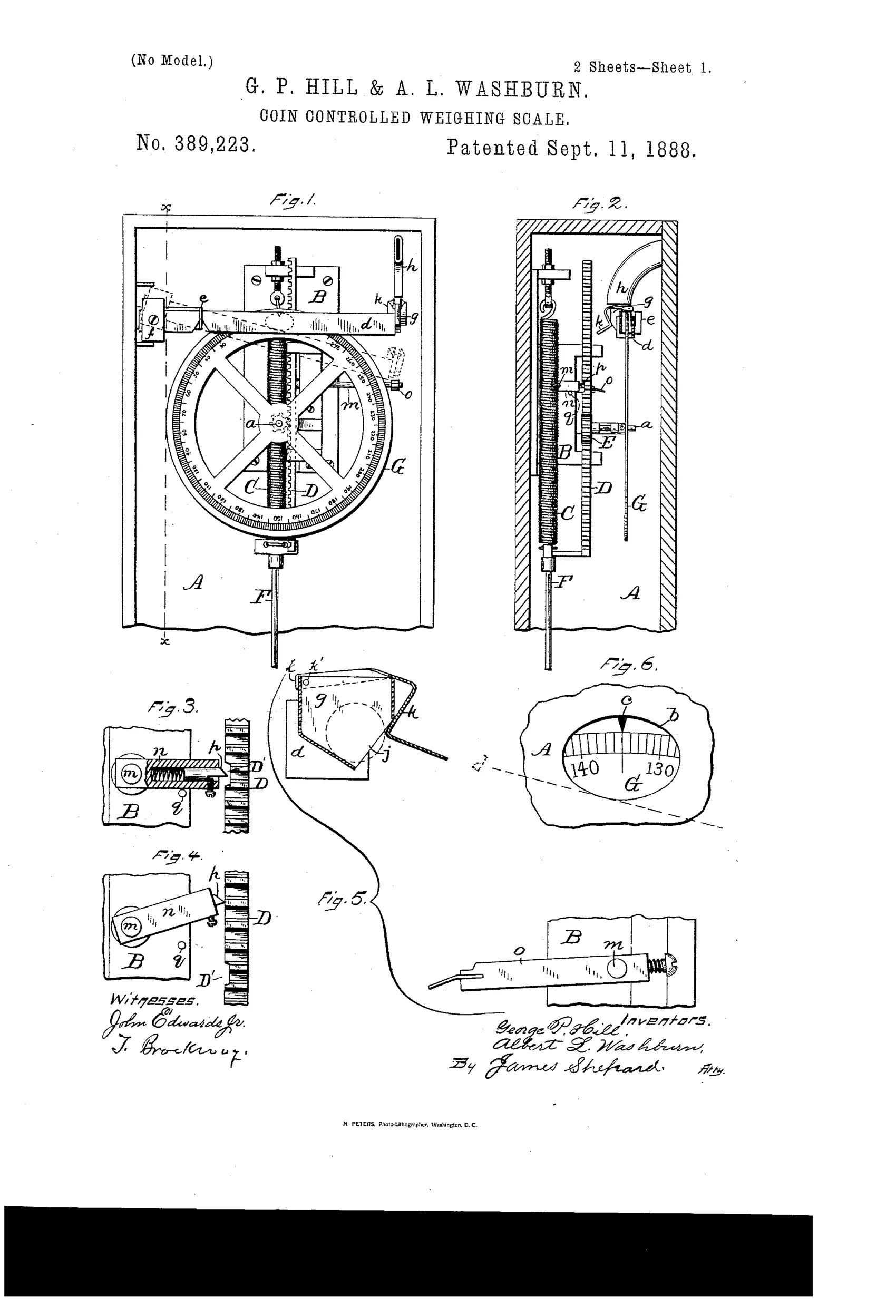
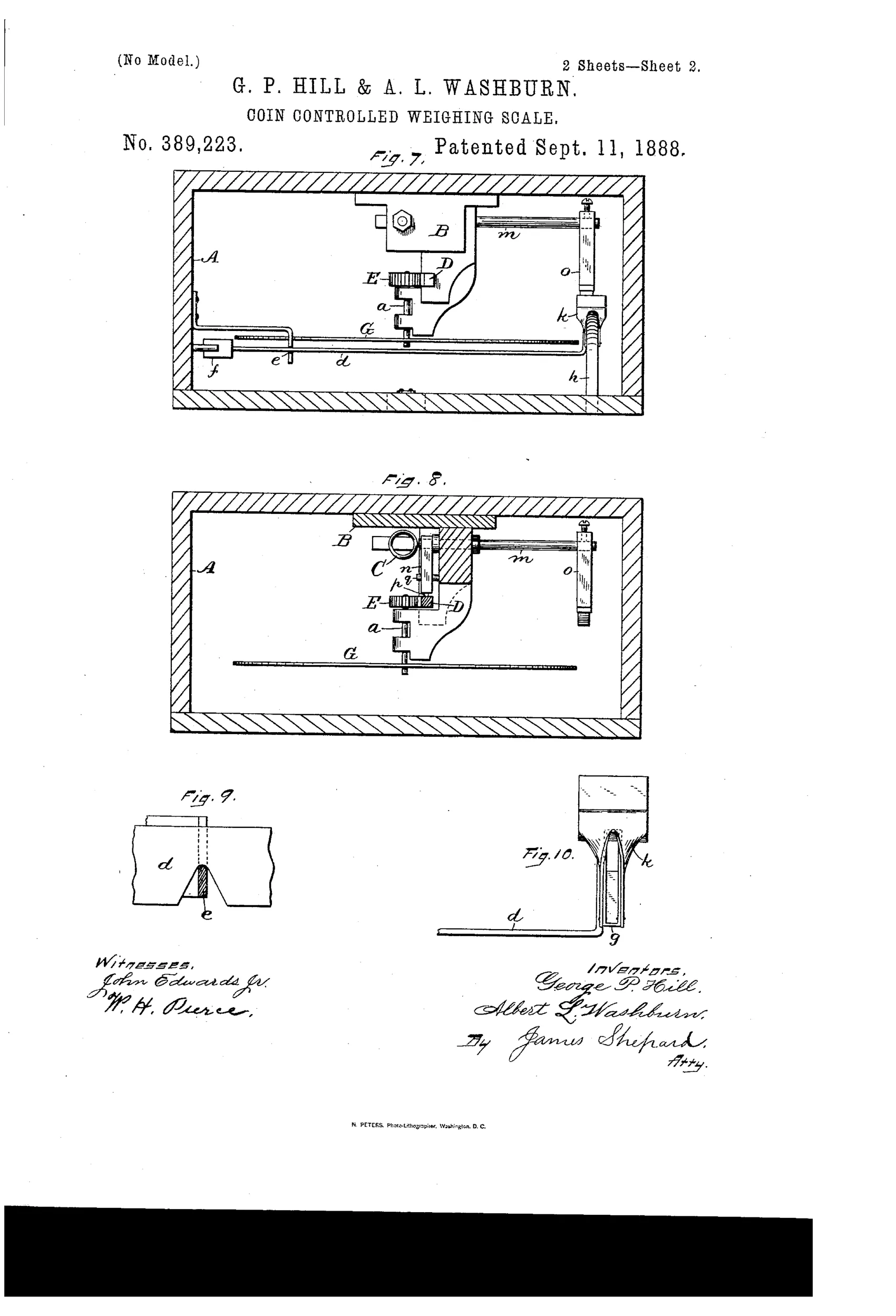
Coin-operated weighing scale with covered dial
◉ How it works
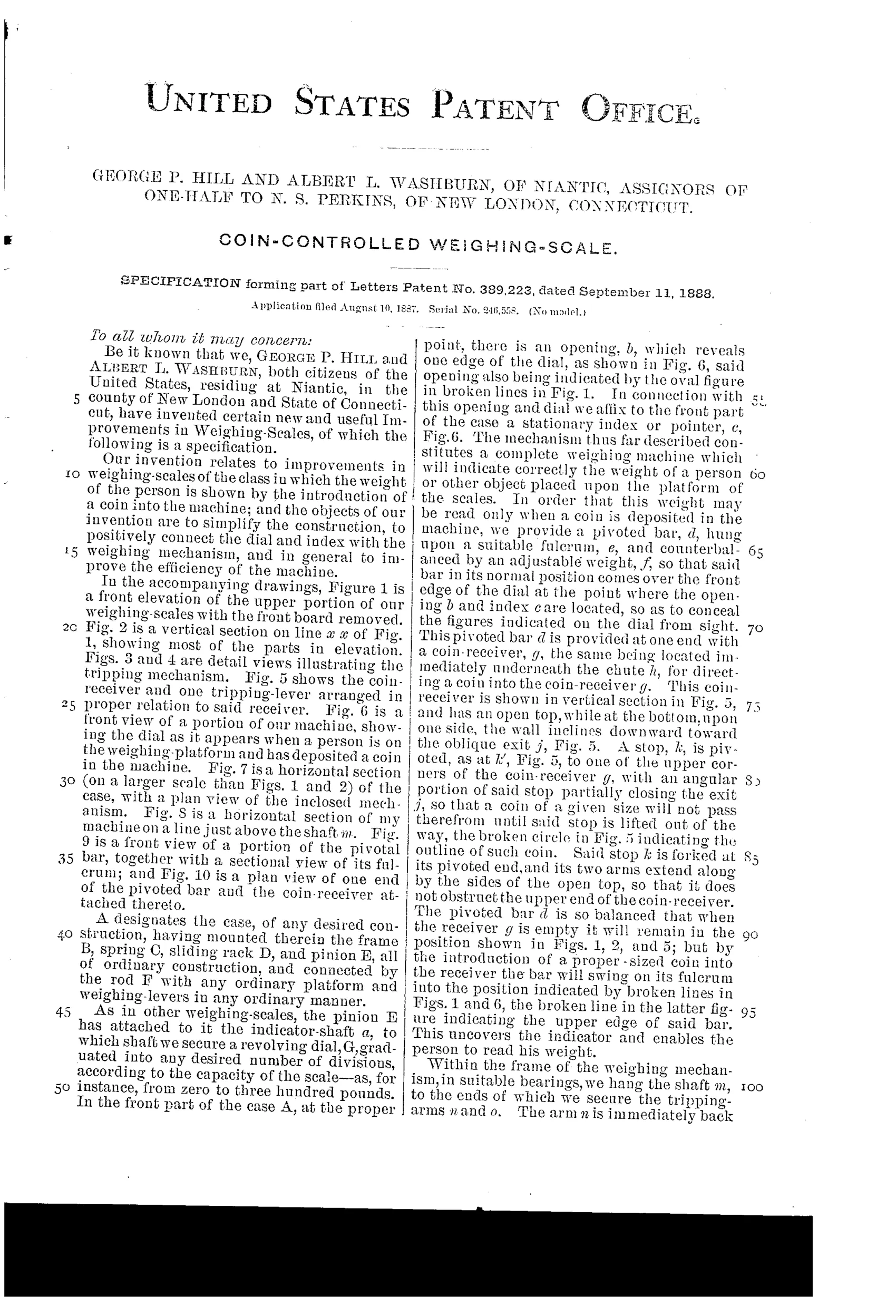
A pivoted bar hung on a fulcrum and counterbalanced by an adjustable weight normally covers the dial opening, hiding the weight indication. Dropping a proper-sized coin into a receiver on the bar's end unbalances it, swinging the bar down to reveal the dial through the opening. A rock-shaft with tripping-arms, actuated by the weighing rack as a person steps on the platform, raises a pivoted stop on the coin-receiver to release the coin once weight is applied. Springs, slides, and stop-lugs govern the timing so the weight can be read only while a coin has been deposited and a person is on the platform.
◉ What was claimed
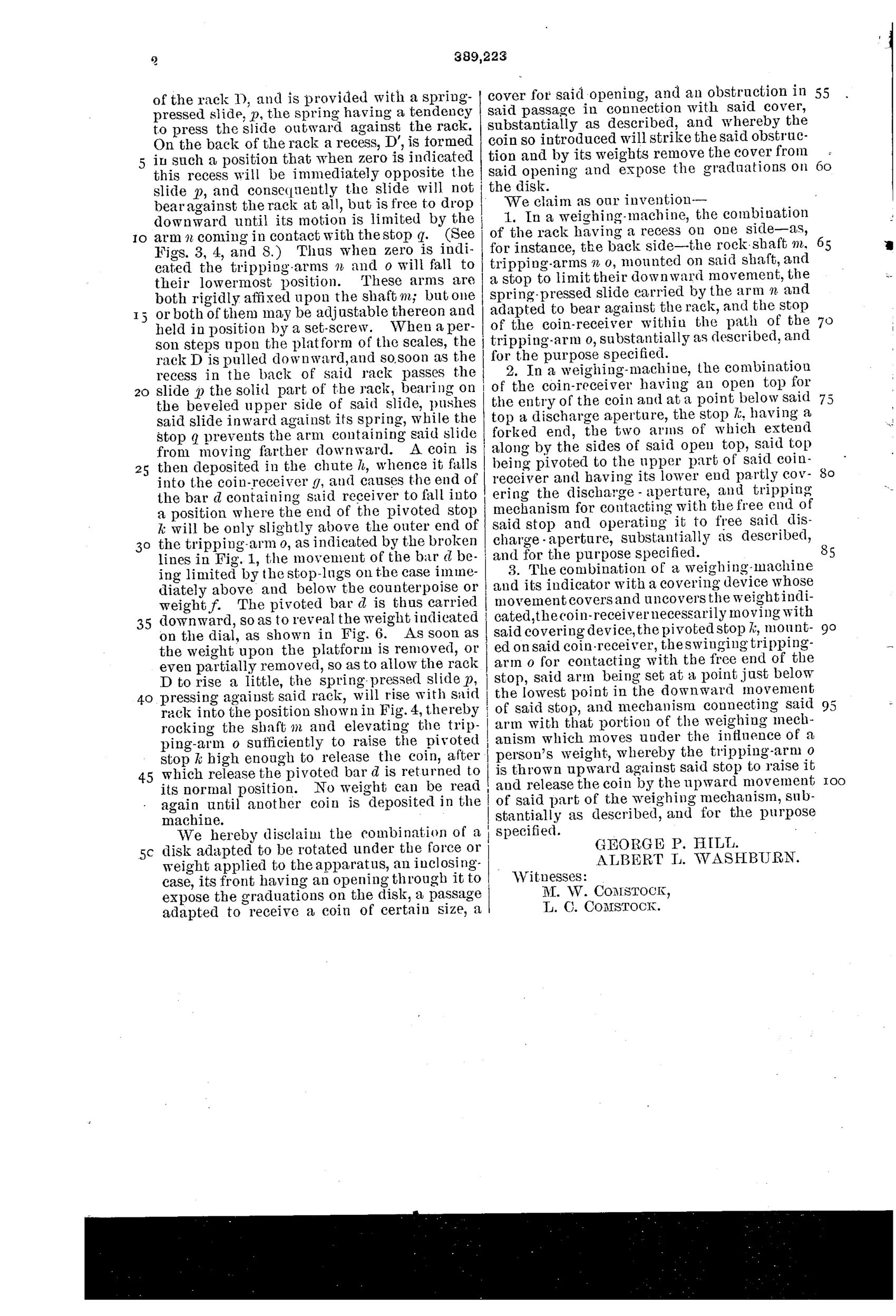
“In a weighing-machine, the combination of the rack having a recess on one side—as, for instance, the back side—the rock-shaft m, tripping-arms n o, mounted on said shaft, and a stop to limit their downward movement, the spring-pressed slide carried by the arm n and adapted to bear against the rack, and the stop of the coin-receiver within the path of the tripping-arm o, substantially as described, and for the purpose specified.”
In plain English: The scale combines a notched weight-rack, a rocking shaft with two tripping arms, a spring-loaded slide that rides on the rack, and a stop on the coin receiver, so that stepping on the platform and depositing a coin work together to trigger the mechanism.
◉ In the inventor’s words
“No weight can be read again until another coin is deposited in the machine.”— George P. Hill and Albert L. Washburn, from the specification
Fate unknown
The assigned half-interest suggests commercial intent, but no surviving marked scale is documented; a specimen or trade-catalog listing would settle it.
◉ Commentary
Most penny scales use the coin to unlock the mechanism. Hill and Washburn inverted the logic: their scale weighs you whether you pay or not. What the coin buys is the reading. A counterbalanced pivoted bar normally hangs over the dial opening, hiding the pointer; drop a coin of the right size into the receiver on the bar's end and the bar swings down, exposing the number. It's a machine that sells information rather than motion, which is a genuinely different way to think about coin control in 1887.
The clever part is the interlock, and it's what the claim protects. A rock-shaft with tripping arms rides against the weight rack, so the coin isn't released and the dial isn't uncovered unless someone is actually standing on the platform. Look at Figs. 3 through 5: the spring-pressed slide and the stop on the coin receiver are timing hardware, ensuring you can't feed a coin to an empty scale or read a stale weight. As the specification puts it, no weight can be read again until another coin is deposited.
This sits at the very front of the penny-scale boom, before the trade settled on coin-released escapements. Coin control here means a sizing receiver — a proper-diameter coin tips the balance — so slug rejection is crude by later chute-tester standards. But as a scheme for monetizing a dial, it's an honest, workable first draft from a pair of Connecticut inventors who had already sold a half-interest before the patent issued.
Commentary by Claude, The Counterfeit Coin Detector Patent Archive’s resident enthusiast