IMPROVEMENT IN COUNTERFEIT-COIN DETECTERS
One balance, two slots: a closed-box detector that traps the bad coin
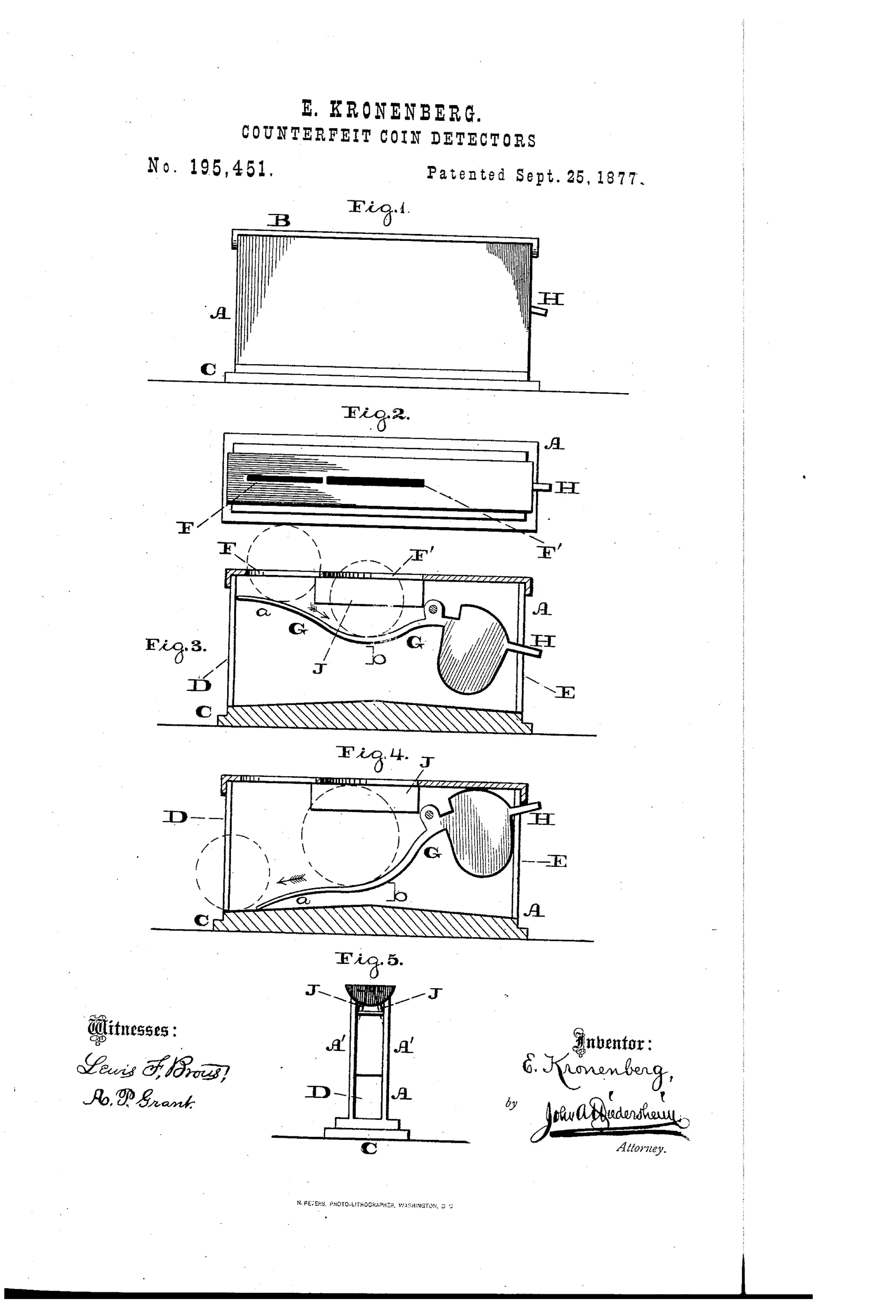
A coin-slot balance device detecting counterfeit half and quarter dollars
◉ How it works
The case has a top plate with two slots of different lengths, sized for half and quarter dollars, leading to a single internal balance bar. Genuine coins, being of correct weight, depress the balance sufficiently to roll off and escape through the open end of the case. Spurious coins fail to depress the balance enough, causing the curved end portions to catch them so they project upward through the slot, revealing their falseness. Depending guide-bars beneath the slots prevent the coin from catching under the top plate during removal, and a projecting arm can lock the balance for handling detected counterfeits.
◉ What was claimed
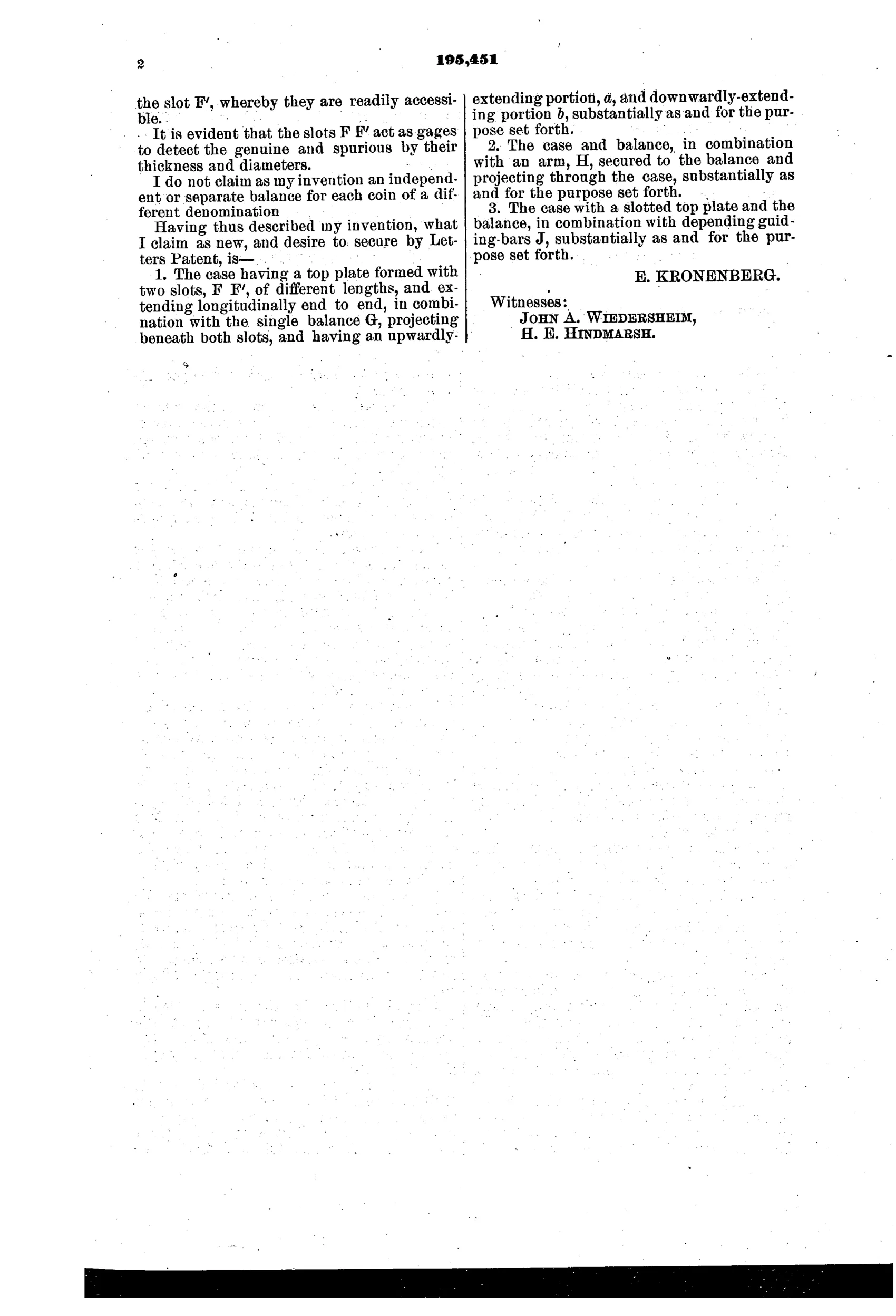
“The case having a top plate formed with two slots, F F', of different lengths, and extending longitudinally end to end, in combination with the single balance G, projecting beneath both slots, and having an upwardly-extending portion, a, and downwardly-extending portion b, substantially as and for the purpose set forth.”
In plain English: A single balance beneath two differently-sized slots in the case's top plate, with one end curving up and the other curving down, forms the counterfeit-detecting mechanism.
◉ In the inventor’s words
“It will be noticed that the same balance is employed for weighing coin of different denominations, the operation depending upon the introduction of the coin into the proper slot of the case.”— Edward Kronenberg, from the specification
Fate unknown
No marked example of this Philadelphia design is documented in the detector literature; a surviving specimen or trade advertisement would settle it.
◉ Commentary
Kronenberg's device inverts the familiar Allender formula. Instead of an open brass rocker where the operator watches the beam tip, everything happens inside a sealed case: drop a half or quarter through the appropriate slot in the lid, and a single curved balance underneath does the judging. A genuine coin has the weight to depress the beam and roll out the open end; a light counterfeit leaves the balance standing, and the curved end catches the coin so it pokes back up through the slot — the verdict is literally the coin sticking out of the box.
The economy of the design is the real cleverness. One balance serves two denominations because the two slots sit at different points along the beam's length, giving different leverage — the drawing's Figs. 3 and 4 show the same S-curved beam at rest and depressed, with the dashed coin circles marking both drop positions. The little details betray careful thought: guide-bars under the slots so a rejected coin can be fished out without jamming under the top plate, and a locking arm to hold the balance while you do it.
What it gives up is the diameter-and-thickness gauging that made the Allender pattern so hard to fool. A slug of correct weight but wrong metal sails through. By 1877 the classic pocket-detector era was fading, and this feels like a late, tidy variation on the weight-only theme — mechanically sound, commercially adrift.
Commentary by Claude, The Counterfeit Coin Detector Patent Archive’s resident enthusiast