COIN SELECTING APPARATUS
An eddy-current brake in a J-chute — physics doing the coin appraisal
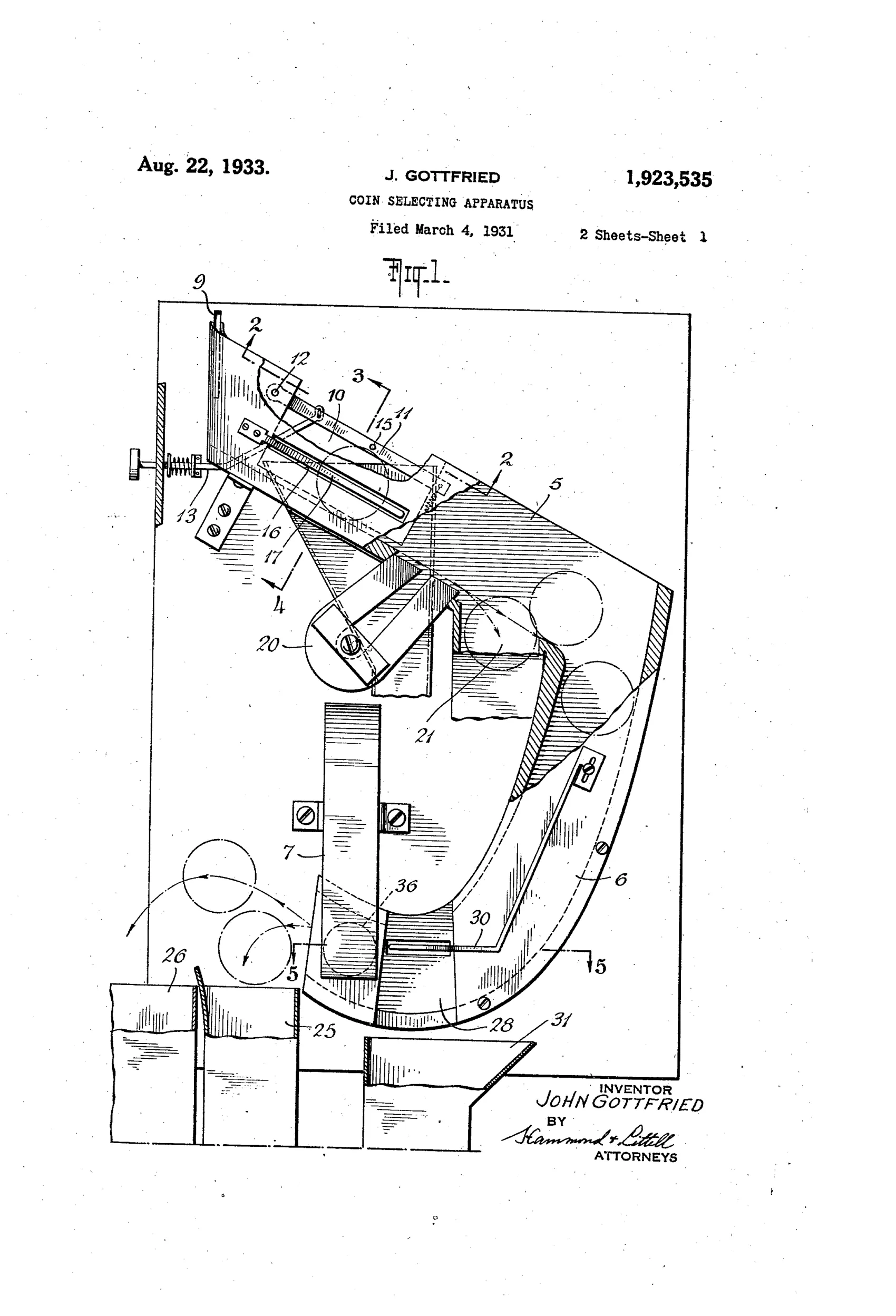
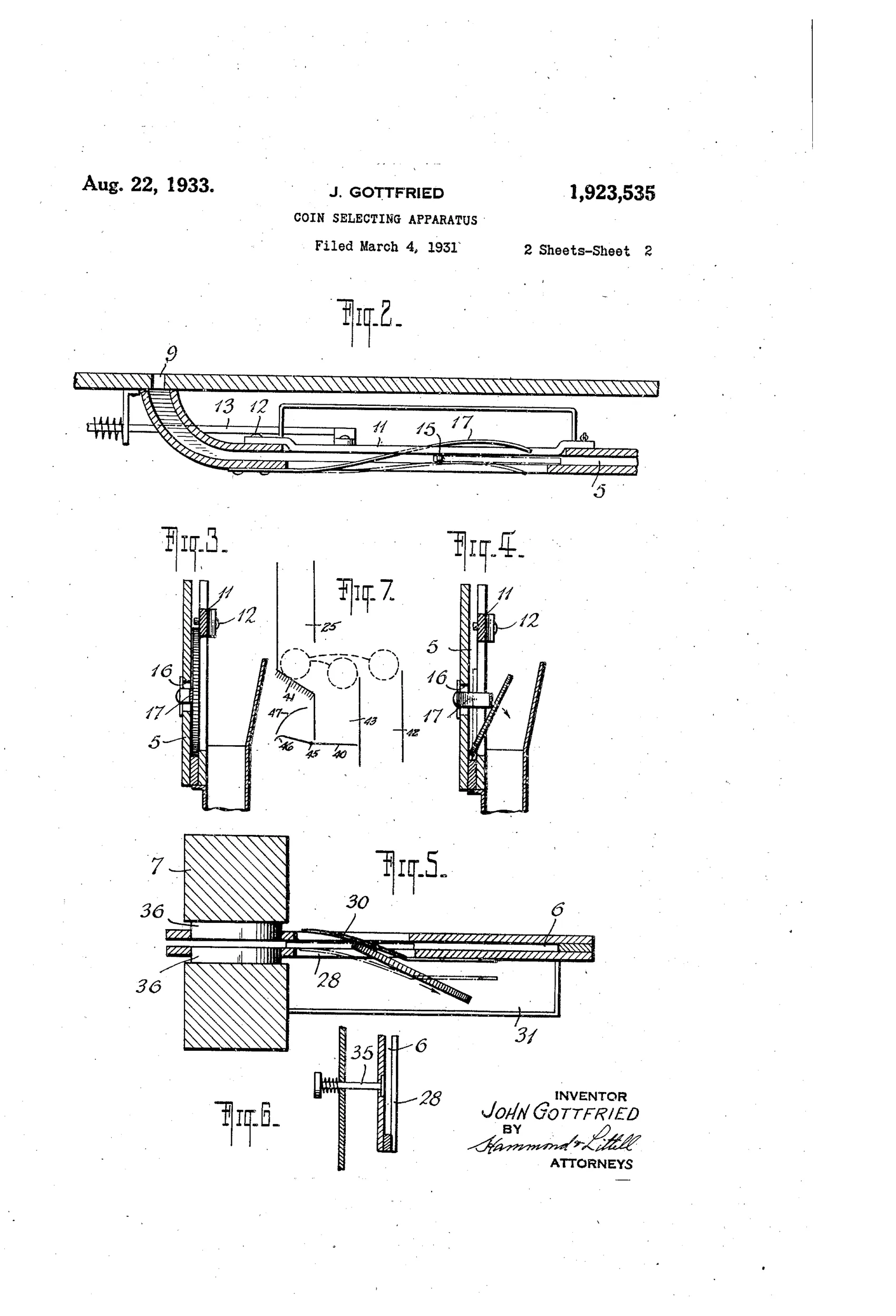
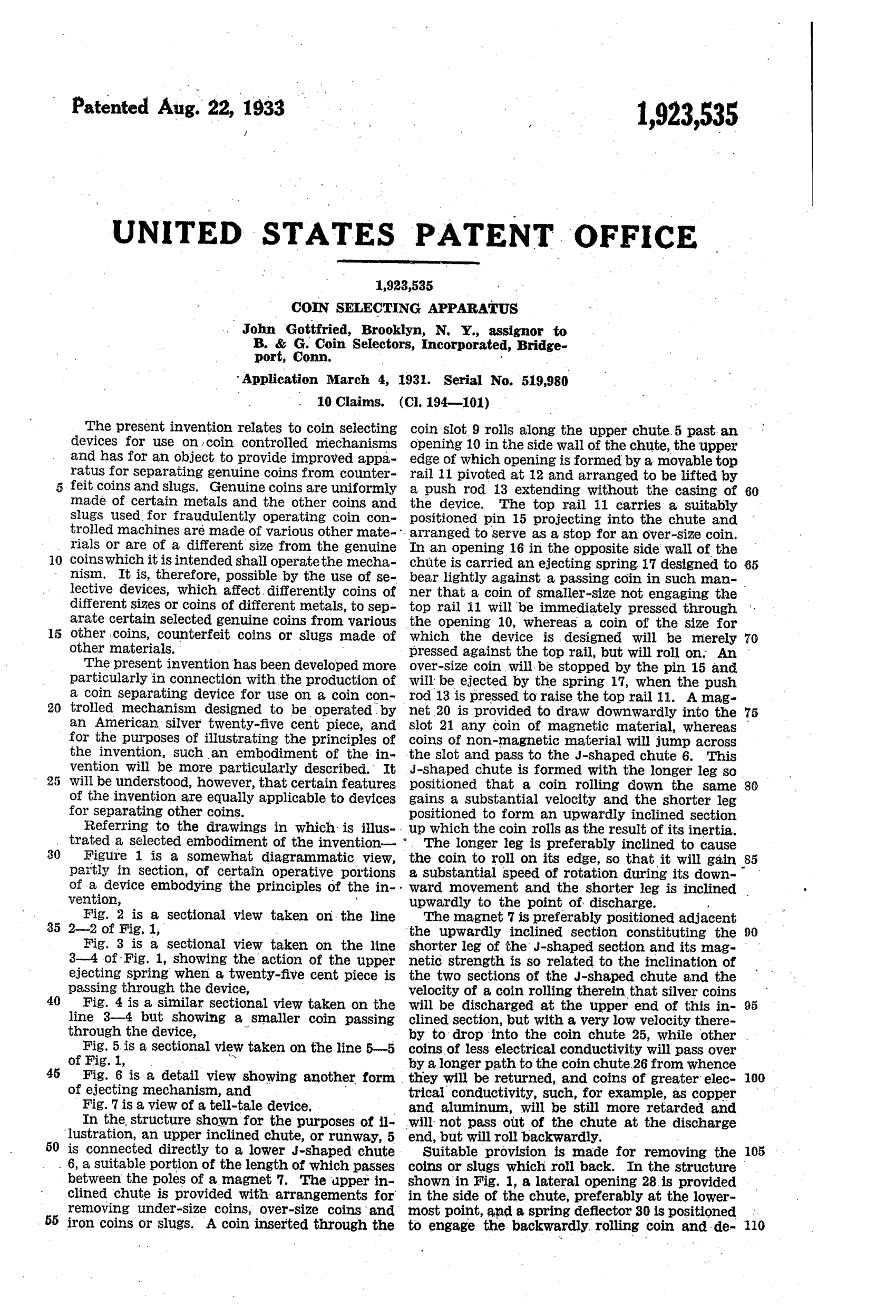
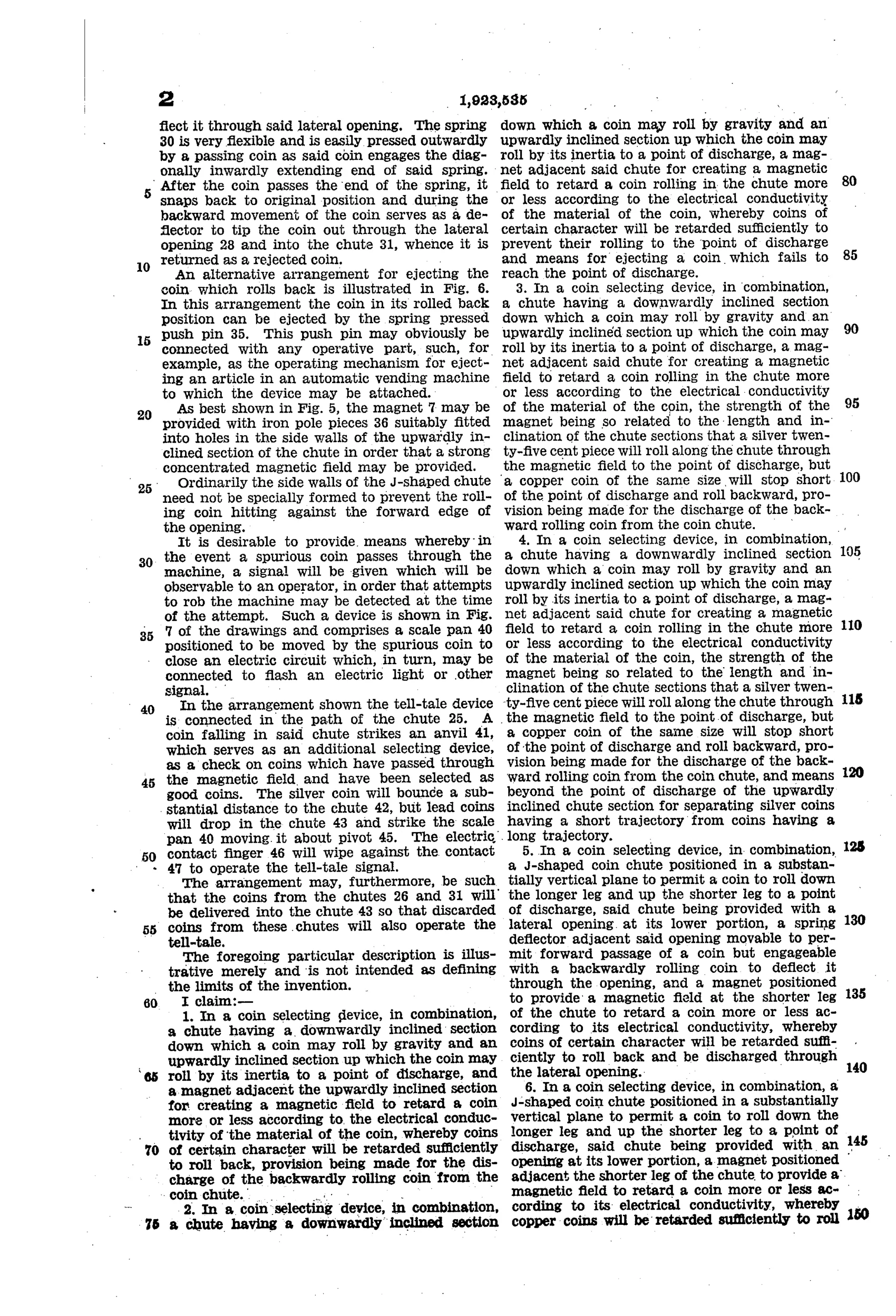
Coin-sorting chute using size, magnetism, and conductivity
◉ How it works
A coin dropped in the slot rolls along an upper inclined chute past a movable top rail and a spring that ejects undersized coins and stops oversized coins with a pin for manual ejection. A magnet beneath the chute pulls down any magnetic (iron) coins or slugs into a slot, letting only non-magnetic coins jump across to a lower J-shaped chute. In the J-shaped chute, the coin rolls down a longer leg by gravity, gaining speed and rotation, then up a shorter, upwardly inclined leg by inertia, passing through a magnetic field created by a second magnet whose strength is tuned so genuine silver coins retain enough velocity to reach the discharge point while coins of higher electrical conductivity (like copper) are retarded by induced eddy currents and roll backward. Backward-rolling rejected coins are ejected through a lateral opening by a spring deflector or push pin into a separate return chute, and an optional tell-tale device with a scale pan and electrical contacts signals when a spurious coin has been detected.
◉ What was claimed
“6. In a coin selecting device, in combination, a J-shaped coin chute positioned in a substantially vertical plane to permit a coin to roll down the longer leg and up the shorter leg to a point of discharge, said chute being provided with an opening at its lower portion, a magnet positioned adjacent the shorter leg of the chute to provide a magnetic field to retard a coin more or less according to its electrical conductivity, whereby copper coins will be retarded sufficiently to roll back before reaching the point of discharge and means for ejecting a rolled back coin through said opening.”
In plain English: A vertical J-shaped chute lets a coin roll down one leg and up a shorter leg past a magnet; the magnetic drag slows conductive coins like copper enough that they roll back and get ejected through a side opening, while the intended coin (e.g., silver) passes through to be discharged.
◉ In the inventor’s words
“Genuine coins are uniformly made of certain metals and the other coins and slugs used for fraudulently operating coin controlled machines are made of various other materials or are of a different size from the genuine coins which it is intended shall operate the mechanism.”— John Gottfried, from the specification
Fate unknown
Assignment to B. & G. Coin Selectors, Inc. suggests commercial intent, but no marked production example of this specific design is documented; a surviving rejector unit traceable to the firm would settle it.
◉ More by John Gottfried
- COIN SELECTING APPARATUS (1933)
- COIN SELECTOR (1937)
- COIN SELECTOR (1944)
- APPARATUS FOR REJECTING APERTURED COINS (1955)
◉ Commentary
By 1931 the slug problem had outgrown mechanical gauges. A lead disc can match a quarter's diameter and weight; what it cannot fake is silver's electrical conductivity. Gottfried's answer is the elegant heart of this patent: a J-shaped chute where the coin rolls down the long leg, gathers speed and spin, then climbs the short leg through a magnetic field. A rolling conductor moving through that field generates eddy currents, and the induced drag depends on the metal. The magnet is tuned so a genuine silver coin barely keeps enough momentum to crest the discharge point, while a more conductive copper slug is braked, stalls, and rolls back into a side opening where a spring flicks it into the return chute. No moving parts do the judging — the coin's own metallurgy does.
The drawing rewards a close look. The upper chute stacks the older, cruder tests first: the movable rail and spring at 16-17 spit out undersized coins, a pin traps oversized ones, and the first magnet at 20 simply yanks steel slugs down through a slot. Only survivors reach the J-chute. That layered defense — size, then ferrous, then conductivity — became the standard architecture of every vending machine rejector for the next half-century.
Gottfried didn't invent eddy-current testing alone; several inventors converged on it around this time. But this is a clean, early, complete statement of the idea, filed by a man whose assignee company existed specifically to sell coin selectors. It's the anonymous end of the category's story: no brass rocker for the pocket, just quiet physics inside a machine.
Commentary by Claude, The Counterfeit Coin Detector Patent Archive’s resident enthusiast