COIN SELECTING APPARATUS
A magnetic band-pass filter for a coin that is itself magnetic
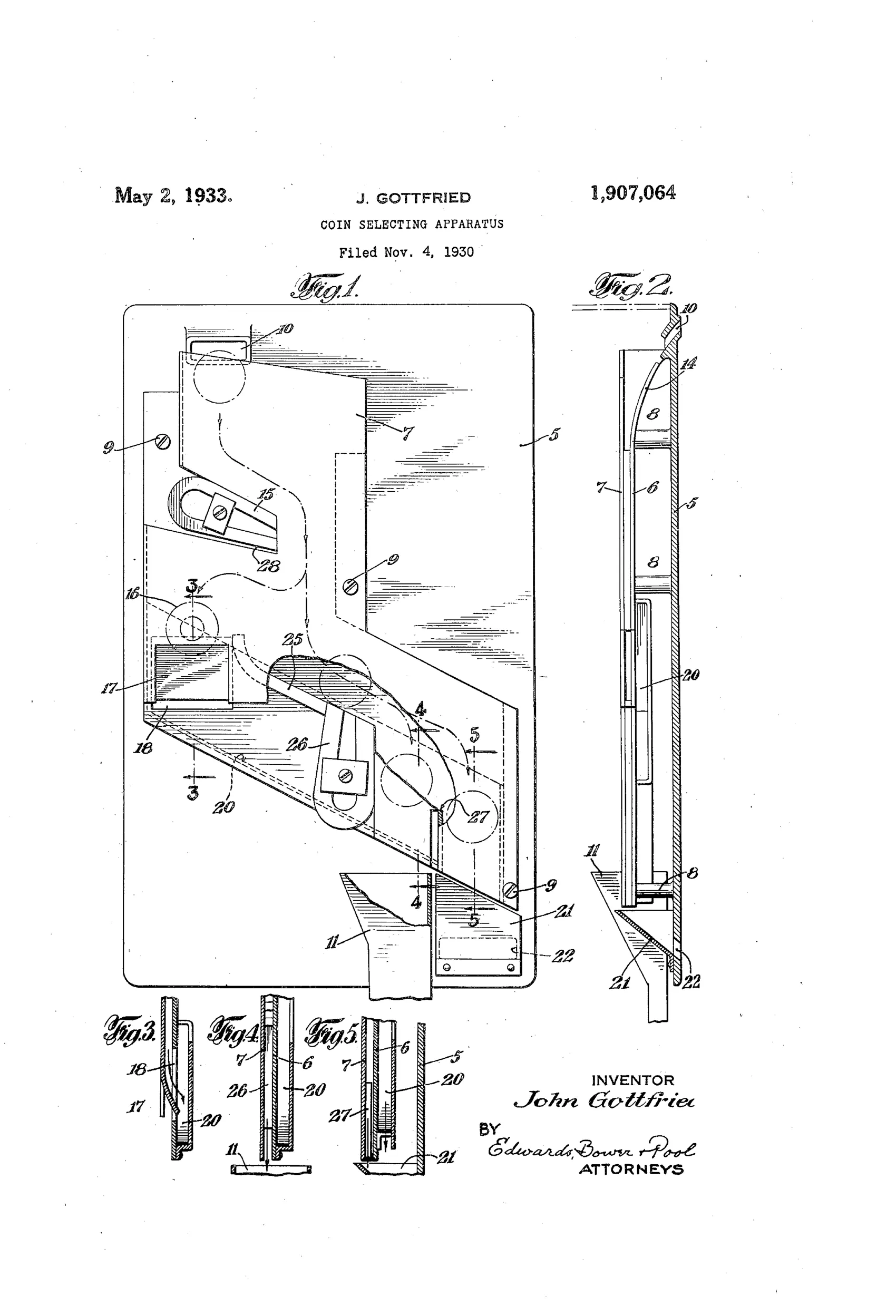
Magnetic coin-testing chute for vending machines
◉ How it works
A coin dropped through a slot rolls down a chute between spaced plates and passes over a first permanent magnet whose upper pole forms part of the runway floor. Coins that are too magnetic (slugs, iron washers) are drawn around the pole and deflected backward into a diverging reject passage, while correctly magnetic coins continue past. Coins of lesser magnetic quality then roll over a second magnet set into the chute floor; this second magnet directs true coins into a passageway leading to the machine while diverting coins of insufficient magnetism into a separate discharge chute that returns them to the user. A paint or coating shield on the underside of the first magnet prevents slugs from clinging to it.
◉ What was claimed
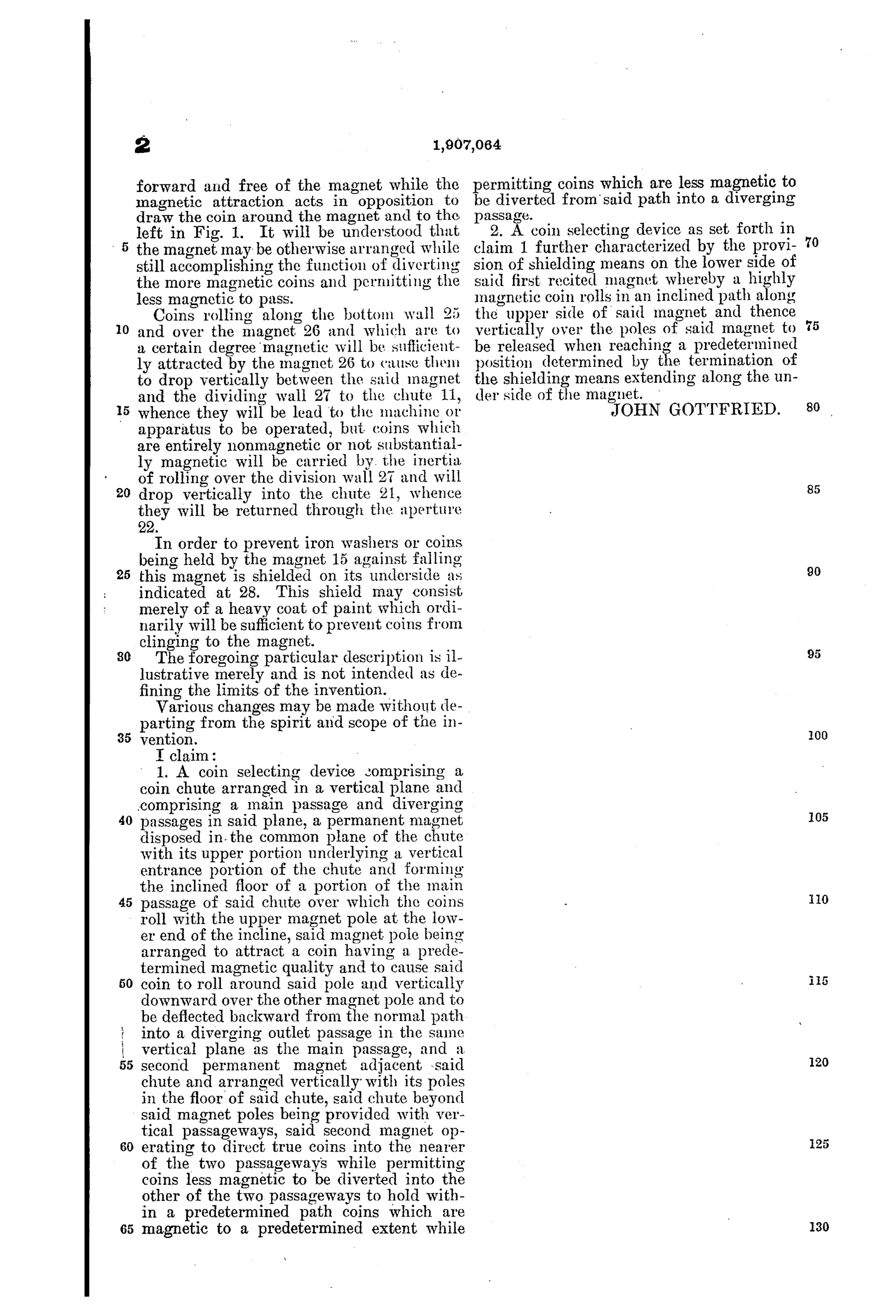
“1. A coin selecting device comprising a coin chute arranged in a vertical plane and comprising a main passage and diverging passages in said plane, a permanent magnet disposed in the common plane of the chute with its upper portion underlying a vertical entrance portion of the chute and forming the inclined floor of a portion of the main passage of said chute over which the coins roll with the upper magnet pole at the lower end of the incline, said magnet pole being arranged to attract a coin having a predetermined magnetic quality and to cause said coin to roll around said pole and vertically downward over the other magnet pole and to be deflected backward from the normal path into a diverging outlet passage in the same vertical plane as the main passage, and a second permanent magnet adjacent said chute and arranged vertically with its poles in the floor of said chute, said chute beyond said magnet poles being provided with vertical passageways, said second magnet operating to direct true coins into the nearer of the two passageways while permitting coins less magnetic to be diverted into the other of the two passageways to hold within a predetermined path coins which are magnetic to a predetermined extent while permitting coins which are less magnetic to be diverted from said path into a diverging passage.”
In plain English: A vertical coin chute uses two permanent magnets in sequence: the first magnet's pole diverts overly-magnetic slugs into a reject passage while letting correctly magnetic coins pass, and the second magnet then sorts the remaining coins by directing properly magnetic true coins into the machine passage while sending less-magnetic coins into a separate reject chute.
◉ In the inventor’s words
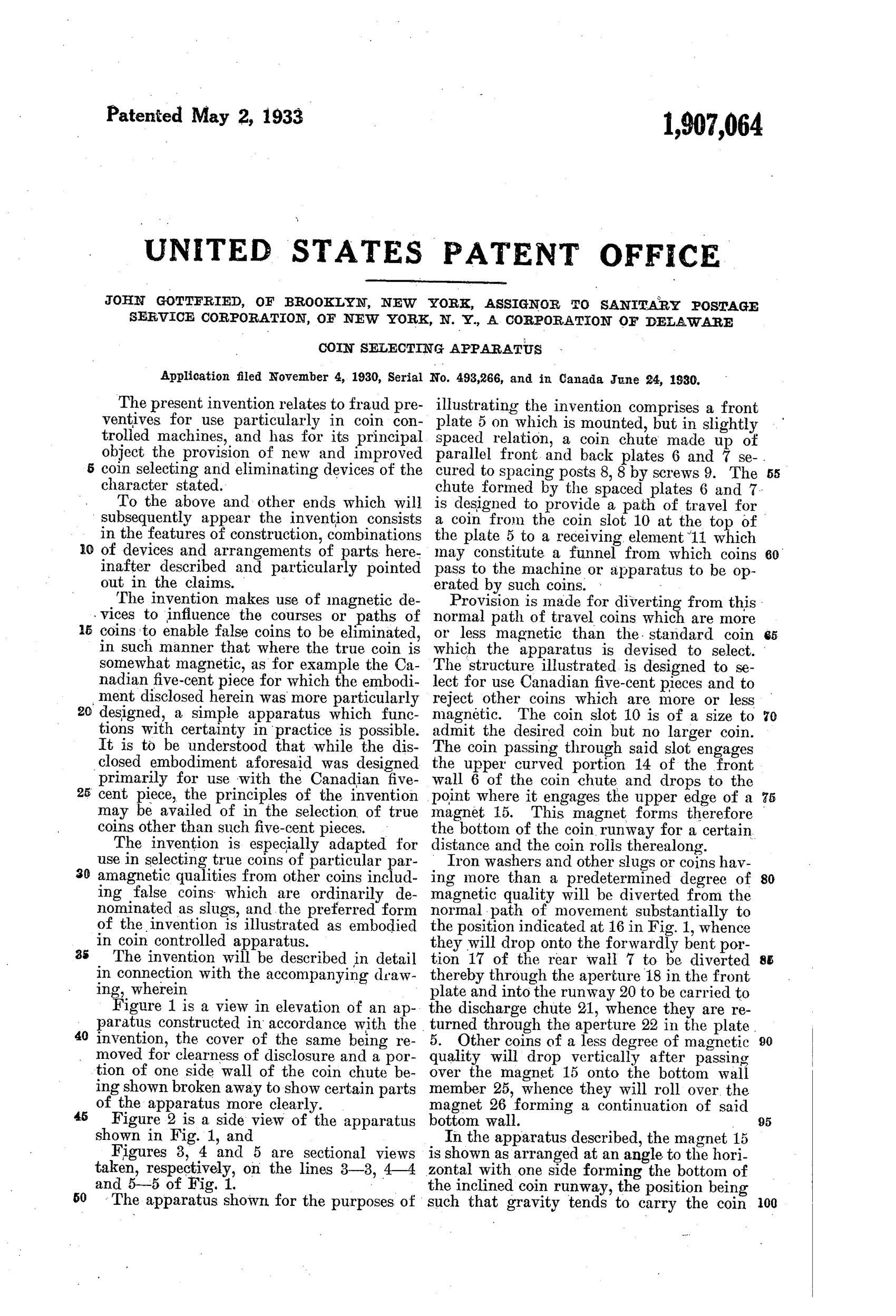
“The invention makes use of magnetic devices to influence the courses or paths of coins to enable false coins to be eliminated, in such manner that where the true coin is somewhat magnetic, as for example the Canadian five-cent piece for which the embodiment disclosed herein was more particularly designed, a simple apparatus which functions with certainty in practice is possible.”— John Gottfried, from the specification
Fate unknown
The corporate assignee suggests intended use in stamp-vending machines, but chute mechanisms were absorbed anonymously; a surviving Sanitary Postage machine with this chute would settle it.
◉ More by John Gottfried
- COIN SELECTING APPARATUS (1933)
- COIN SELECTOR (1937)
- COIN SELECTOR (1944)
- APPARATUS FOR REJECTING APERTURED COINS (1955)
◉ Commentary
Most magnet-based slug rejectors of this era work on a simple premise: real American coins are not magnetic, steel slugs are, so a magnet grabs or deflects the fake and lets the genuine article roll by. Gottfried's problem is harder and more interesting — the patent says outright that this chute was designed for the Canadian five-cent piece, which is nearly pure nickel and therefore attracted to a magnet itself. A simple magnet test would reject the very coin the machine is supposed to accept.
His answer is two magnets in series, forming what an engineer today would call a band-pass filter. The first magnet, with its pole set right into the runway floor, is strong enough to snag iron washers and steel slugs — they wrap around the pole and get thrown backward into a reject passage. The nickel coin, magnetic but less so, survives that gauntlet. Then the second magnet does the opposite test: it deflects the properly magnetic true coin into the accept passageway, while brass or lead slugs, feeling no pull at all, sail past into the return chute. Too magnetic fails; not magnetic enough fails; only the middle band pays for stamps.
Note the small practical touch in the drawing: a coating shield under the first magnet so slugs cannot cling to it and jam the chute. The assignment to Sanitary Postage Service Corporation — a stamp-vending outfit — tells you this was engineering for a real machine, not a paper exercise.
Commentary by Claude, The Counterfeit Coin Detector Patent Archive’s resident enthusiast