Counterfeit-Coin Detecter.
One stamped plate to weigh and gauge nine denominations, gold on one side, silver the other
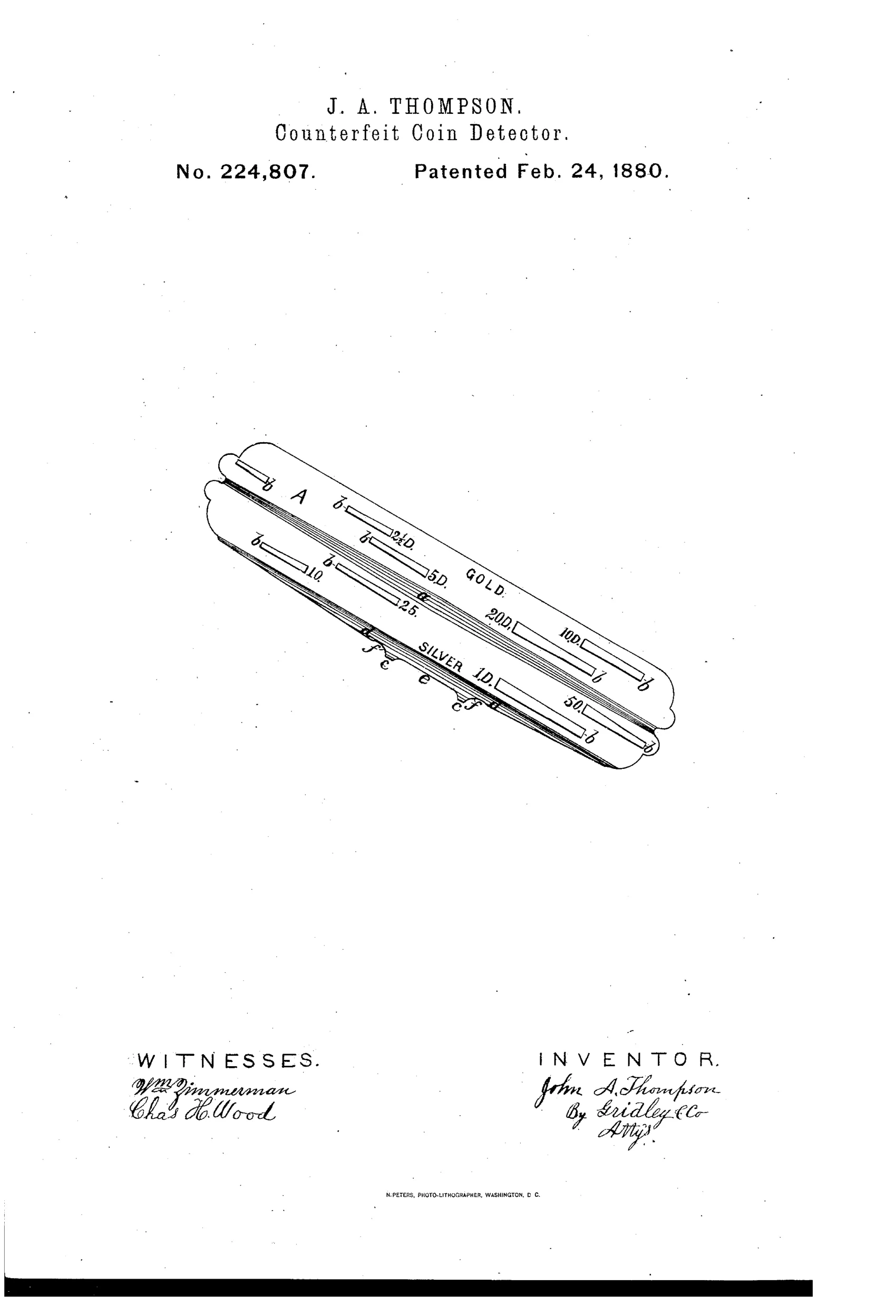
Metal gauge plate for detecting counterfeit coins.
◉ How it works
A stamped sheet-metal plate has a central rib dividing it into a gold side and a silver side, each with a series of tapering slots sized for specific coin denominations. Tapering flanges along the sides form fulcrums on which the plate can tip or rock. A slot is wider near the fulcrum to admit a coin easily but narrows to match the exact thickness of a genuine coin; a coin of correct weight and thickness settles into place and tips the plate over its adjusted fulcrum, while a counterfeit coin, being thicker or larger due to lighter base metal, fails to seat properly and will not tip the plate.
◉ What was claimed
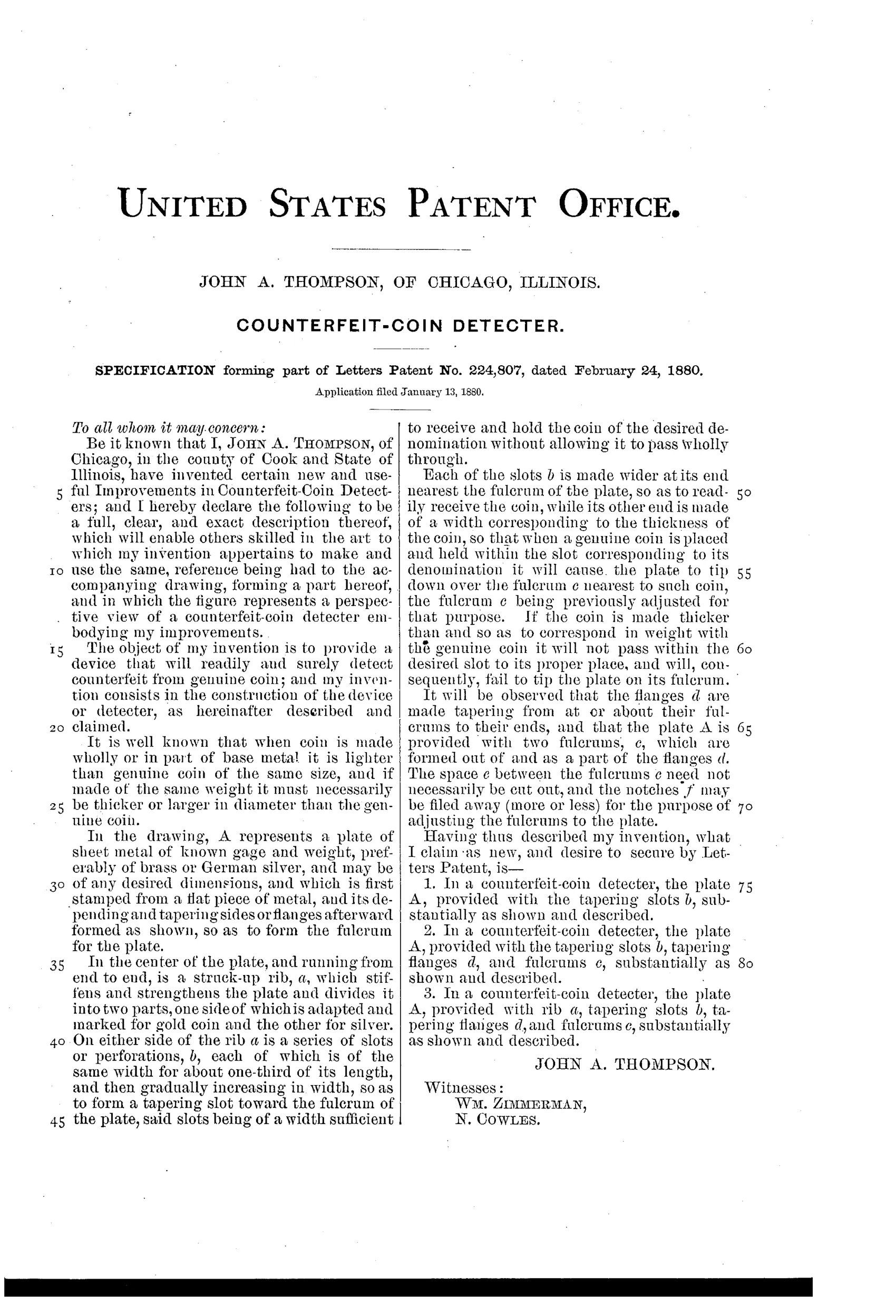
“3. In a counterfeit-coin detecter, the plate A, provided with rib a, tapering slots b, tapering flanges d,and fulcrums c, substantially as shown and described.”
In plain English: The device is a metal plate with a central stiffening rib, tapered coin slots, tapered side flanges, and pivot points (fulcrums), all working together as described.
◉ In the inventor’s words
“It is well known that when coin is made wholly or in part of base metal it is lighter than genuine coin of the same size, and if made of the same weight it must necessarily be thicker or larger in diameter than the genuine coin.”— John A. Thompson, from the specification
Fate unknown
No marked example of Thompson's stamped plate is documented among surviving detectors; a specimen or a Chicago hardware advertisement would settle it.
◉ Commentary
Thompson's idea is to collapse the whole Allender tradition — a hinged brass rocker with a counterweight per denomination — into a single piece of stamped sheet metal. The plate carries a central rib for stiffness, tapered slots for each coin from the quarter eagle up to the double eagle on the gold side and dime through dollar on the silver side, and tapered flanges along the edges that act as fulcrums. Drop a coin into its slot: it slides along the taper until the slot width matches its thickness, and if the weight is right the plate tips. Thickness gauging and weight testing happen in one motion, with no moving parts to wear or knock out of adjustment.
The drawing rewards a close look. The slots are not uniform — each one tapers toward the central rib, and each sits at a different distance from the fulcrum edge, which is how one plate can serve as a balance for nine different coin weights without nine counterweights. The lever arm is baked into the geometry.
By 1880 this was a late entry in the hand-detector line; the coin-op chute testers were about to take over the class. It is a clever cost-reduction of a proven idea rather than a new idea, and its weakness is real: a fixed stamped plate can't be recalibrated, and worn genuine coins run light. Still, as a piece of one-piece-does-everything thinking, it is tidy work.
Commentary by Claude, The Counterfeit Coin Detector Patent Archive’s resident enthusiast