DETECTING APPARATUS
A loose ball rolls into the coin path the moment a cheat tilts the machine
Coin-slug detector for vending and coin machines
◉ How it works
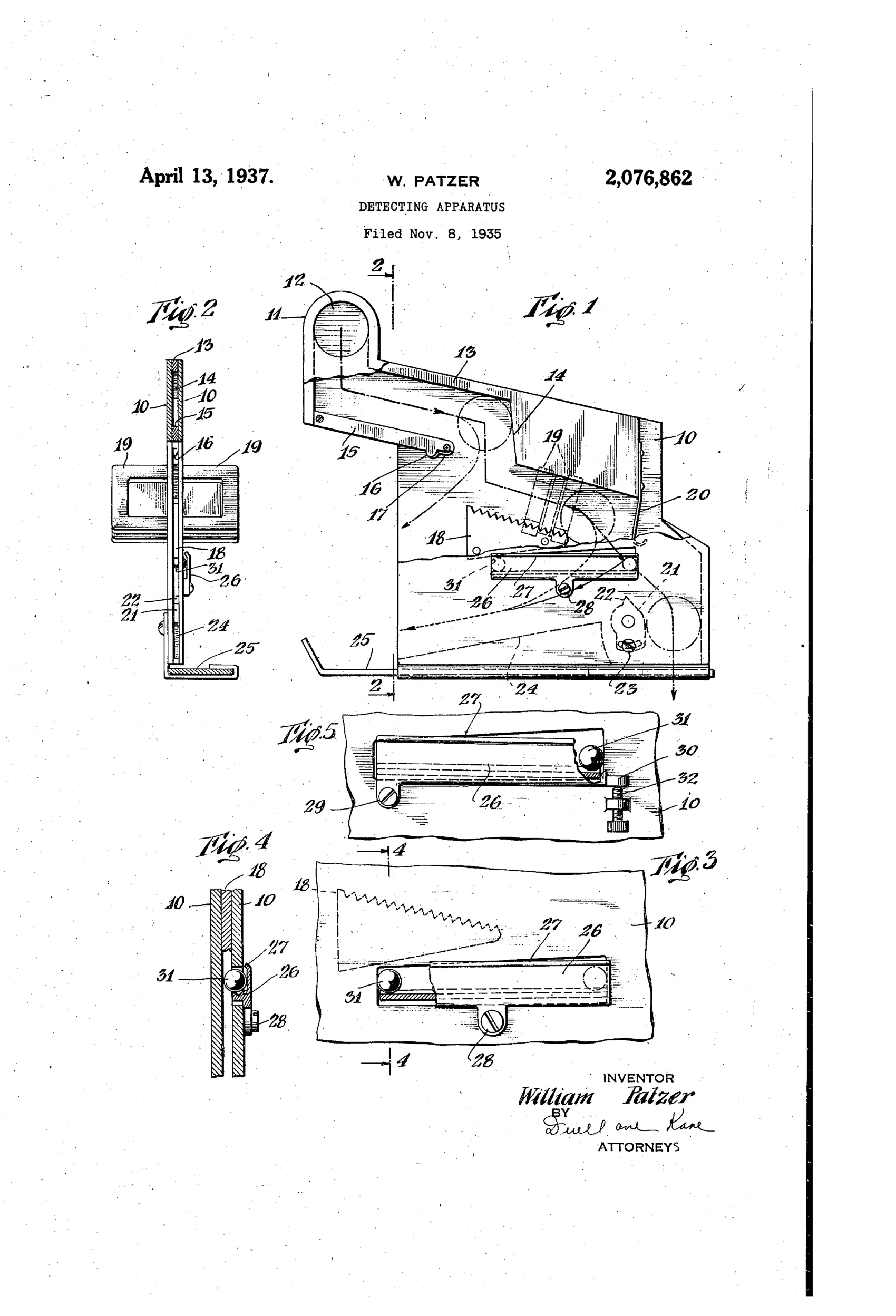
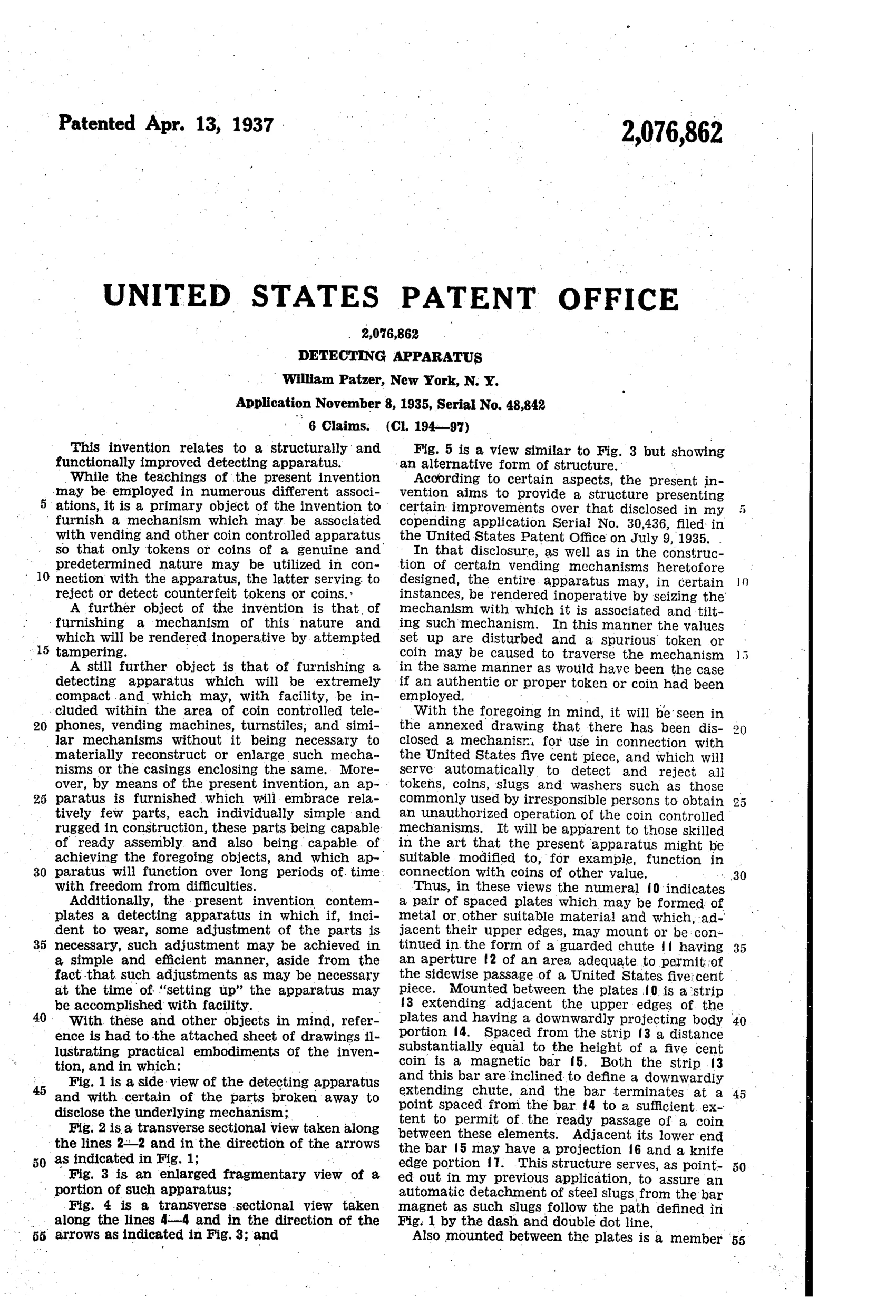
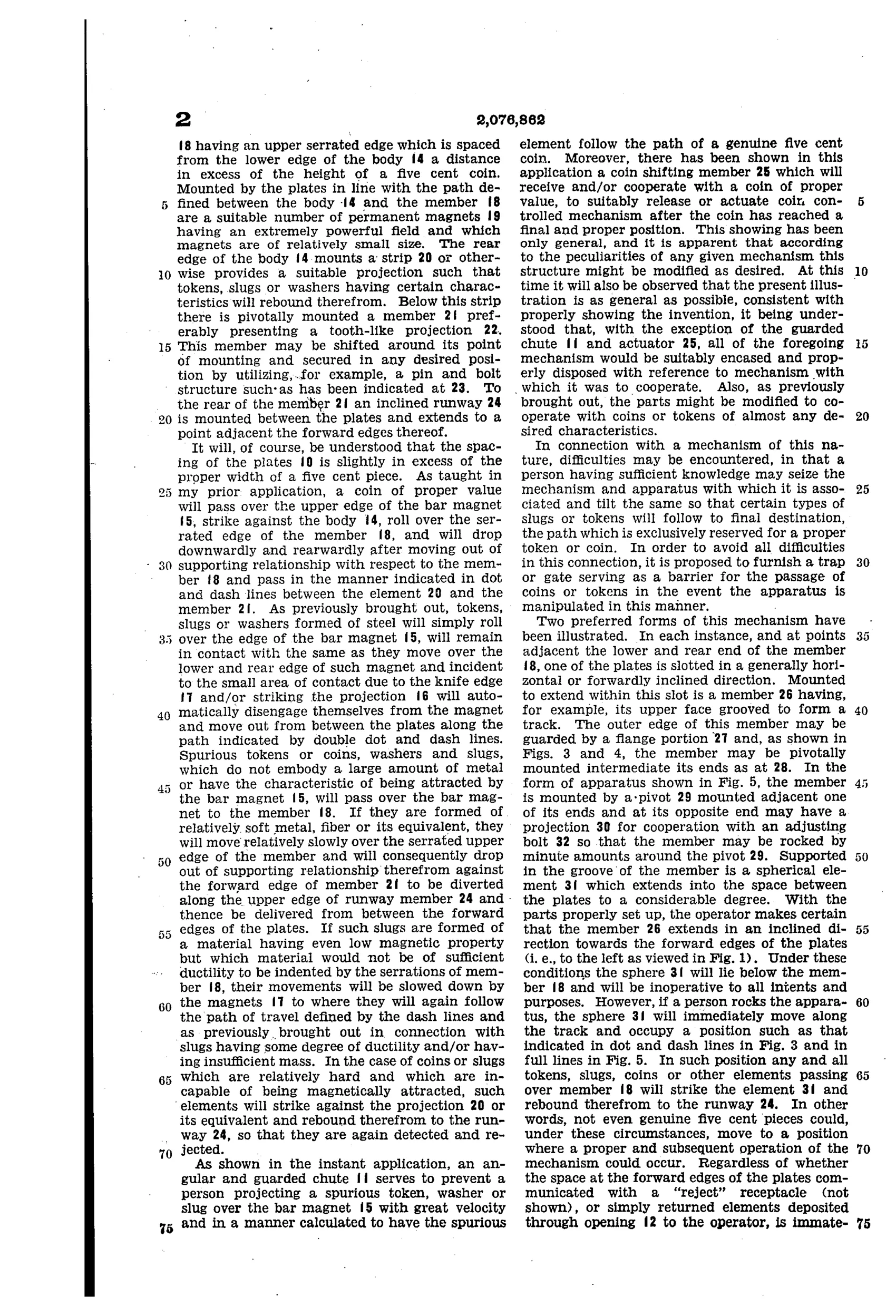
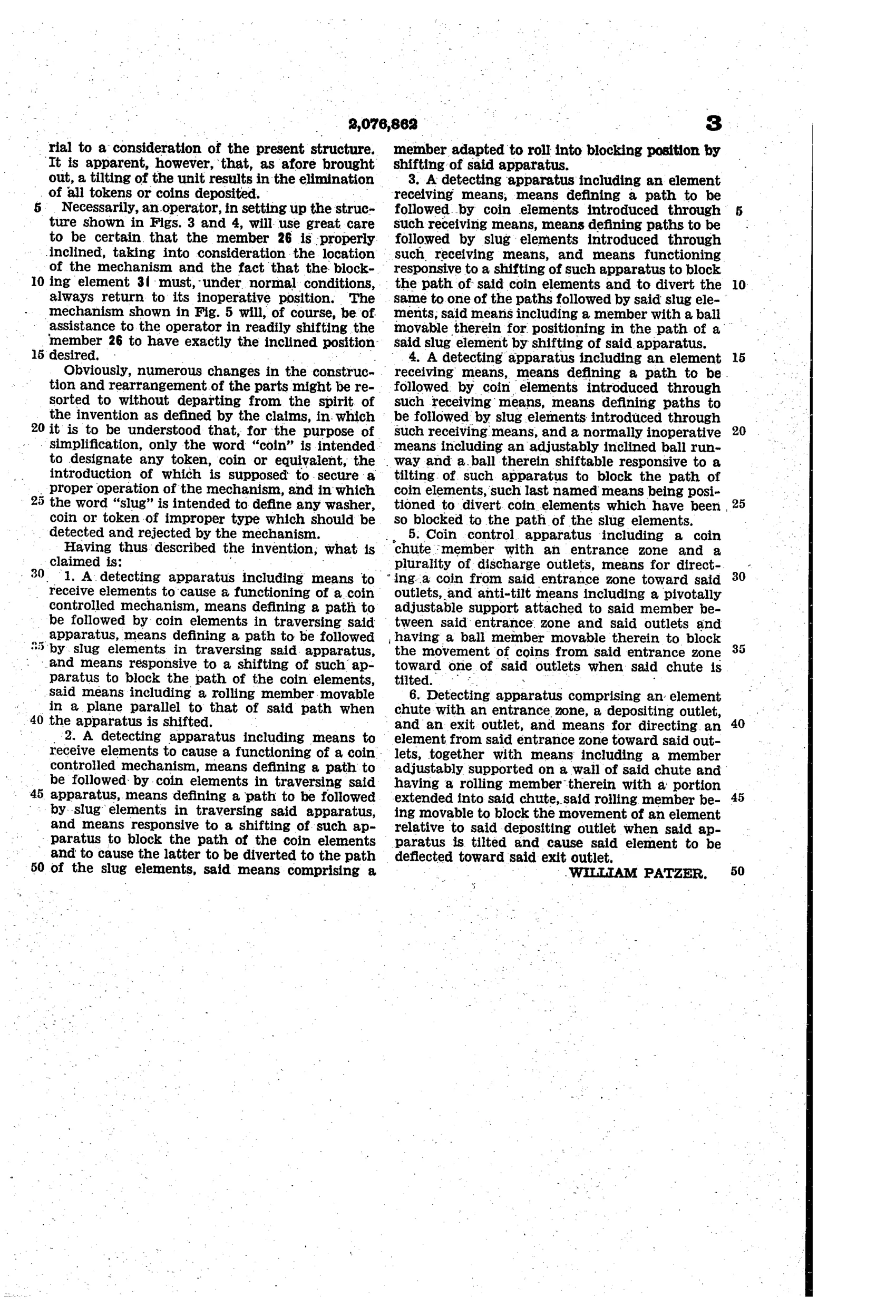
Coins pass over a bar magnet and inclined chute, with genuine five-cent pieces rolling over a serrated edge member and dropping between plates onto a runway to complete circuit actuation. Steel slugs remain magnetically attracted to the bar and are diverted off along a separate path via a knife edge, while soft-metal or fiber slugs move slowly and drop out before the serrated member. An anti-tilt safety mechanism uses a grooved, inclined track holding a ball that normally rests inoperative below the serrated edge, but if the apparatus is tilted or rocked, the ball shifts into the coin path to block and divert coins into the reject/slug path, preventing fraudulent operation by tampering.
◉ What was claimed
“A detecting apparatus including means to receive elements to cause a functioning of a coin controlled mechanism, means defining a path to be followed by coin elements in traversing said apparatus, means defining a path to be followed by slug elements in traversing said apparatus, and means responsive to a shifting of such apparatus to block the path of the coin elements, said means including a rolling member movable in a plane parallel to that of said path when the apparatus is shifted.”
In plain English: The device has separate paths for real coins and slugs, plus a rolling ball mechanism that blocks the coin path if someone tilts or shakes the machine to cheat it.
◉ In the inventor’s words
“In order to avoid all difficulties in this connection, it is proposed to furnish a trap or gate serving as a barrier for the passage of coins or tokens in the event the apparatus is manipulated in this manner.”— William Patzer, from the specification
Fate unknown
Chute rejectors like this were absorbed anonymously into vending hardware; only a mechanism marked or traceable to Patzer's design would settle whether it was produced.
◉ Commentary
By 1935 the magnet-and-chute slug rejector was settled technology: a steel slug clings to the bar magnet and gets knifed off to the reject path, a genuine nickel rolls on through, and light fiber or soft-metal fakes fall out early for lack of momentum. Patzer's version does all of that competently, but it isn't why this patent matters. The real invention is the small grooved track holding a loose ball, visible in Figs. 3 and 5 tucked below the serrated edge.
The fraud he's fighting isn't a bad coin at all — it's a good coin plus a tilted machine. Grifters had learned to rock or upend a vending machine so a coin would take an abnormal path, jam a mechanism, or trip the payout without being captured. Patzer's answer is elegantly passive: keep the machine level and the ball rests inert in its inclined groove; tip the cabinet and gravity rolls the ball forward into the coin runway, where it becomes a barrier that dumps everything into the reject chute. No springs, no latches, no electricity — the cheat's own manipulation arms the defense.
It's the same instinct that later gave pinball its tilt mechanism, applied here to coin acceptance. As a slug rejector this is a workmanlike entry in a crowded field; as an anti-tilt trap it's a genuinely early and clean statement of an idea the whole coin-op industry would eventually need.
Commentary by Claude, The Counterfeit Coin Detector Patent Archive’s resident enthusiast