DETECTOR
Wurlitzer's jukebox detector reads a coin's engraving with spring-loaded feeler pins
Coin slug/counterfeit detector for vending machines
◉ How it works
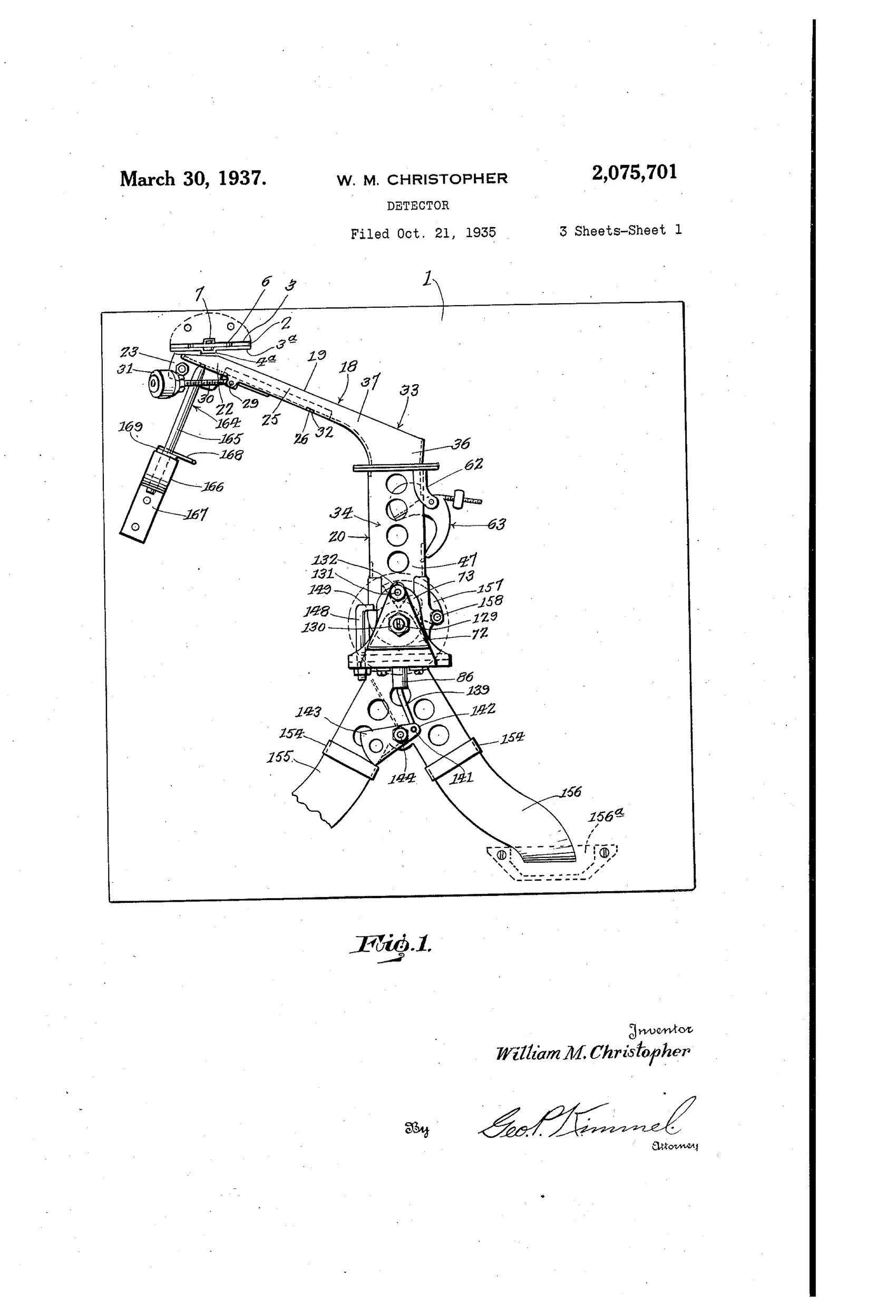
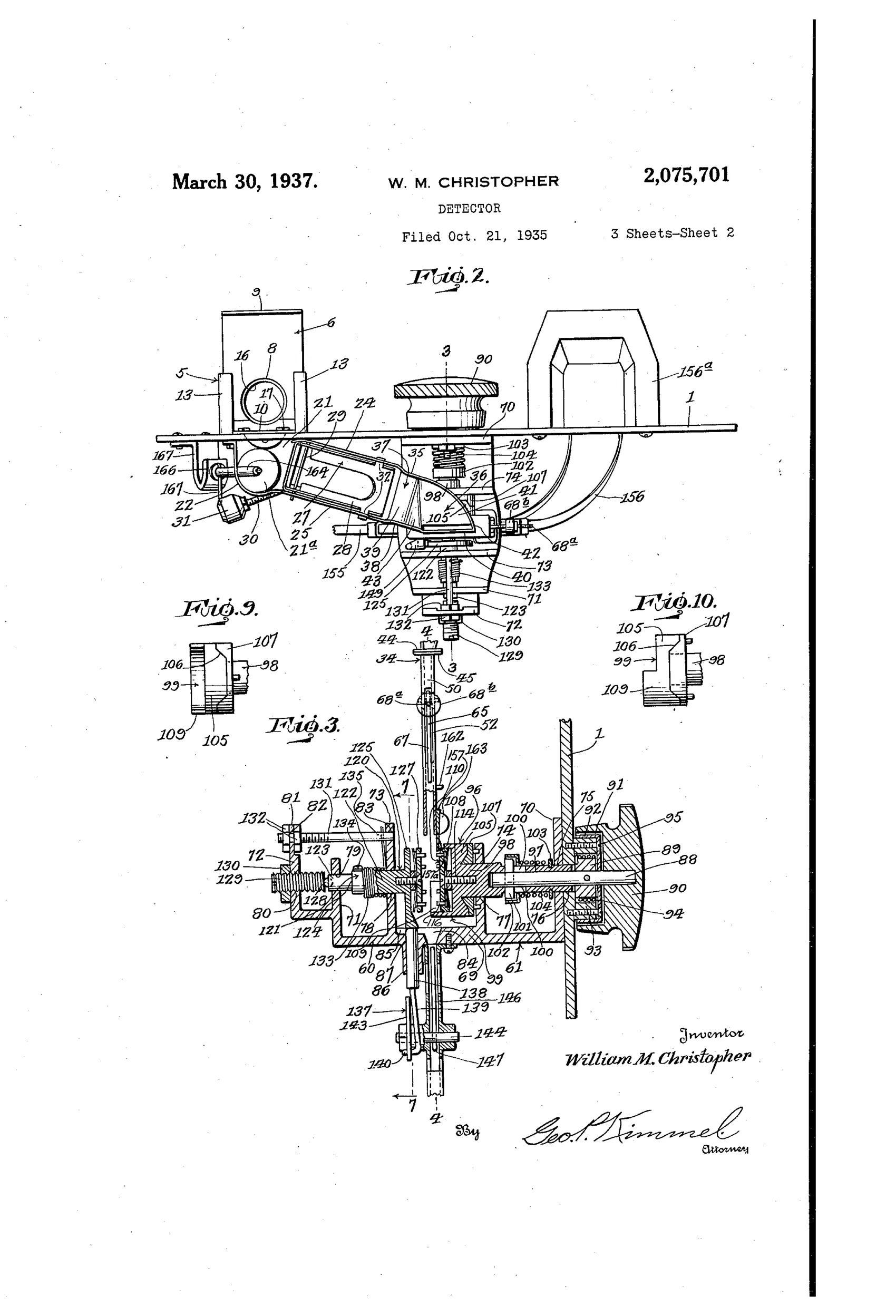
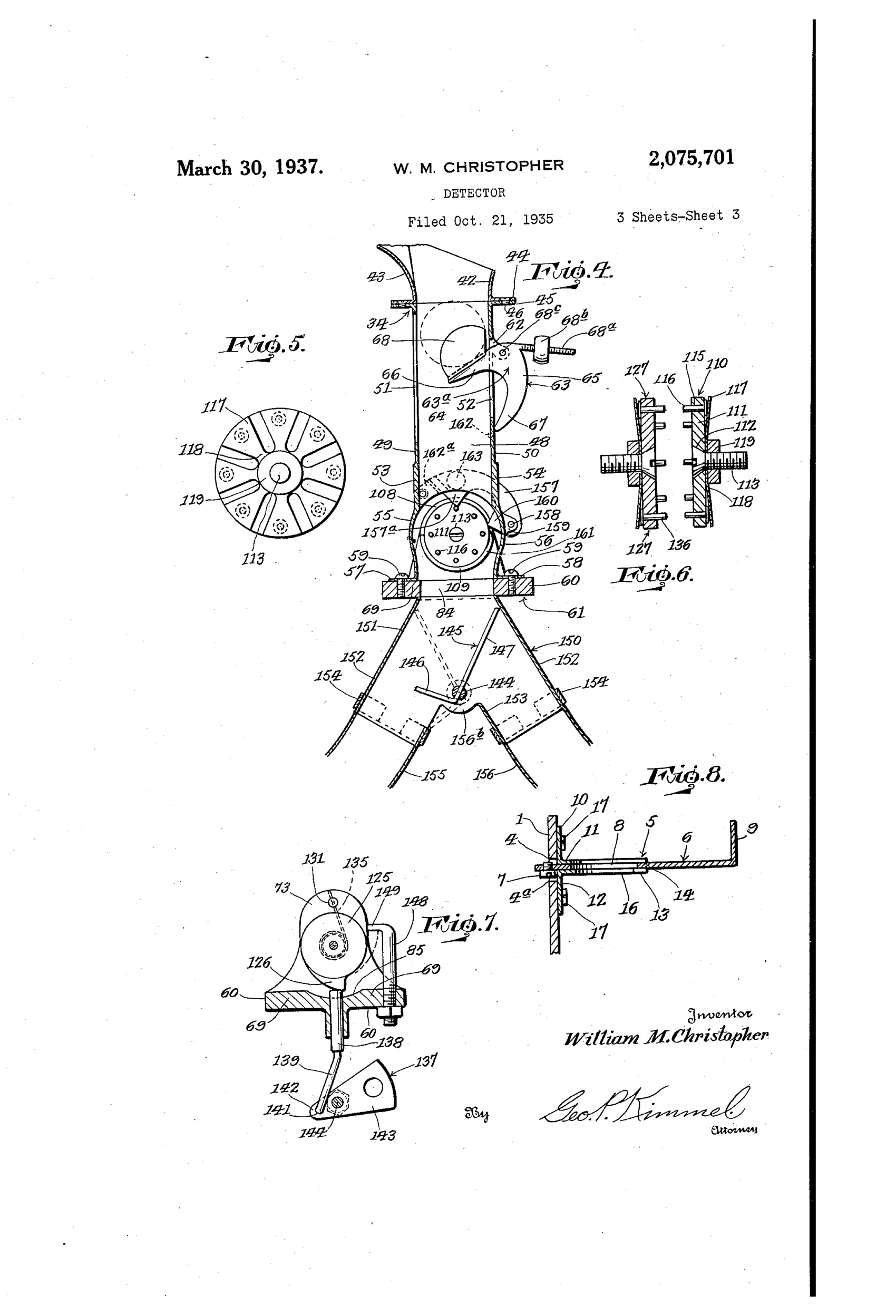
A coin or slug enters through a slide and is directed down a chute where a pivoted weighing pan (element 27) with a counterweight causes overweight substitutions to be dumped before reaching the mechanism. Good coins or matching-weight slugs continue to a combined slug-detecting and coin-directing mechanism featuring slidable and revoluble shaft structures fitted with spring-loaded finder and clutch pins that engage the raised lettering or engraving on genuine coins. When the pins catch on a coin's face configuration, the front and rear shaft structures clutch together and revolve in unison, actuating a cam-operated deflector that opens a passage to the good-coin chute while closing the slug chute. If a slug has smooth, imperforate faces, the pins fail to catch, the structures do not clutch, and the slug is discharged through the alternate chute leading to a reject receiver. An additional rod detector catches annuli or apertured slugs that would otherwise pass a solid-coin gauge.
◉ What was claimed
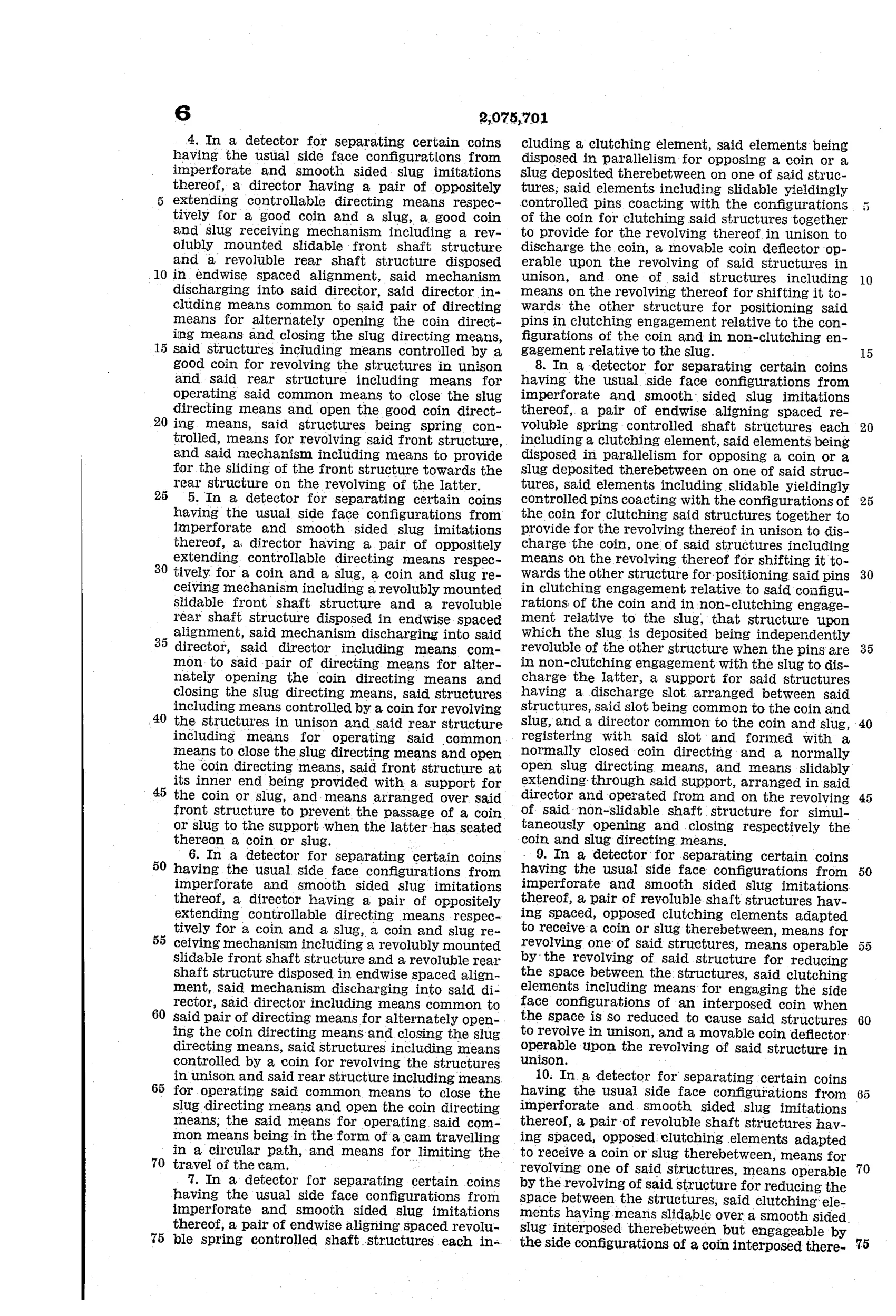
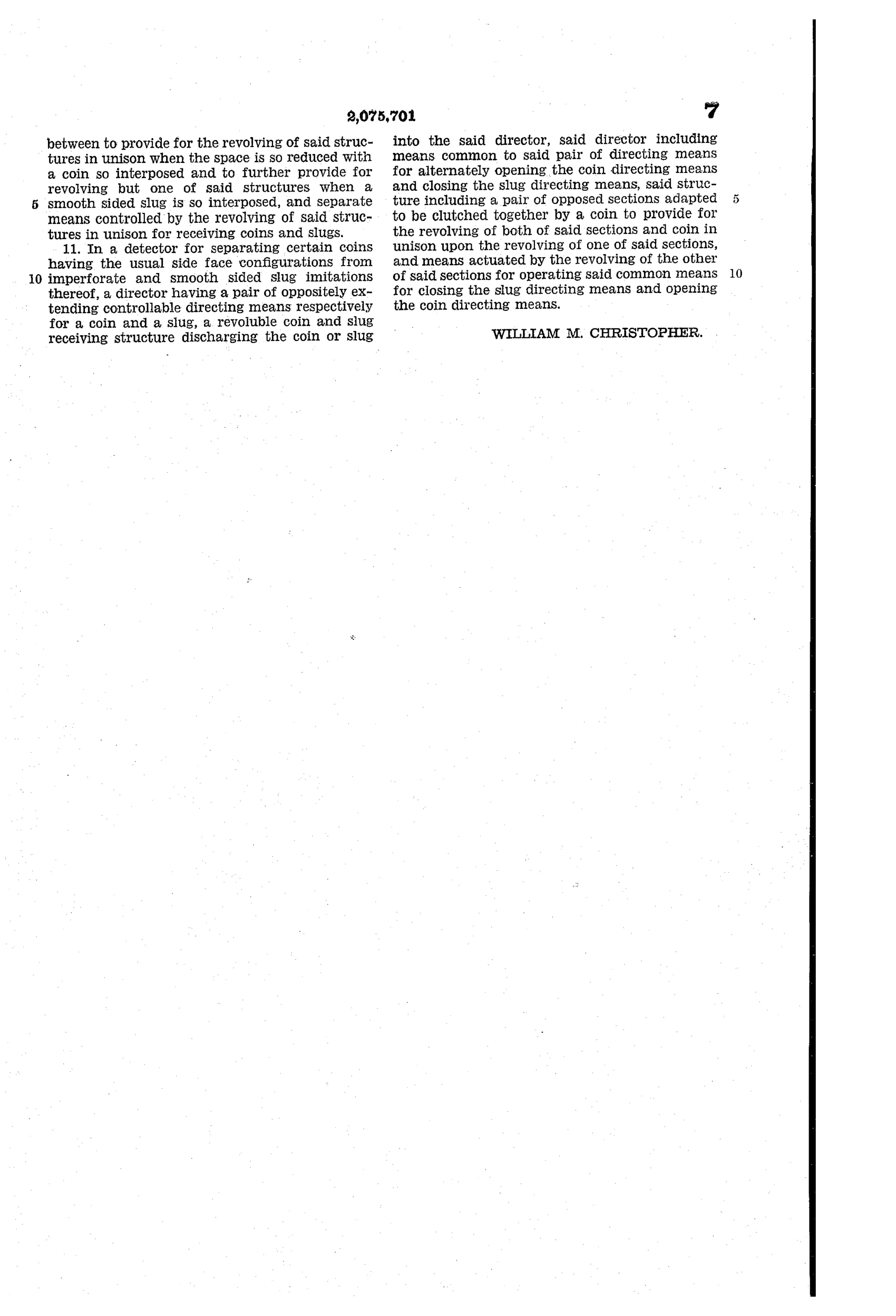
“In a detector for separating certain coins having the usual side face configurations from imperforate and smooth sided slug imitations thereof, a director including a coin directing means, a slug directing means and controllable means common to said directing means for normally closing the coin directing means and normally opening the slug directing means, a coin and slug receiving mechanism arranged over and having a discharge slot opening into said director, said mechanism including a slidable revoluble front shaft structure and a revoluble non-slidable rear shaft structure, said front structure including means, on the revolving thereof in one direction, for dumping a coin or slug into said slot, said structures including means controlled by the configurations of the coin to provide for the revolving thereof in unison, said rear structure including means acting, during the revolving thereof in one direction, upon said controllable means for opening the coin directing means to receive the coin and for closing the slug directing means, means for sliding the front structure in a direction towards the rear structure on the revolving of the front structure, and means for revolving the front structure.”
In plain English: The detector uses two rotating shaft parts that lock together only when a genuine coin's face pattern engages spring-loaded pins, which then opens a chute for good coins and closes the reject chute for slugs.
◉ In the inventor’s words
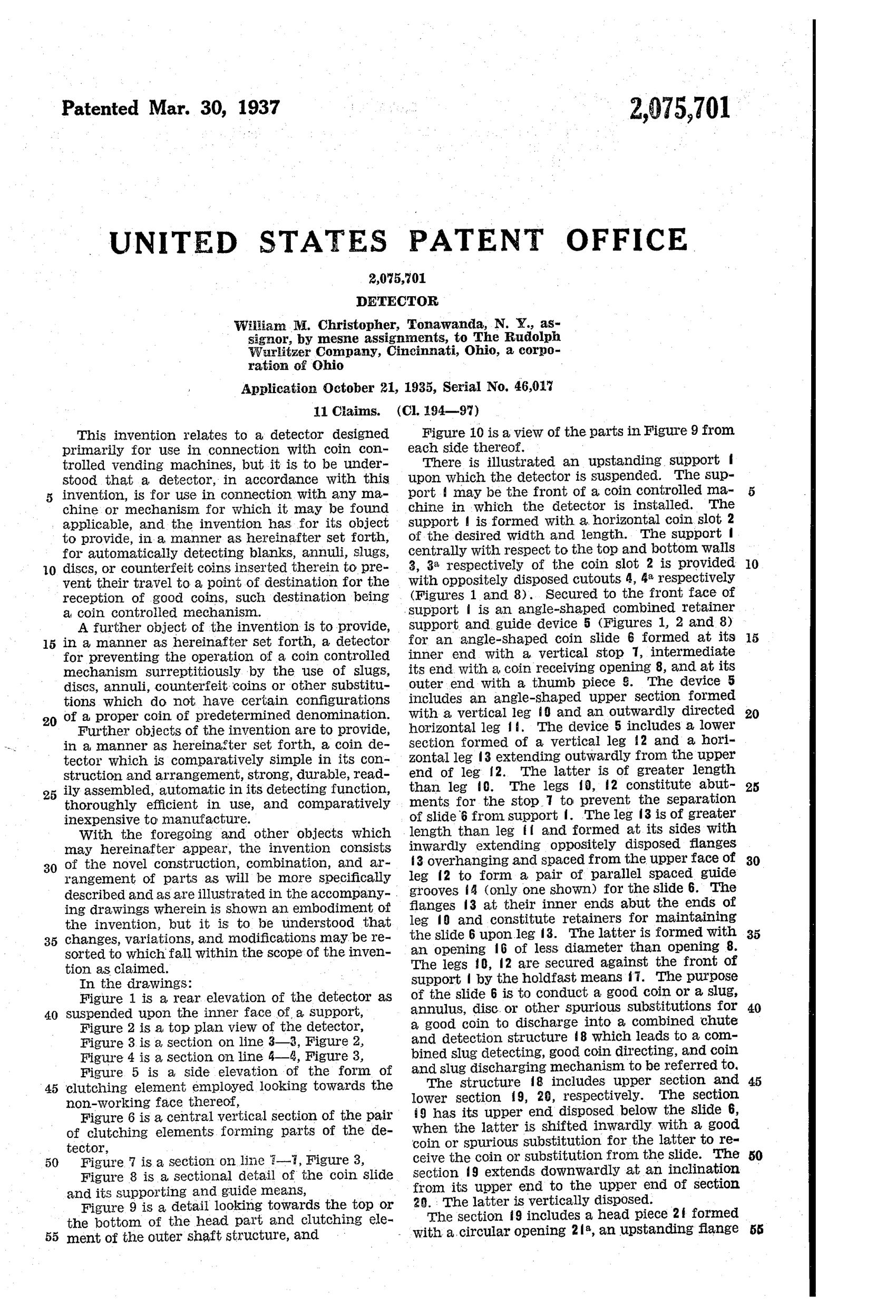
“Further objects of the invention are to provide, in a manner as hereinafter set forth, a coin detector which is comparatively simple in its construction and arrangement, strong, durable, readily assembled, automatic in its detecting function, thoroughly efficient in use, and comparatively inexpensive to manufacture.”— William M. Christopher, from the specification
Fate unknown
Wurlitzer certainly shipped slug rejectors in this era, but whether this pin-clutch design entered production is undocumented; a surviving mechanism matching the drawings would settle it.
◉ Commentary
Most slug rejectors of the 1930s test what a coin is made of — weight, diameter, magnetic response, bounce. Christopher's patent, assigned to Wurlitzer of jukebox fame, tests what a coin looks like. Spring-loaded finder pins press against the coin's face; if they catch on raised lettering or relief, two coaxial shaft structures clutch together and rotate as one, camming open the good-coin chute. A smooth, blank slug gives the pins nothing to grip, the clutch never engages, and the piece drops to the reject chute by default. The fail-safe logic is sound: the machine has to be positively convinced before it accepts anything.
The drawing shows how much apparatus that idea demands — a preliminary counterweighted weighing pan to dump overweight pieces, a separate rod detector to catch washers and holed slugs that a solid-coin gauge would pass, and then the sliding-and-revolving shaft assembly at the heart of it. Ten figures for what a magnet-and-rail rejector does in three parts.
It is a genuine dead-end branch worth studying: engraving-sensing detectors kept appearing because they defeat the classic same-weight, same-size slug, but the pins are exactly the kind of delicate, dirt-sensitive parts that operators hate. The industry settled on magnetic and eddy-current tests instead. Still, as an answer to the specific plague of blank-faced slugs feeding nickel jukeboxes, this is a thoughtful, honest attempt from inside the company that suffered the losses.
Commentary by Claude, The Counterfeit Coin Detector Patent Archive’s resident enthusiast