ART OF TESTING COINS OR OTHER TOKENS FOR GENUINENESS
Testing coins by conductivity in 1929 — with silver-nitrate-treated contacts to foil copper slugs
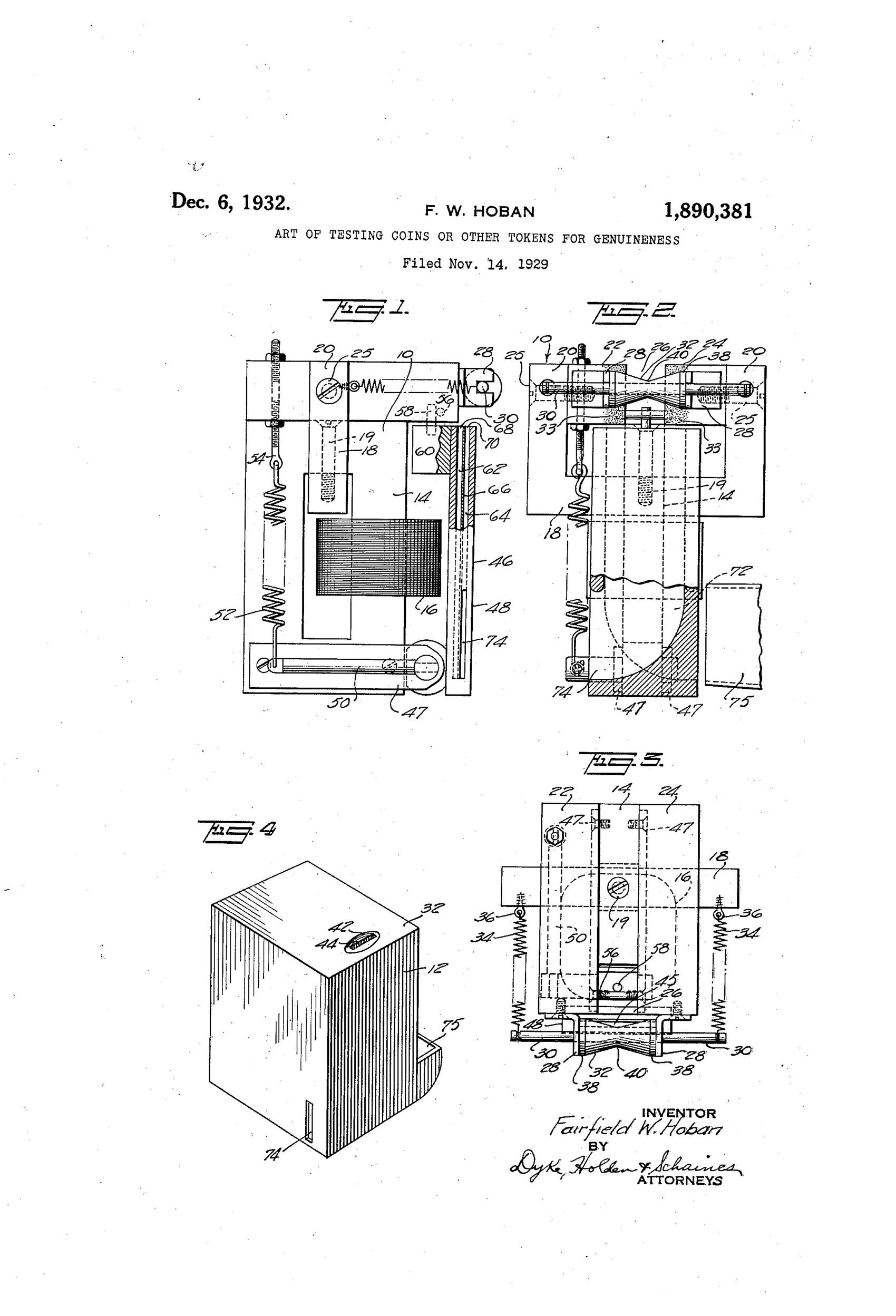
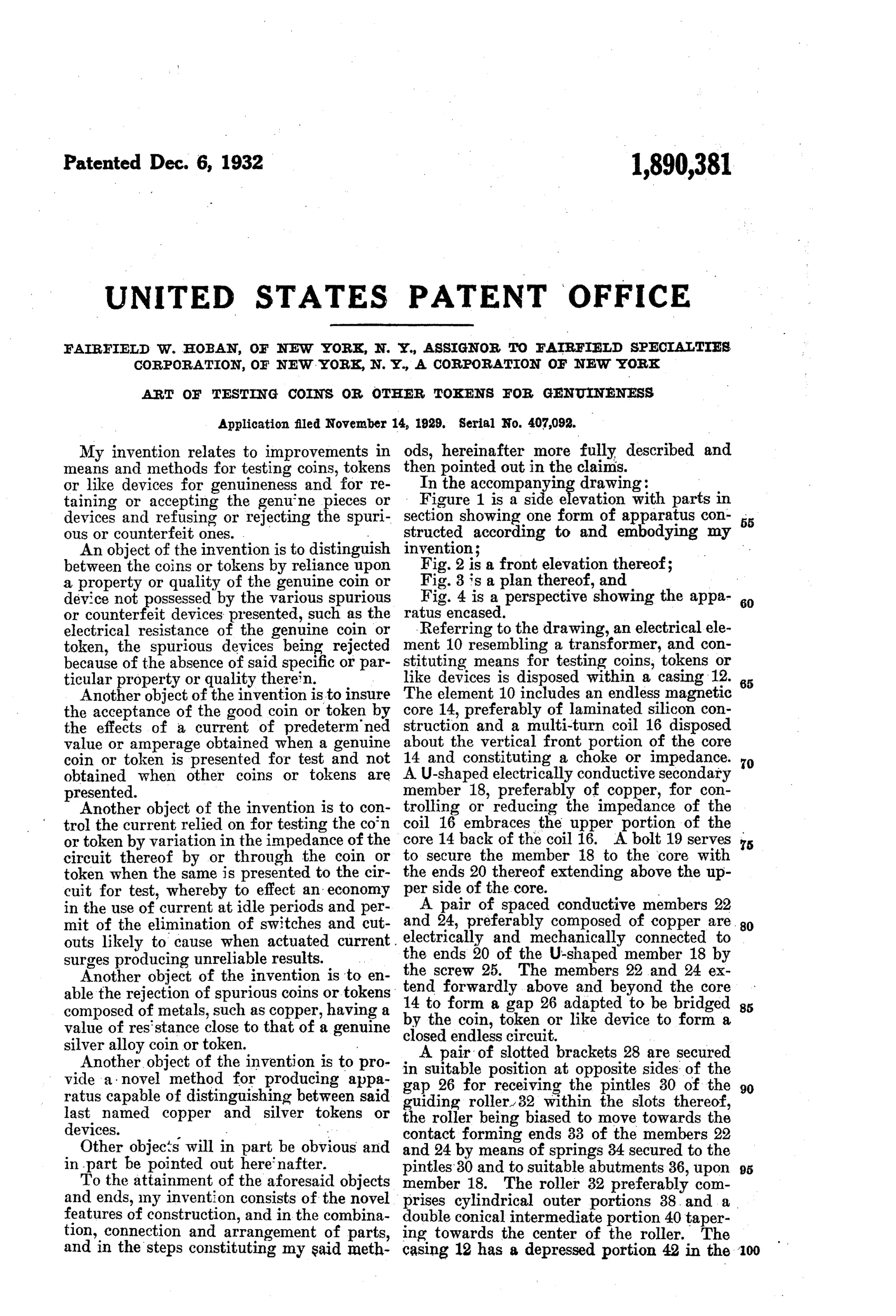
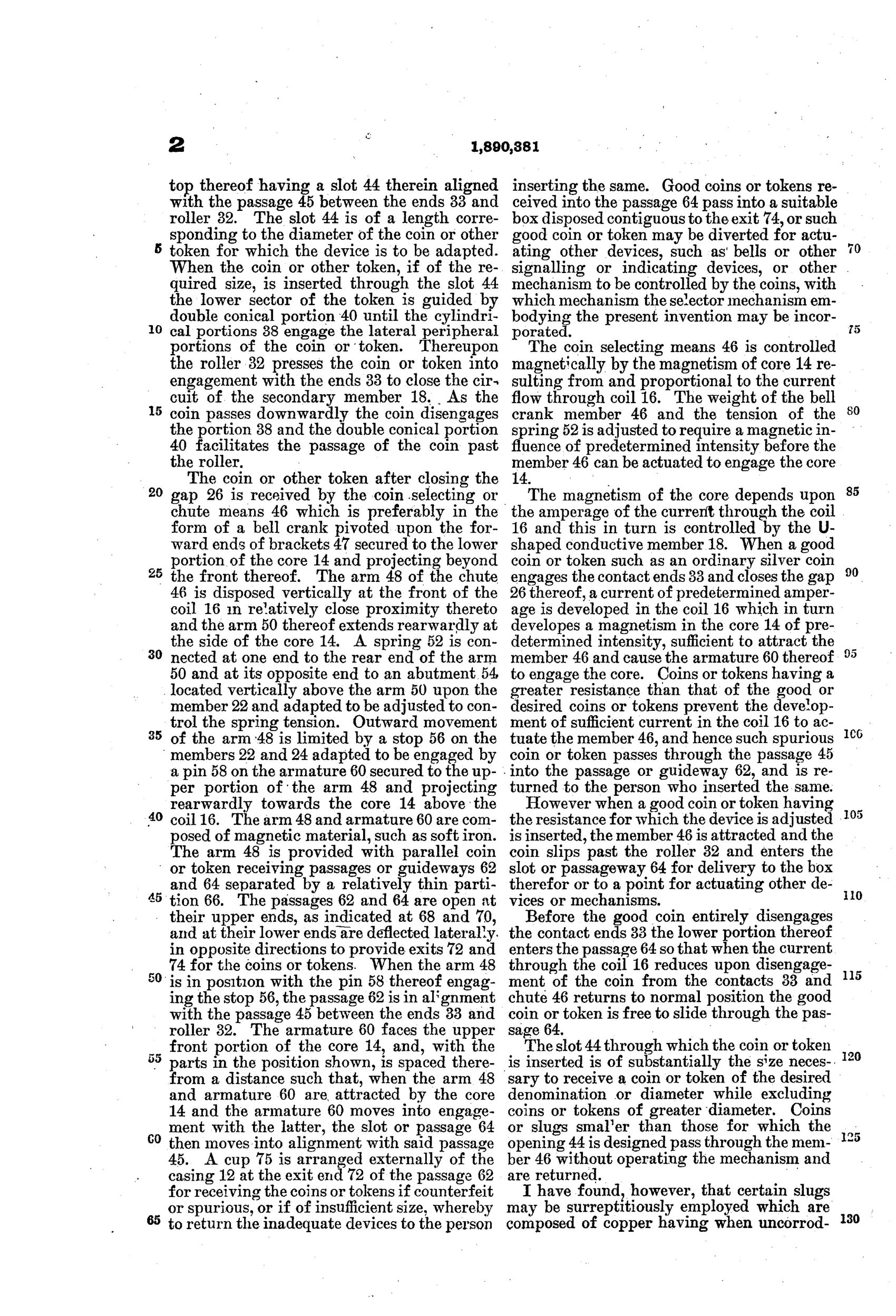
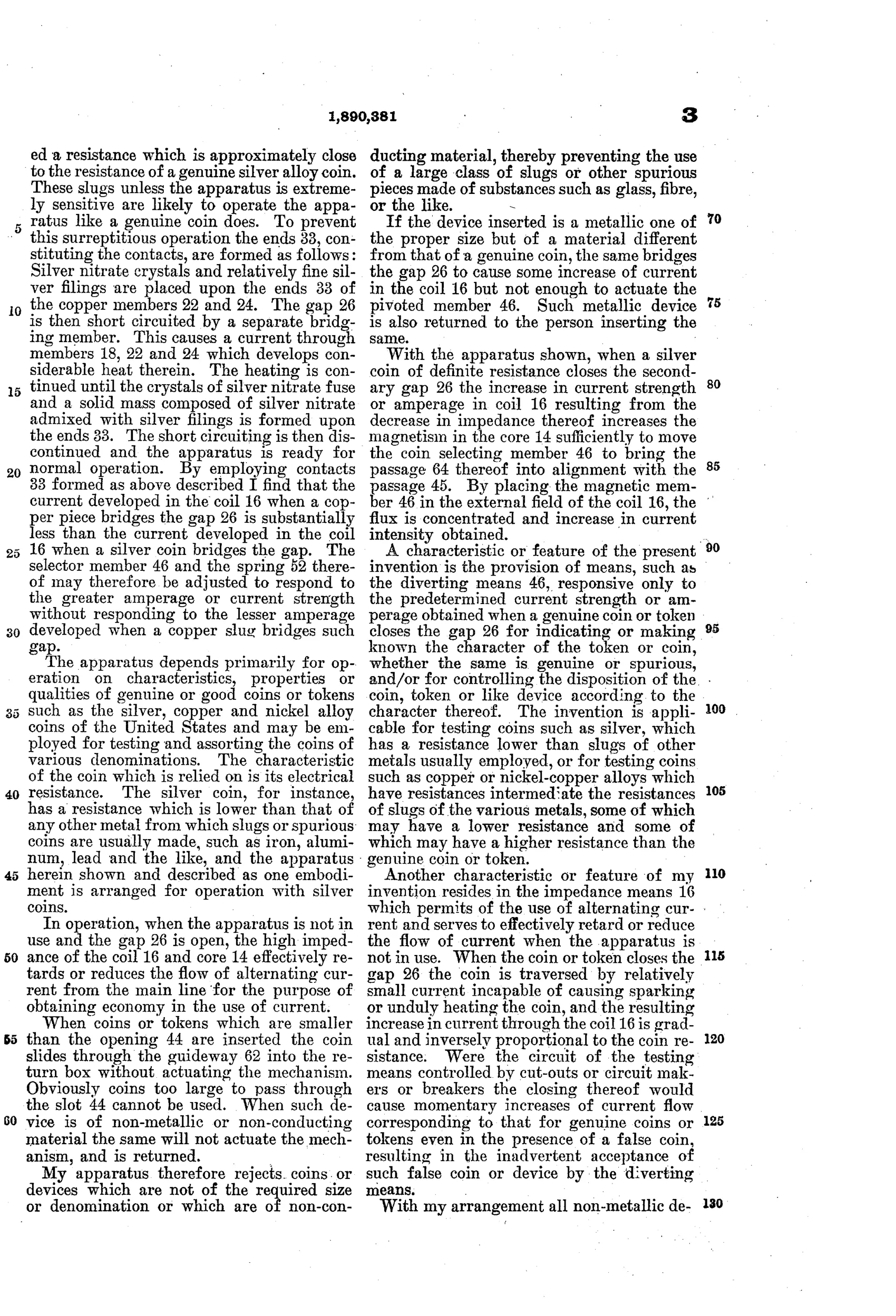
Electromagnetic coin/token genuineness tester and sorter
◉ How it works
A coin dropped through a sizing slot is guided by a spring-biased double-conical roller into contact with two spaced copper terminals, bridging a secondary electrical gap. The resulting current flows through a coil wound on a laminated magnetic core, and the coin's electrical resistance determines how much the current (and resulting magnetism) increases. A pivoted bell-crank armature, magnetically actuated only when a predetermined amperage (matching a genuine coin) is reached, swings to align a passage that lets the genuine coin fall through to an acceptance chute; otherwise the coin is diverted back through a return passage to the person who inserted it. The contact terminals are specially treated with fused silver nitrate and silver filings to sharpen the difference in current between genuine silver coins and copper slugs of similar resistance.
◉ What was claimed
“7. Apparatus of the character described comprising a core, an impedance coil about said core, an open secondary member about said core, conducting member extending forward from said secondary member and providing spaced contacts for engagement with a coin, token or like device, a spring pressed roller facing said contacts and forming a passage for said device, a vertically extending armature pivoted at the lower end thereof contiguous to said core, and having vertical device receiving passages therein, a stop, and a spring normally holding said armature against said stop and one passage thereof in alignment with said first named passage, said armature being actuated magnetically by said core to move the other of said passages into alignment with said first named passage upon development in said impedance of a current of predetermined amperage resulting from the presence of a genuine coin or device, and being immune to currents of lesser amperage.”
In plain English: The device uses a magnetic core with a coil and a spring-loaded roller to press a coin against contacts; when a genuine coin's resistance produces just the right current, a pivoting armature swings a passage into alignment to let the coin through, but it ignores weaker currents from fake coins.
◉ In the inventor’s words
“I have found, however, that certain slugs may be surreptitiously employed which are composed of copper having when uncorroded a resistance which is approximately close to the resistance of a genuine silver alloy coin.”— Fairfield W. Hoban, from the specification
Fate unknown
Assigned to Fairfield Specialties Corporation, suggesting intent to produce, but no documented machine using this mechanism is known; an identified vending unit would settle it.
◉ More by Fairfield W. Hoban
- ART OF TESTING COINS OR OTHER TOKENS FOR GENUINENESS (1934)
- ART OF TESTING COINS OR OTHER TOKENS FOR GENUINENESS (1934)
◉ Commentary
By 1929 the magnet-and-gauge chute tester was old news, and Hoban is reaching for the next frontier: measuring the coin itself electrically. His coin drops past a spring-loaded double-cone roller that presses it against two spaced copper terminals, closing a circuit through an impedance coil. Only if the current hits the amperage a genuine silver-alloy coin produces does the armature — a pivoted piece carrying two vertical passages, visible in Figure 1 at the right of the drawing — swing to line up the acceptance channel. Too little current and the slug rides the default passage back to the customer.
The honest detail is the best part. Hoban admits that uncorroded copper slugs have a resistance uncomfortably close to silver coin, so he doctors the contact terminals with fused silver nitrate and silver filings to sharpen the electrical difference between the two metals. That is a chemist's fix to an electrician's problem, and it tells you exactly how thin the margin was that this whole approach lived on — contact resistance, surface condition, and coin cleanliness all conspire against a fixed amperage threshold.
This is a genuine forerunner of the conductivity testing that eventually did win, decades later, in solid-state coin validators. Whether Hoban's version could hold calibration in a dirty, unattended vending machine is another matter; the assignment to a specialties corporation suggests real commercial intent, but the class swallowed such mechanisms anonymously.
Commentary by Claude, The Counterfeit Coin Detector Patent Archive’s resident enthusiast