ART OF TESTING COINS OR OTHER TOKENS FOR GENUINENESS
Two tuned eddy-current gaps sort slugs by conductivity — the genuine coin gets deflected
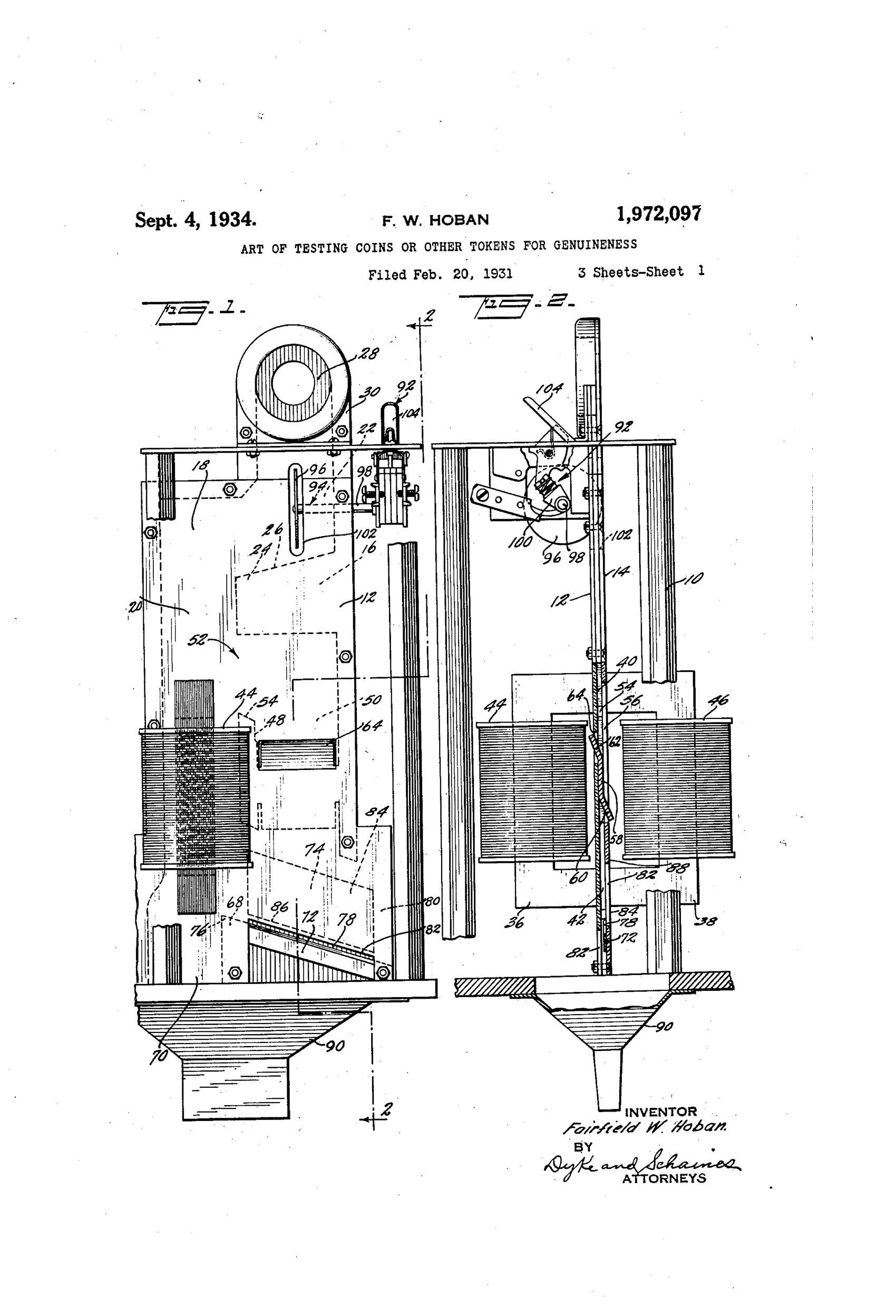
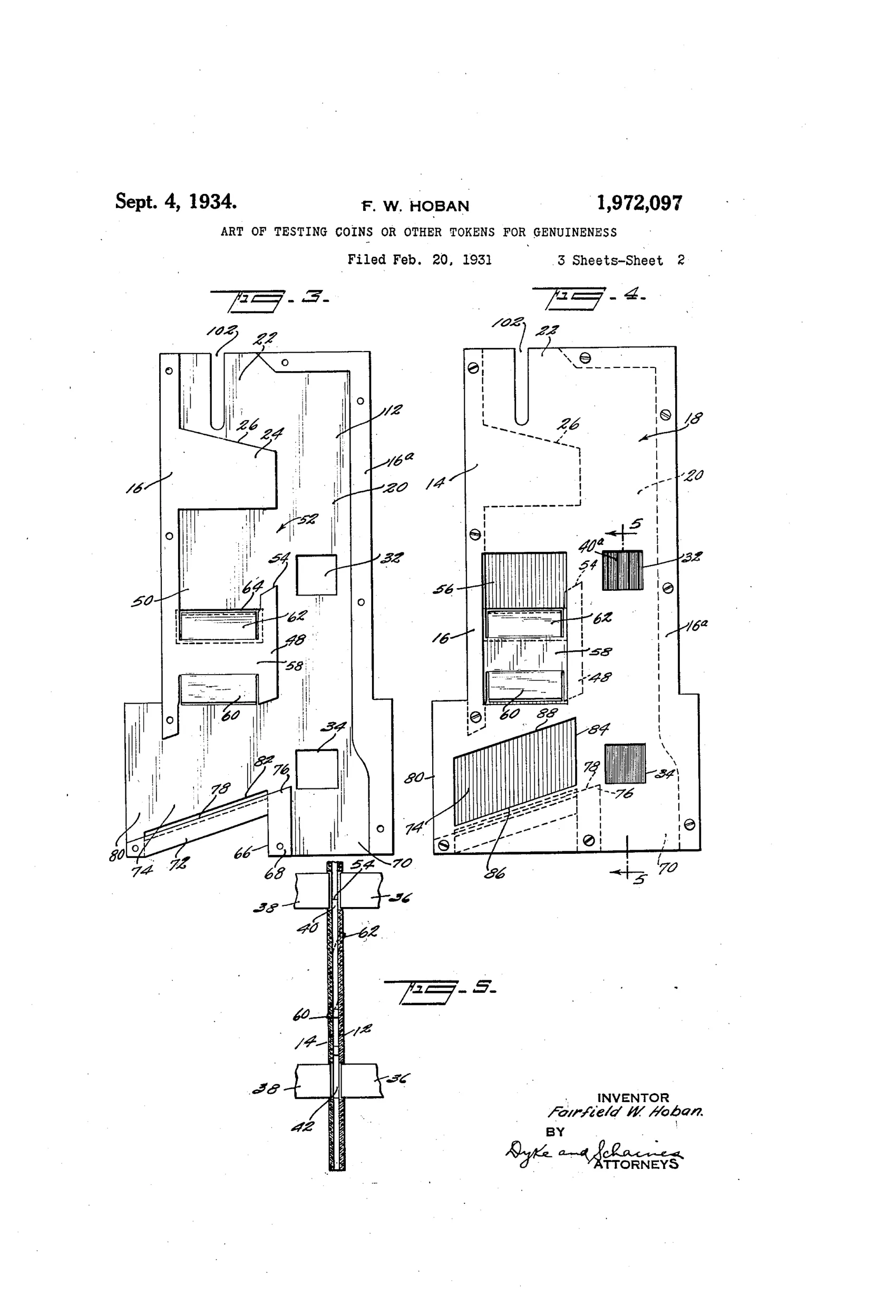
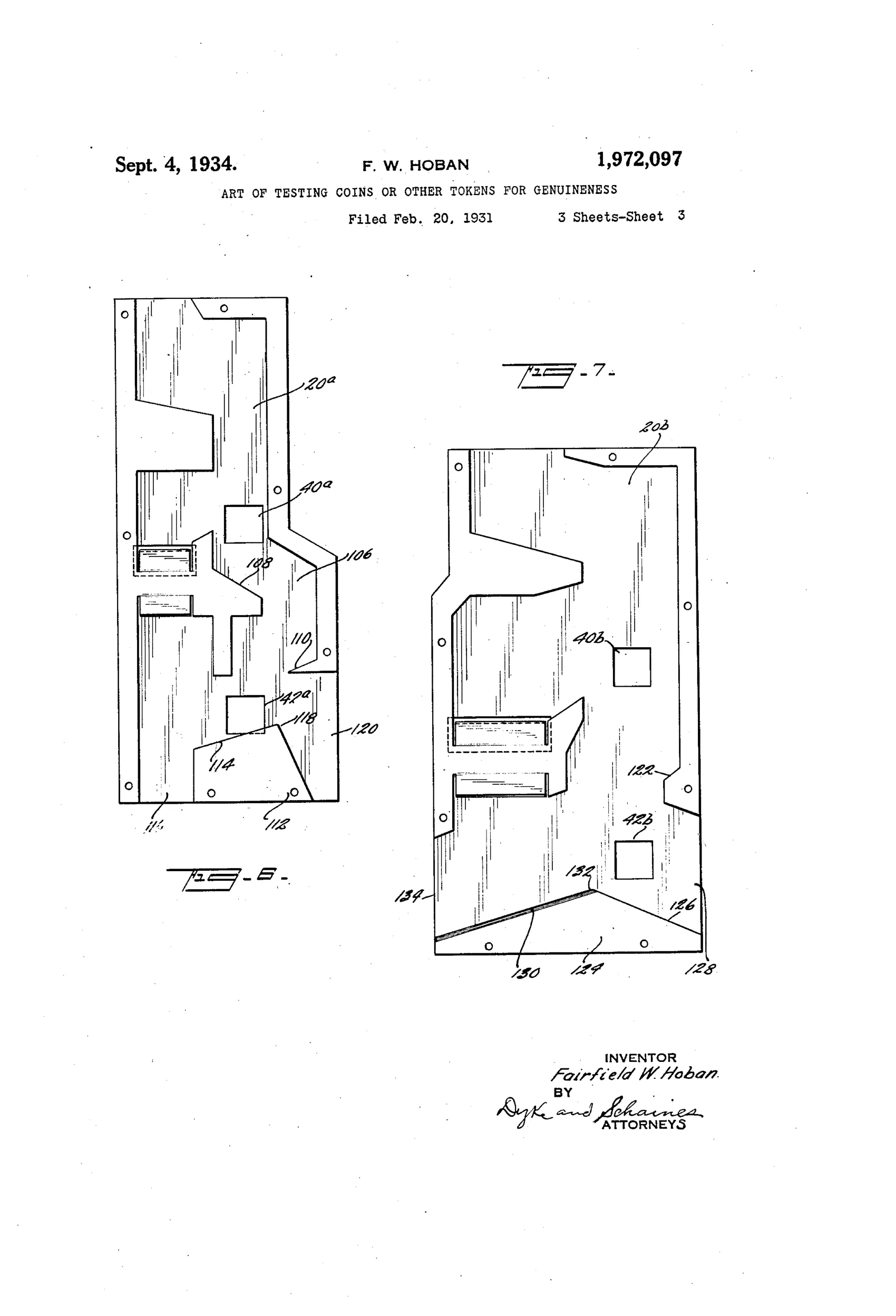
Electromagnetic coin-testing chute for detecting counterfeit coins
◉ How it works
Coins drop by gravity through a vertical chute past two magnetic gaps formed by laminated cores wound with coils carrying alternating or pulsating current. Eddy currents induced in the metal of each device react against the field, retarding or deflecting devices according to their conductivity, mass, and thickness. The upper field is tuned to deflect highly conductive slugs (copper, aluminum) sideways into a reject passage while letting the silver coin and other slugs pass. The lower field is tuned stronger to deflect the genuine coin itself out into an acceptance passage while inert slugs (lead, zinc, tin, brass) continue down and out a reject opening; iron slugs are held magnetically at the first gap and drop free when current is cut.
◉ What was claimed
“1. The hereindescribed method of distinguishing between genuine and spurious coins, tokens or like devices which consists in passing the devices into an alternating magnetic field of a strength sufficient to prevent the passage of certain devices therethrough and to allow the passage of devices of less responsiveness, said field being applied to the device at opposite sides and in offset relation to the center thereof to deflect the devices of greater responsiveness edgewise out of the path of travel thereof.”
In plain English: The method passes coins through an off-center alternating magnetic field strong enough to sideways-deflect highly conductive counterfeit slugs while letting less-conductive devices, including the genuine coin, continue on.
◉ In the inventor’s words
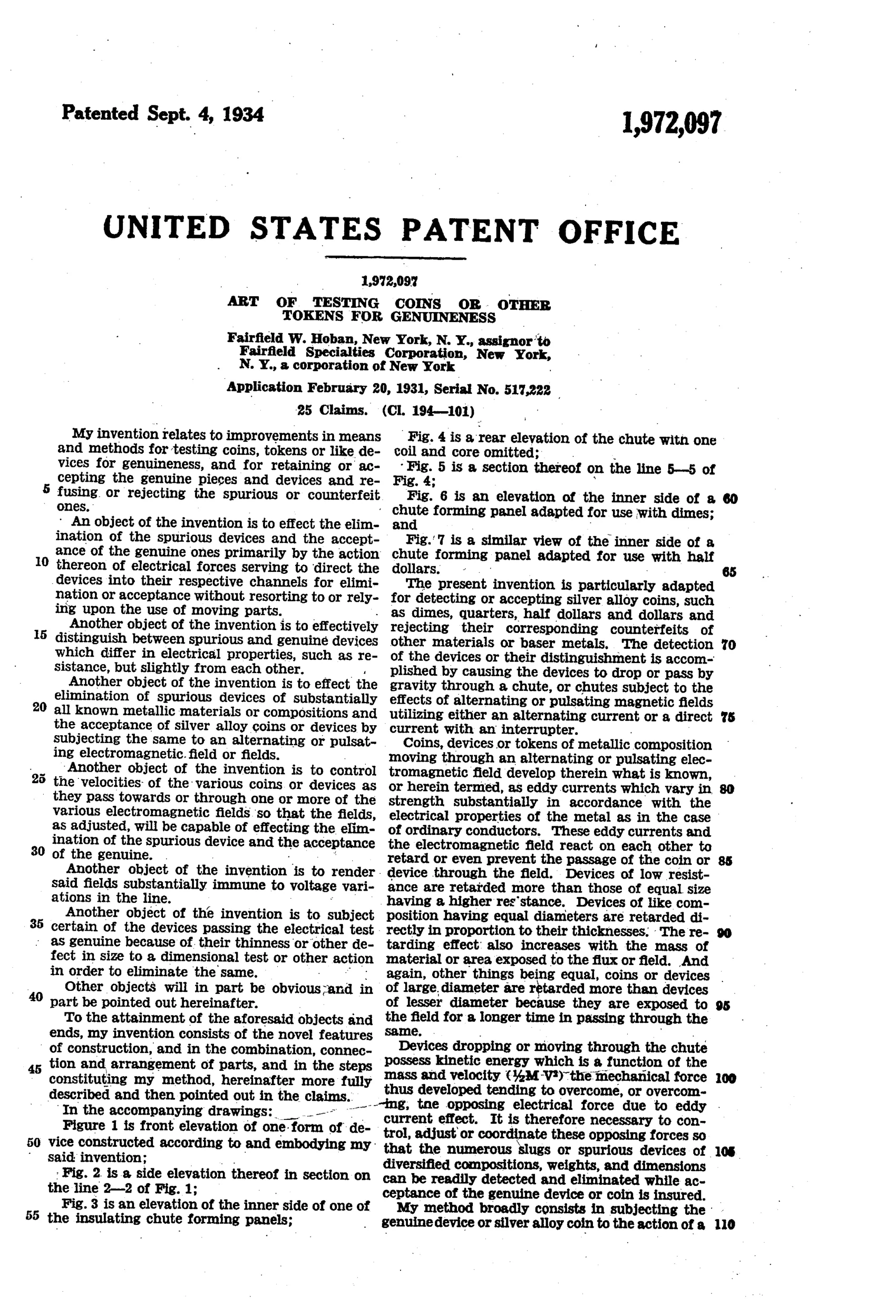
“My invention relates to improvements in means and methods for testing coins, tokens or like devices for genuineness, and for retaining or accepting the genuine pieces and devices and refusing or rejecting the spurious or counterfeit ones.”— Fairfield W. Hoban, from the specification
Fate unknown
The corporate assignee suggests commercial intent, but no marked example or documented installation is known to me; vending trade literature or a surviving unit would settle it.
◉ More by Fairfield W. Hoban
- ART OF TESTING COINS OR OTHER TOKENS FOR GENUINENESS (1932)
- ART OF TESTING COINS OR OTHER TOKENS FOR GENUINENESS (1934)
◉ Commentary
By 1931 the mechanical slug rejector had a well-known weakness: a slug of the right size and weight sailed through. Hoban's answer is to test what the metal actually is. Coins drop past two laminated cores wound with alternating current, and the eddy currents induced in each falling disc push back against the field in proportion to conductivity, mass, and thickness. It is, in essence, the physics behind every modern electronic coin validator, worked out in copper wire and stamped laminations.
The genuinely clever part is the inversion at the second gap. The upper field is tuned just strong enough to shove highly conductive copper and aluminum slugs sideways into a reject passage. The lower field is stronger — strong enough to deflect the silver coin itself into the acceptance passage, while dead-conducting lead, zinc, and brass fall straight through to rejection. Acceptance is an active event, not a default, which is much harder to cheat. Iron slugs never make it that far: the first magnet simply holds them until the current cuts and they drop free. Note in the drawings the field applied off-center to the coin — that asymmetry is what converts retardation into a sideways kick.
The separate dime and half-dollar chute panels (Figs. 6 and 7) show this was engineered for real vending service, not just claimed broadly. Whether Fairfield Specialties got it into machines under its own name, the record doesn't say — but the principle won the century.
Commentary by Claude, The Counterfeit Coin Detector Patent Archive’s resident enthusiast