COIN DETECTOR
Two frauds, one chute: a magnet trap and a toothed wheel working in sequence
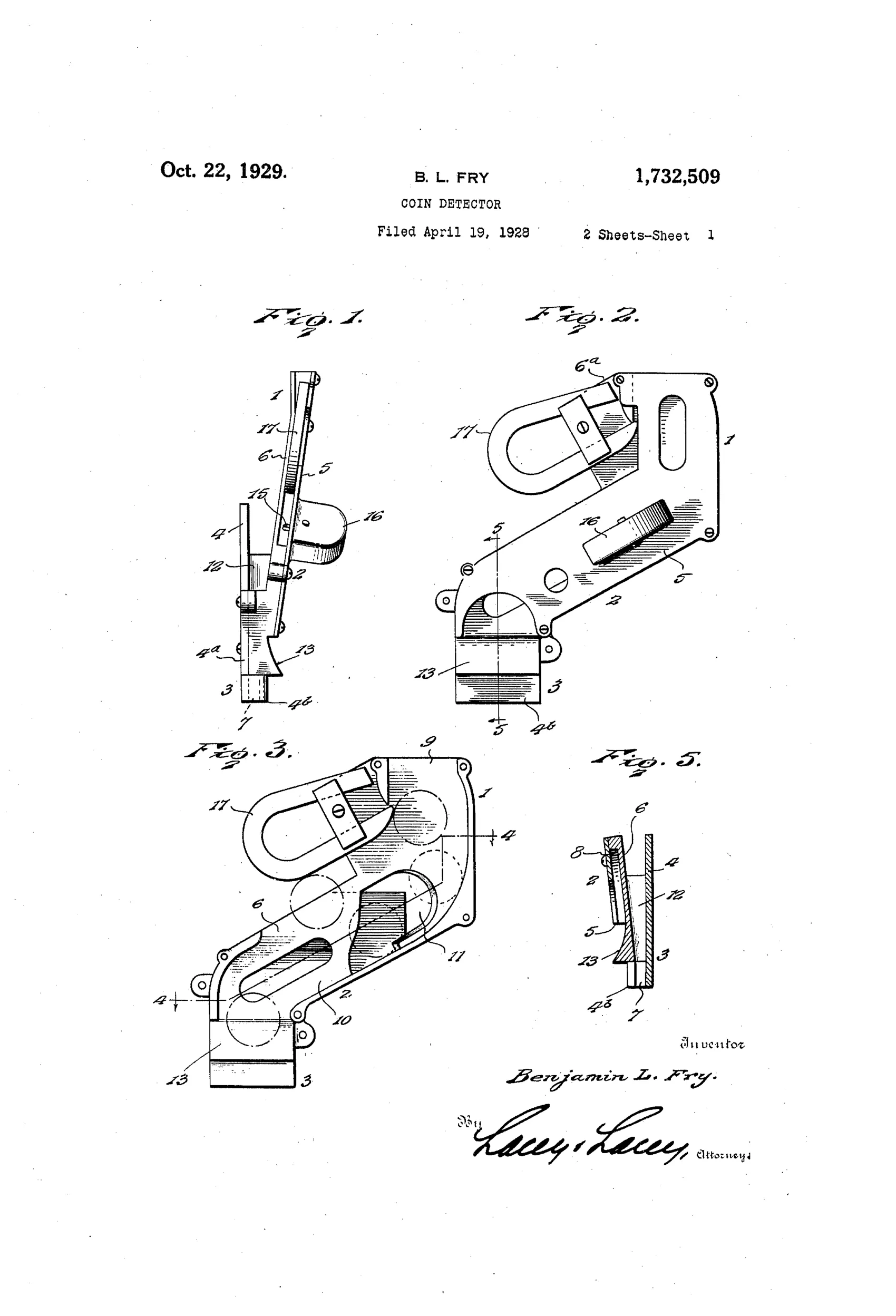
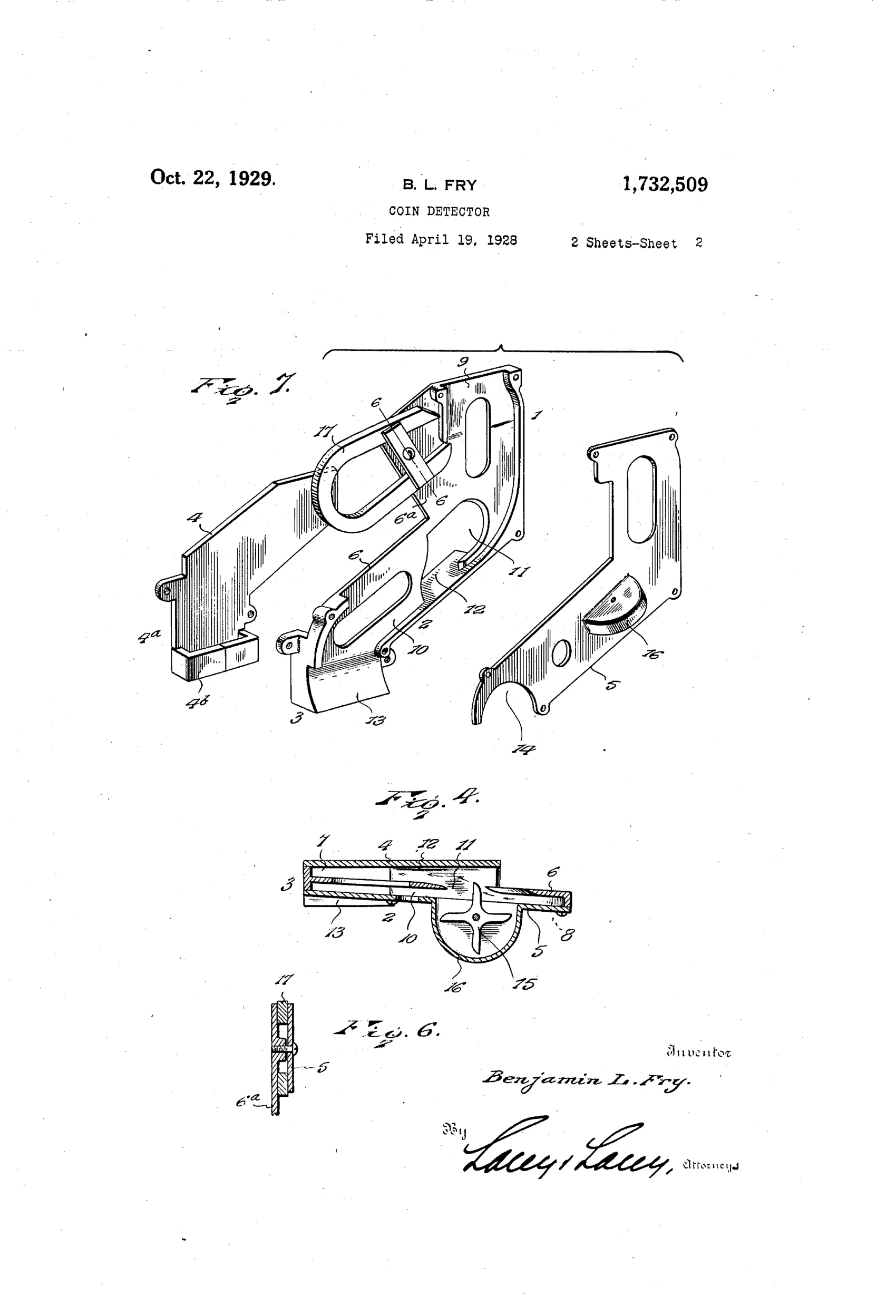
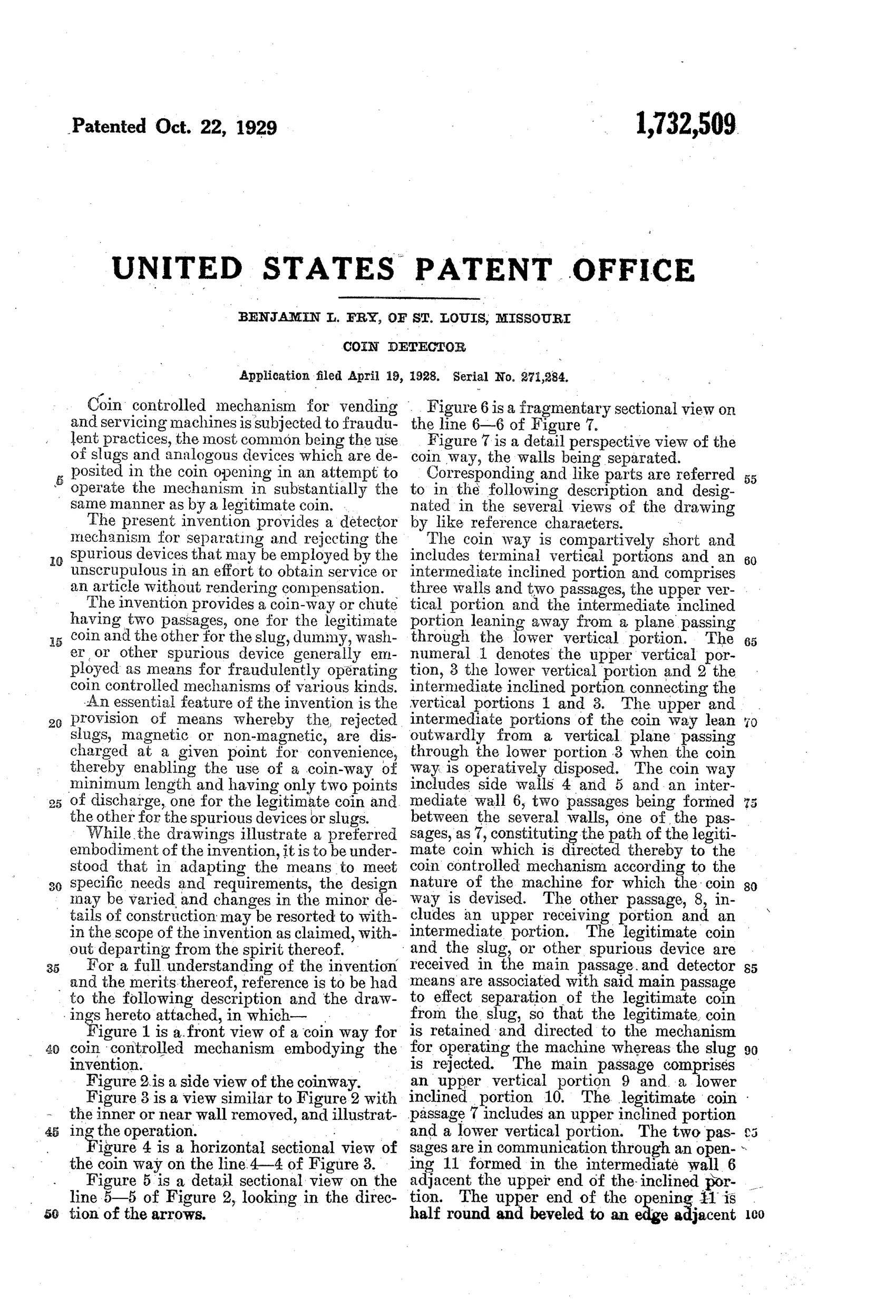
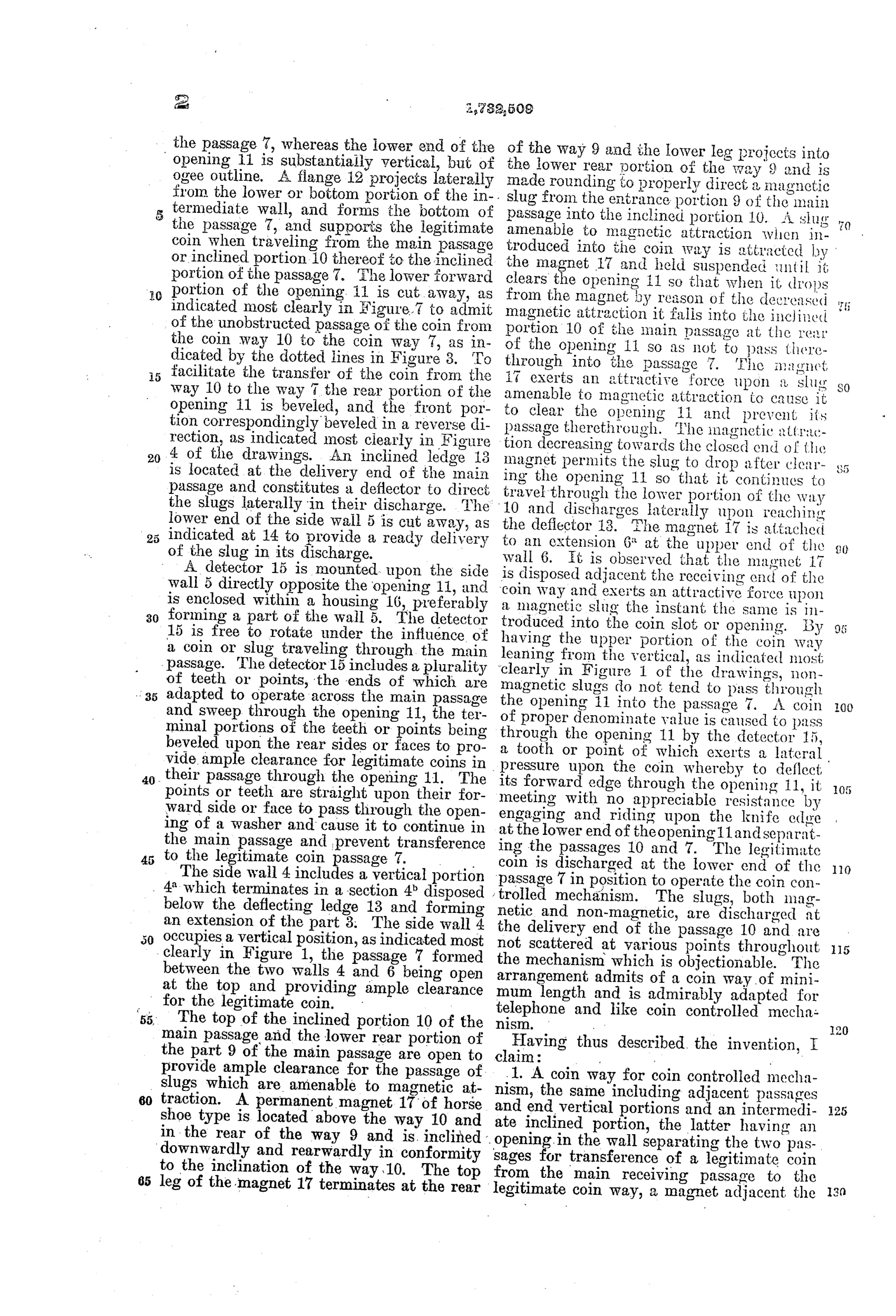
Magnetic coin-way slug detector for vending machines
◉ How it works
A coin way with two passages separated by walls receives a coin or slug in a main receiving passage; a permanent horseshoe magnet mounted above the passage attracts and holds magnetic slugs suspended until they clear an opening in the intermediate wall, causing them to fall back into the main passage and be discharged as rejects. A rotating detector with teeth mounted opposite the opening sweeps across the passage, engaging the edge of a legitimate coin and deflecting it through the opening into the separate legitimate coin passage while non-magnetic slugs, lacking the correct size to be deflected, continue down the main passage. An inclined ledge and cut-away side wall at the delivery end of the main passage act as a lateral deflector to discharge all rejected slugs, magnetic or non-magnetic, at a single common point.
◉ What was claimed
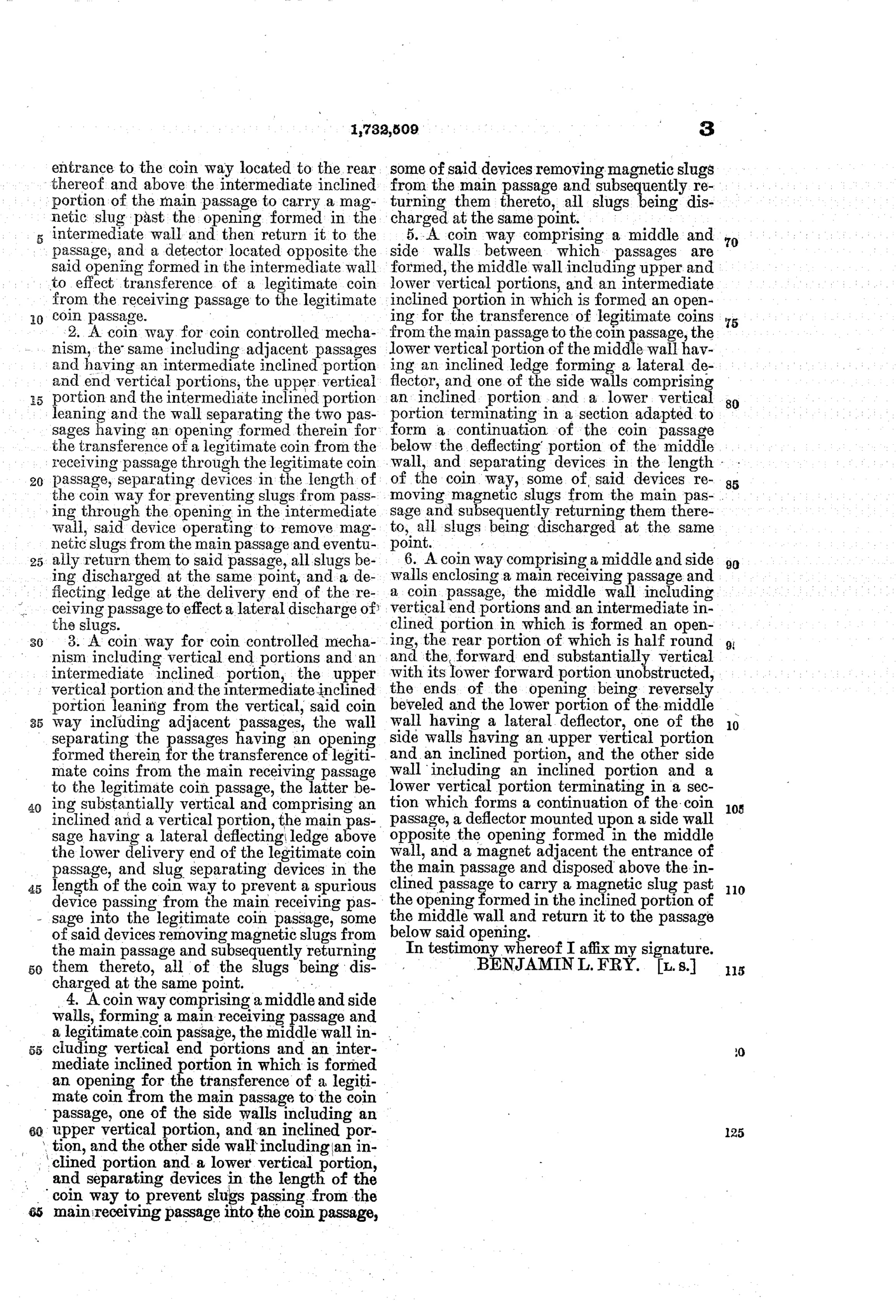
“1. A coin way for coin controlled mechanism, the same including adjacent passages and end vertical portions and an intermediate inclined portion, the latter having an opening in the wall separating the two passages for transference of a legitimate coin from the main receiving passage to the legitimate coin way, a magnet adjacent the entrance to the coin way located to the rear thereof and above the intermediate inclined portion of the main passage to carry a magnetic slug past the opening formed in the intermediate wall and then return it to the passage, and a detector located opposite the said opening formed in the intermediate wall to effect transference of a legitimate coin from the receiving passage to the legitimate coin passage.”
In plain English: A coin chute with two passages separated by a wall having an opening; a magnet near the entrance holds magnetic slugs suspended past the opening and drops them back into the reject passage, while a rotating detector opposite the opening pushes genuine coins through into the legitimate coin passage.
◉ In the inventor’s words
“Coin controlled mechanism for vending and servicing machines is subjected to fraudulent practices, the most common being the use of slugs and analogous devices which are deposited in the coin opening in an attempt to operate the mechanism in substantially the same manner as by a legitimate coin.”— Benjamin L. Fry, from the specification
Fate unknown
No assignee is named and chute mechanisms of this era were absorbed anonymously into vending hardware; a surviving rejector matching Fig. 7's wall-and-wheel arrangement would settle it.
◉ Commentary
By 1928 the vending industry had settled on the magnet as its first line of defense — steel slugs get grabbed, brass ones sail past. Fry's contribution is in how the geometry of failure is arranged. His horseshoe magnet doesn't just deflect a steel slug; it carries it, suspended, past the opening in the intermediate wall that a genuine coin must pass through, then lets it drop back into the main passage. The slug's own susceptibility to the magnet is what marches it past the only exit to the payoff side.
Meanwhile the genuine coin, unbothered by the magnet, meets the rotating detector — a toothed wheel opposite the wall opening that catches the coin's edge and nudges it laterally through into the legitimate passage. A non-magnetic slug of the wrong diameter misses the teeth and rides the main passage to the reject exit. Fig. 7's exploded view is the one to study: the whole logic lives in that sandwich of walls, and the inclined ledge at the bottom that funnels every kind of failure — steel or brass, big or small — to a single common reject point. That unification of rejects is the tidy detail; earlier chutes often spat slugs out in different places.
This is refinement work, not a first. The category by 1929 was thick with in-chute testers, and Fry's is a competent, well-drawn entry in that crowd — the crowd chasing a slug rejector cheap enough to build into every machine.
Commentary by Claude, The Counterfeit Coin Detector Patent Archive’s resident enthusiast