COIN-DETECTOR FOR VENDING-MACHINES.
Bigelow tests coins by momentum, then makes them ride a spring-loaded seesaw
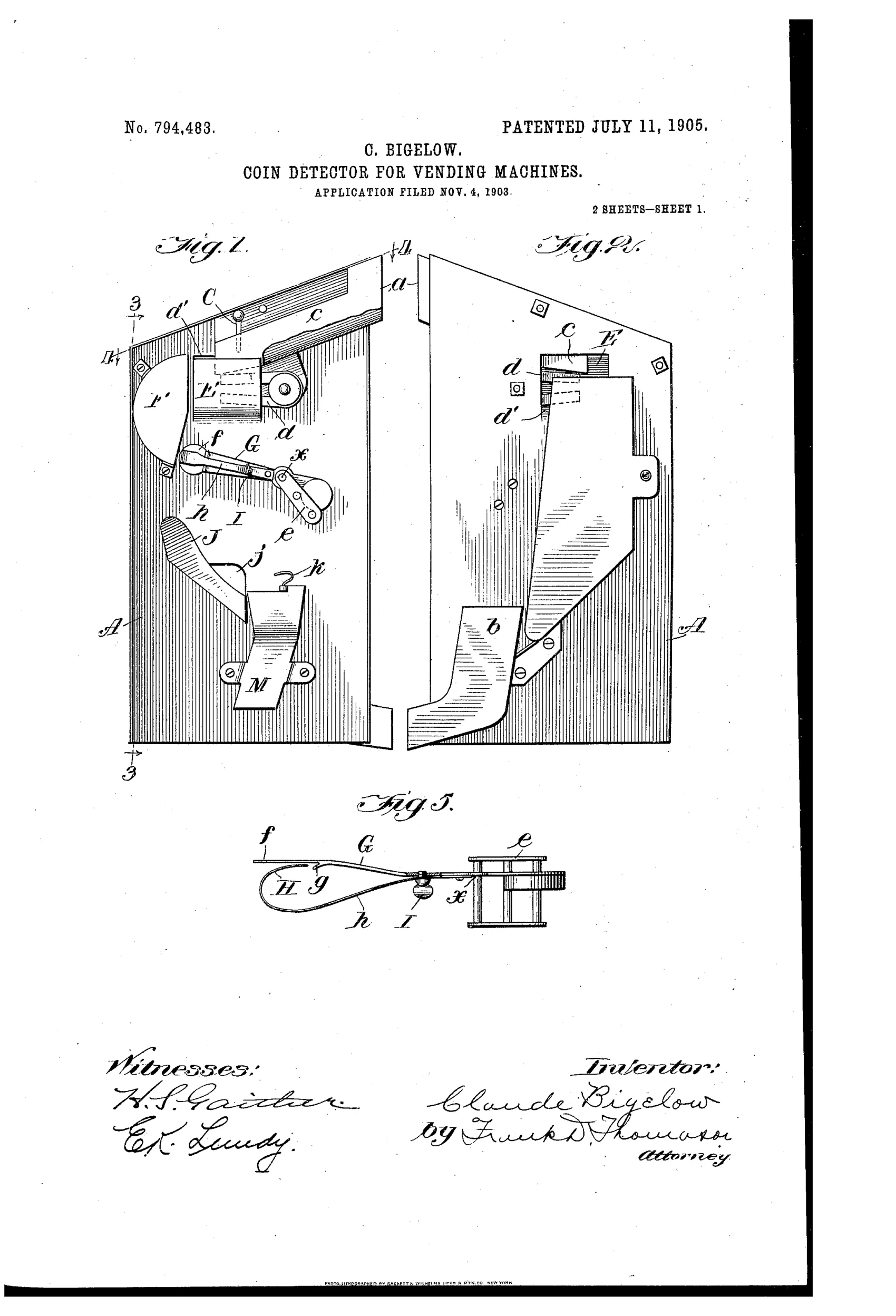
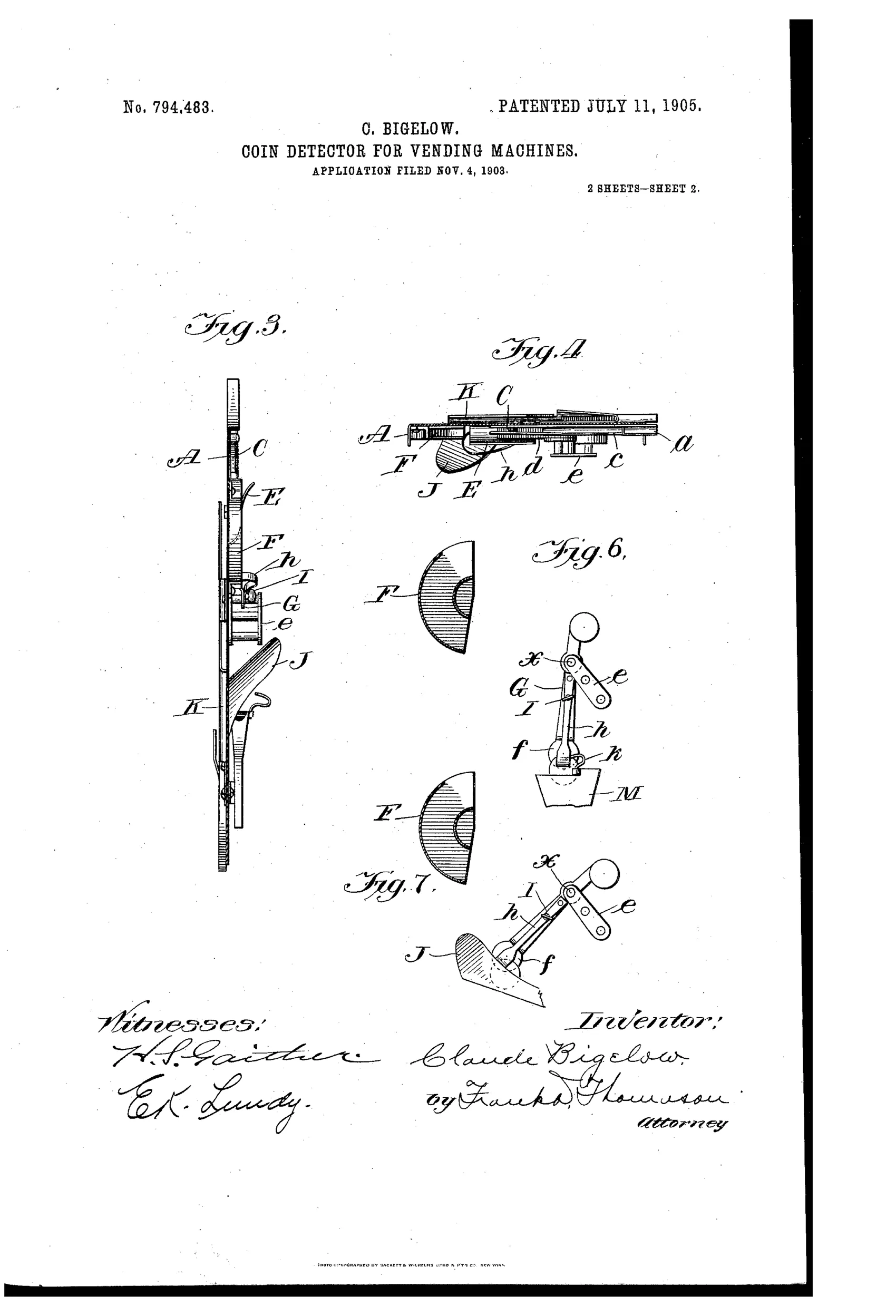
Mechanical slug-rejecting coin detector for vending machines
◉ How it works
A coin inserted through the slot rolls down an inclined steel chute past a fixed permanent magnet and a pivoted retarding arm, which drag or slow any steel or overly light substitute coin. A genuine coin, retaining full momentum, leaps a gap into a curved segmental chute that reverses its direction and delivers it with uniform force onto the flat vertical pan of a counterbalanced, fulcrumed tilting bar. A gauged leaf-spring presses the coin sideways against this pan; a coin of correct weight rides the bar down until a fixed arm strips it free into the payout chute, while a lighter or smooth-edged slug slips out of the spring's grip early and drops into a separate reject passage.
◉ What was claimed
“A coin-detector comprising an independent automatically-returnable fulcrumed arm, a flat imperforate tray on the end thereof, and adjustable yielding means for pressing a coin against said tray.”
In plain English: The device uses a pivoting, spring-return arm with a flat solid tray on its end, and an adjustable spring that presses a coin against that tray to test it.
◉ In the inventor’s words
“The object of my invention is to provide a simply-constructed and effective device for coin-operated machines which will invariably distinguish between the coin it is adjusted to select and the many and various substitutes which it is so frequently sought to impose on such machines.”— Claude Bigelow, from the specification
Fate unknown
The Curtiss-Williams assignment suggests intended production, but no surviving mechanism traceable to this patent is documented; a marked vending machine internal would settle it.
◉ Commentary
Most chute testers of this era run a coin past a magnet and call it a day. Bigelow stacks three tests in sequence, and the middle one is the interesting part: after the magnet and a pivoted drag arm slow down anything steel or too light, the coin has to jump a gap. Only a coin with the right mass, retaining full momentum down the incline, clears it into the curved segmental chute. A slug that survives the magnet but got dragged by the retarder simply falls short. That's a kinetic-energy test done with no moving parts at all.
The curved chute then does something subtle — it reverses the coin's direction so every genuine coin arrives at the final test with uniform speed and orientation, landing flat against the pan of a counterweighted tilting bar (Fig. 5 shows it isolated). A leaf spring pinches the coin against the pan; a true coin's weight and edge friction keep it gripped as the bar swings down until a fixed arm strips it into the payout. A light or slick-edged slug loses the spring's grip early and drops into the reject passage — Figs. 6 and 7 diagram the two outcomes side by side.
Assigned at filing to Curtiss-Williams of Chicago, this is a serious commercial design from the first wave of vending-machine slug rejectors, not a lone tinkerer's fancy. Like most of its kind, though, it would have vanished anonymously into the machinery it protected.
Commentary by Claude, The Counterfeit Coin Detector Patent Archive’s resident enthusiast