COIN-DETECTOR
A slug rejector that literally bites soft counterfeits with a sharpened point
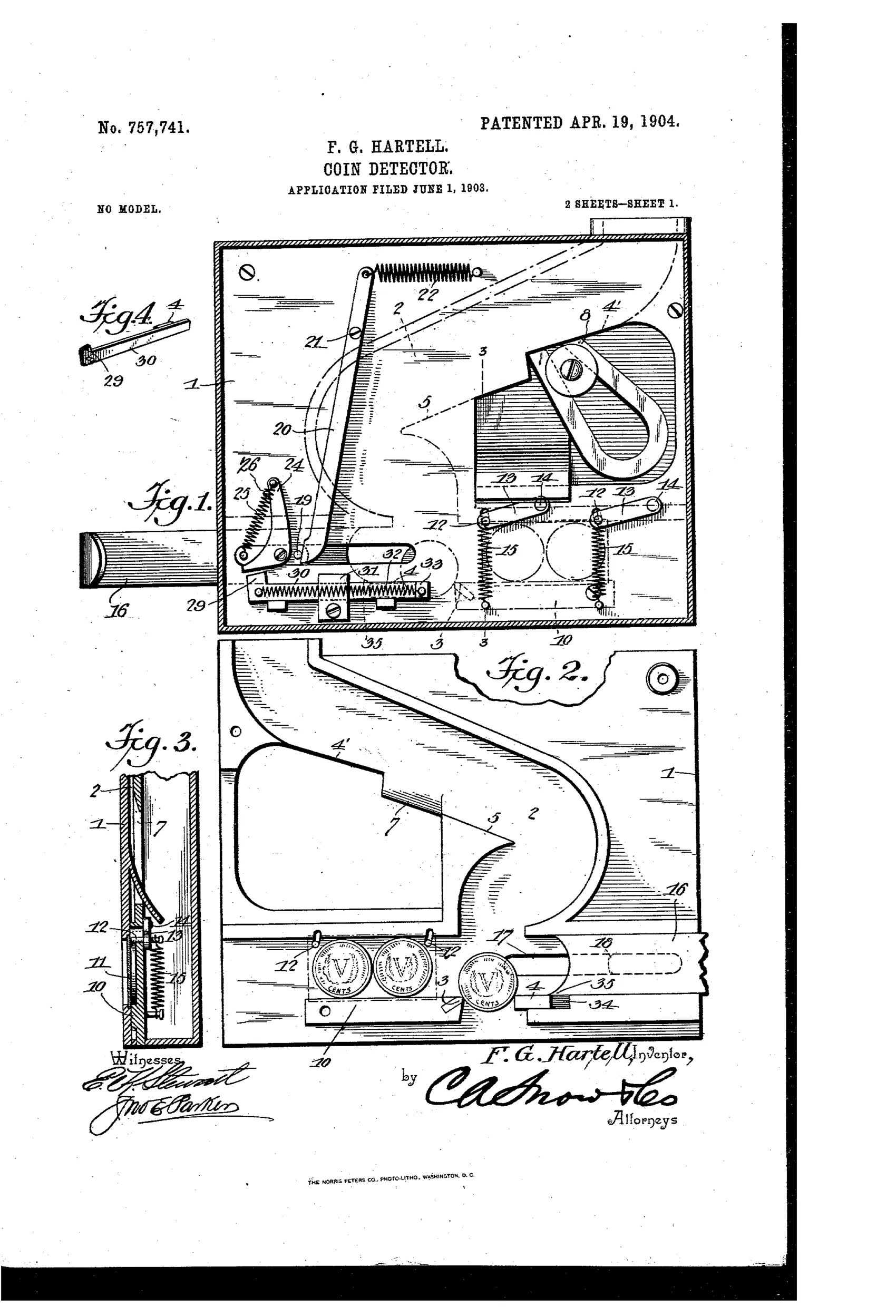
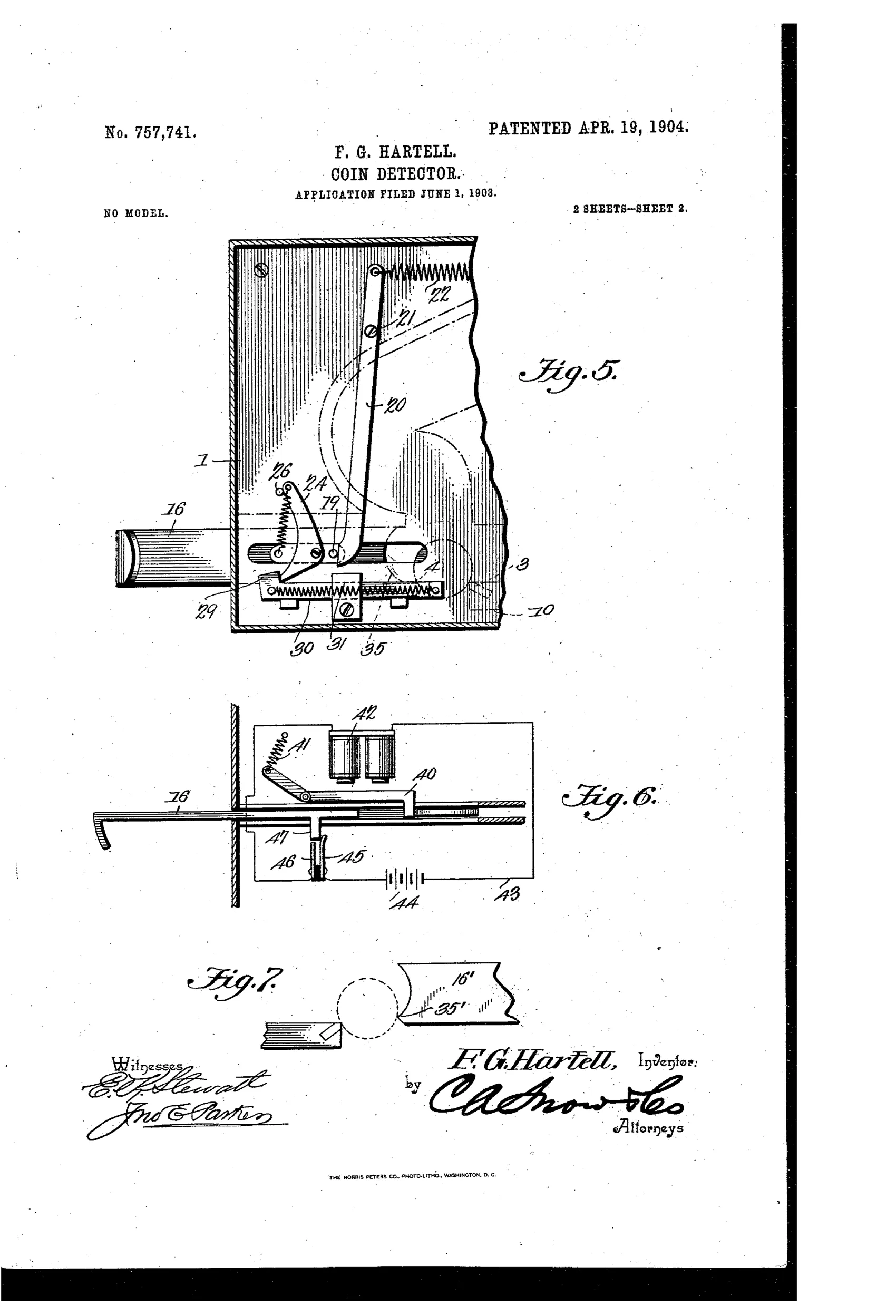
Mechanical coin detector for vending machines
◉ How it works
A coin travels down a winding inclined chute onto a pair of spaced coin-rests, one of which is movable, sized so a genuine coin bridges the gap while a slug can fall through an opening. A sliding coin-engaging slide with a sharpened point pushes against the coin's periphery; a good coin lifts smoothly over the rest and past spring-loaded locking pins, while a coin of softer inferior metal is bitten into by the point and its movement is arrested. A portion of the chute passes near an electromagnet so that paramagnetic slugs (iron) are slowed or held, negating their momentum and letting them drop through the reject opening. On release of the slide, a bell-crank lever and spring-loaded sliding bar retract the movable coin-rest just enough to let a rejected slug fall through the gap between the two rests.
◉ What was claimed
“1. In a coin-detector, a coin-engaging slide, a coin-rest including a movable member, means for maintaining the movable member in normal position during the forward movement of the slide, and means for moving said member to release position on the returning movement of the slide.”
In plain English: The device has a sliding coin-pusher and a coin-rest with a movable part that stays fixed while pushing a coin forward but shifts to release position when the slide moves back.
◉ In the inventor’s words
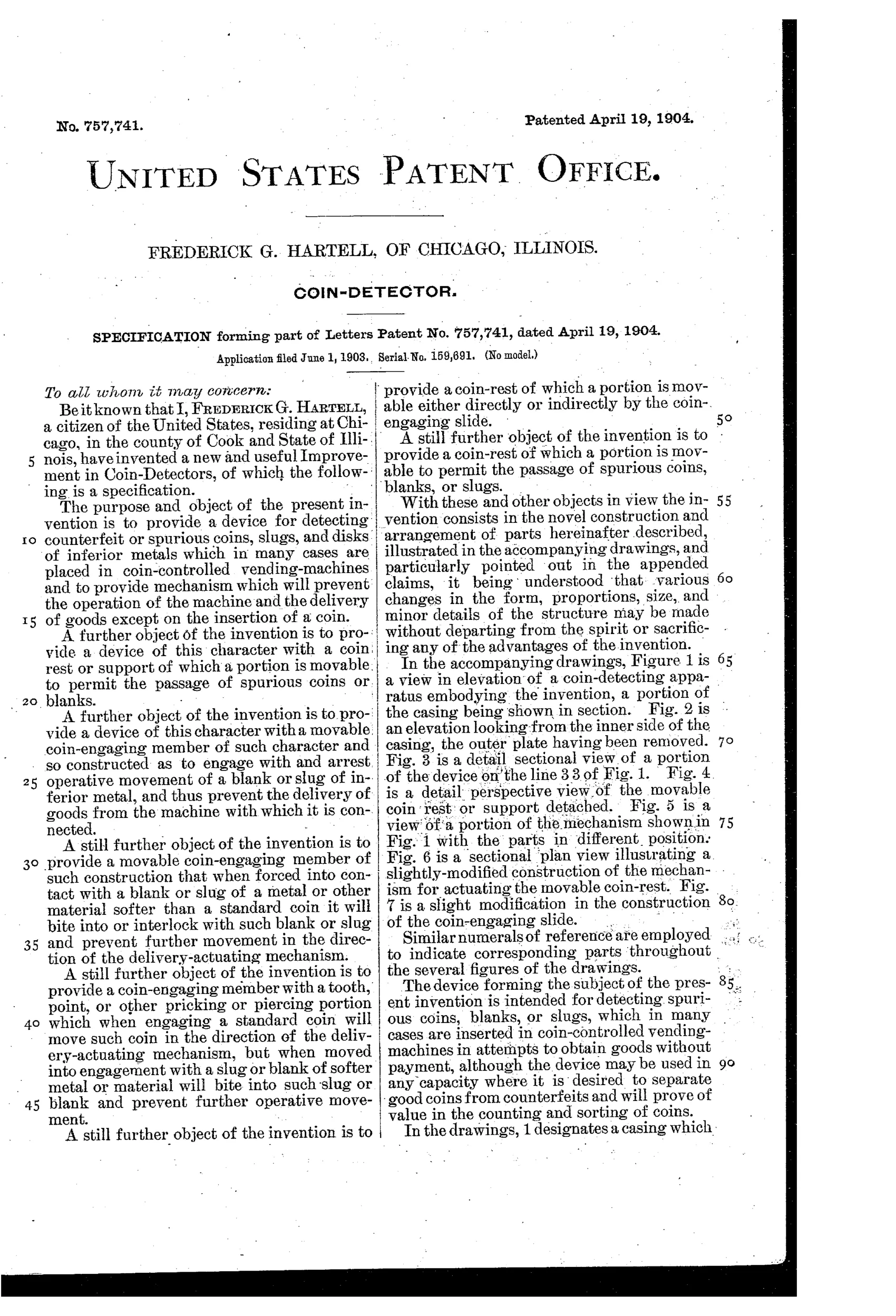
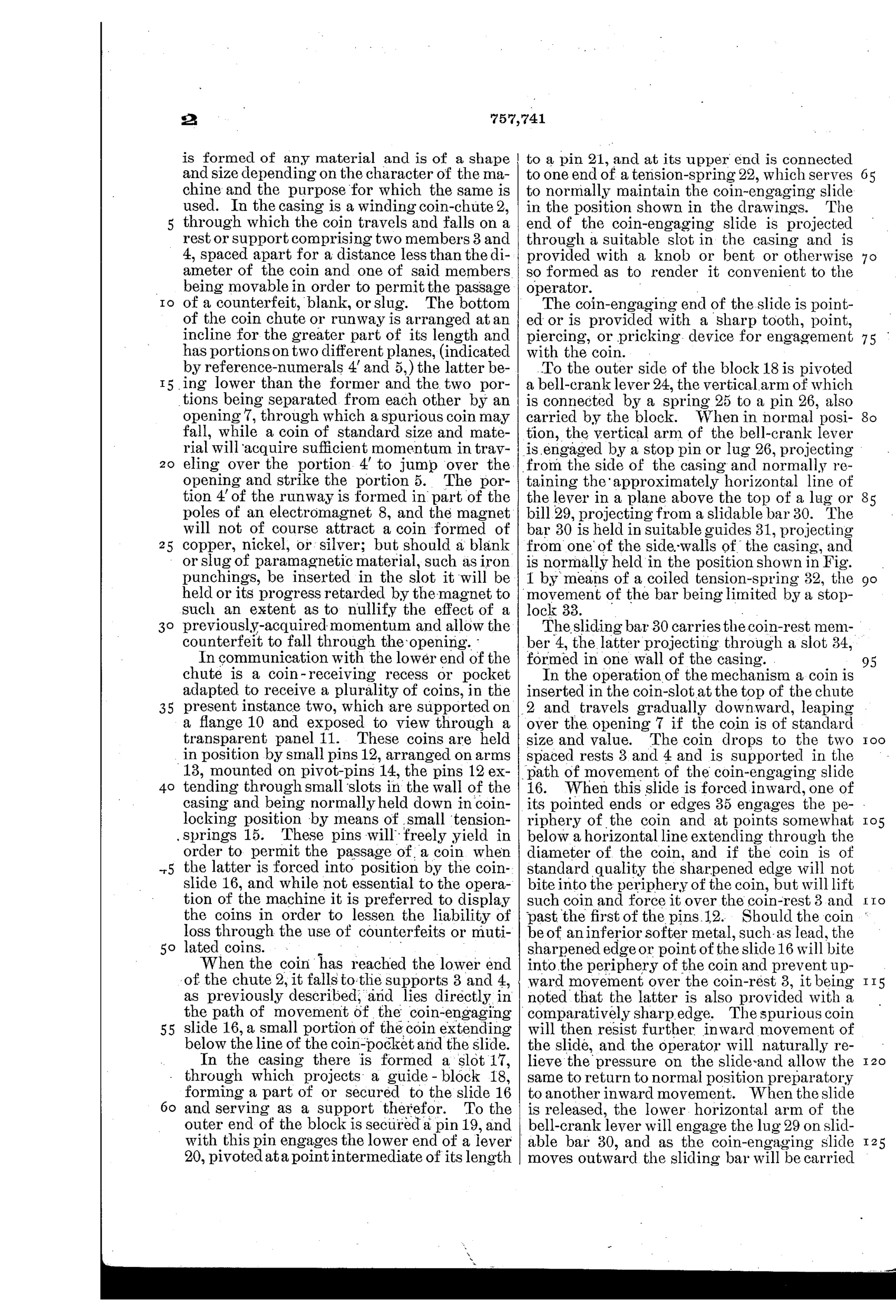
“Should the coin be of an inferior softer metal, such as lead, the sharpened edge or point of the slide 16 will bite into the periphery of the coin and prevent upward movement over the coin-rest 3.”— Frederick G. Hartell, from the specification
Fate unknown
Like most chute-tester patents, any commercial use would have been buried anonymously inside vending machines; a documented licensee or surviving mechanism would settle it.
◉ Commentary
Hartell's 1904 patent stacks three separate tests into one chute, and the middle one is the fun part. The coin lands on a pair of spaced rests — bridge the gap and you're a candidate; fall through and you're rejected on diameter alone. Then a sliding bar with a sharpened point pushes against the coin's edge. Genuine hard coinage slides up and over the rest; a lead slug gets bitten. The point digs into the soft metal and the coin simply can't climb. It's a hardness test done with a single pointed slide, no scales, no springs to calibrate — a genuinely economical piece of thinking.
The electromagnet handles the third failure mode: iron slugs get their momentum sapped as they pass, so they stall and drop through the reject opening rather than coasting to the good-coin pocket. Magnets in chutes were becoming standard by 1904; the hardness bite was not.
The cleverest detail is in the first claim, and easy to miss in the drawing: the movable coin-rest holds firm while the slide pushes forward, then a bell-crank retracts it on the return stroke, dumping anything left stranded. That means the machine self-clears — a jammed slug doesn't disable the mechanism, which was the practical death of many chute testers. Fig. 2, with its 'V CENTS' nickels in place, shows a nickel-vending target. A workmanlike, well-thought entry in the crowded slug-rejector rush.
Commentary by Claude, The Counterfeit Coin Detector Patent Archive’s resident enthusiast