COIN-CONTROLLED MECHANISM.
The Roebuck of Sears, Roebuck turns his hand to slug rejection
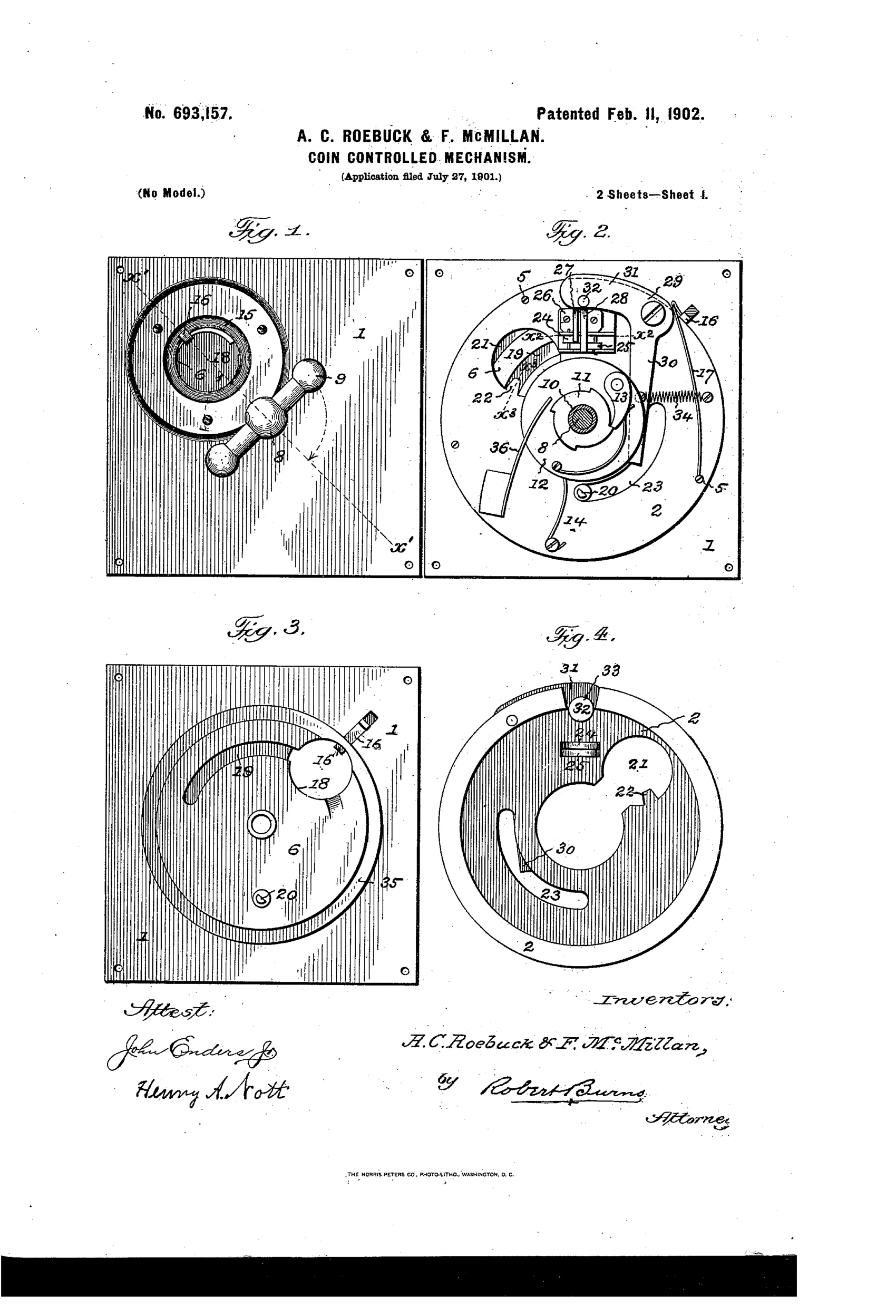
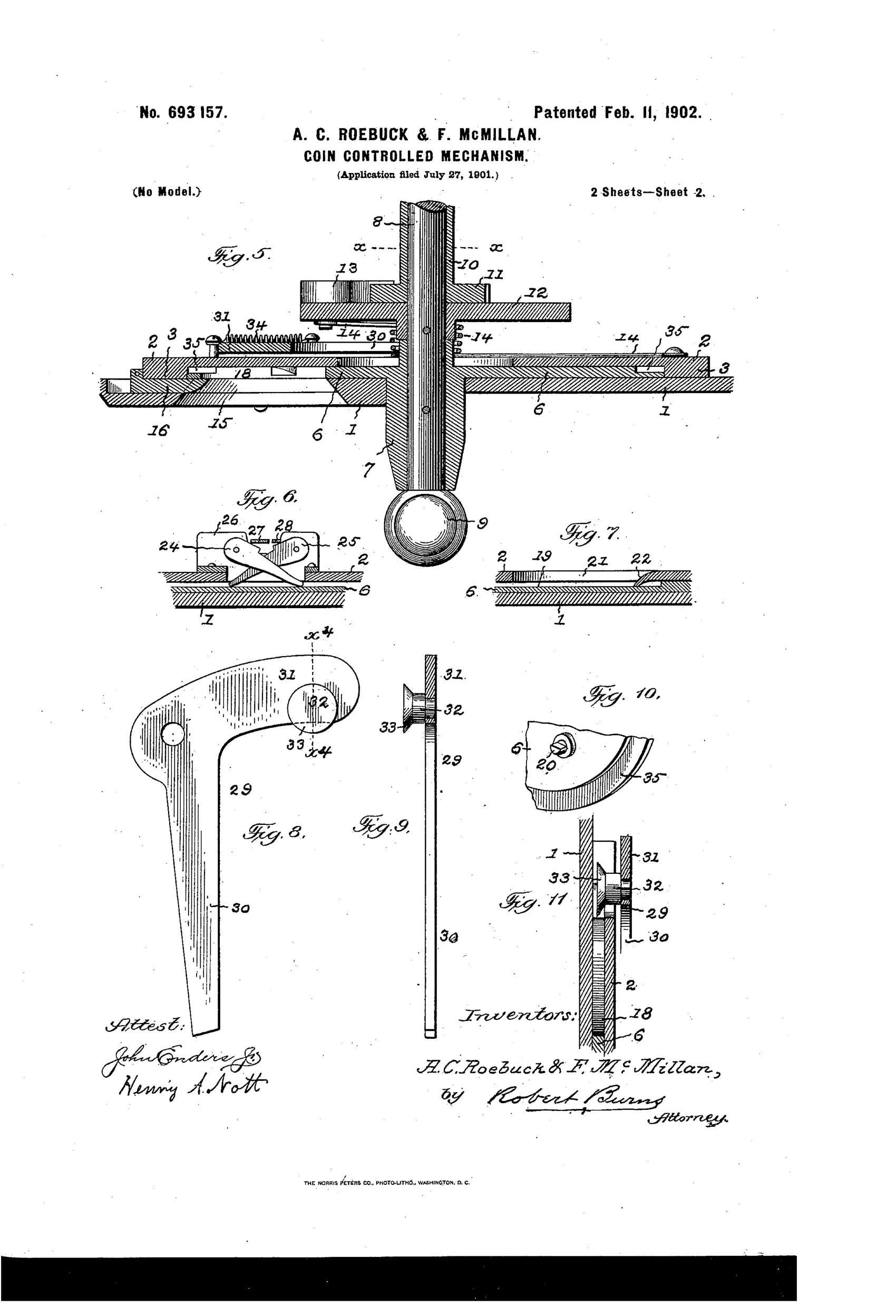
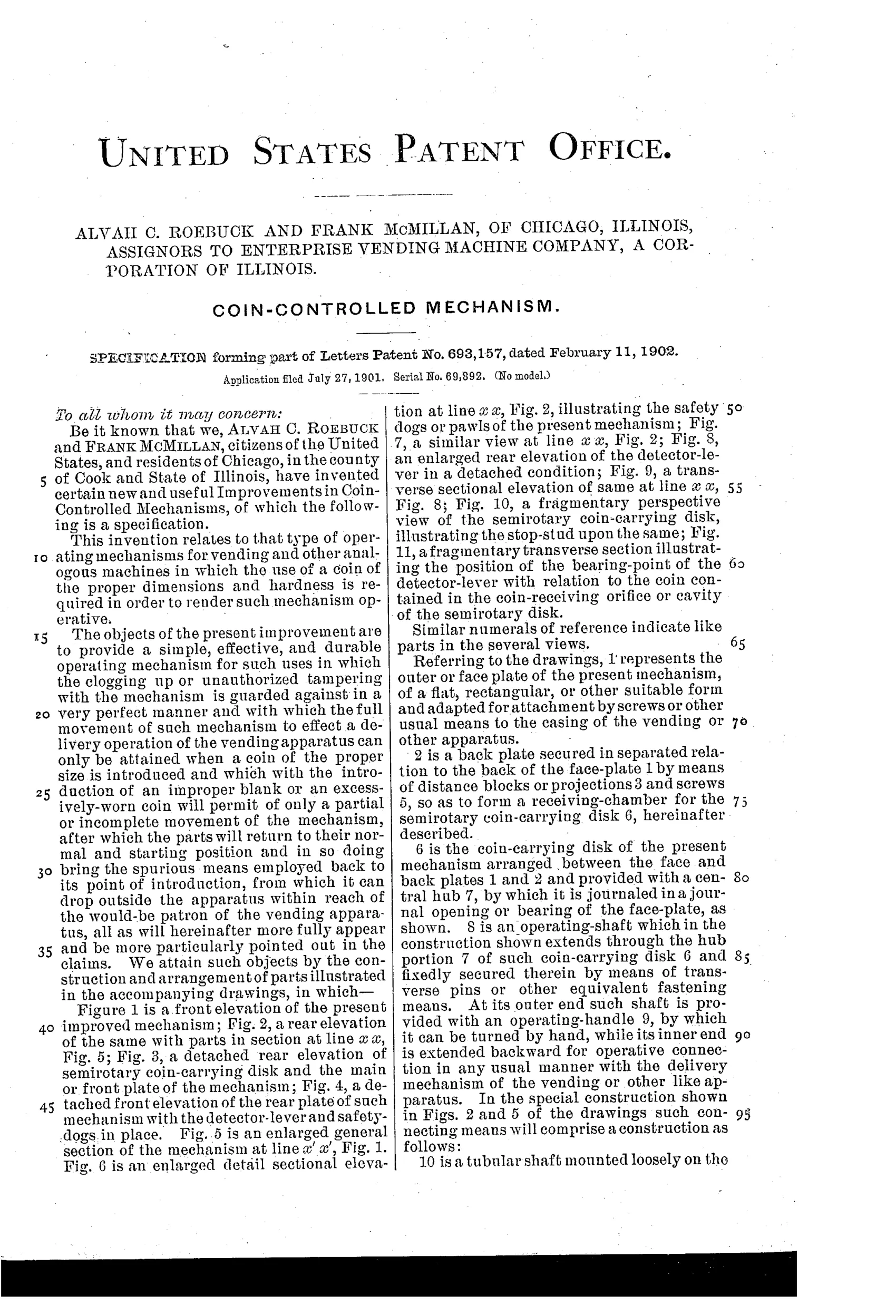
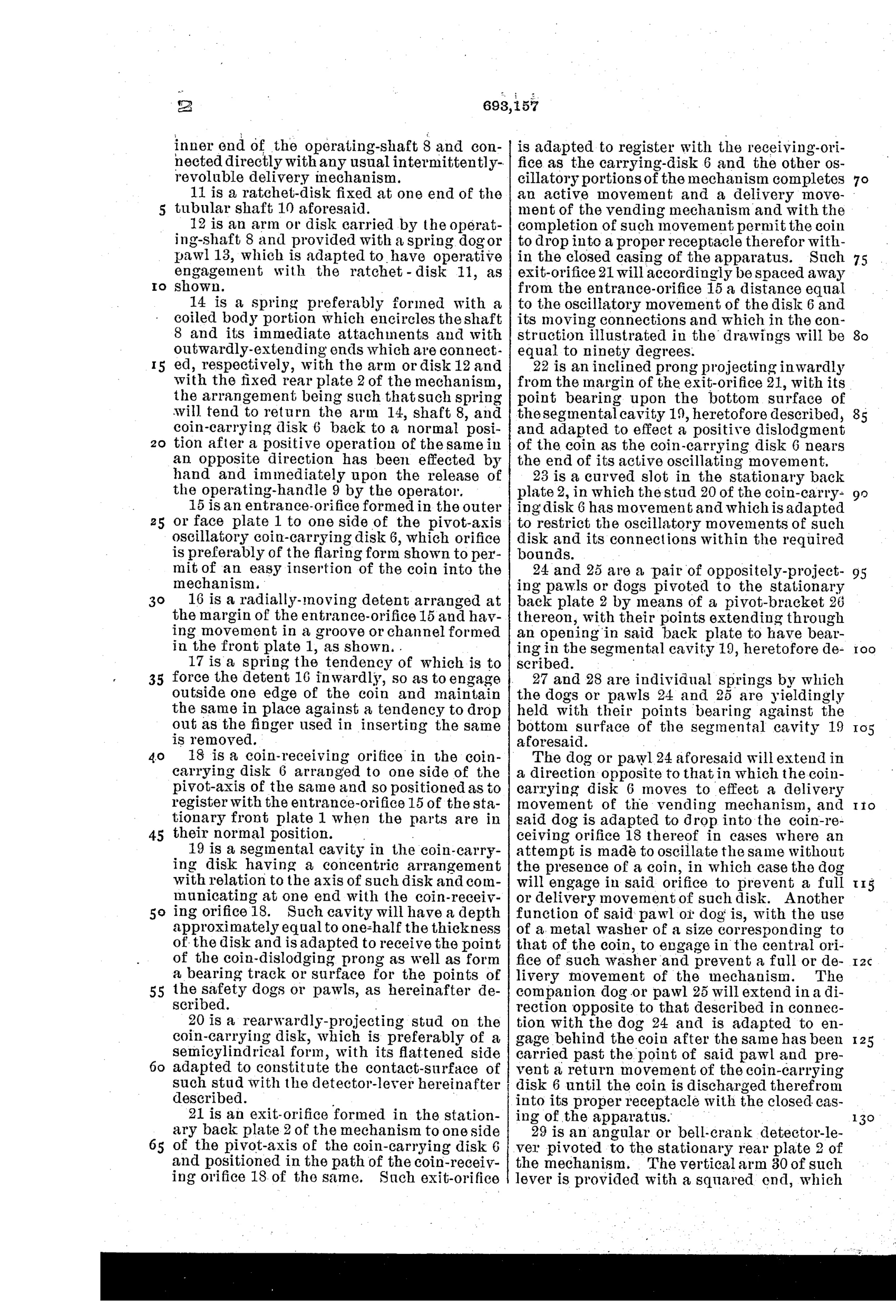
A coin-detecting mechanism for vending machines.
◉ How it works
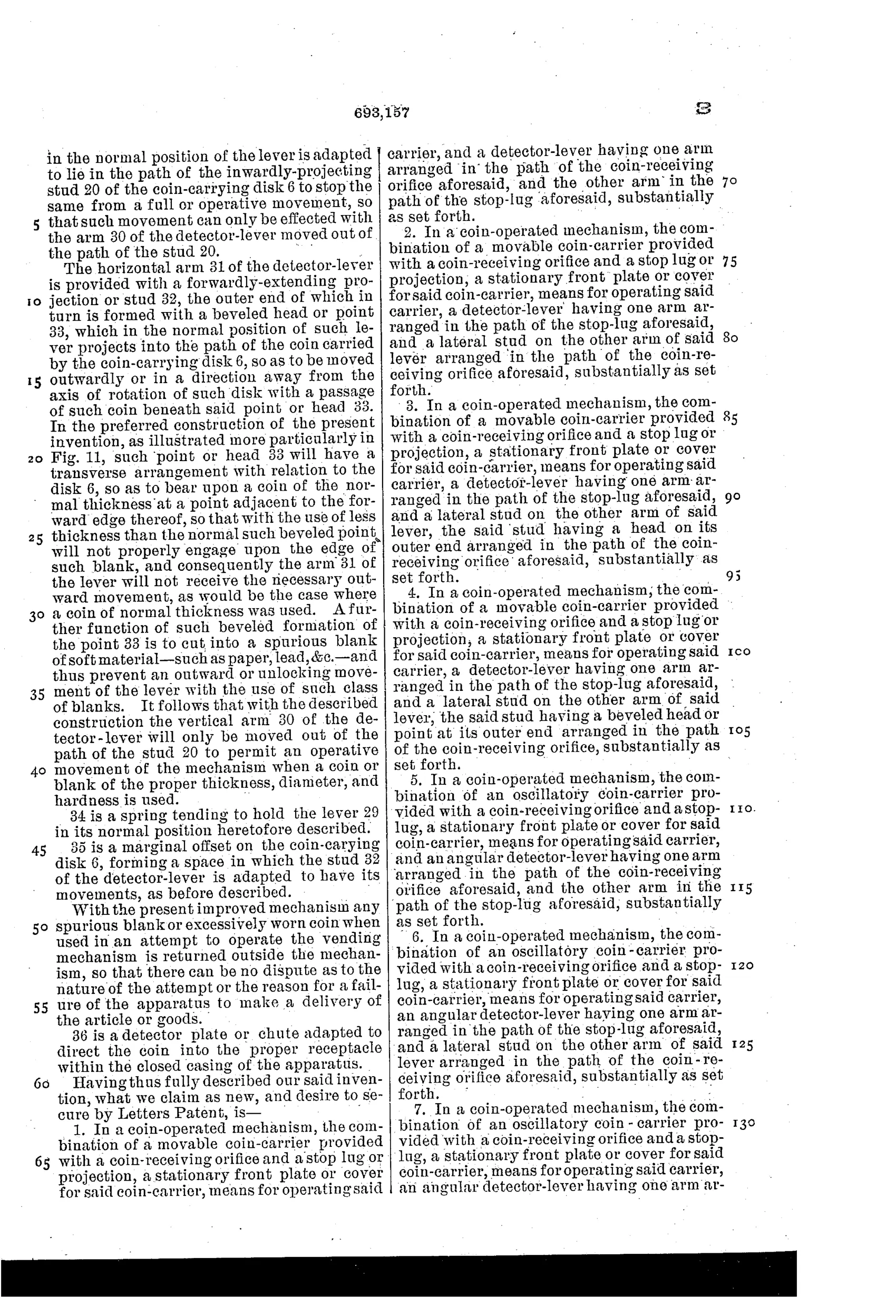
A semirotary coin-carrying disk mounted between fixed front and back plates receives a coin through an entrance orifice and detent, and is turned by a handled operating shaft against a return spring. A bell-crank detector-lever, with one arm resting on a stop-lug and the other bearing a beveled stud in the path of the coin-receiving orifice, only swings clear when a coin or blank of the correct thickness passes beneath its beveled point, allowing the disk full oscillation to an exit orifice. Undersized, oversized, or soft spurious blanks fail to deflect the lever properly, so the disk returns to start and ejects the blank back out where it was inserted. Safety pawls and a curved dislodging prong further ensure the coin is captured, held, and discharged only upon a completed genuine delivery movement.
◉ What was claimed
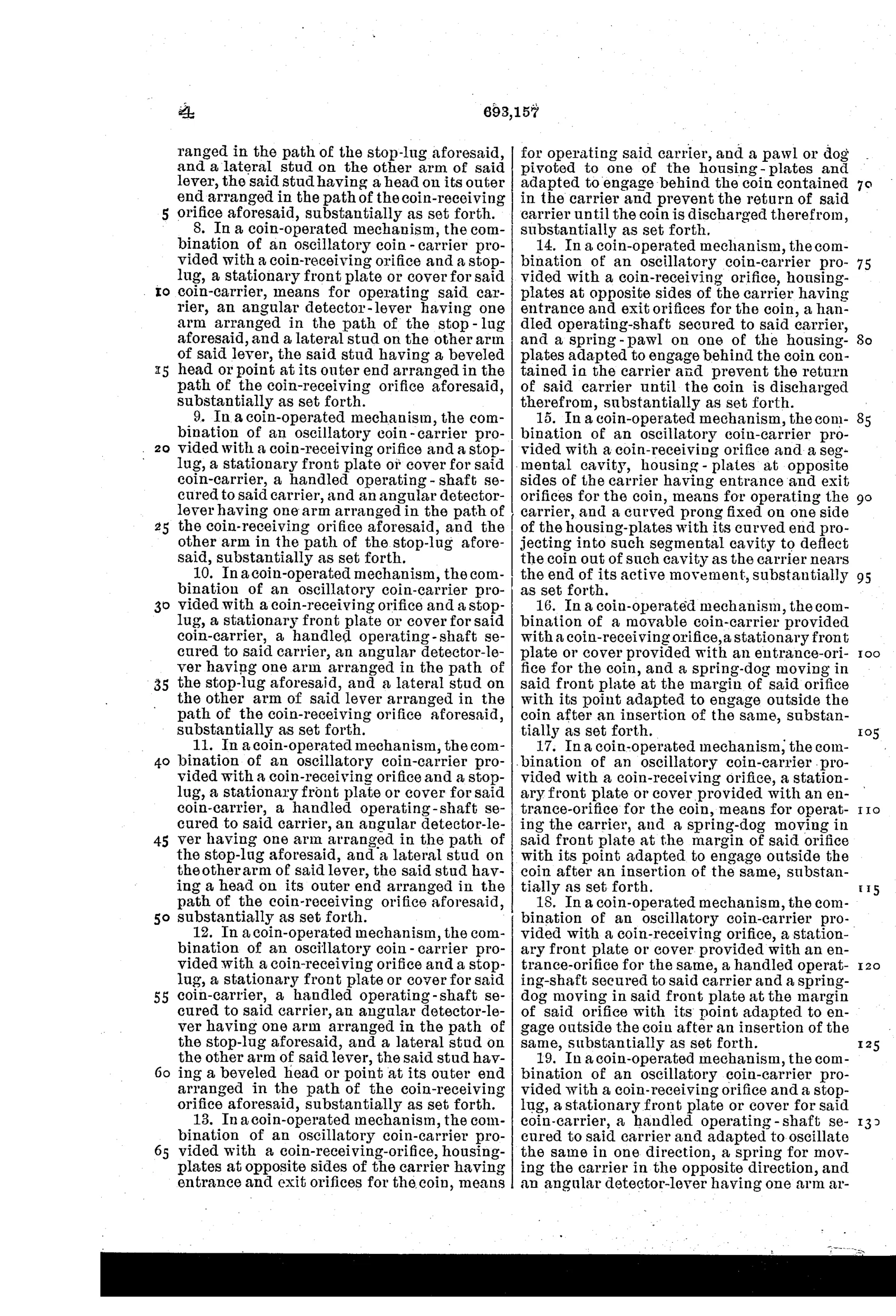
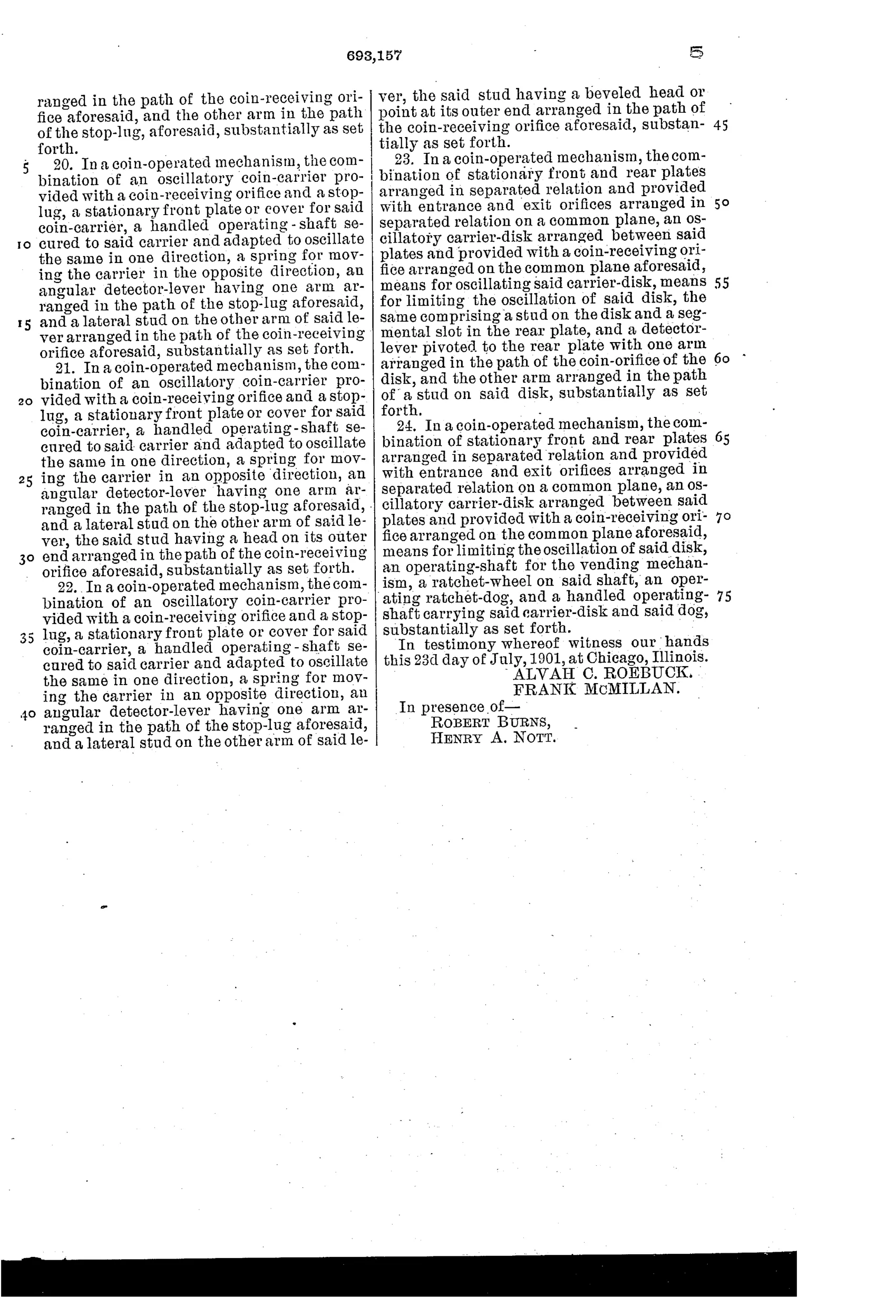
“In a coin-operated mechanism, the combination of a movable coin-carrier provided with a coin-receiving orifice and a stop lug or projection, a stationary front plate or cover for said coin-carrier, means for operating said carrier, and a detector-lever having one arm arranged in the path of the coin-receiving orifice aforesaid, and the other arm in the path of the stop-lug aforesaid, substantially as set forth.”
In plain English: The machine combines a movable coin holder with a stop lug, a cover plate, an operating mechanism, and a two-armed lever that checks both the coin slot and the stop lug to confirm a proper coin before allowing the machine to work.
◉ In the inventor’s words
“With the present improved mechanism any spurious blank or excessively worn coin when used in an attempt to operate the vending mechanism is returned outside the mechanism, so that there can be no dispute as to the nature of the attempt or the reason for a failure of the apparatus to make a delivery of the article or goods.”— Alvah C. Roebuck and Frank McMillan, from the specification
Fate unknown
Enterprise Vending Machine Co. was a real concern, but no surviving machine documented with this specific carrier-and-lever mechanism is known to me; a marked example would settle it.
◉ Commentary
Yes, that Alvah C. Roebuck — the watchmaker whose name still hangs on the Sears sign. By 1901 he had sold his interest in the mail-order house and was chasing other ventures, and here he is with Frank McMillan patenting a coin tester for the Enterprise Vending Machine Company of Chicago. The category is full of anonymous chute-tinkerers; this one comes with a famous signature.
The mechanism itself is a rotary carrier rather than a gravity chute, which is the interesting choice. The coin rides in a pocket in a disk that the customer turns by hand against a spring. A bell-crank lever does double duty: one arm carries a beveled stud that must be lifted by the coin's edge as the pocket sweeps past, the other arm blocks a stop-lug on the disk. Only a coin of correct thickness deflects the stud far enough to clear the lug — too thin, too thick, or too soft, and the disk simply won't complete its throw. The spring then returns everything and hands the slug back.
That return feature is the shrewdest part, and the patent says why in plain merchant's language: the rejected blank comes back out where it went in, 'so that there can be no dispute' about why the machine didn't deliver. That's a retailer thinking about arguments at the counter, not just a mechanic thinking about slugs. A workmanlike test, but the customer-relations logic is pure Roebuck.
Commentary by Claude, The Counterfeit Coin Detector Patent Archive’s resident enthusiast