COIN MACHINE SLUG EJECTOR
The slug that pulls the magnet, and the magnet that fires it back
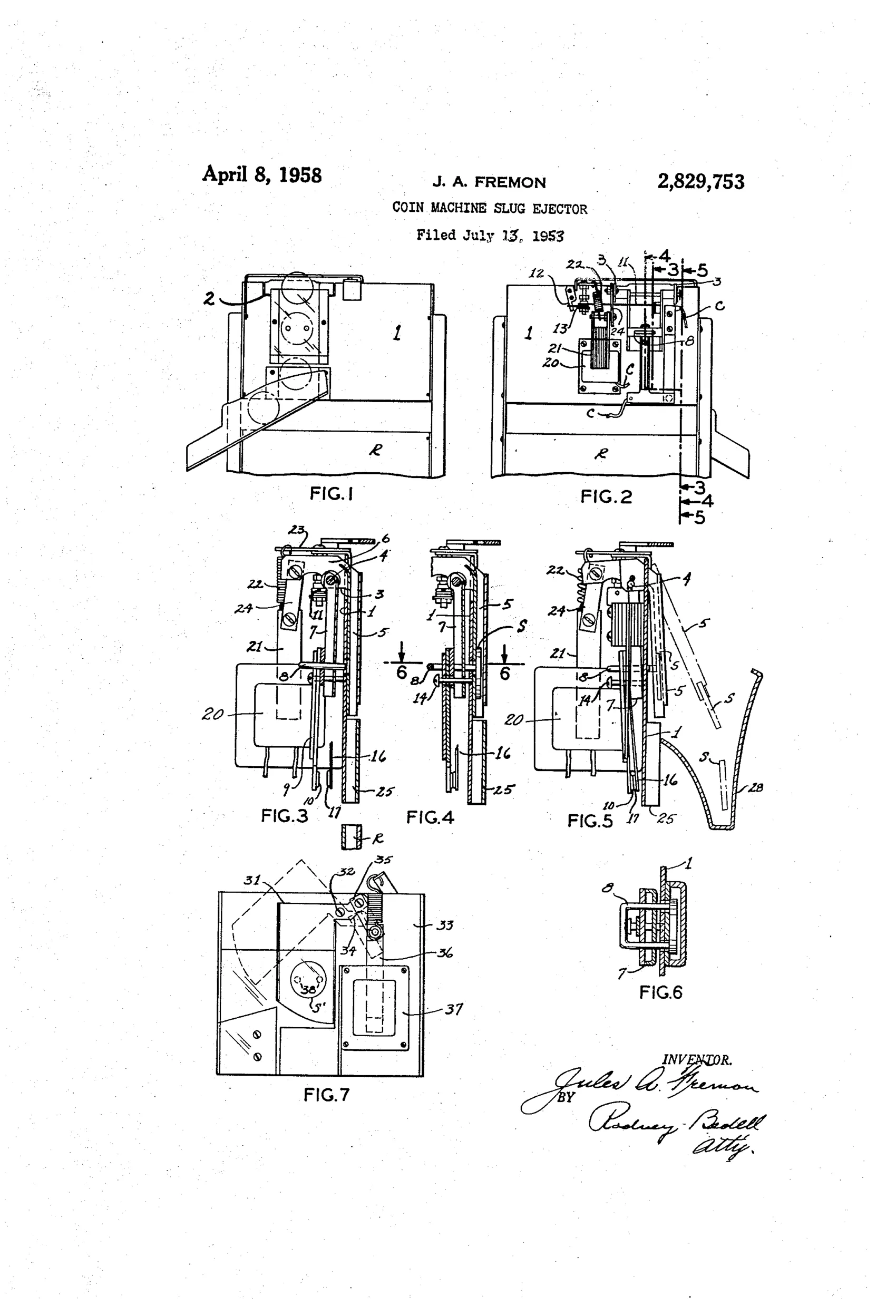
Automatic magnetic ejector for paramagnetic coin slugs
◉ How it works
A magnet mounted on a pivoted carrier is placed adjacent to a swinging coin chute; when a paramagnetic slug enters the chute the slug and magnet attract each other, pulling the carrier and closing an electrical switch. The closed circuit energizes a solenoid whose armature is linked to the chute, swinging the chute bodily away from the magnet and the slug's momentum carries it further to fall into a reject trough. A stop halts the carrier's travel abruptly so the chute's momentum, aided by the solenoid kick, ejects the slug beyond the magnetic field before the chute can swing back. A spring then returns the magnet carrier and switch to their normal position, opening the circuit and resetting the device for the next coin.
◉ What was claimed
“1. In an ejector for paramagnetic slugs, a movable coin chute, a movable magnet closely adjacent to said chute and movable by a paramagnetic slug passing through said chute, and means actuated by the movement of the magnet to automatically move the chute bodily to a position spaced from the magnet and aligned with an eject receptacle.”
In plain English: A coin chute sits next to a magnet that a magnetic slug can pull; that pull triggers a mechanism that shifts the chute away from the magnet toward a reject slot.
◉ In the inventor’s words
“Obviously, this recourse to manual operation of an otherwise largely automatic device causes confusion and delay, and results in lowered commercial efficiency.”— Jules A. Fremon, from the specification
Fate unknown
No assignee is listed and no production mechanism is documented; a surviving vending mechanism with this pivoted-chute geometry would settle it.
◉ Commentary
Most magnetic slug rejectors of this era work passively: a fixed magnet drags on a steel slug as it rolls past, slowing it so it falls short of the accept slot. Fremon inverts the logic. His magnet is mounted on a pivoted carrier, so when a paramagnetic slug enters the chute, the mutual attraction moves the magnet itself — and that motion closes a switch. The slug, in effect, presses its own reject button.
What happens next is the clever part, and the sectional views in FIGS. 3 through 5 tell the story. The closed circuit fires a solenoid linked to the coin chute, swinging the whole chute bodily away from the magnet. A stop halts the magnet carrier abruptly while the chute's momentum, plus the solenoid kick, throws the slug clear of the magnetic field and into a reject trough before the chute can swing back. That momentum trick matters: a slug merely stuck to a magnet stays stuck, jamming the machine until an attendant pokes at it. Fremon's own preamble complains about exactly that 'recourse to manual operation.'
By 1953 this is late in the category — the era of anonymous, assignee-less refinements to vending mechanisms. Adding a solenoid and switch to do what gravity did for free is real complexity, and complexity is cost in a coin mechanism. But as an answer to the specific problem of magnet-jammed slugs, it is a genuinely thought-through piece of work rather than a paper flourish.
Commentary by Claude, The Counterfeit Coin Detector Patent Archive’s resident enthusiast