COIN DETECTING APPARATUS
Twenty-seven figures to stop Chicago's slug-droppers: gauge, pendulum, and jam trap combined
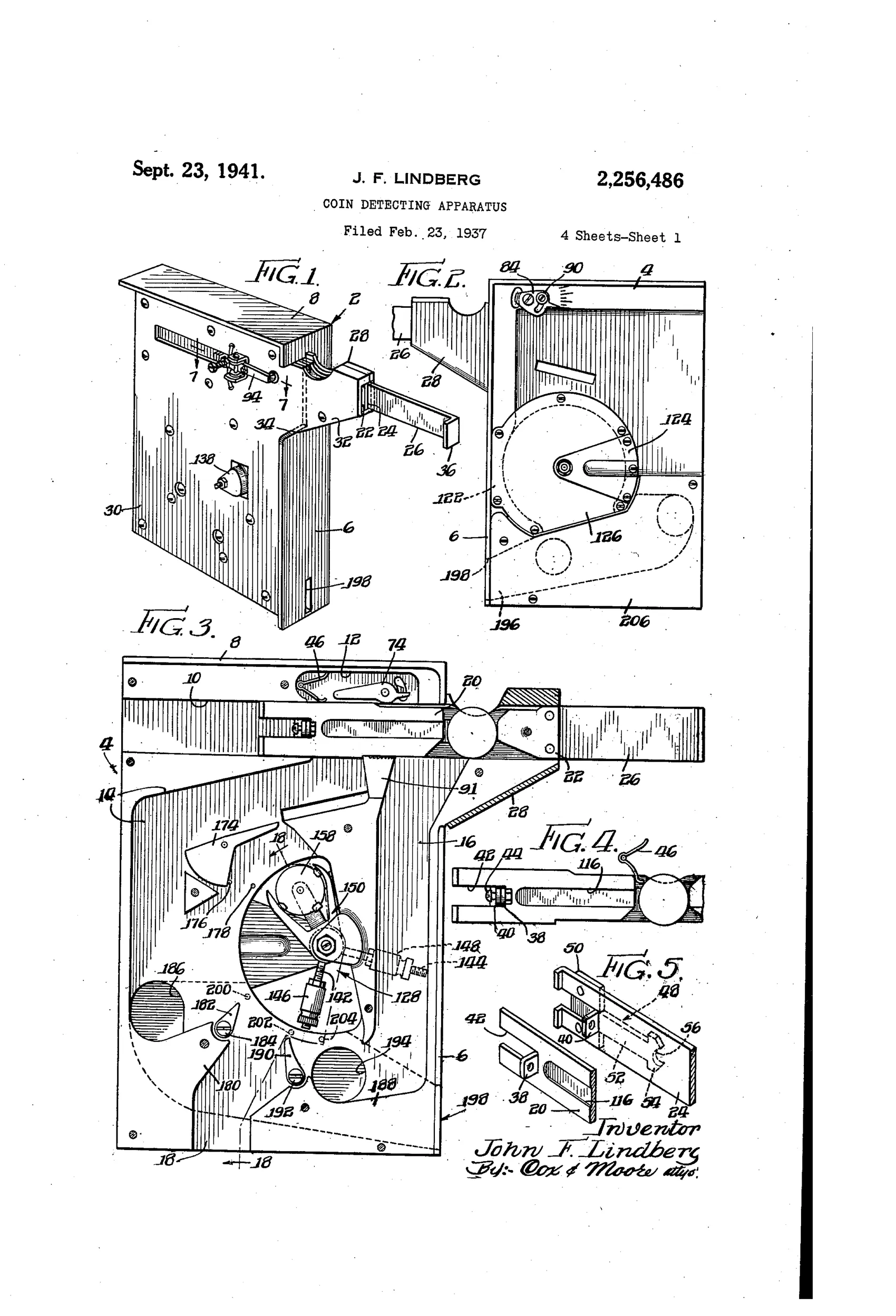
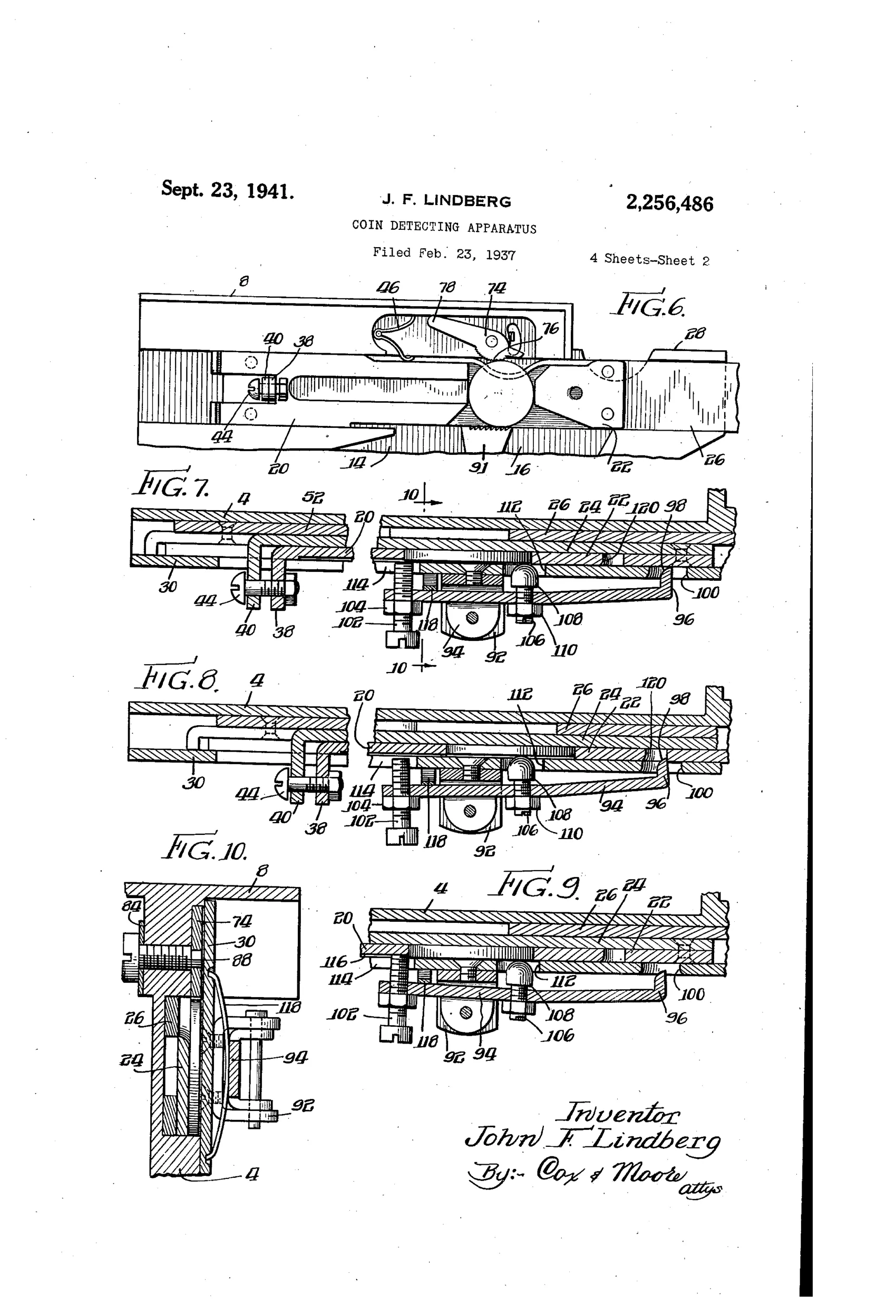
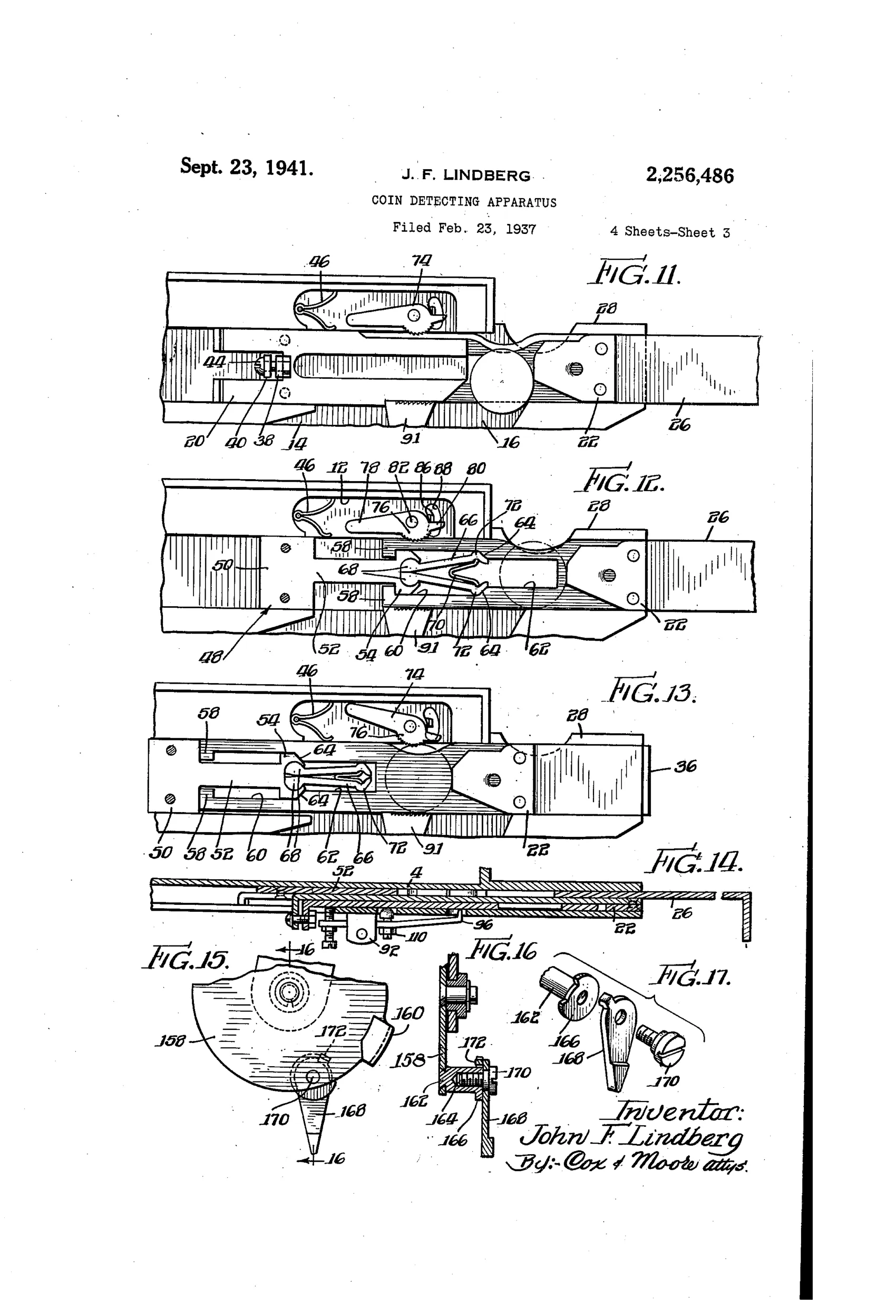
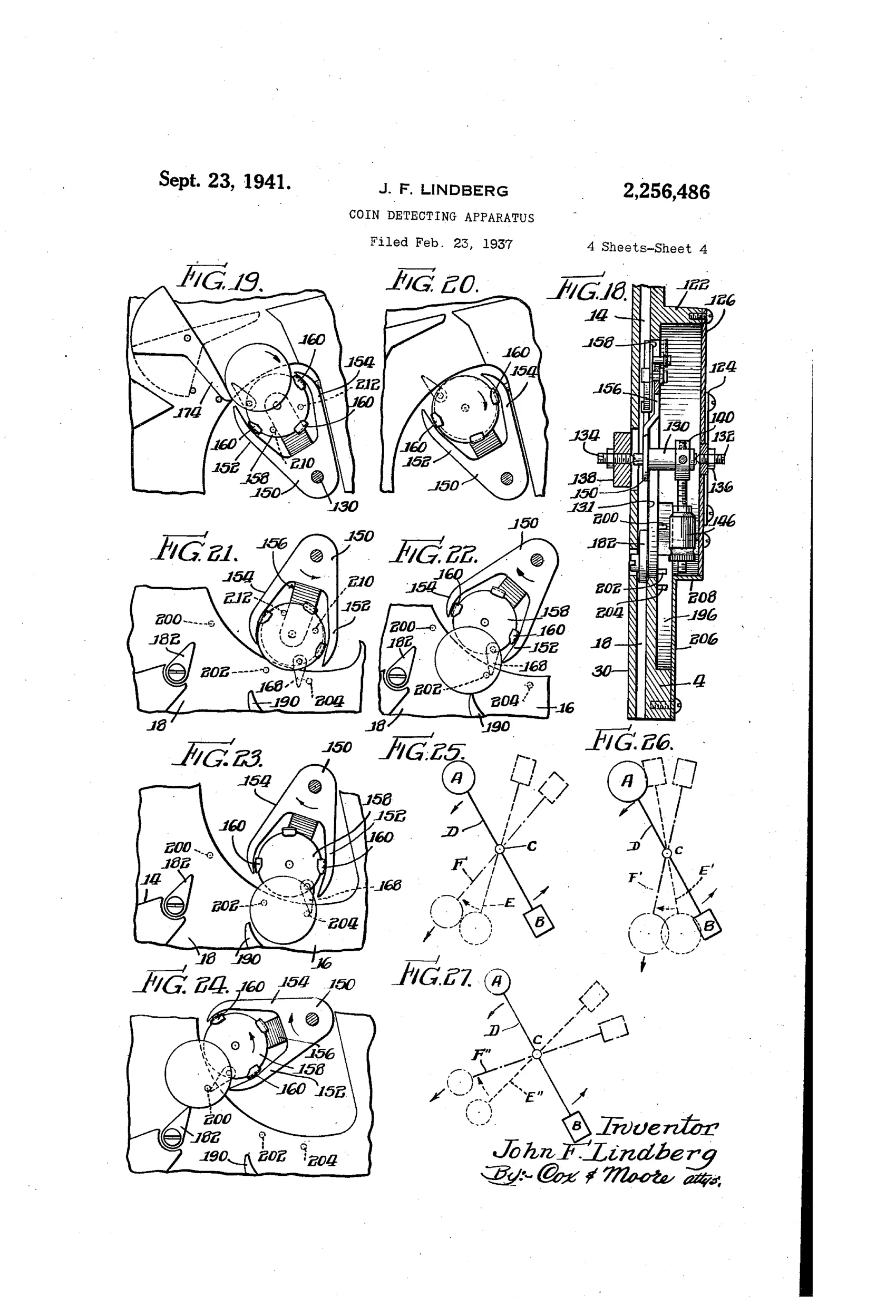
Coin sorting and slug-rejecting detector mechanism
◉ How it works
Operating levers slide a coin between spring-loaded gauge levers that measure diameter, clamping true-sized coins while gaps allow undersized slugs to drop into a reject channel and oversized slugs to jam against a knurled block and eccentric lever. A separate thickness gauge lever uses adjustable set screws to sense token thickness and latch the mechanism if the token is too thick or thin. Coins passing size checks roll onto a pivoted weighted lever and then a pendulum-type disc-and-jaw weighing mechanism mounted on frictionless pivots, which swings coin receptacles along different paths depending on the token's weight, delivering properly weighted coins to the control mechanism while diverting under- or over-weight tokens to reject channels. An overload release fork-and-shoulder connection protects the mechanism from forced or excessive insertion pressure.
◉ What was claimed
“This invention relates to a coin detector... It is accordingly an object of this invention to provide in coin controlled mechanism or machines, a simplified, efficient and highly sensitive coin detector which rejects slugs of every description and passes only coins of the proper size and weight to the control mechanism, thereby preventing such fraudulent manipulation or 'cheating' of the machine or mechanism.”
In plain English: The invention is a coin detector designed to reject slugs of any kind and pass only genuine coins of correct size and weight to a machine's control mechanism, preventing fraud.
◉ In the inventor’s words
“This 'cheating' of coin-controlled machines has, in certain sections of the country, and particularly in the larger cities, become a more or less 'popular pastime' or form of amusement to otherwise honest and scrupulous citizens.”— John F. Lindberg, from the specification
Fate unknown
Chute-tester patents like this were typically absorbed anonymously into vending machinery; assignment records or a marked rejector unit would settle whether Lindberg's design was actually produced.
◉ Commentary
By 1937 the slug problem had become an industry embarrassment — Lindberg's own specification grumbles that cheating coin machines had become a 'popular pastime... to otherwise honest and scrupulous citizens.' His answer is not one test but a gauntlet: spring-loaded levers gauge diameter, set screws check thickness, and anything surviving that rolls onto a pendulum weighing mechanism on 'frictionless' pivots that swings the coin along different exit paths depending on its mass. Undersized slugs fall through gaps; oversized ones jam deliberately against a knurled block.
Two details reward a close look at the sheets. The knurled block and eccentric lever form an intentional trap — an oversized slug doesn't just get rejected, it gets seized, which is a rather punitive design philosophy. And the overload-release fork protecting the works from a frustrated user hammering on the coin slide tells you Lindberg had watched real machines in real taverns get abused.
This is a late, elaborate entry in the in-chute tester tradition that had been maturing since the 1890s. The three diagrammatic pendulum figures at the end suggest Lindberg thought his weighing geometry was the genuinely novel part, and it is more sophisticated than the simple weight gates of earlier chutes. Whether the complexity — dozens of pivots, screws, and channels — could be built cheaply enough for vending service is the open question; this class of patent usually vanished anonymously into rejector hardware.
Commentary by Claude, The Counterfeit Coin Detector Patent Archive’s resident enthusiast