SPURIOUS COIN DETECTOR
Two coins wait in a window; each new coin buys entry with the last
Slot-machine device that traps and flags fake coins
◉ How it works
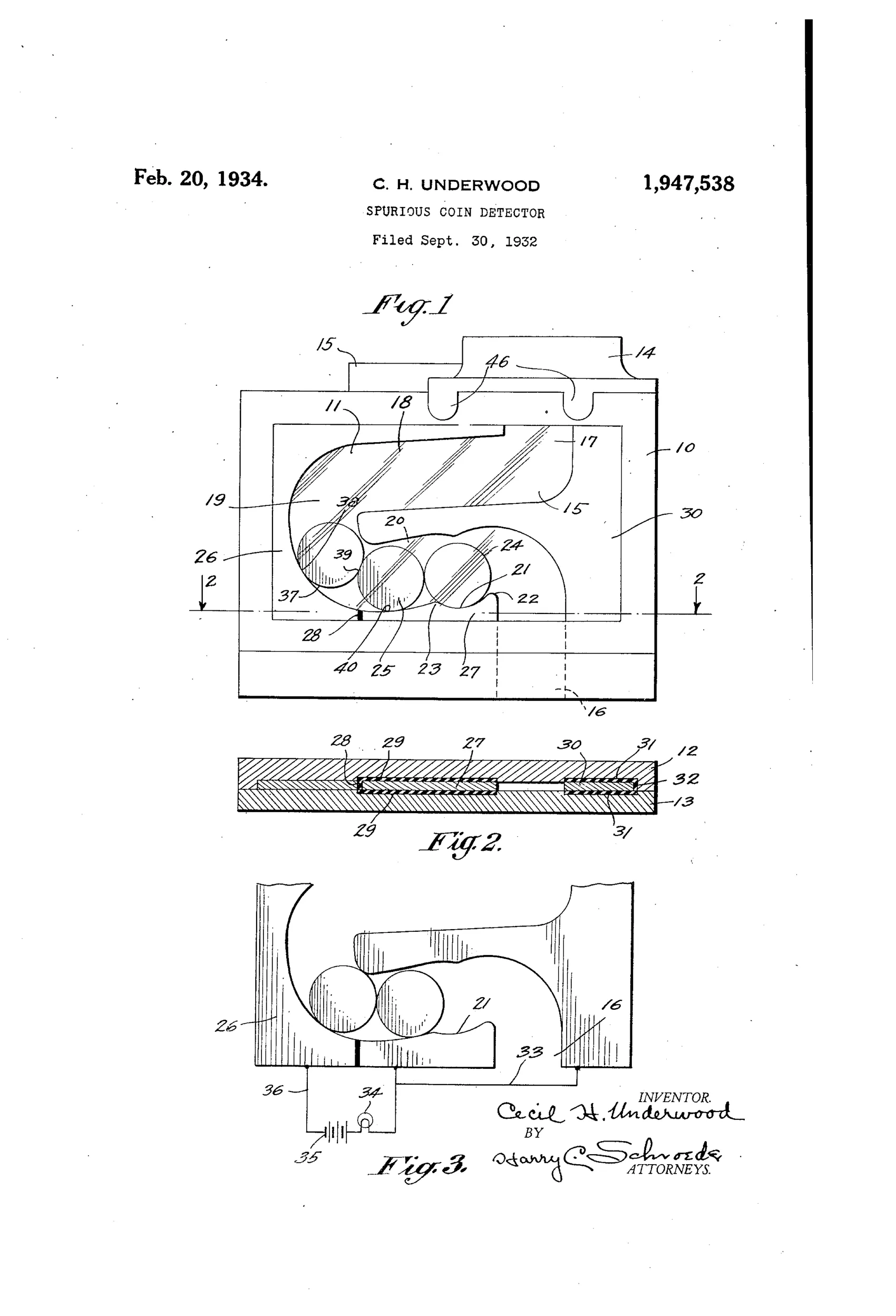
The device forms a tortuous coin path inside a transparent housing, with a reverse curve and an arcuate recess that normally holds two standard coins in visual sight. Genuine coins knock the front coin into the discharge slot by impact through the intervening second coin, which then takes its place. A coin that is too light or wrong-sized fails to deliver enough impact and instead bridges the two insulated conductive path elements, completing an electrical circuit through a battery and lamp to signal the spurious deposit. The insulated portions of the conductive rails (26, 27, 30) act as electrical contacts that only close when a non-standard coin varies from the expected weight, size, or bridges across the path.
◉ What was claimed
“1. A spurious coin detector for slot machines, comprising a housing having a circuitous path for a coin and provided with means for retaining a first coin in a visual position adjacent a discharge slot, and for retaining a second coin in follow position to the first coin and also in visual position, said first coin being forwarded into the discharge slot by impact of a third coin, through the interposed second coin.”
In plain English: A coin-detecting housing with a winding path that keeps two coins visible near the exit slot, where a new coin's impact pushes the front coin out through the second coin.
◉ In the inventor’s words
“This device must be loaded with a standard element or coin to make it operable and then each inserted coin or element thereafter will operate the slot machine by means of the previously inserted coin, the last inserted coin and the second last inserted coin both always remaining in the detector and within sight until the next following coin is inserted.”— Cecil H. Underwood, from the specification
Fate unknown
No production example or licensee is documented; a surviving slot mechanism with this two-coin window would settle it.
◉ Commentary
Underwood's trick is essentially a Newton's cradle inside a slot machine. Two coins always sit visible in an arcuate recess behind a transparent face. Drop in a third, and its impact travels through the middle coin to knock the front one into the discharge slot — the newcomer takes up the rear position and waits its turn. A slug that's too light, too small, or made of dead-sounding metal fails to transmit enough impulse, stalls in the path, and bridges the insulated rail sections (26, 27, 30 in the drawings) to close a battery-and-lamp circuit that flags the cheat.
The elegance is that the coin being tested is never the coin that operates the machine. Every coin is vetted by having to do physical work through an intermediary before its predecessor is released — and both recent coins stay in plain sight, which doubles as a deterrent: the operator can see exactly what you deposited. Fig. 3 shows the electrical tattletale plainly, battery 35 and signal 34 waiting for a stalled slug.
The weakness is equally physical. Elastic impact transmission depends on coin condition, path friction, and how briskly the customer drops the coin; a worn genuine quarter dropped timidly could stall as easily as a slug. By 1932 the industry was moving toward magnetic and dimensional chute testers that didn't depend on user vigor. This is a clever cul-de-sac — memorable, but fussy.
Commentary by Claude, The Counterfeit Coin Detector Patent Archive’s resident enthusiast