DEVICE FOR REJECTING SPURIOUS COINS
The tester that only works with a coin already inside it
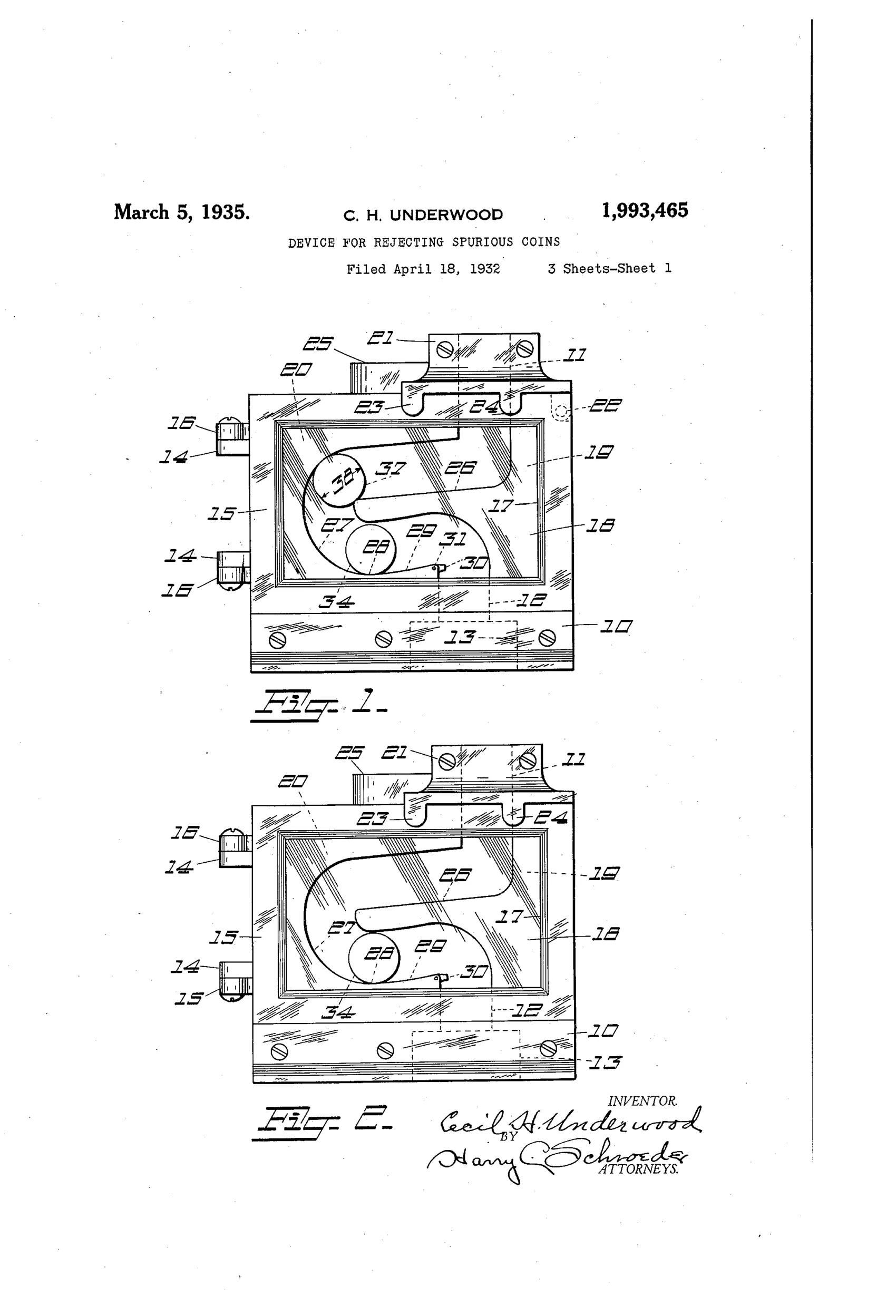
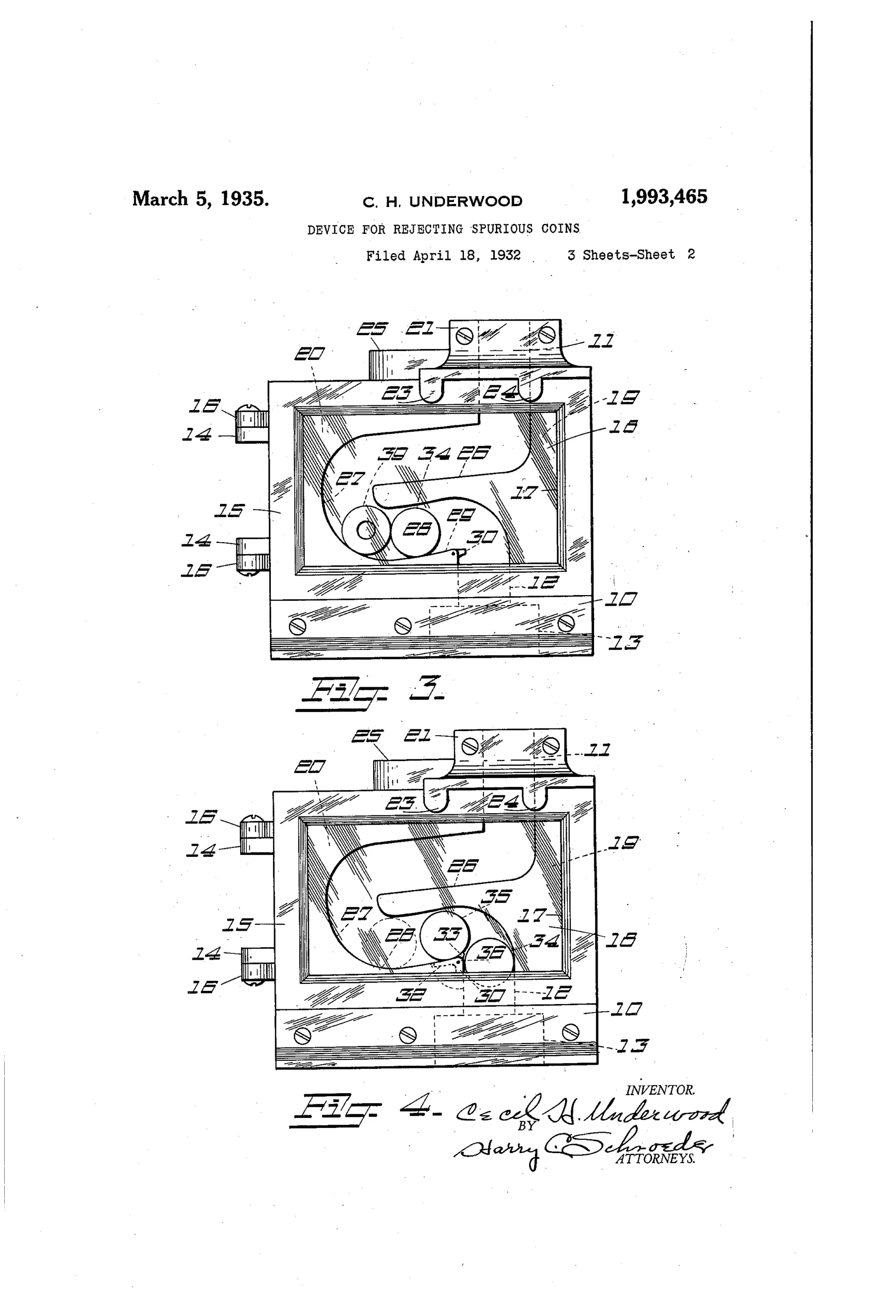
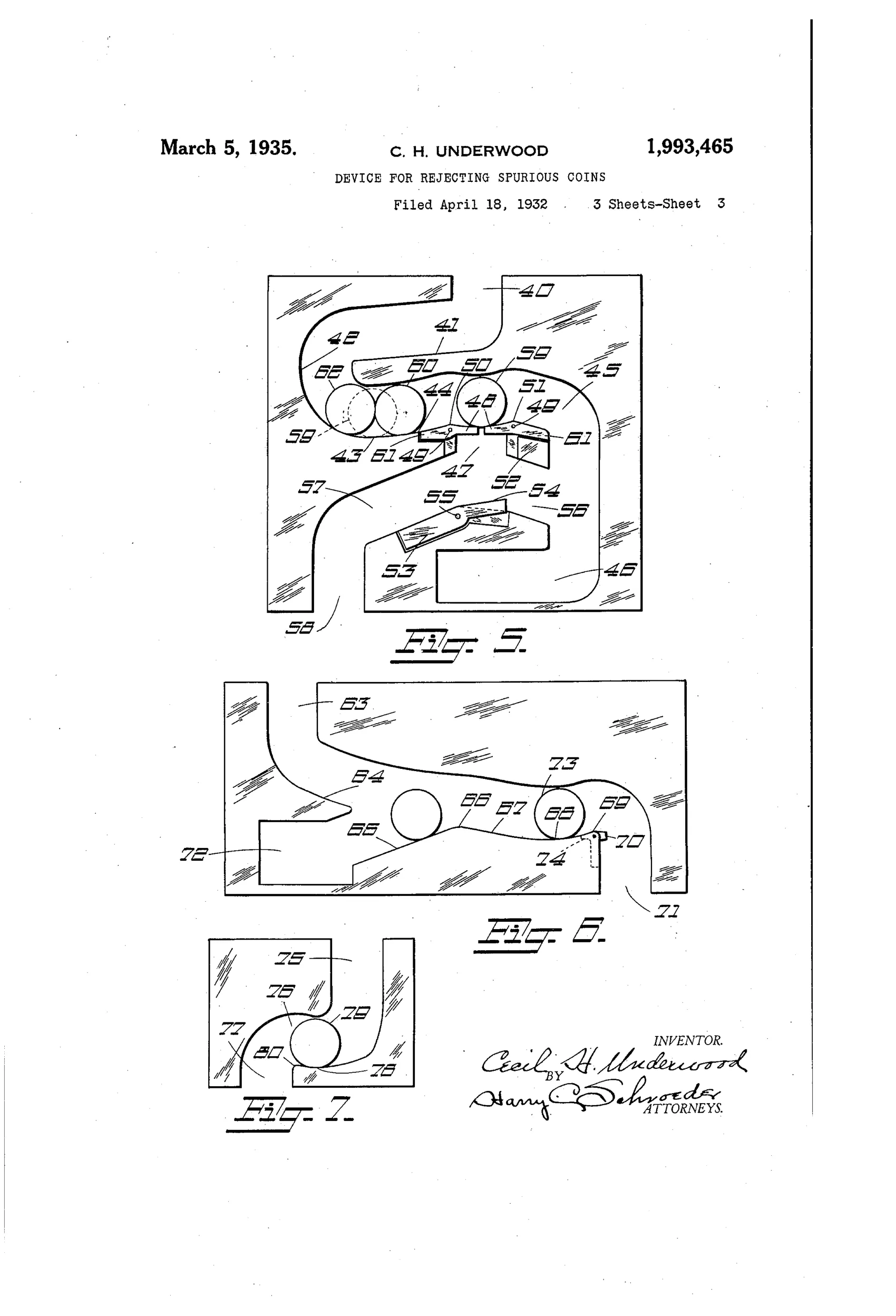
Coin-slot detector that traps and displays spurious coins
◉ How it works
A casing forms a circuitous, glass-windowed track between an entry slot and a discharge slot leading to the coin machine. A standard coin rests in a recess at the bottom of an incline and return bend; a following coin rolling down the incline strikes it, using impact energy to forward the first coin toward the discharge slot only if the following coin is of proper (or greater) weight. A hinged, counterweighted selector or trap door beneath the track rejects coins of incorrect weight or shape, letting them fall away to a separate discharge chute while retaining lighter, heavier, or irregular slugs visible behind the glass until removed by an attendant. Variations of the mechanism use ridges, humps, and pivoted trap elements calibrated to the standard coin's weight so that only a coin of predetermined weight, forwarded by a similar coin, passes through to operate the slot machine.
◉ What was claimed
“A spurious coin rejector comprising retaining means for retaining a normal weight first coin in a visible position of rest, means for forwarding a second coin to impact with the first coin to forward the first coin to a discharge opening, and, selective means for rejecting forwarded first coins when forwarded by second coins of greater weight and for rejecting all coins of different weight than the first coin, and for forwarding first coins forwarded by coins of similar weight to the discharge opening.”
In plain English: The device holds a standard coin in view, lets a following coin push it toward the payout slot only if that following coin is of the same weight, and rejects any coin that is lighter, heavier, or forwarded by a coin of the wrong weight.
◉ In the inventor’s words
“With this method, the detector must be loaded with a standard element or coin to make it operable and then each inserted coin or element thereafter will operate the slot machine by means of the previously inserted coin, spurious coins being retained or rejected, the last inserted coin always remaining in the detector until the next coin is inserted.”— Cecil H. Underwood, from the specification
Fate unknown
No commercial use of this specific impact-transfer design is documented; a surviving mechanism or a maker's catalog reference would settle it.
◉ More by Cecil H. Underwood
- SPURIOUS COIN DETECTOR (1934)
◉ Commentary
Underwood's core idea is genuinely odd, and worth slowing down for: the detector must be primed with a genuine coin before it can accept anything. Your coin never operates the machine directly. Instead it rolls down the incline, strikes the previous customer's coin resting in a recess, and the impact knocks that older coin through to the mechanism — but only if your coin has the right weight to deliver the right blow. Your coin then takes up residence in the recess, waiting for the next patron. It's a ballistic pendulum wearing a coin-chute costume, using momentum transfer as the weight test.
The second clever touch is the glass window. Rejected slugs aren't simply dumped into a reject cup where the cheat can retrieve and retry them; the drawing shows them trapped visibly behind glass until an attendant clears them. That's a small piece of social engineering — the slug becomes evidence, sitting in plain view.
Would it work? Impact-based sorting is finicky: coin condition, rolling friction, and how squarely the strike lands all vary shot to shot, which is probably why Underwood needed five figures of modifications with ridges, humps, and counterweighted traps. By 1932 the vending industry was converging on simpler magnet-and-cradle testers, and this Rube Goldberg elegance likely lost on cost and reliability. But as a mechanism on paper, it's one of the more original entries in the chute-tester crowd.
Commentary by Claude, The Counterfeit Coin Detector Patent Archive’s resident enthusiast