COIN-CONTROLLED MECHANISM FOR TELEPHONE-BOXES AND THE LIKE.
Three tests in one chute, and a bell to tell the operator
Coin-slot mechanism that detects slugs, spurious coins.
◉ How it works
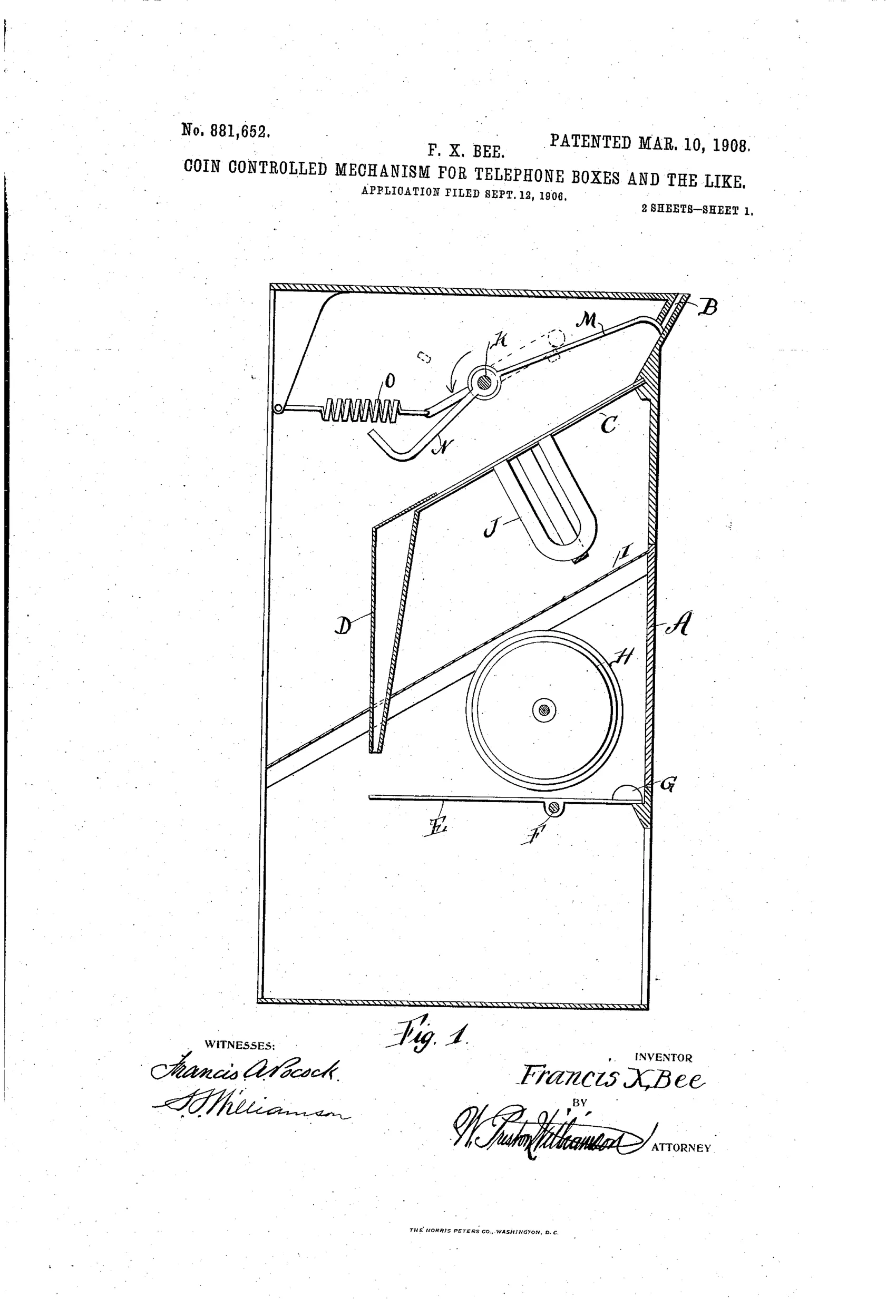
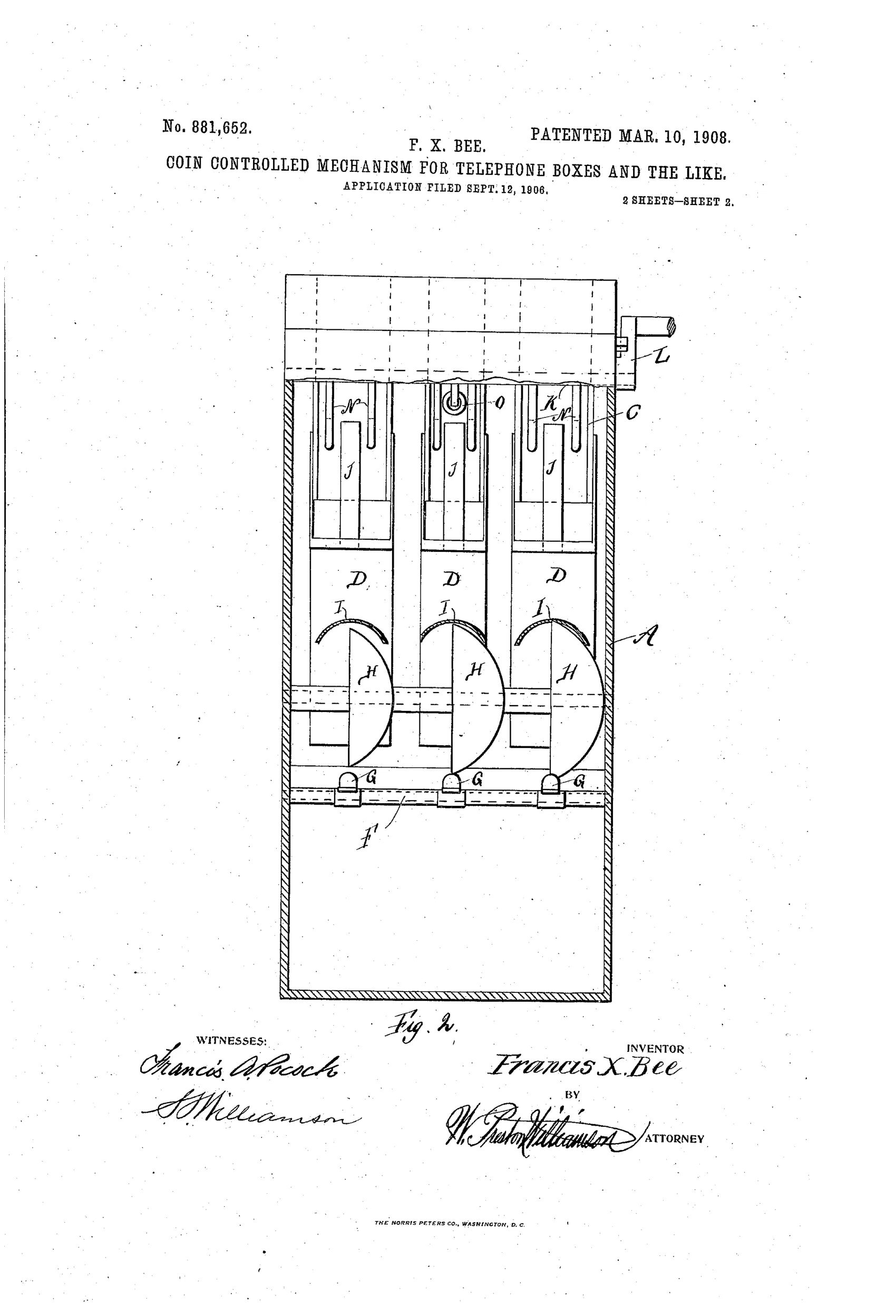
Coins inserted in slots B travel down chutes C formed by narrow L-shaped side bars; undersized coins fall over the bars into the receptacle bottom. Correct coins pass over a permanent magnet J positioned beneath each chute, which attracts and catches any iron or steel slug, preventing it from continuing down the chute. A crank L turns operating shaft K, swinging kick-off fingers N between the chute's side bars until they lift retaining bars M, releasing any coin waiting in the slot to fall down the chute onto the weighing lever E. If the coin has proper weight it depresses lever E, causing counterweight G to strike bell H and signal the operator; a spurious light coin fails to trip the bell, silently warning against connection. Fender plates I shield the bells from undersized coins that fall through without following the chute.
◉ What was claimed
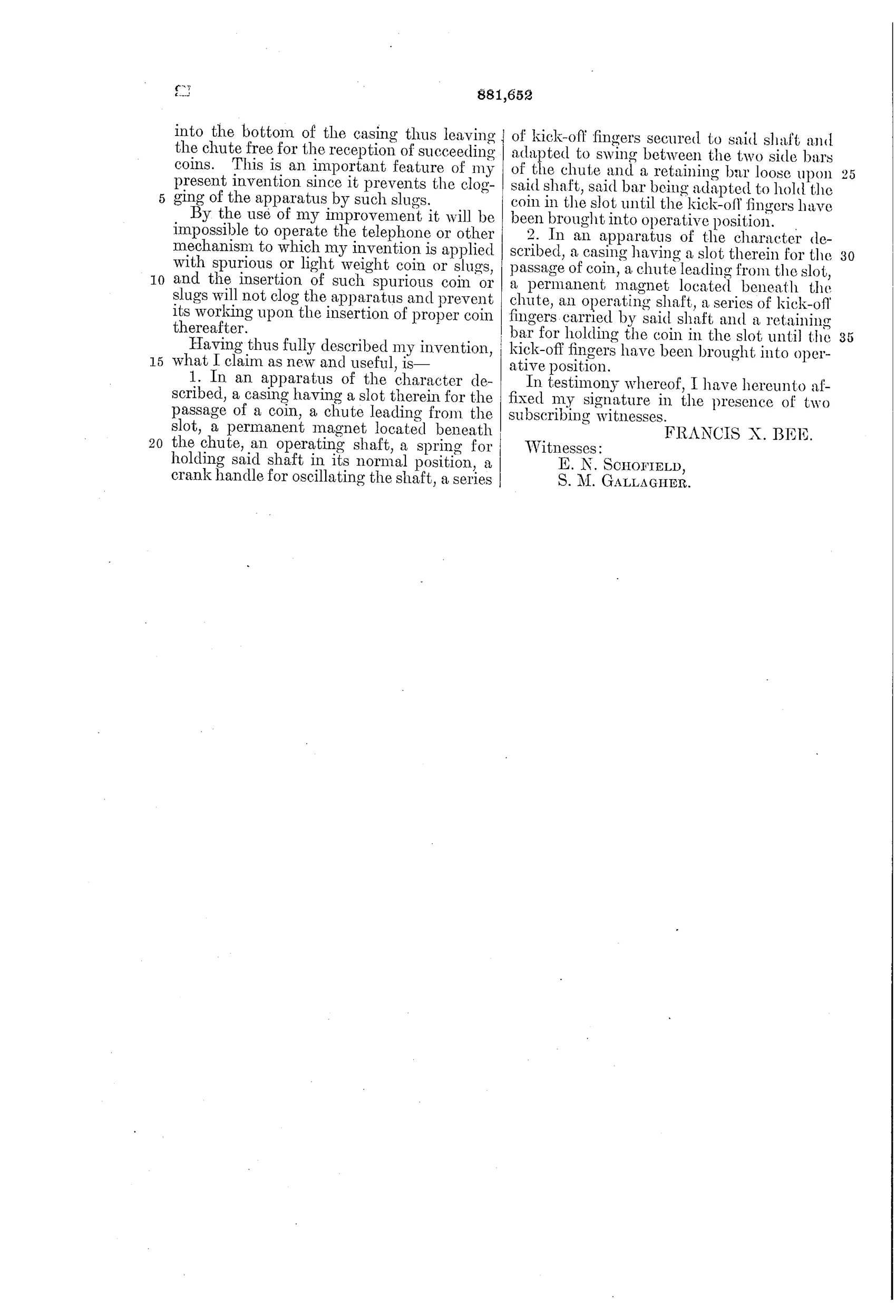
“In an apparatus of the character described, a casing having a slot therein for the passage of a coin, a chute leading from the slot, a permanent magnet located beneath the chute, an operating shaft, a spring for holding said shaft in its normal position, a crank handle for oscillating the shaft, a series of kick-off fingers secured to said shaft and adapted to swing between the two side bars of the chute and a retaining bar loose upon said shaft, said bar being adapted to hold the coin in the slot until the kick-off fingers have been brought into operative position.”
In plain English: The device uses a slotted casing with a spring-loaded, crank-operated shaft carrying kick-off fingers that release a held coin down a magnet-equipped chute only when the shaft is turned.
◉ In the inventor’s words
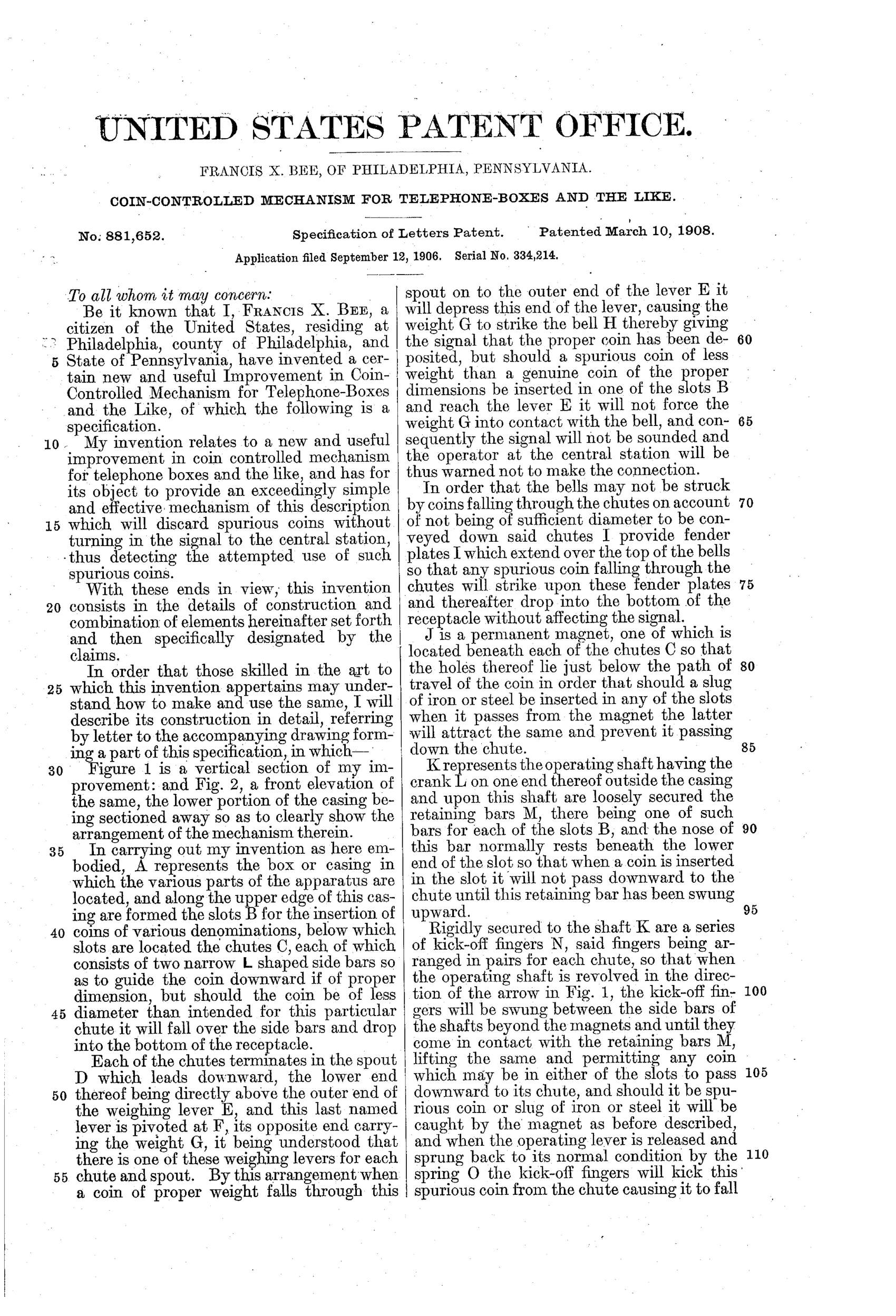
“By the use of my improvement it will be impossible to operate the telephone or other mechanism to which my invention is applied with spurious or light weight coin or slugs, and the insertion of such spurious coin or slugs will not clog the apparatus and prevent its working upon the insertion of proper coin thereafter.”— Francis X. Bee, from the specification
Fate unknown
Bee filed without an assignee and telephone coin-box hardware of this era is rarely traceable to individual patents; a marked pay station or licensing record would settle it.
◉ Commentary
Bee's 1908 pay-station mechanism stacks the era's three standard slug tests into a single gravity run: an undersized coin falls over the narrow L-shaped chute bars before it gets anywhere; a steel slug of the right size sticks to the permanent magnet J waiting under the chute; and anything that survives both must still be heavy enough to depress lever E at the bottom, swinging counterweight G against bell H. No bell, no connection. This is the pre-dial world where a human operator listened for the chime — the gong-signal idea Western Electric would standardize — so the machine doesn't need to physically block the call, only to stay honest and silent.
The detail worth lingering on is the crank-and-finger release at the top. The coin doesn't drop when inserted; a retaining bar M holds it in the slot until the caller turns crank L, swinging kick-off fingers N up between the chute bars to lift the bar and launch the coin. That makes the deposit a deliberate act synchronized with the operator's attention, and — as Bee's own text stresses — keeps jammed slugs from clogging the works, the practical failure mode that killed many chute designs.
As engineering it is a competent assembly of known tests rather than a new one. Its interest is documentary: it shows exactly what a 1906 telephone coin box had to defeat, and how anonymous this class of invention was about to become.
Commentary by Claude, The Counterfeit Coin Detector Patent Archive’s resident enthusiast