FRAUD-PREVENTIVE FOR COIN-CONTROLLED MACHINES
A self-clearing slug trap that hands rejects back with every pull of the lever
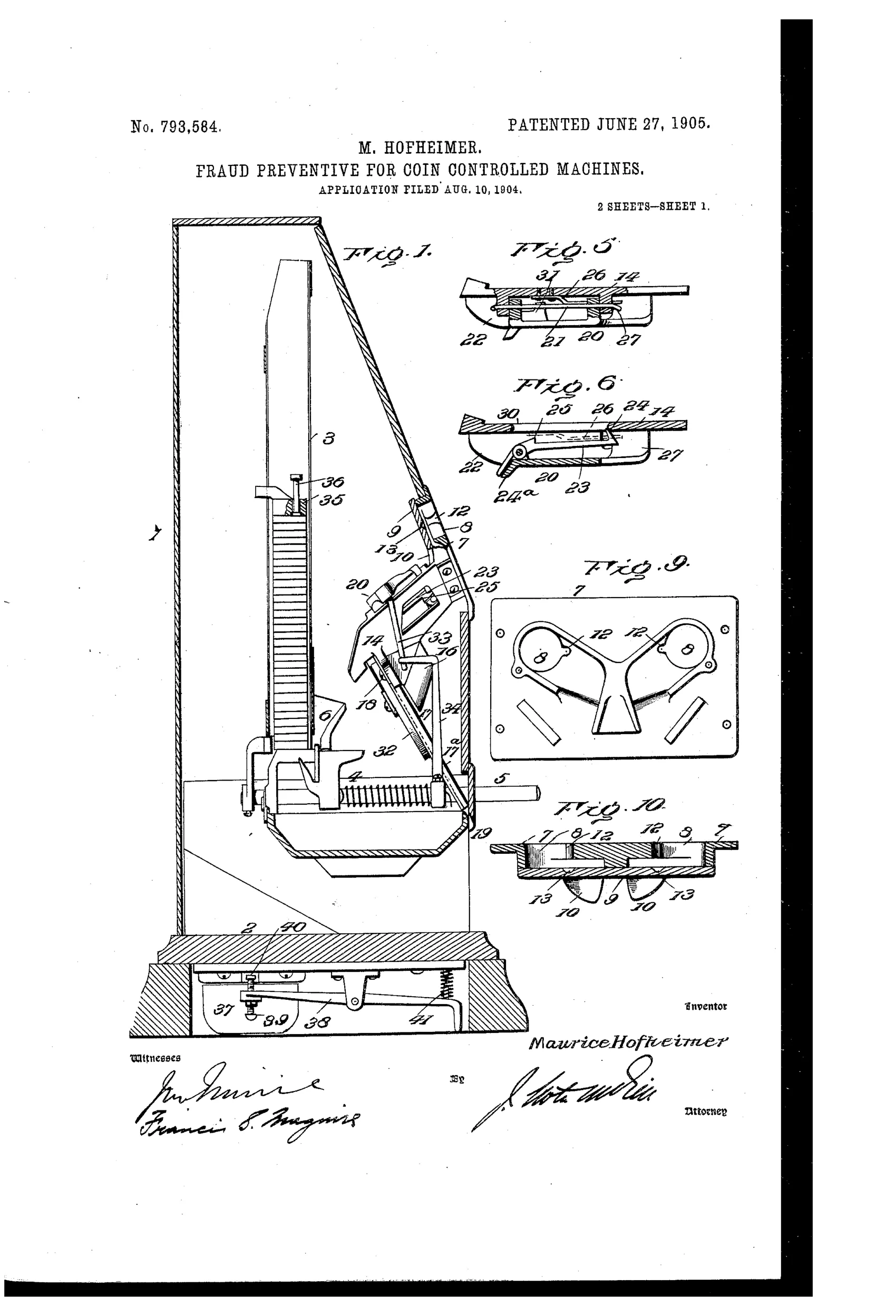
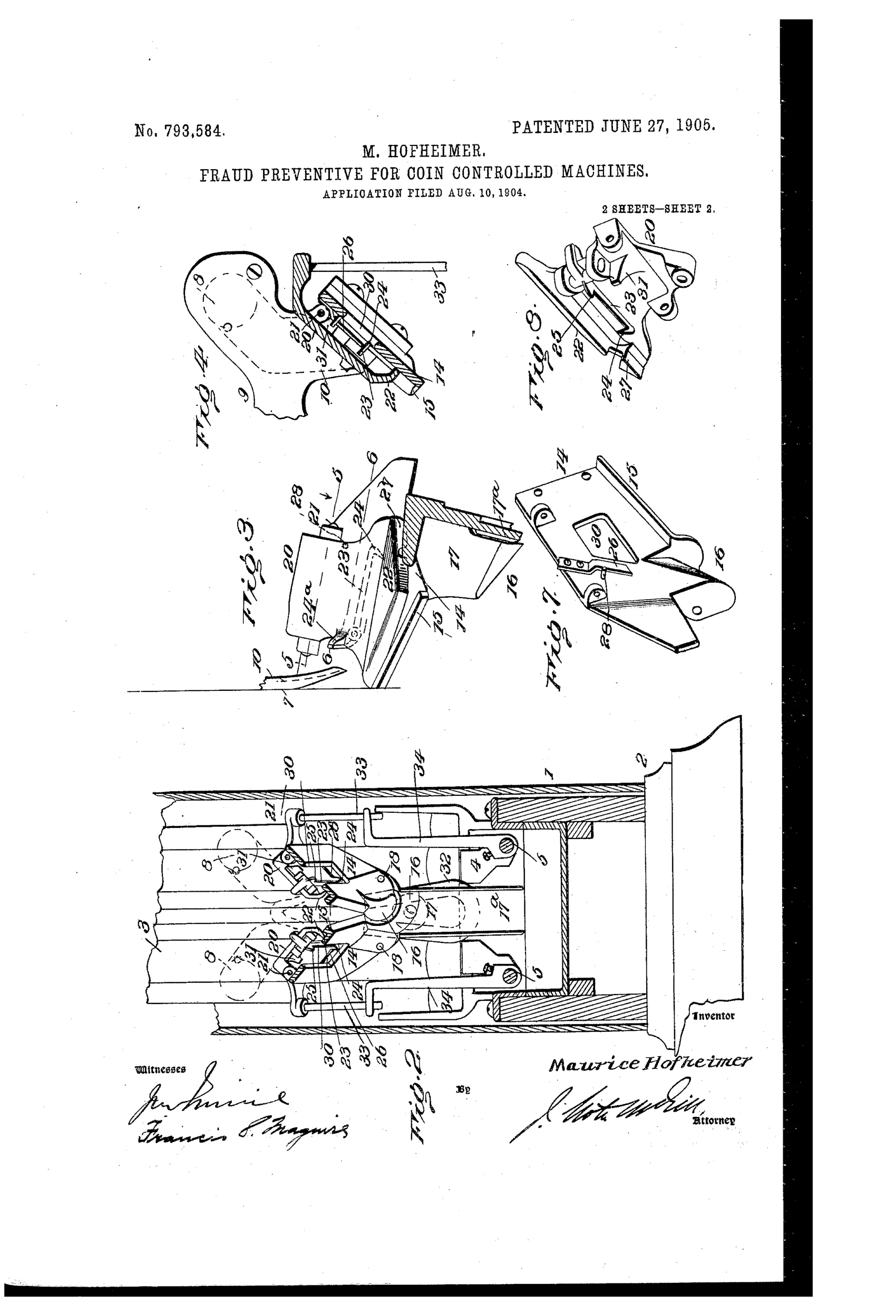
Anti-fraud coin-guideway mechanism for vending machines
◉ How it works
A stationary inclined coin-guideway plate carries coins toward the ejector while a pivoted casting overhead engages the edges of passing disks. Hooked fingers, lugs, and flanges on the casting arrest washers, slugs, and coins of improper thickness or diameter along the guideway. A magnet mounted at the chute whirls any steel or iron slugs sideways to catch fraudulent tokens that pass other tests. At each operation of the ejector rod, an arm and depending rod positively raise the casting, releasing arrested spurious coins so they fall through slots and chutes back to the front of the machine, while a base-mounted lever and spring trigger an alarm bell if the machine is tipped or lifted.
◉ What was claimed
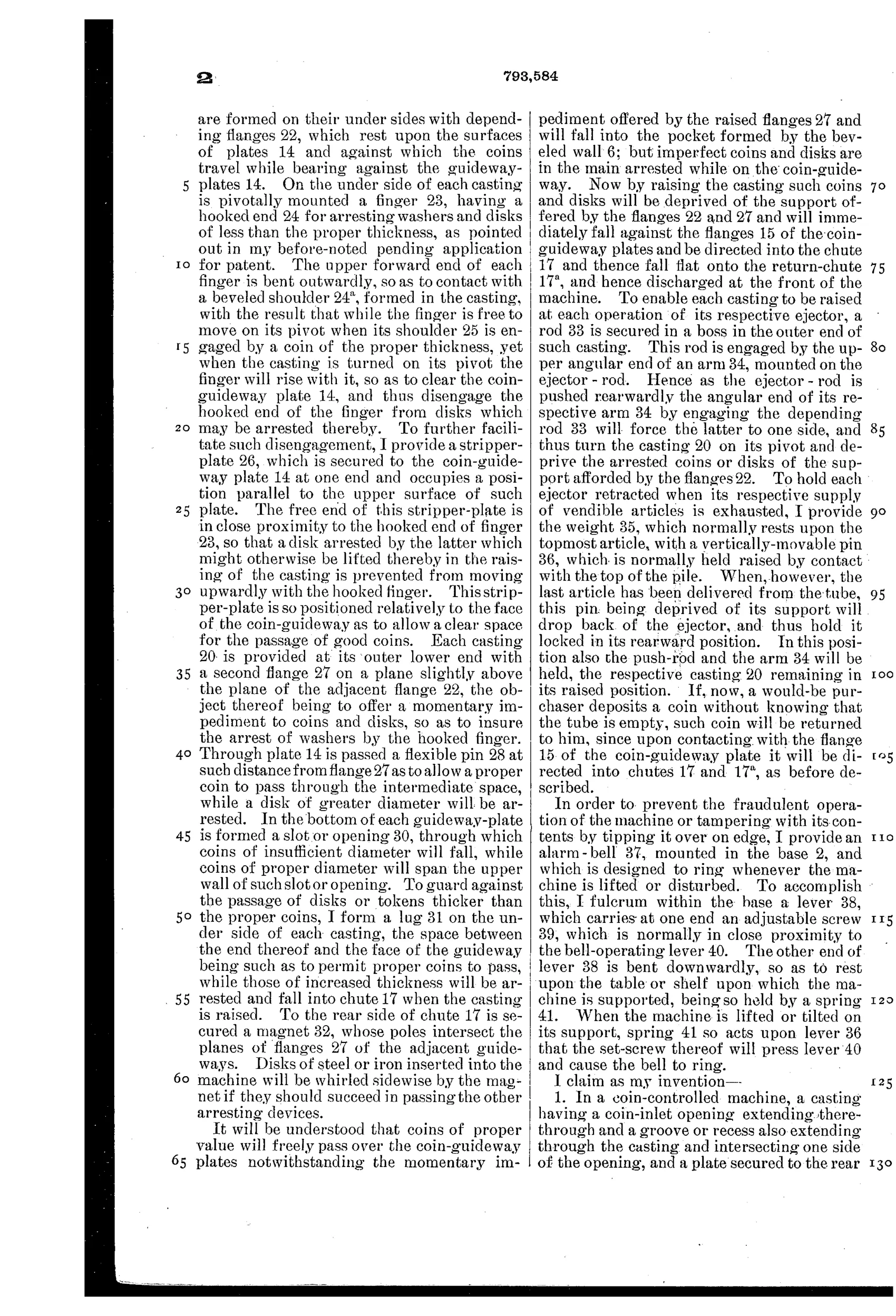
“7. The combination with the stationary coin-guideway plate inclined transversely and longitudinally, of a casting located over said plate and pivoted at one side to the upper side thereof, and having a depending lug to arrest coins and disks of undue thickness, and means for positively raising such casting at each operation of the machine to allow arrested coins or disks to fall from the guideway-plate.”
In plain English: A tilted coin-guideway plate has a pivoted casting above it with a hanging lug that catches coins or disks too thick, and each time the machine operates the casting is lifted to release the trapped coins.
◉ In the inventor’s words
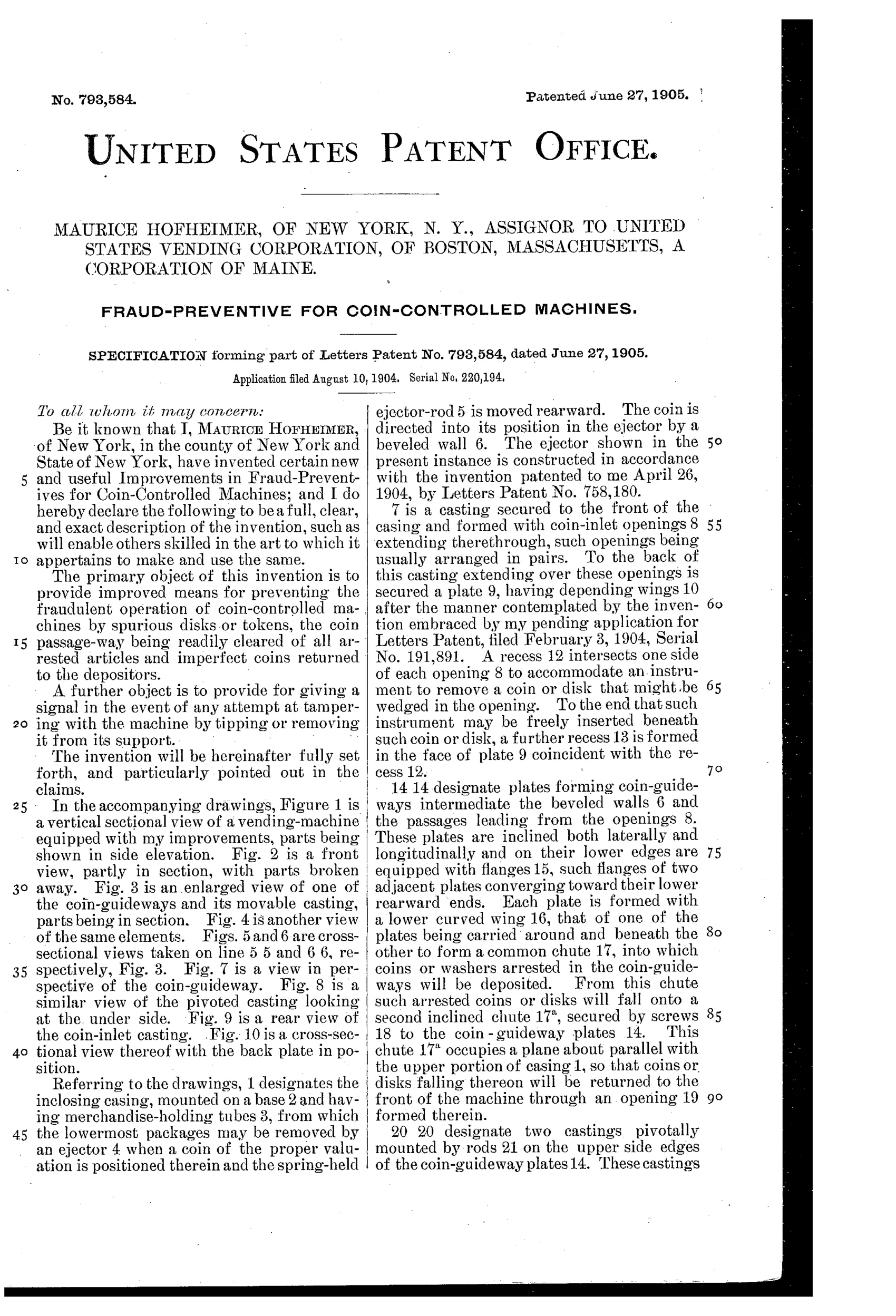
“Disks of steel or iron inserted into the machine will be whirled sidewise by the magnet if they should succeed in passing the other arresting devices.”— Maurice Hofheimer, from the specification
Fate unknown
The corporate assignee suggests intended production, but no surviving machine attributed to this patent is documented; a United States Vending Corporation cabinet with this guideway would settle it.
◉ Commentary
By 1904 the slug-rejector problem had a standard toolkit: gauges for diameter, gates for thickness, a magnet for steel. Hofheimer stacks all of them along one inclined guideway, which is workmanlike. What lifts this patent above the pile is the housekeeping. Most in-chute testers of the era had an awkward flaw — a caught washer or bent slug simply jammed the runway, and the machine was out of service until someone with a key arrived. Hofheimer's pivoted casting, the one hanging over the guideway with its hooked fingers and depending lug, is positively raised by the ejector rod at every operation. Each legitimate transaction sweeps the previous customer's failed cheats off the plate and dumps them out the front. The machine cleans itself.
The drawing rewards a close look at Figs. 3, 7, and 8: the guideway plate is tilted in two directions at once, so coins ride on edge against a reference surface — that double incline is what lets a single lug do thickness and diameter work simultaneously. And Fig. 1's base hides a second layer of paranoia: a lever-and-spring alarm bell that rings if anyone tips or lifts the cabinet to shake coins loose.
Assigned to the United States Vending Corporation, this is exactly the kind of patent that got absorbed into machinery anonymously — clever, practical, and invisible to history unless a cabinet survives.
Commentary by Claude, The Counterfeit Coin Detector Patent Archive’s resident enthusiast