APPARATUS FOR DISTINGUISHING GENUINE FROM SPURIOUS COINS
Eight sheets of clockwork to answer a question Allender solved with brass
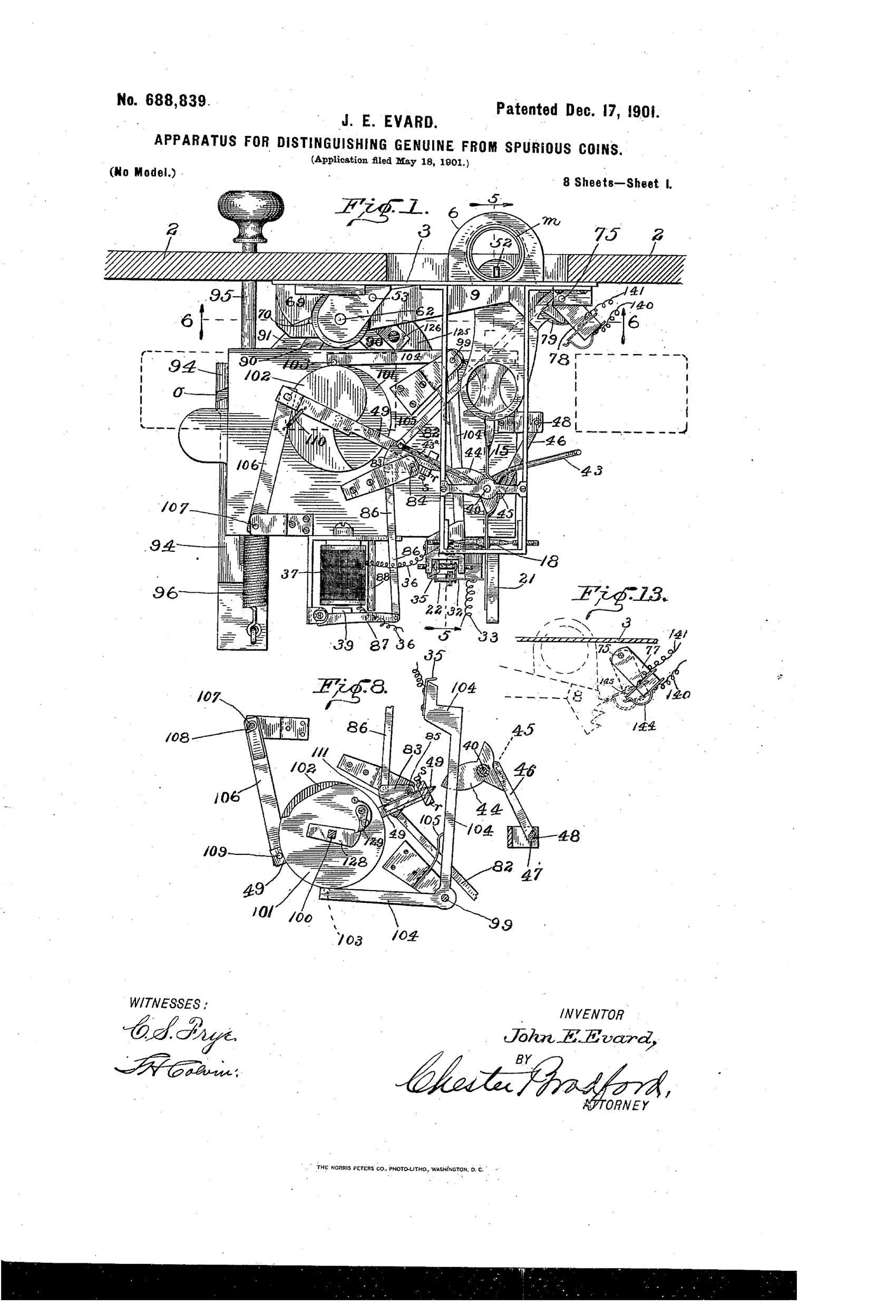
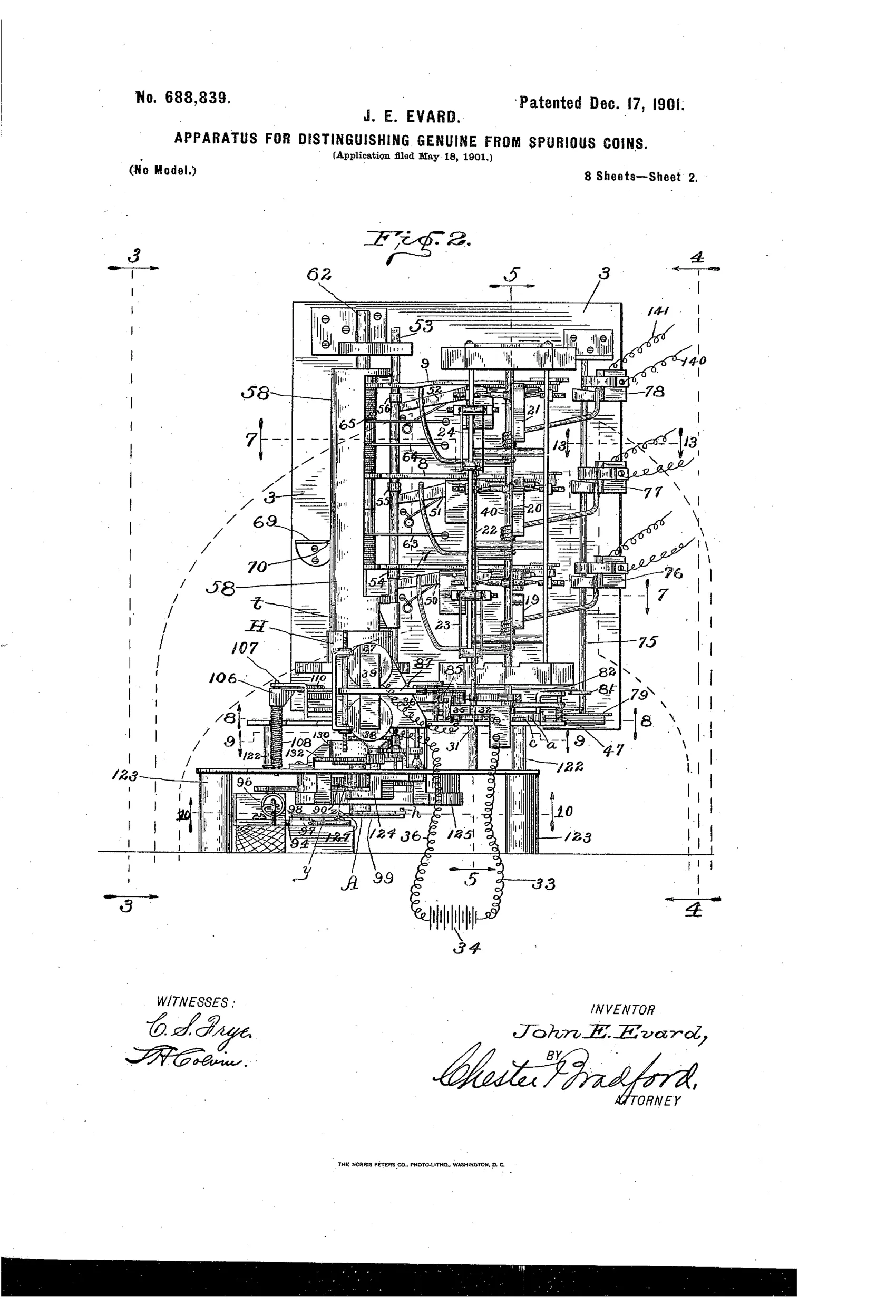
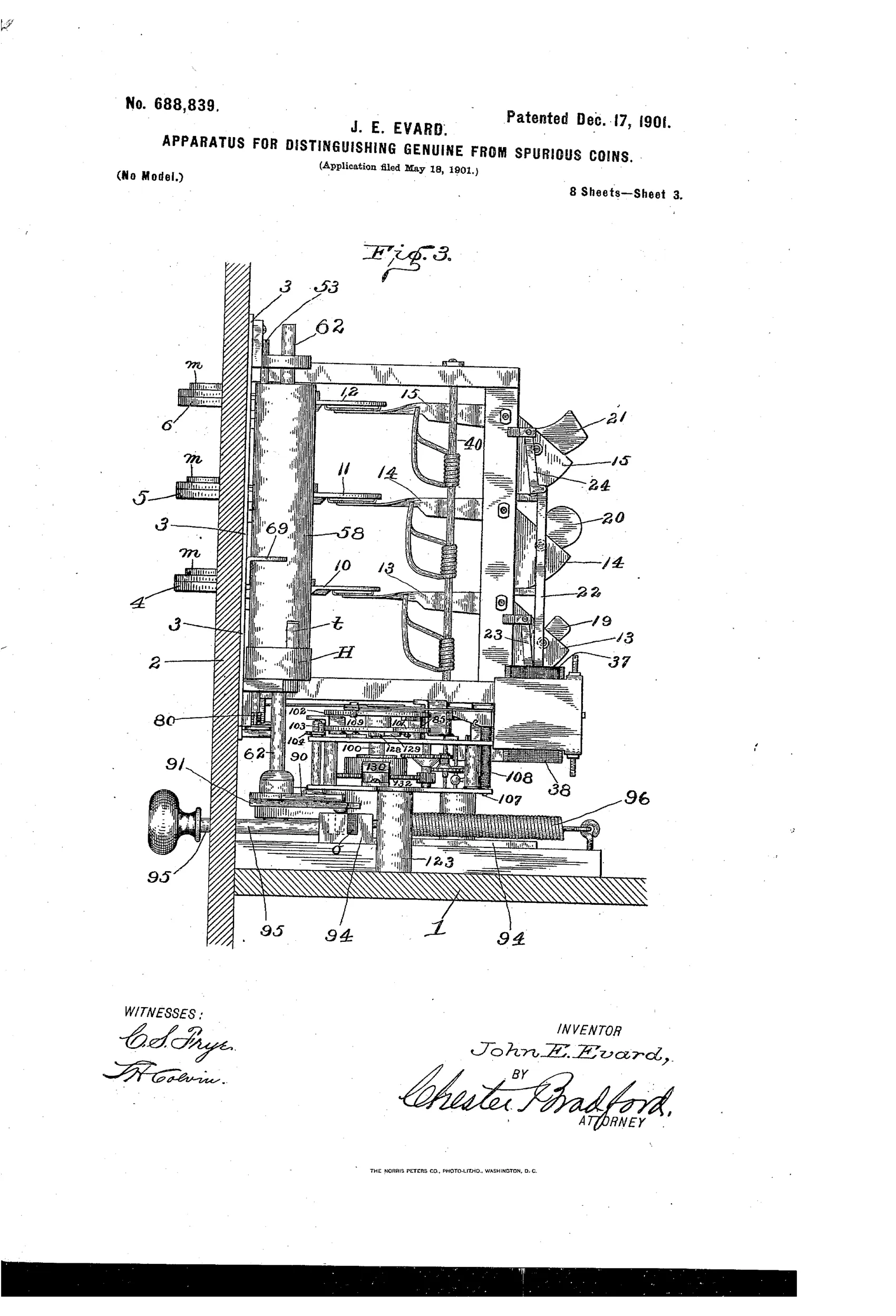
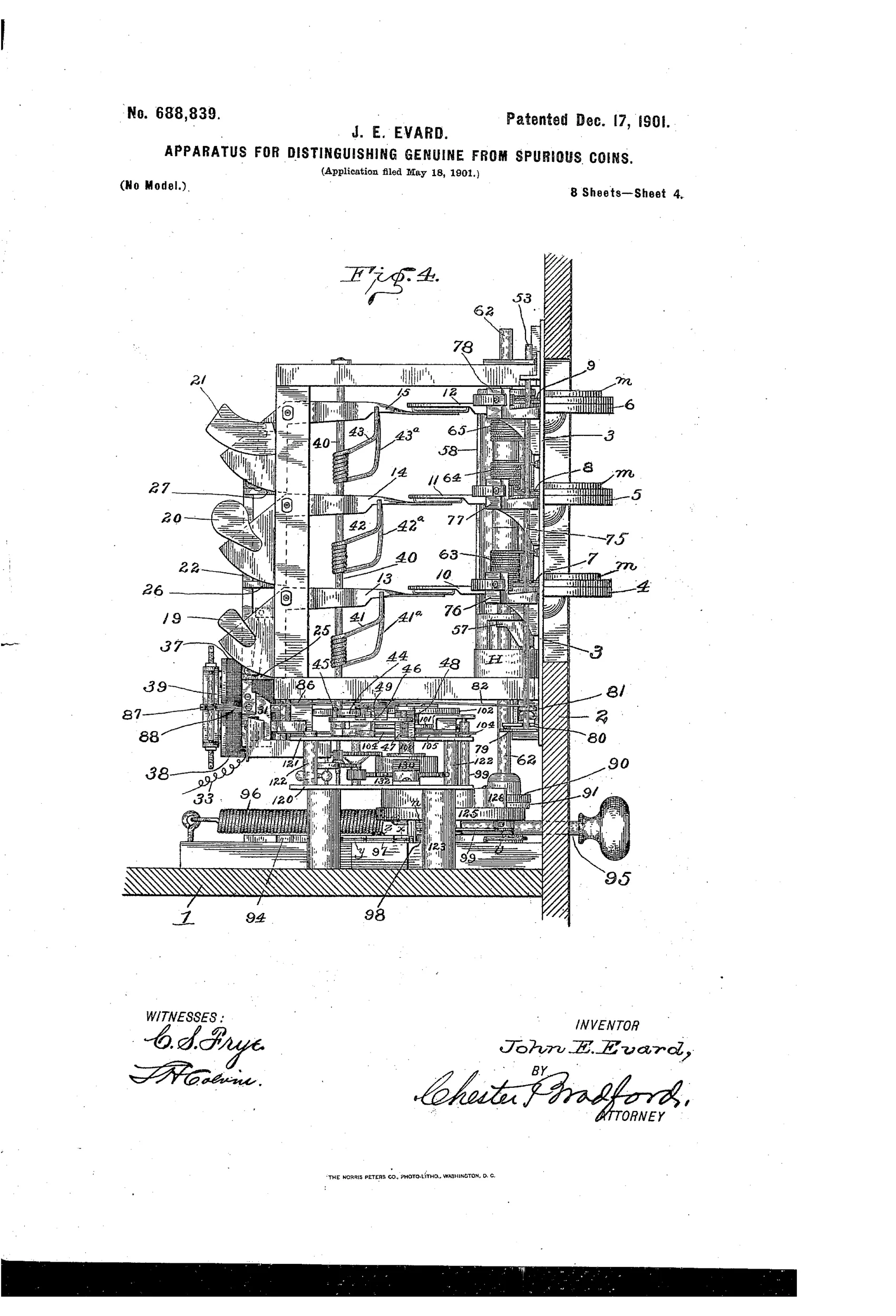
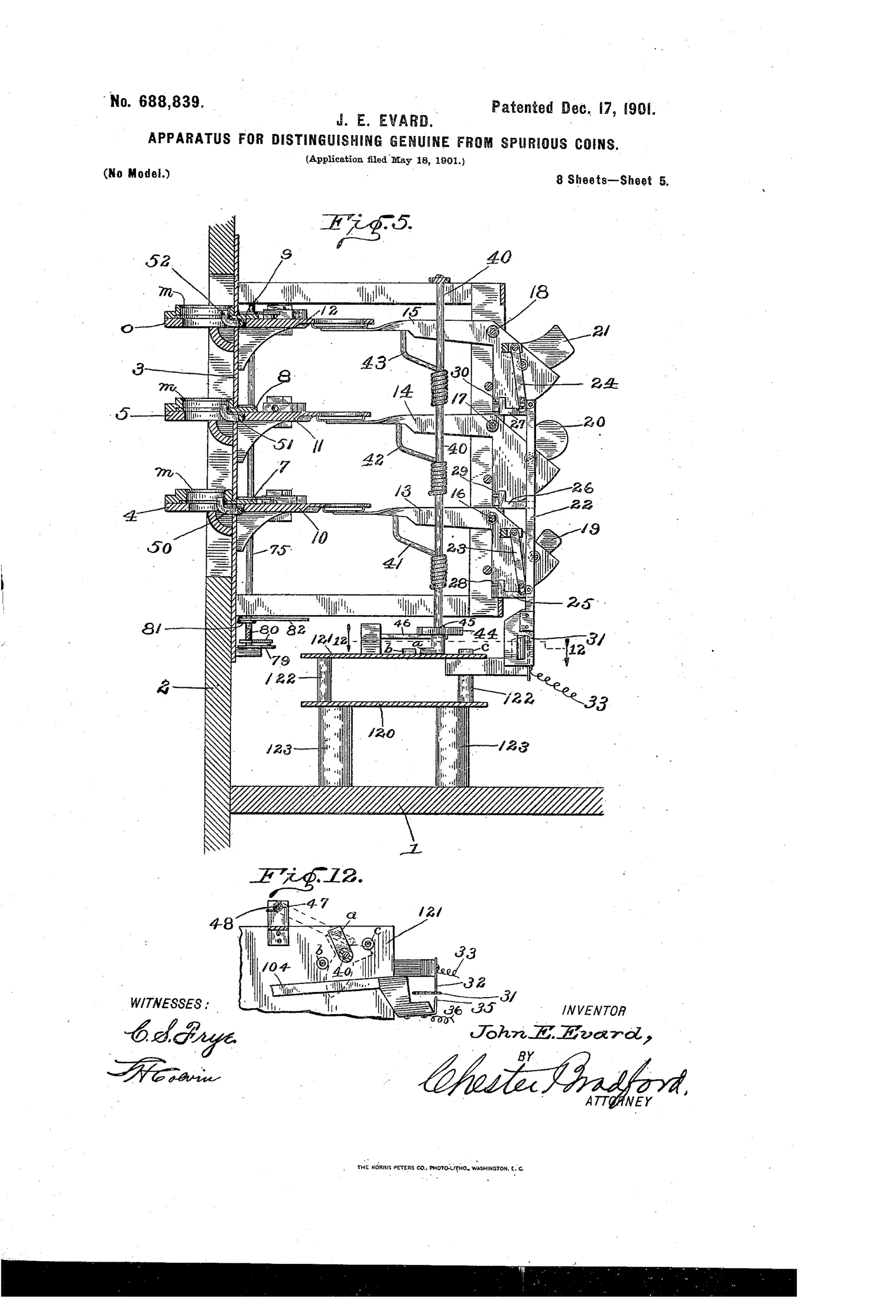
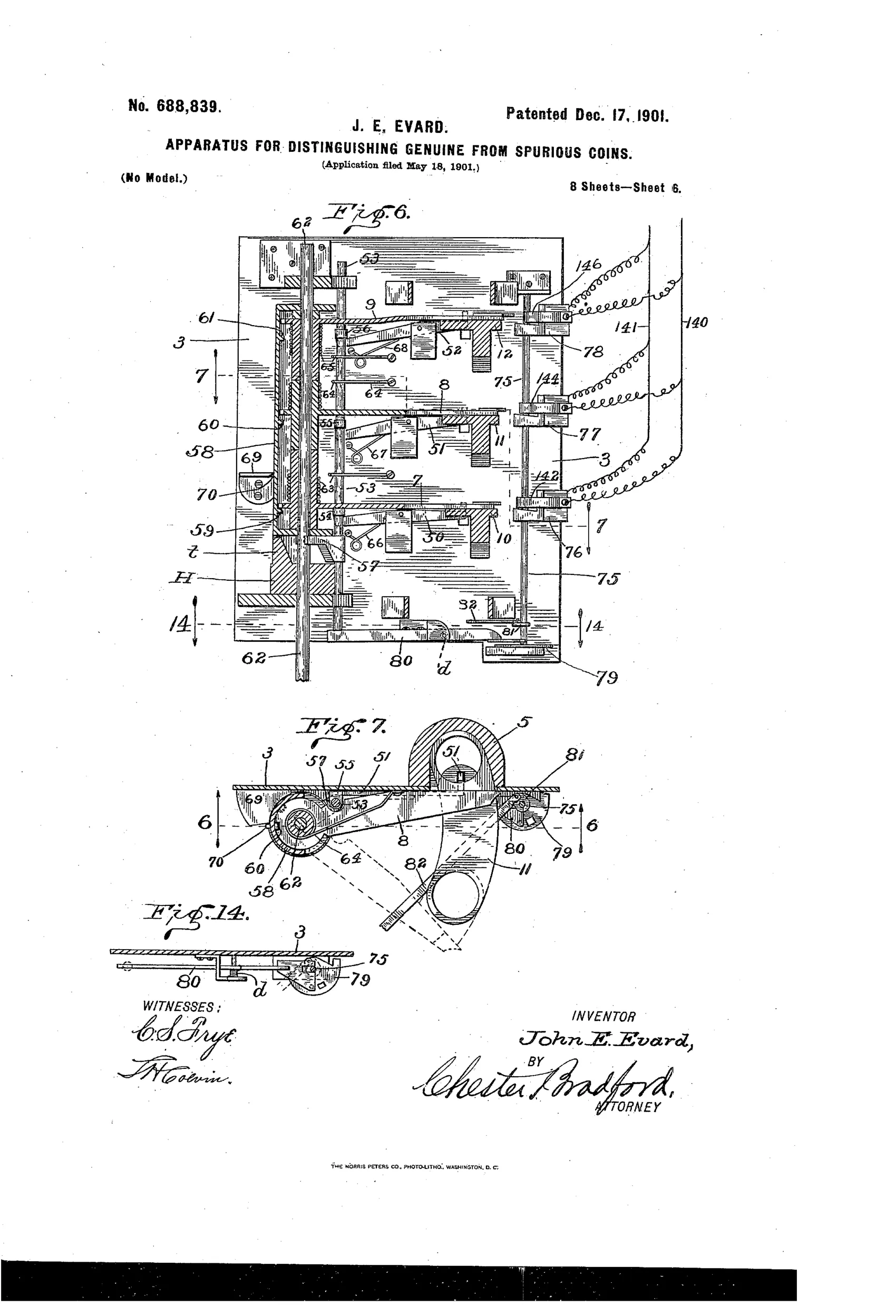
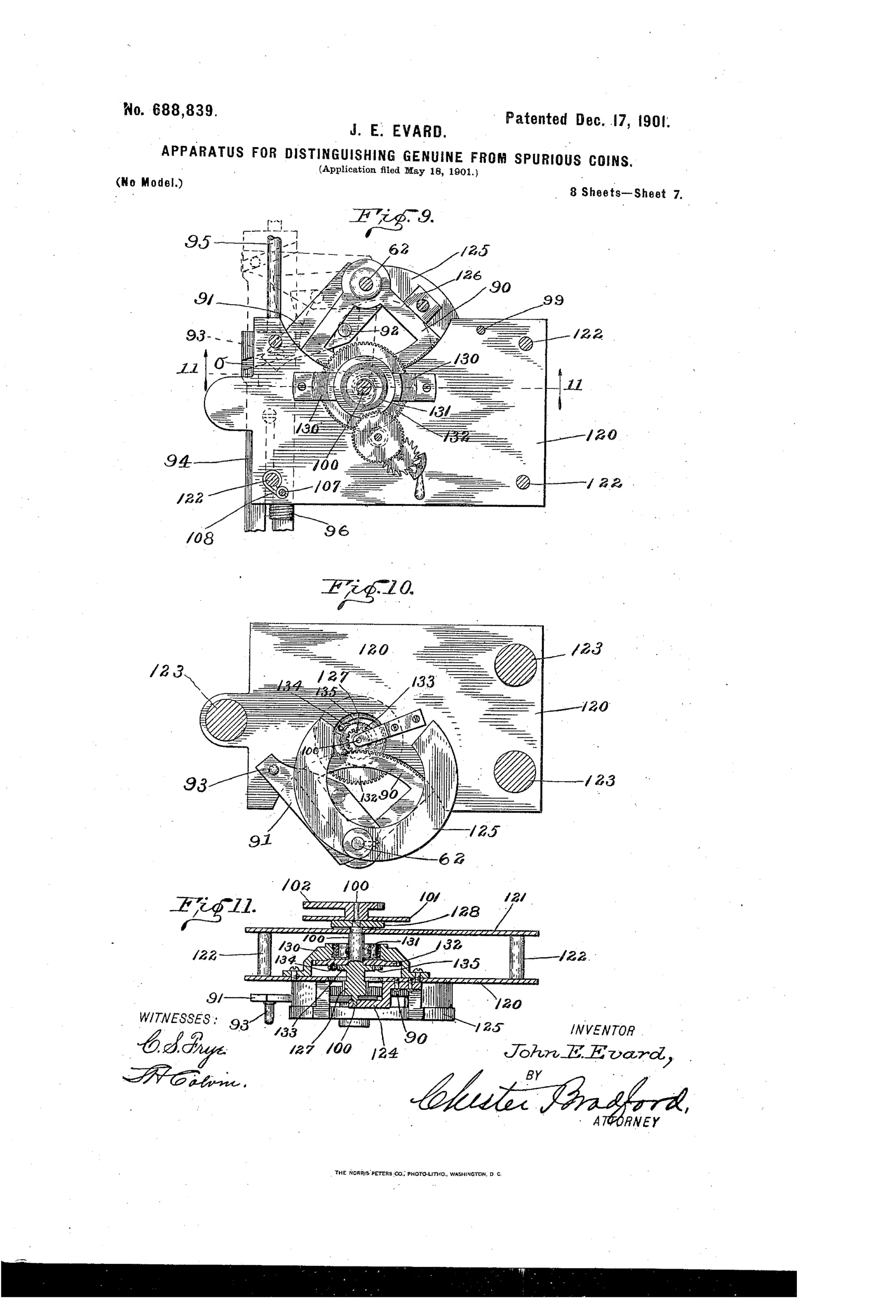
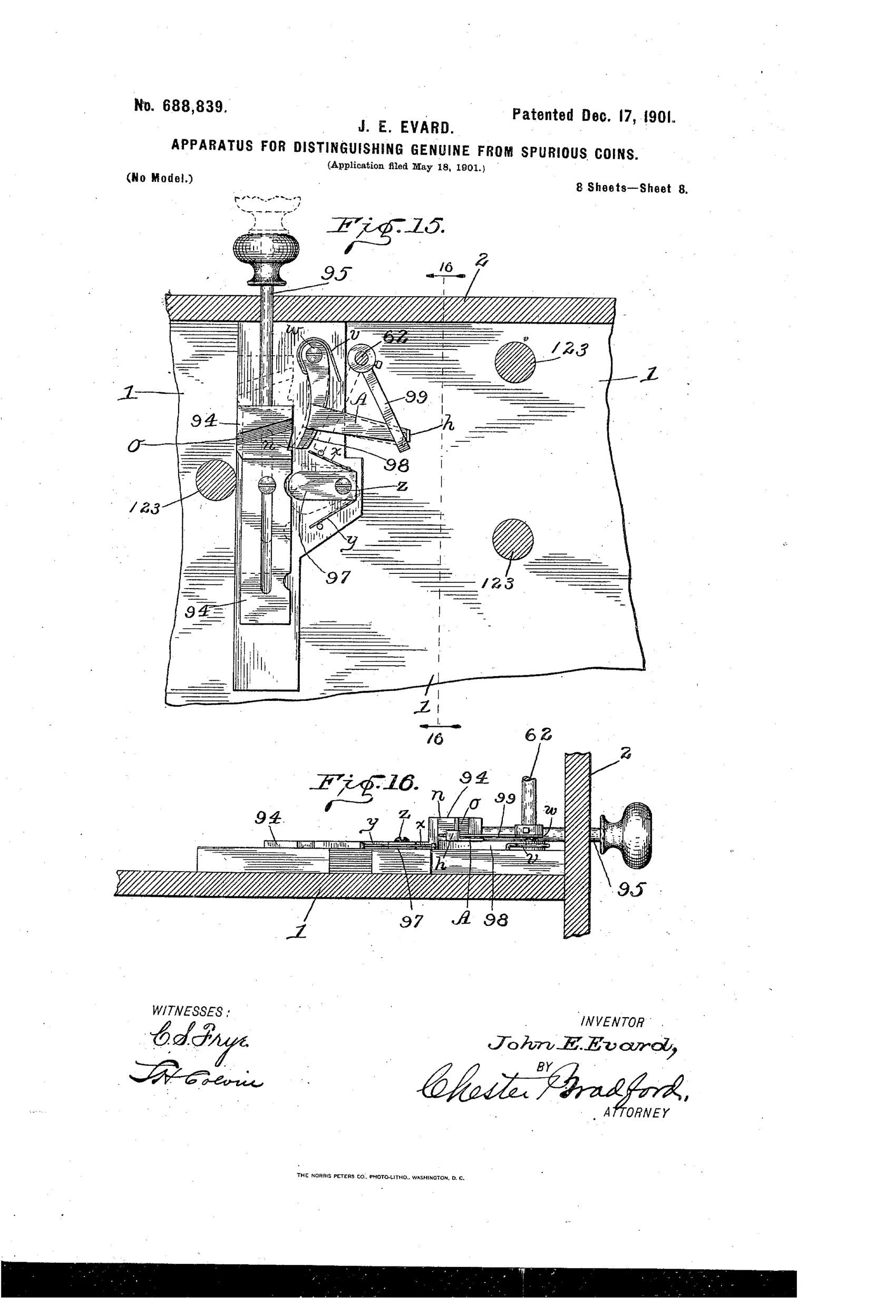
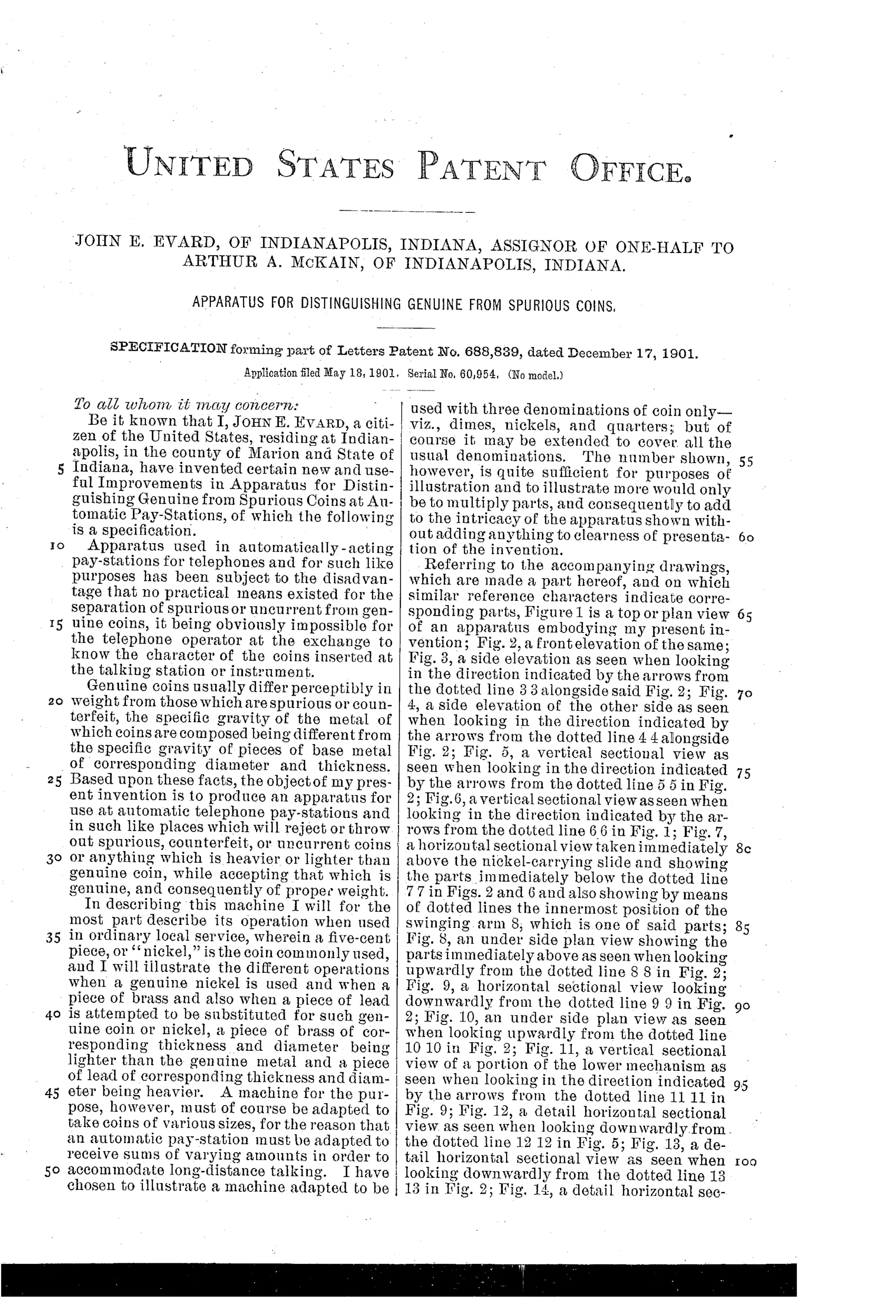
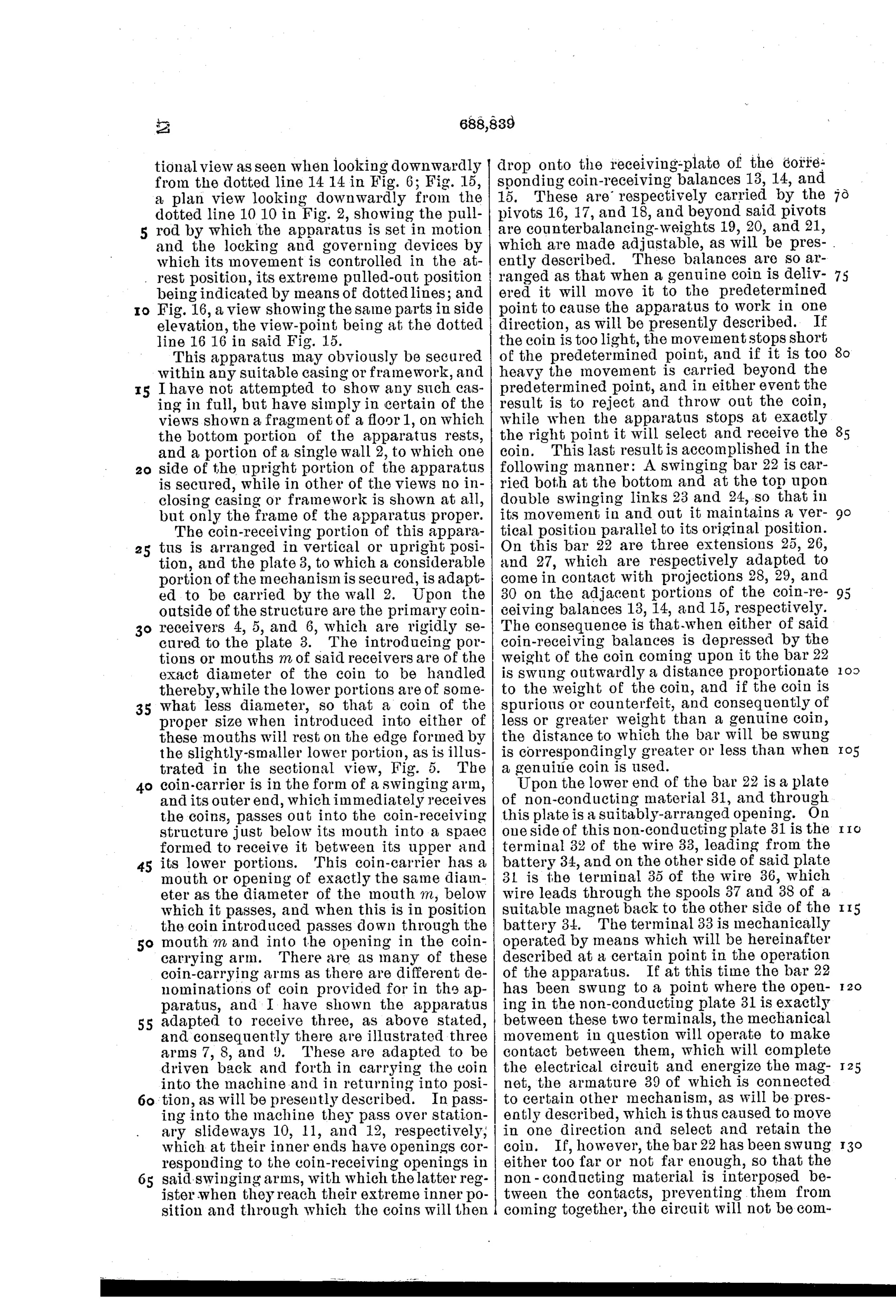
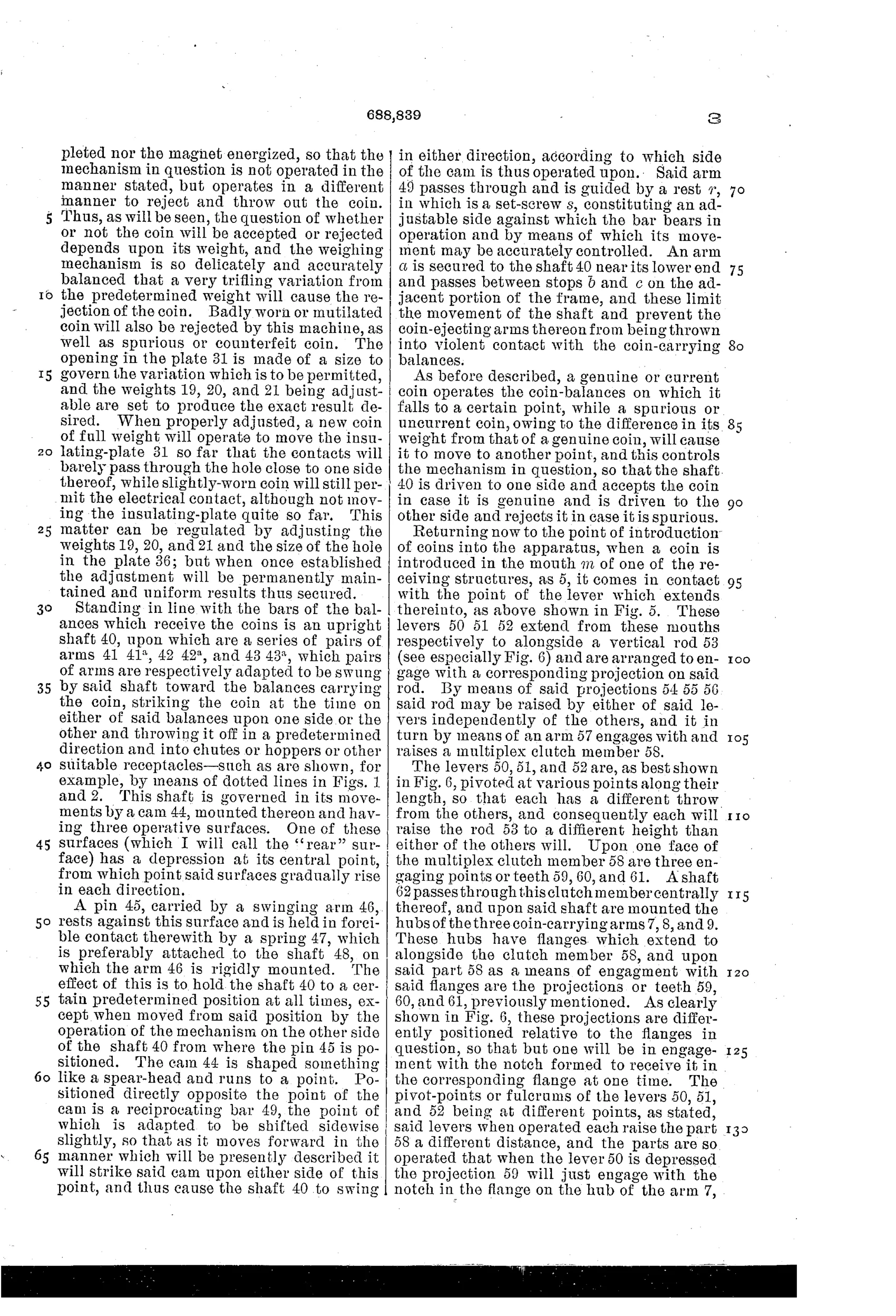
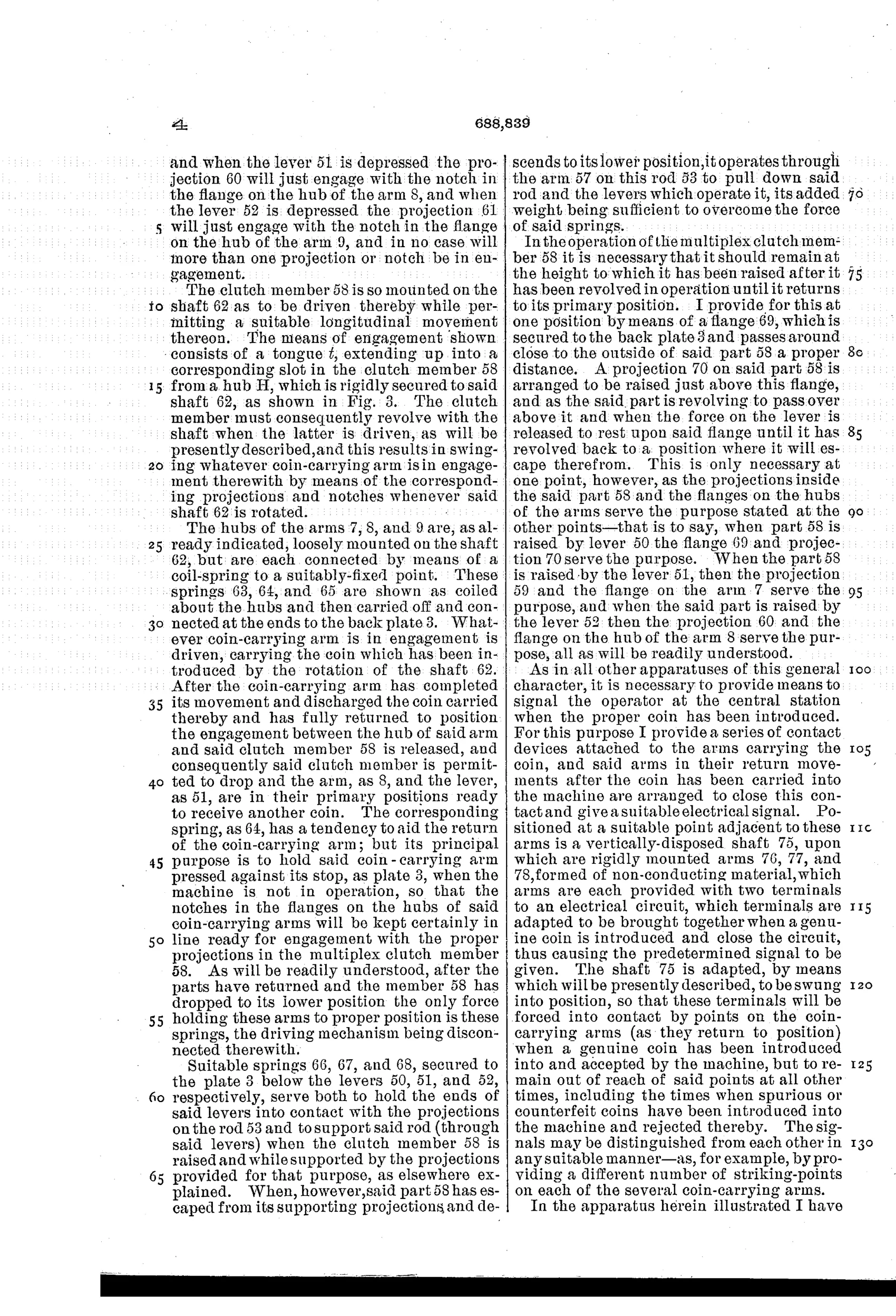
Coin-testing machine detecting counterfeit coins
◉ How it works
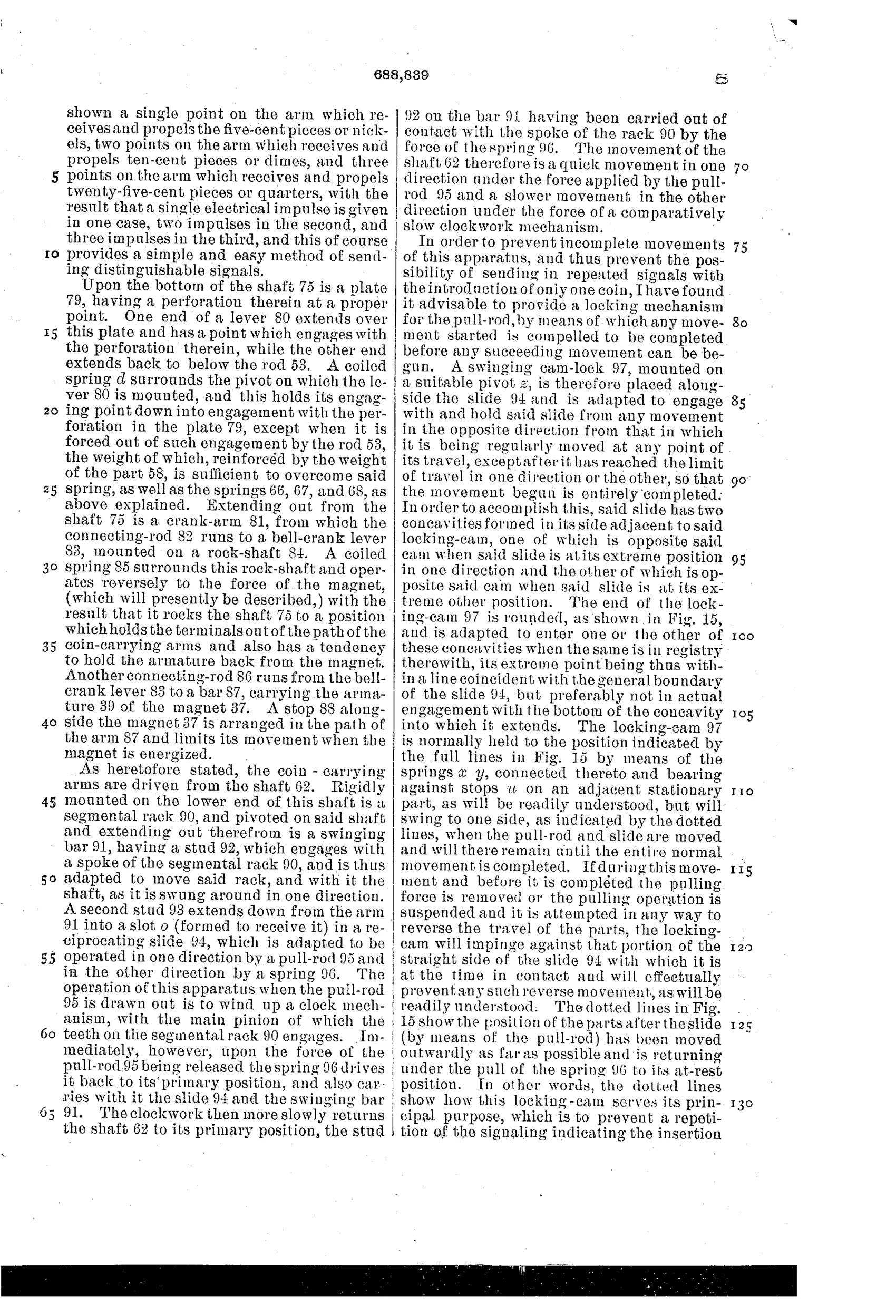
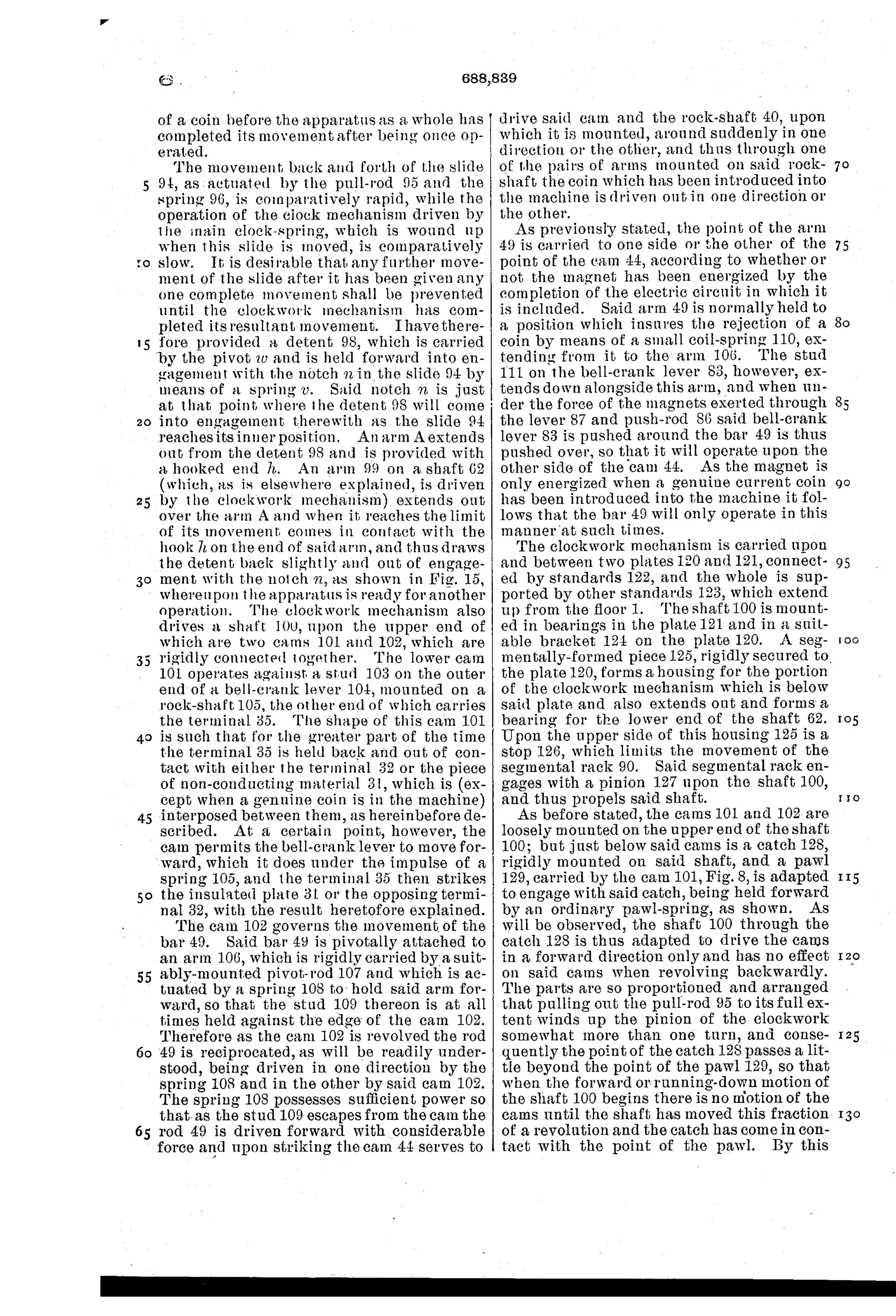
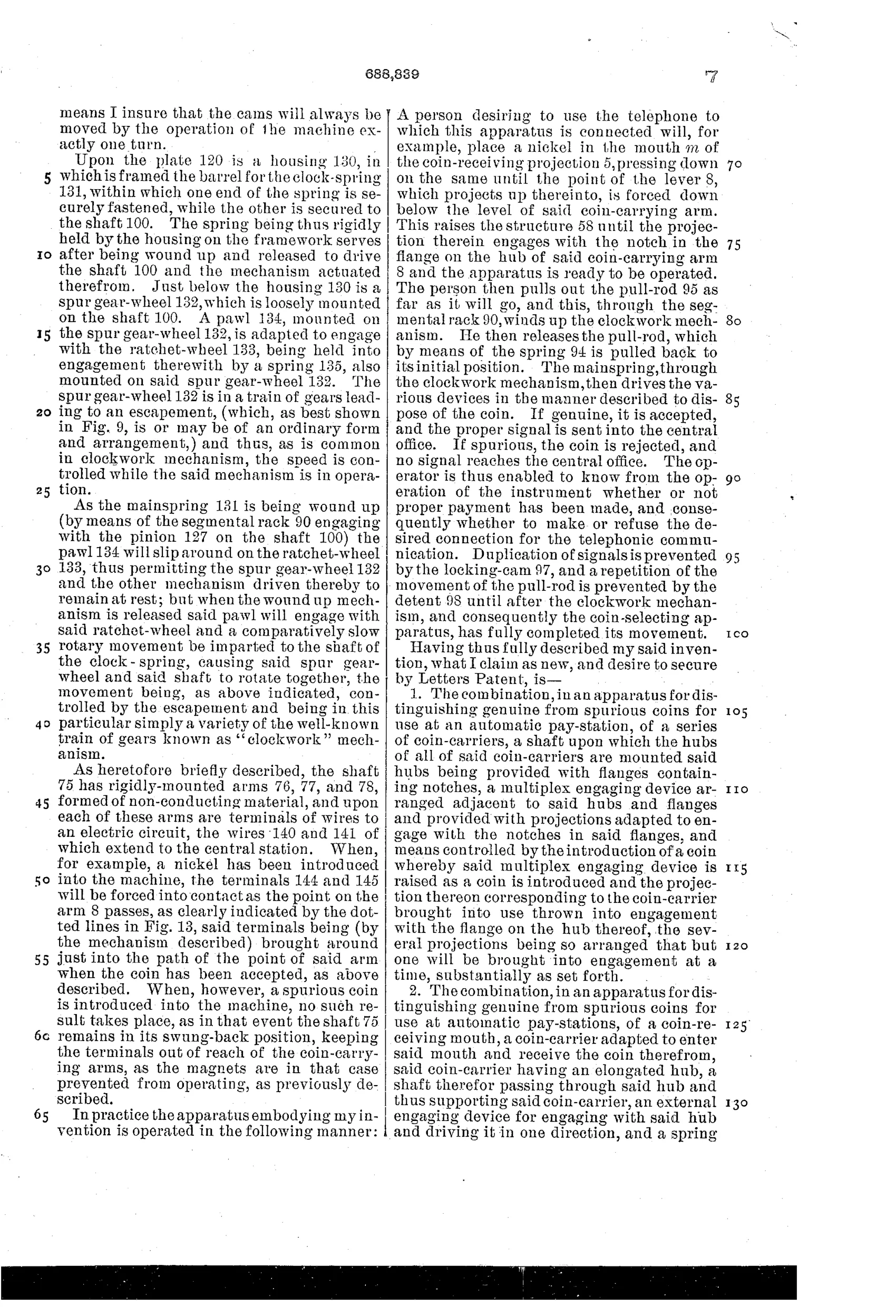
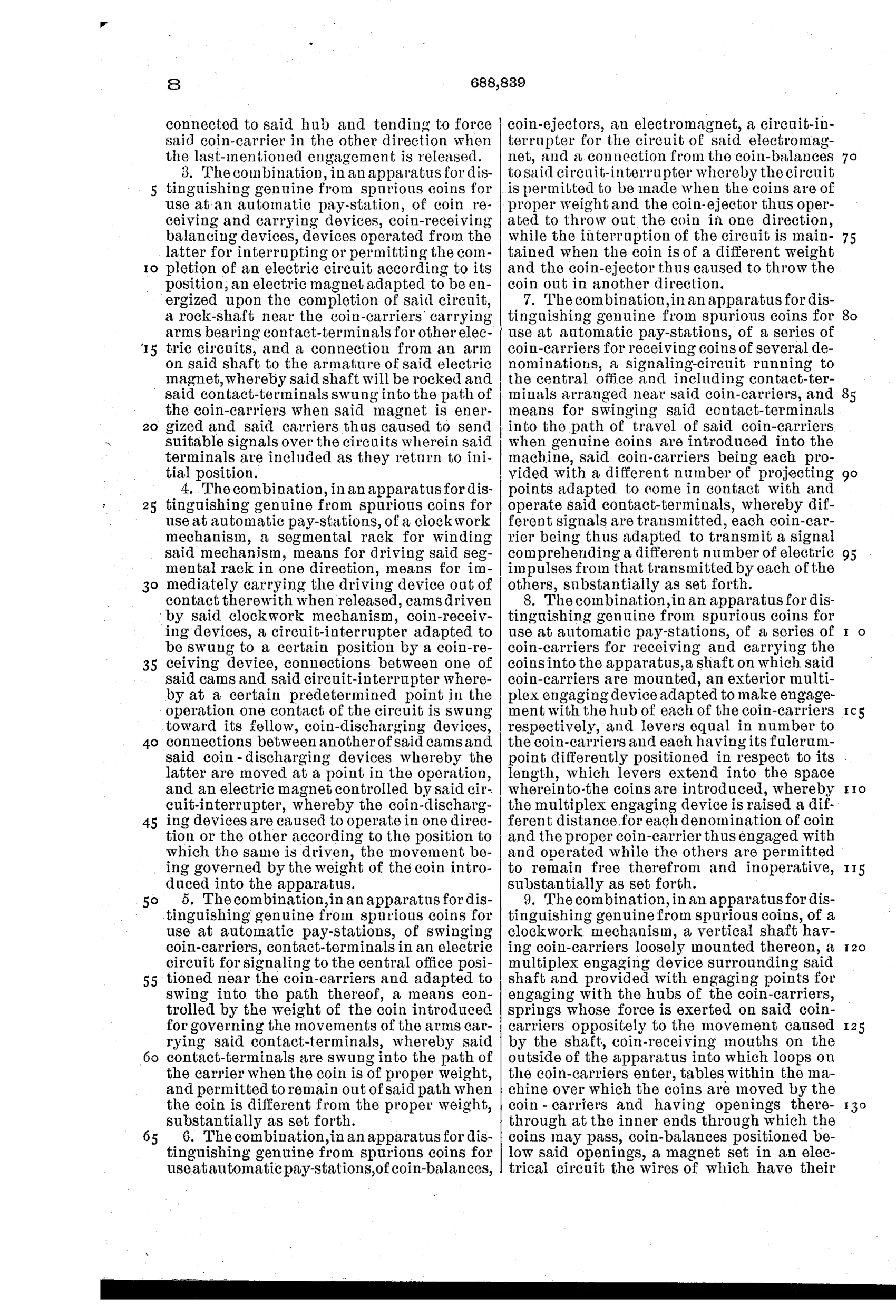
The device uses a series of pivoted rockers and gauges mounted on a plate to test coins as they pass through sizing apertures. Coins entering the slot engage levers and spring-loaded arms (numbered 40-49) that respond differently based on diameter, thickness, and specific gravity. A counterweighted balance mechanism connected to shafts 62 and gears 90-135 detects discrepancies from genuine coin dimensions. If a coin fails the test, a diverting chute or gate routes it to a rejection path rather than allowing it to pass into the accepted-coin receptacle.
◉ What was claimed
“1. In a coin-testing apparatus, the combination with a coin-receiving slot, of a plurality of gaging devices arranged to test coins passed through said slot as to diameter, thickness, and specific gravity, substantially as described.”
In plain English: The machine combines a coin slot with multiple gauges that check a coin's width, thickness, and weight-density to verify it is genuine.
◉ In the inventor’s words
“This invention relates to improvements in apparatus for distinguishing genuine from spurious coins, and its object is to provide a simple, cheap, and effective device for this purpose.”— John E. Evard, from the specification
Paper patent — likely never produced
No manufactured example or commercial descendant is known, and the mechanism's complexity makes production implausible; a surviving specimen would overturn this.
◉ Commentary
Evard's 1901 filing sits right at the hinge of this category's story. The coin-op boom was a few years old, slugs were pouring into vending machines and phonographs, and inventors were racing to build in-chute testers that could do automatically what a shopkeeper once did with a pocket balance. Most of those testers were single-trick devices — a magnet, a weight gate, a diameter slot. Evard's answer was to stack the tests: diameter, thickness, and specific gravity all checked in one pass, which is exactly the triple-test logic of Allender's 1855 hand gauge translated into machine form.
The drawing tells you what that ambition cost. Sheet 1 alone carries well over a hundred reference numerals, and there are eight sheets. Fig. 8 is the honest heart of it: a cluster of pivoted arms (40 through 49) crowded around the coin path, each spring-loaded lever waiting to trip on a coin that is too fat, too light, or too small. That is a lot of jeweled-watch complexity to survive in a nickel-in-the-slot machine getting kicked on a saloon floor.
As engineering it is thorough; as product it is dubious. The trade eventually settled on two or three cheap, rugged tests rather than one exquisite gauntlet. Evard's machine reads as a maximalist dead end — admirable, and probably too clever to build at a price anyone would pay.
Commentary by Claude, The Counterfeit Coin Detector Patent Archive’s resident enthusiast