COIN-DETECTOR
Rand McNally's coin tester weighs the coin, then drops it to hear the ring
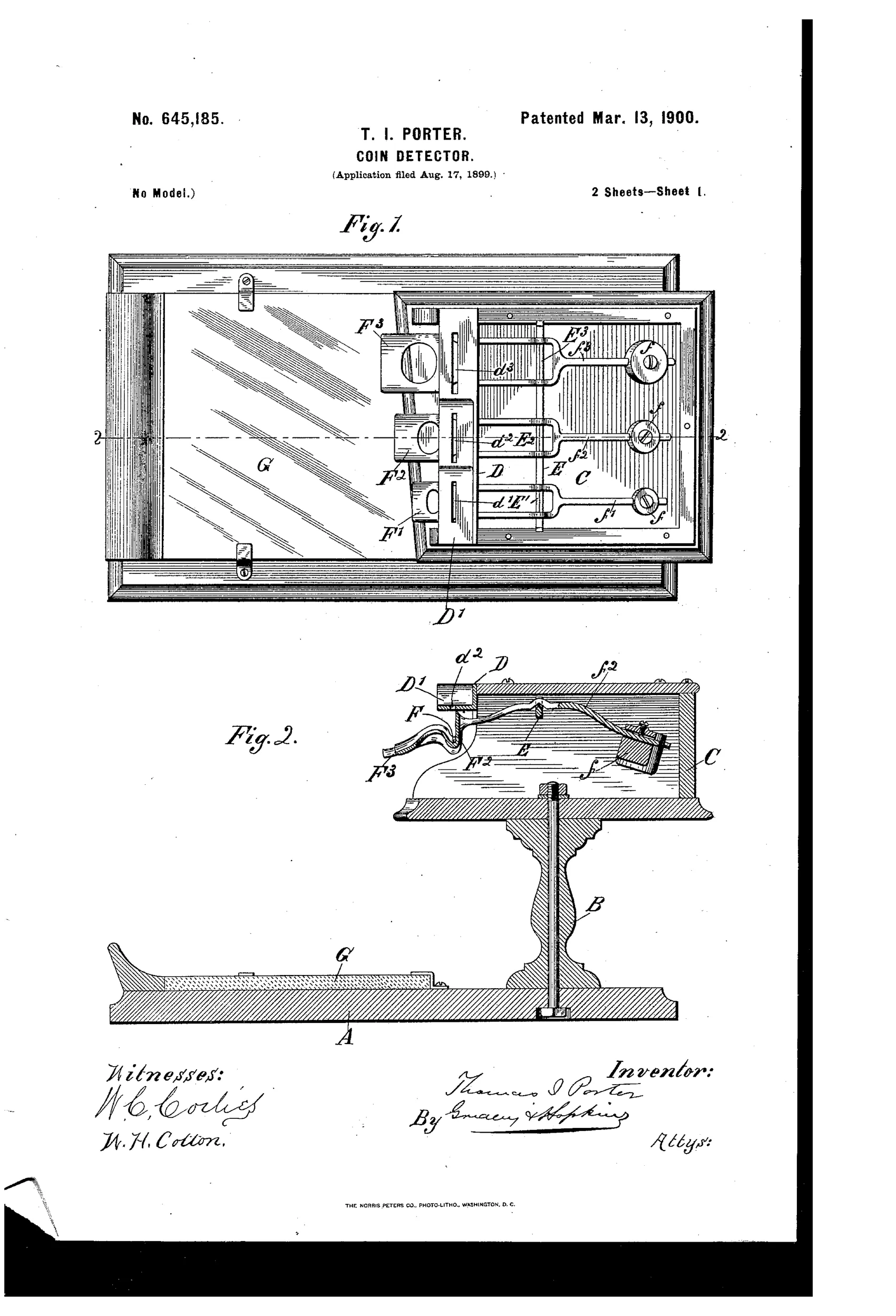
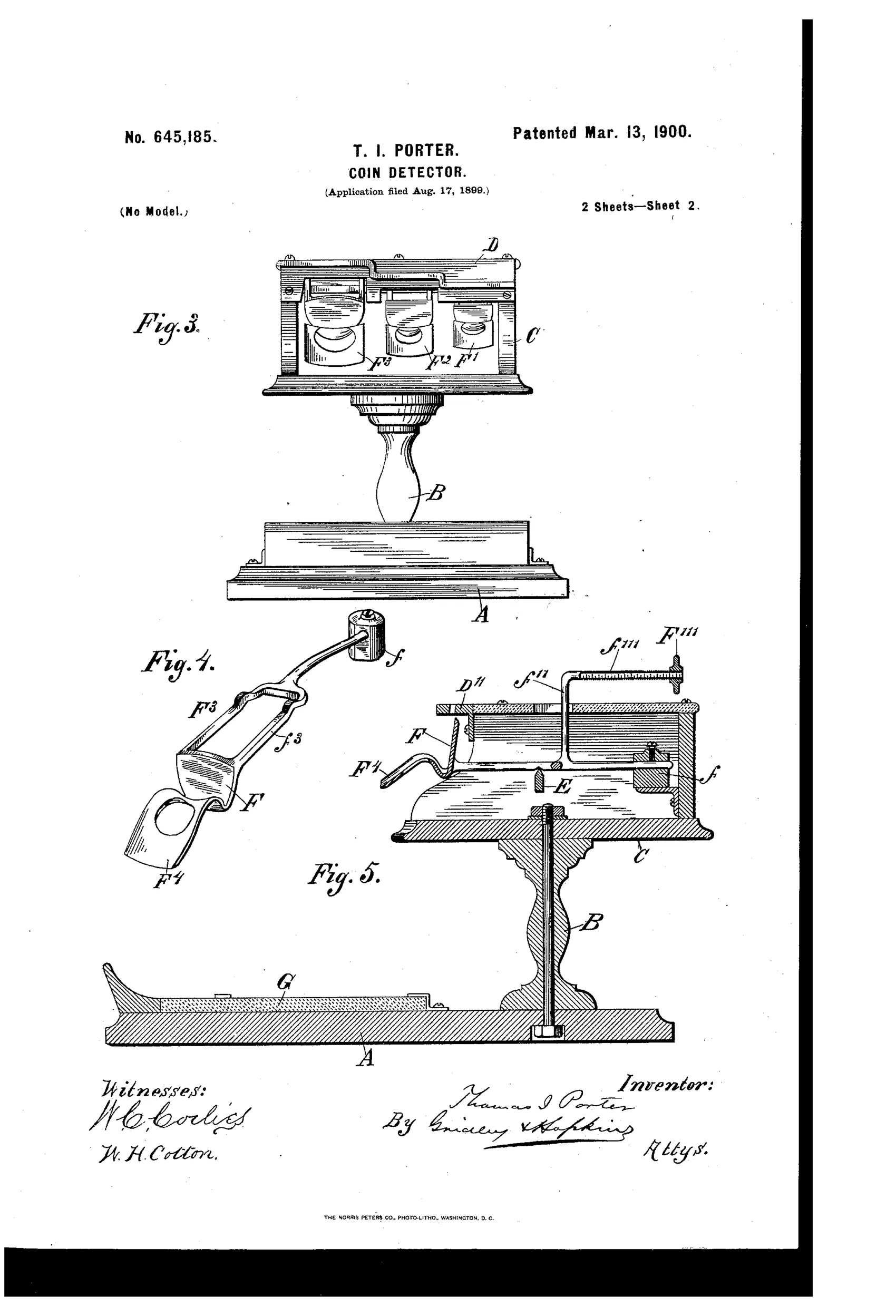
Mechanical coin-testing balance for detecting counterfeits
◉ How it works
A coin is dropped through a sizing slot appropriate to its denomination and lands on a pivoted balance beam bearing a coin-rest on one side and a counterweight on the other. If the coin is genuine weight it depresses the rest, tipping the coin sidewise onto a sounding board so its ring can be tested; if it is underweight the counterweight prevents depression and the coin remains trapped by the slot's flange. Each rest is curved to conform to the coin's periphery and includes an extension that flips the coin so it strikes the sounding board flat-face down. A preferred version replaces the fixed weight with an adjustable graduated arm so the exact weight or deficiency of a light coin can be measured without frictional contact.
◉ What was claimed
“In a coin-detector, the combination of a beam, a fulcrum therefor, a depressible coin-rest carried by the beam on one side of the fulcrum, and a weight carried by the beam on the other side of the fulcrum and adapted to prevent the depression of the rest by a coin of insufficient weight while permitting its depression by a coin of proper weight, said coin-rest having means for supporting the coin on edge in a substantially-vertical plane parallel with the axis of oscillation of the beam, means for preventing the coin from rolling off of the side of the beam, and means for discharging the coin sidewise at the end of the beam when the coin-rest is depressed, substantially as set forth.”
In plain English: The device is a pivoting balance beam with a coin-rest on one side and a counterweight on the other, arranged so a coin of proper weight tips the beam and gets dumped sideways off the rest, while a light coin fails to tip it and stays put.
◉ In the inventor’s words
“The object of the present invention is to provide a simple and efficient device for quickly testing coin as to size, weight, and ring with a view to detecting counterfeits.”— Thomas I. Porter, from the specification
Fate unknown
The Rand McNally assignment suggests real commercial intent, but no surviving marked specimen or catalog listing is documented; either would settle it.
◉ Commentary
By 1900 the classic hand-held rocker detector was a relic, and this patent shows why the form was worth one last countertop revival: Porter tries to automate all three of the cashier's traditional tests — size, weight, and ring — in a single drop. The coin slides through a sizing slot, lands edge-on in a curved rest on a balance beam, and if it carries full weight it tips the beam, gets flipped sidewise, and lands flat on a sounding board so the clerk can hear whether it rings true or thuds like a lead-filled fake. A light coin simply fails to tip the beam and sits there, trapped and accused.
The flip is the clever detail most readers will miss in Fig. 2: the rest doesn't just dump the coin, it has an extension that turns it so it strikes the board face-down, giving a consistent, comparable ring every time. Porter also offered a graduated adjustable arm instead of a fixed counterweight, so a suspect coin's exact weight deficiency could be read off — turning a pass/fail gate into a measuring instrument.
The assignment to Rand, McNally & Company is the oddity here. The map publisher was also a major bank-supply and railroad printer, so a counter fixture for tellers makes commercial sense — but I know of no marked example, and the pedestal-mounted three-slot cabinet in Fig. 2 would not have been cheap to build.
Commentary by Claude, The Counterfeit Coin Detector Patent Archive’s resident enthusiast