BOGUS-COIN DETECTOR FOR COIN-OPERATED VENDING-MACHINES
Mills Novelty's answer to slugs: shame the cheater by showing the coin
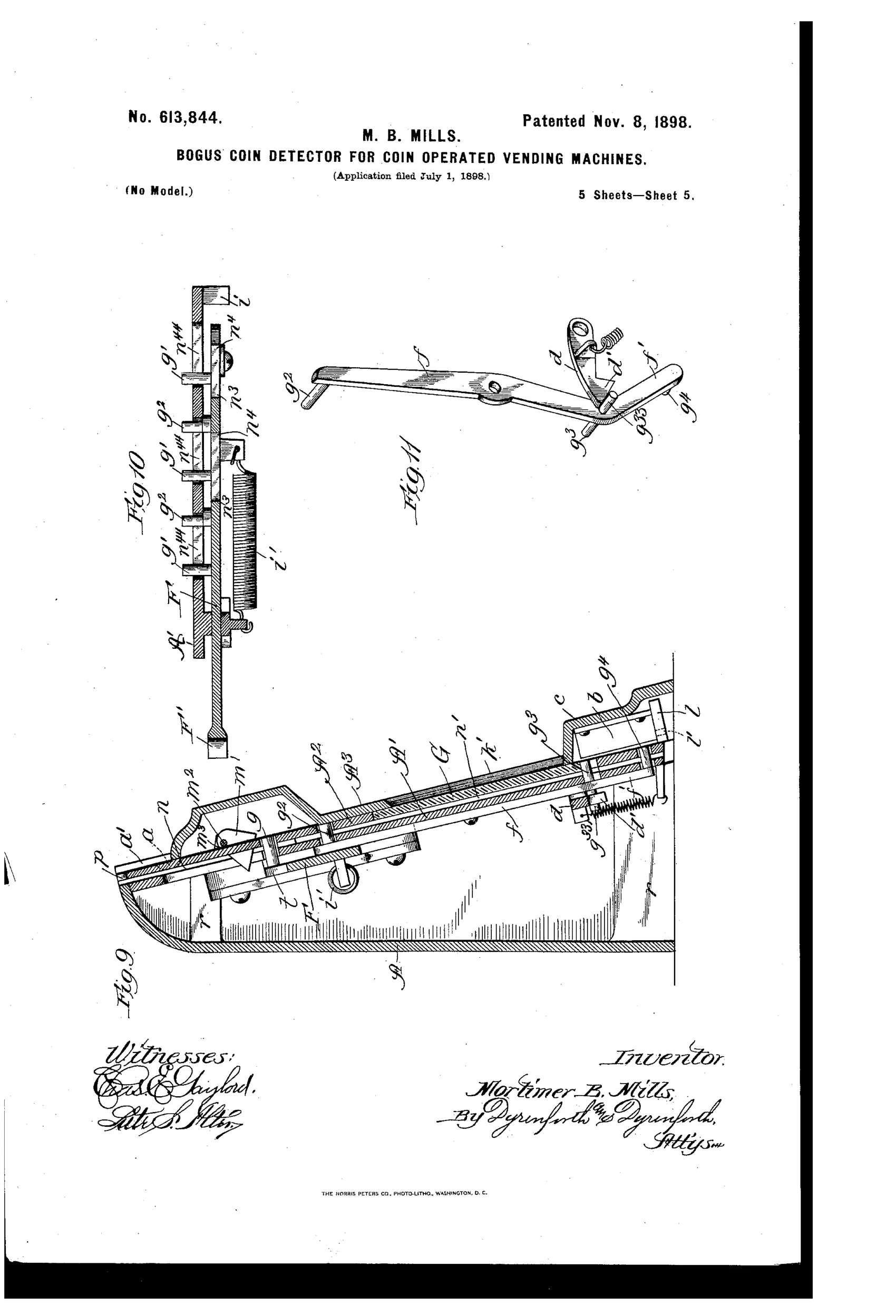
Vending-machine attachment displaying inserted coin until verified
◉ How it works
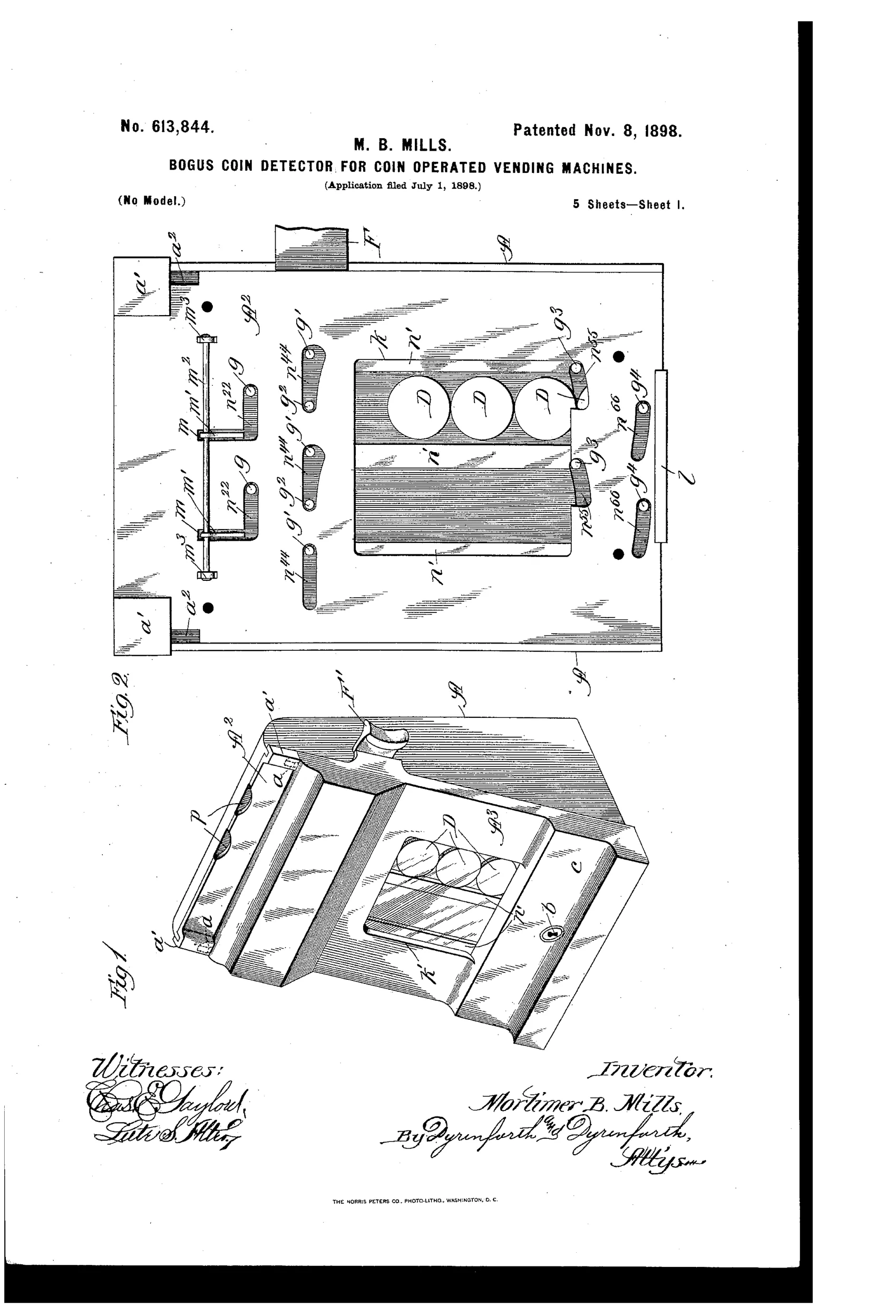
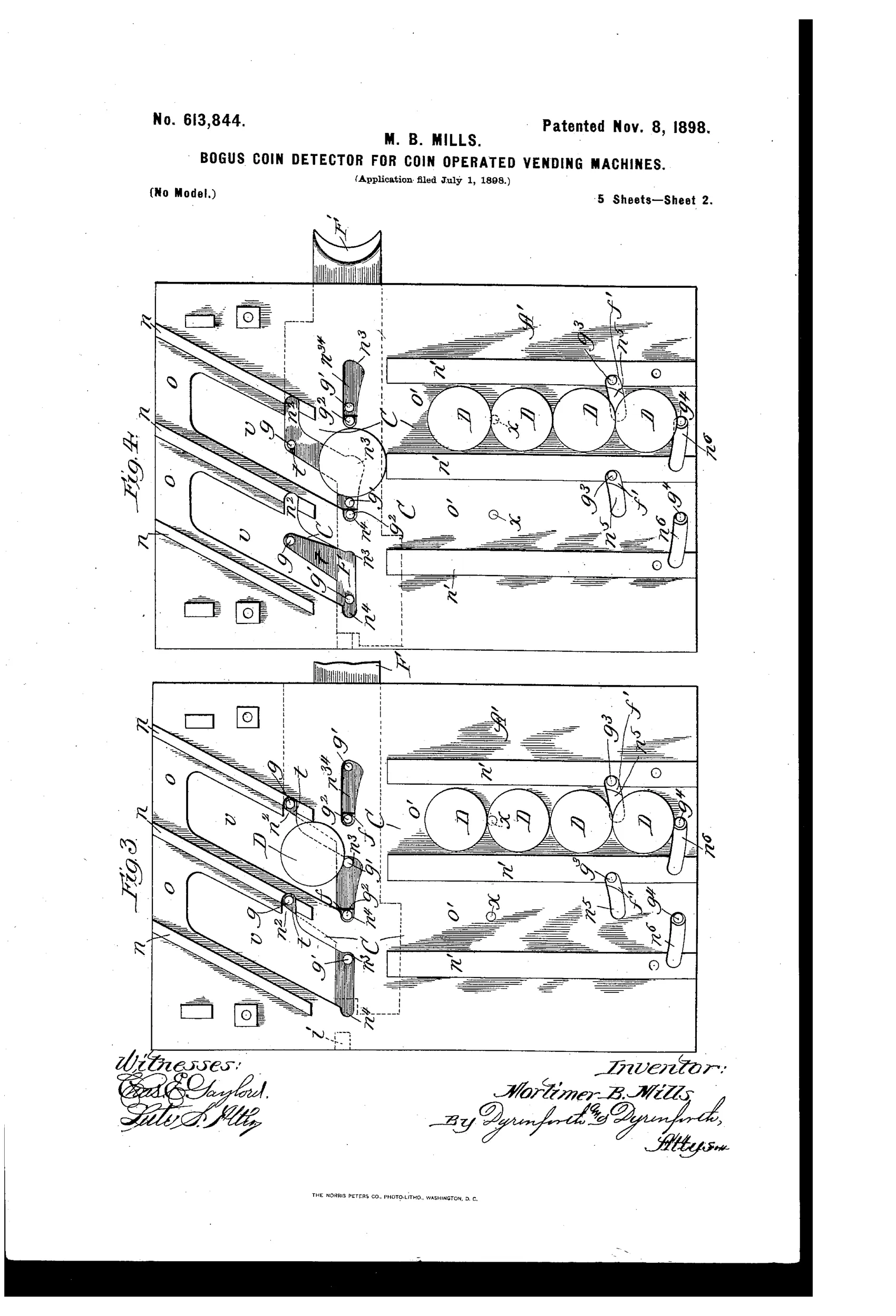
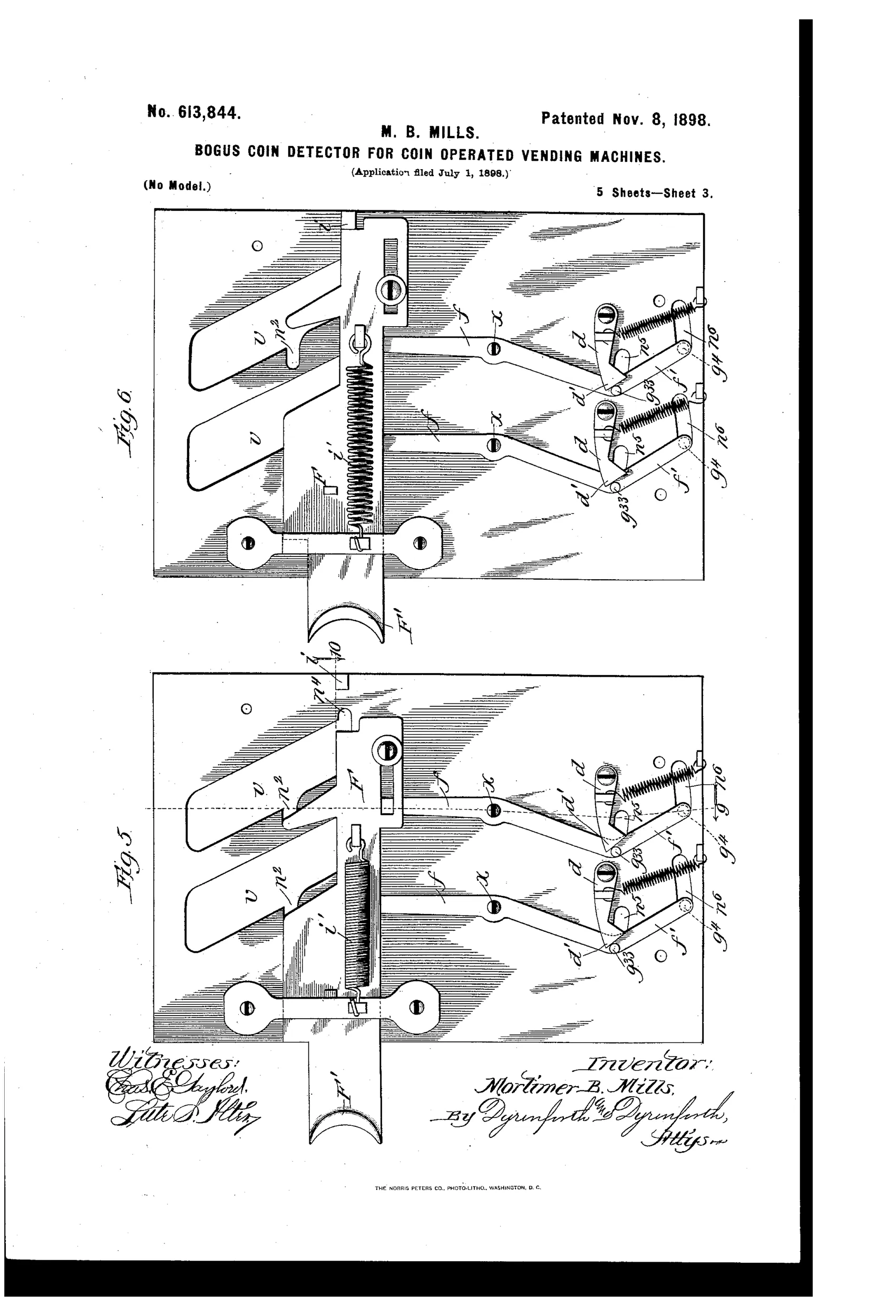
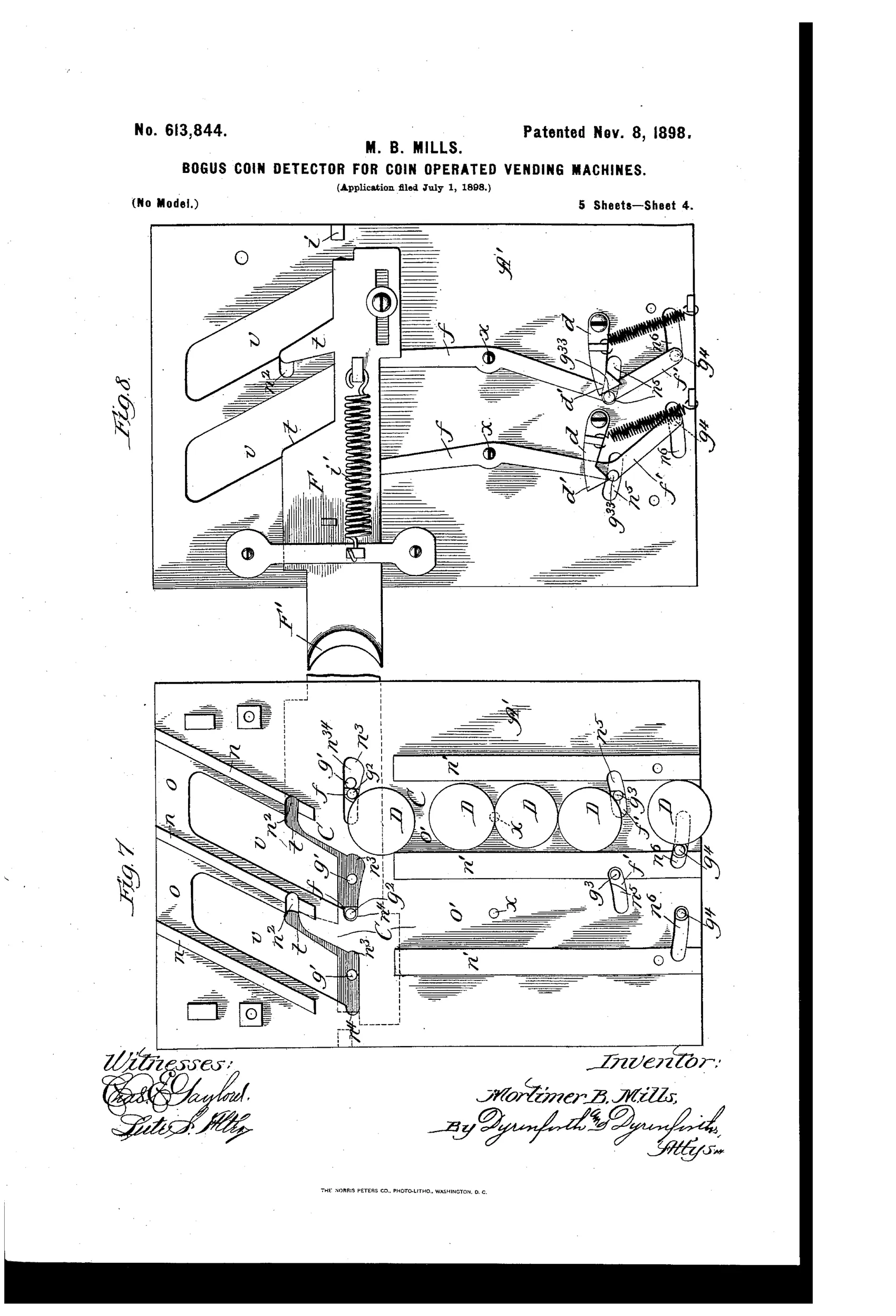
A coin dropped into a slotted chute slides down an inclined section until arrested by a stud, remaining visible behind a glass-covered opening in the case front. Pushing an operating handle retracts a bar that shifts studs to release the coin, letting it drop between two studs and pivot a lever, while a spring-controlled cam-dog with a V-shaped head snaps the lever to its throw extent to ensure release. Coins of improper diameter are deflected by an eccentrically-hung tappet projecting into the chute path, causing them to fall through a side opening instead of passing through. The device holds the last-inserted coin in view through one or more operations, and where multiple chutes are used, the last coin inserted occupies a higher plane than coins in other chutes, fixing which coin was most recently deposited.
◉ What was claimed
“I, Mortimer B. Mills, ... have invented a new and useful Improvement in Bogus-Coin Detectors for Coin-Operated Vending-Machines... The object of my invention is to provide as an attachment for use with coin-operated vending-machines generally a device through which the coin for paying the purchase price of the article to be delivered and for rendering the machine operative to produce the delivery must be passed in view and shall remain in view until the machine has been operated one or more times by another inserted coin or other such coins.”
In plain English: The invention is an attachment that forces any coin used to buy an item to be displayed and held visible until at least one more coin is inserted and the machine is operated again.
◉ In the inventor’s words
“Thus in the event that a would-be purchaser inserts a bogus coin into the detector it is presented to view therein and so remains during one or more operations of the machine.”— Mortimer B. Mills, from the specification
Manufactured and sold
Mills Novelty put visible coin-escrow windows into commercial production, and this 1898 patent is the documented root of that well-known feature on surviving Mills machines.
◉ Commentary
Most patents in this class try to make the machine smarter — magnets, weight gates, sizing rockers. Mortimer Mills, whose Mills Novelty Company would soon dominate the American slot machine trade, tries something socially clever instead: keep the last coin inserted parked behind a glass window on the front of the machine until the next customer's coin pushes it through. Drop a slug and it sits there in public view, advertising your dishonesty to the proprietor and everyone at the counter. The deterrent is psychological, not mechanical.
The drawing rewards a close look. The three discs stacked in the chute in Figs. 1 and 2 are the escrow — coins held in sequence, the newest riding a higher plane so there is no ambiguity about who deposited what. The release mechanics are careful too: the spring-loaded cam-dog with its V-shaped head snaps the stud lever through its full throw, so the coin either releases cleanly or not at all, no half-strokes leaving the escrow jammed. There is a conventional diameter check as well, an eccentric tappet that flicks undersized coins out a side opening, but that is the boilerplate; the visible escrow is the invention.
This idea stuck. The coin-escrow window became a signature of Mills slot machines for decades — arguably the most durable anti-slug measure the company ever adopted, precisely because it enlisted the shopkeeper's eyes rather than trying to out-engineer the counterfeiter.
Commentary by Claude, The Counterfeit Coin Detector Patent Archive’s resident enthusiast