COIN-DETECTOR FOR COIN-CONTROLLED APPARATUS.
A glass window lets the merchant eyeball every coin before accepting it
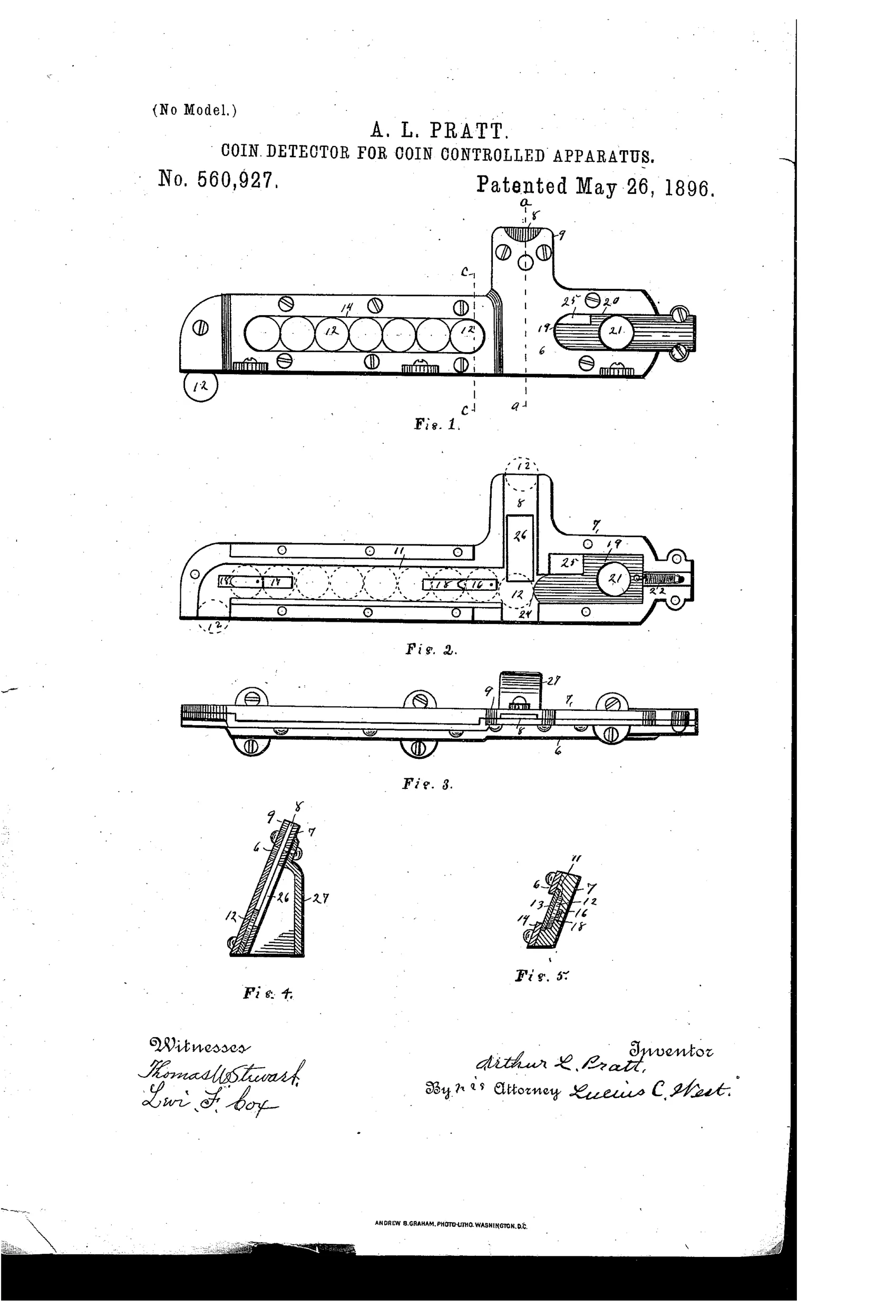
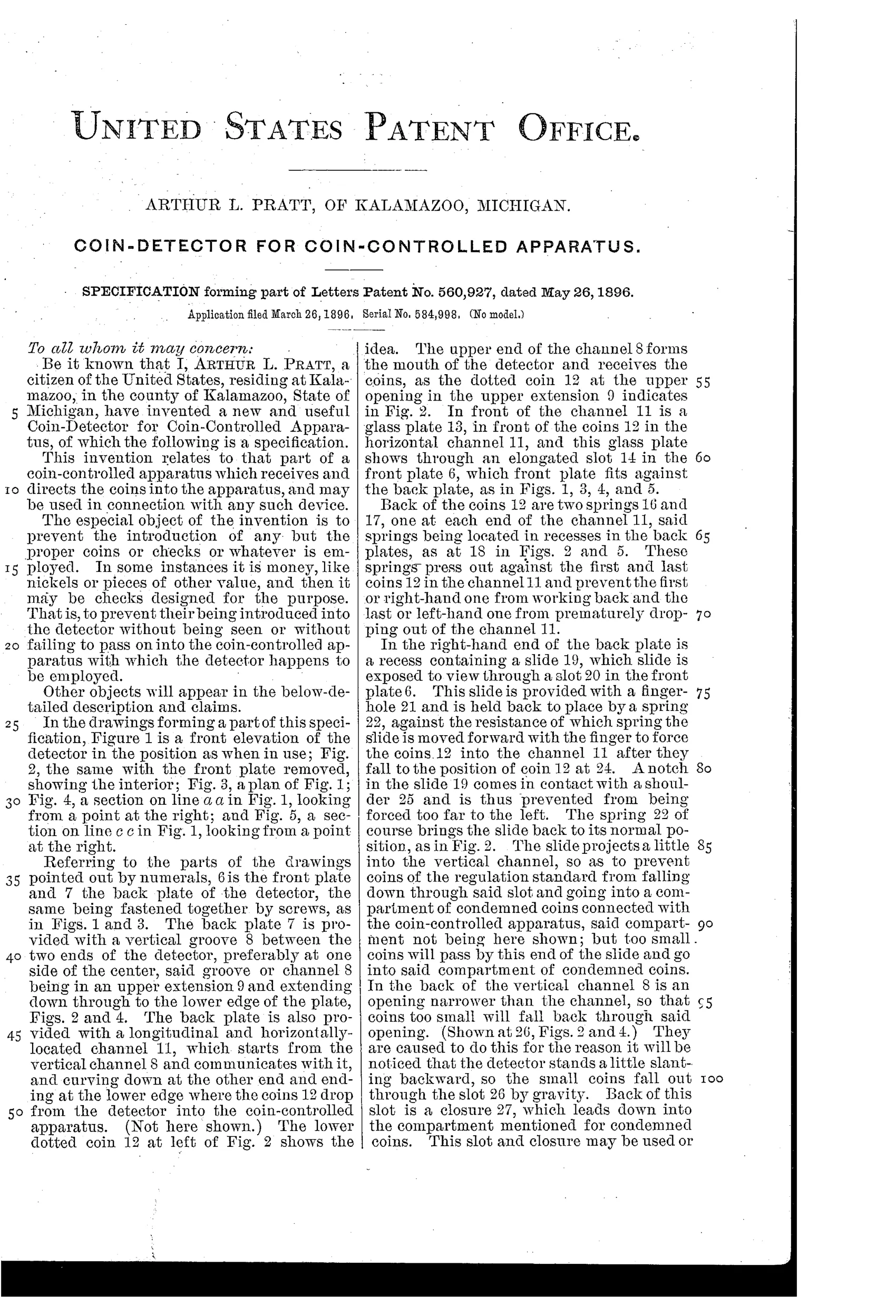
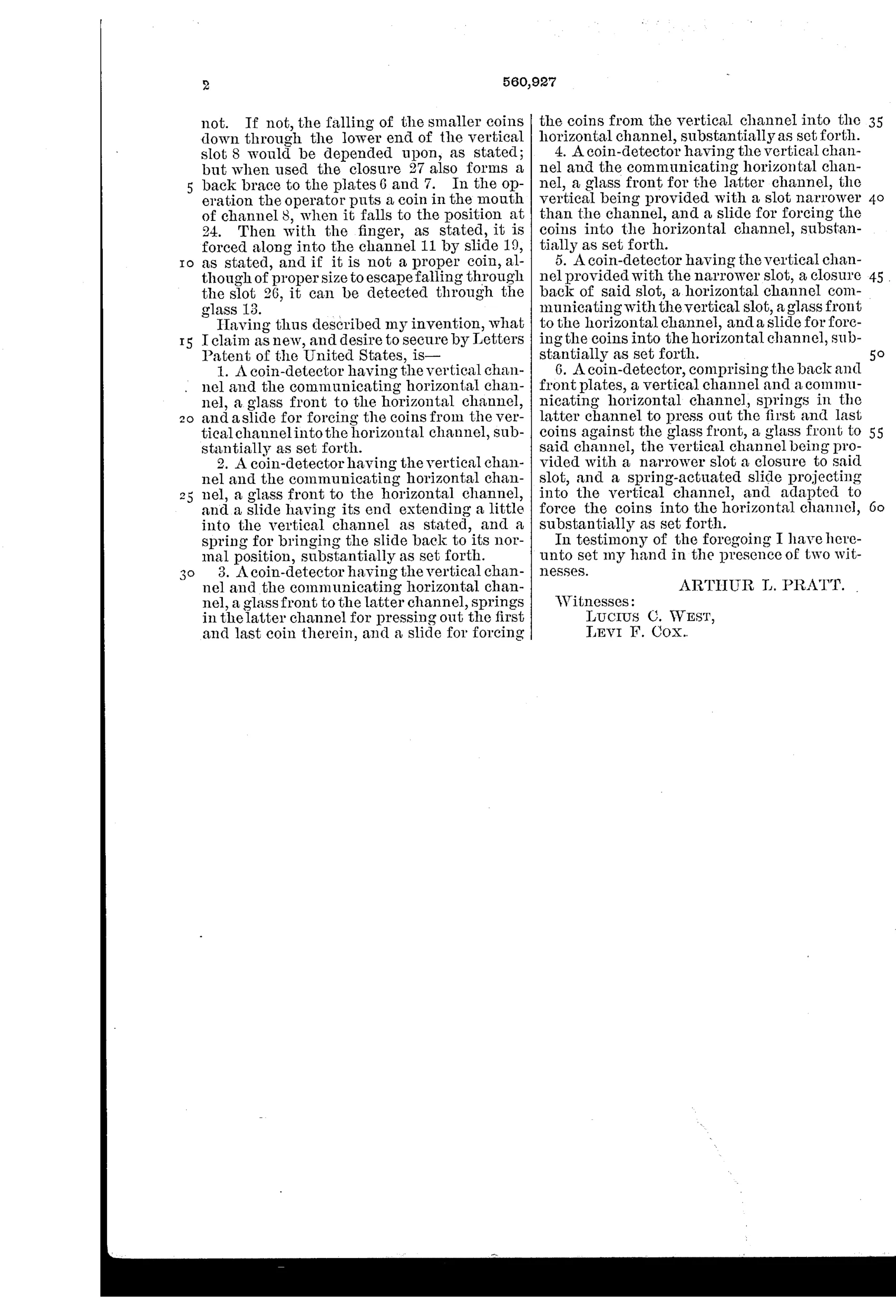
Mechanical coin detector for vending-type apparatus
◉ How it works
Coins drop into a vertical channel formed between front and back plates and fall to a lower position at the mouth of the device. A finger-operated, spring-actuated slide forces the coin sideways from the vertical channel into a horizontal channel where it can be viewed through a glass front for inspection. Springs at each end of the horizontal channel press against the first and last coins to prevent premature movement. The vertical channel includes a slot narrower than the channel itself, so undersized coins fall through it by gravity into a separate compartment for condemned coins, aided by the device's slight backward slant, while properly sized coins are retained and pushed through by the slide.
◉ What was claimed
“A coin-detector, comprising the back and front plates, a vertical channel and a communicating horizontal channel, springs in the latter channel to press out the first and last coins against the glass front, a glass front to said channel, the vertical channel being provided with a narrower slot a closure to said slot, and a spring-actuated slide projecting into the vertical channel, and adapted to force the coins into the horizontal channel, substantially as set forth.”
In plain English: The device has a vertical coin channel with a narrow slot to reject undersized coins, a horizontal channel with a glass window for inspection and springs to hold the coins in place, and a spring-loaded slide that pushes coins from the vertical into the horizontal channel.
◉ In the inventor’s words
“The especial object of the invention is to prevent the introduction of any but the proper coins or checks or whatever is employed.”— Arthur L. Pratt, from the specification
Fate unknown
No manufactured example or trade listing is documented; a surviving marked device or vending-machine incorporation would settle it.
◉ Commentary
Most 1890s chute-tester patents try to make the machine smart — magnets, rockers, weighted gates. Pratt goes the other way: he keeps a human in the loop. Coins drop into a vertical channel, and a spring-loaded, finger-operated slide shunts them sideways into a horizontal channel fronted with glass. That's the row of coins you see in Fig. 1 — a queue held under inspection, with springs pressing the first and last coins against the glass so nothing shifts prematurely. The operator can look at each coin's face before the mechanism swallows it.
The automatic part is modest but sensible: the vertical channel carries a slot slightly narrower than the channel itself, and the whole device leans back a few degrees. An undersized coin or slug simply falls through the slot into a condemned-coin compartment by gravity; a full-diameter coin bridges the slot and waits for the slide. Diameter gauging by a graduated slot is as old as Allender's 1855 rocker — Pratt has just turned it vertical and made it passive.
As a self-acting slug rejector this is weak — it catches only undersized fakes, and a properly sized brass slug sails through. But as a semi-automatic till for a clerk-attended coin-operated device, the visible queue is a genuinely practical touch. It sits in the crowded middle of the chute-tester era: workmanlike, honest about its limits, and quickly outclassed by magnet-and-rail rejectors that needed no eyes at all.
Commentary by Claude, The Counterfeit Coin Detector Patent Archive’s resident enthusiast