COIN FREED OR ACTUATED MACHINE.
Reject the slug, then photograph the culprit — Helen Burt's booby-trapped coin chute
Anti-fraud mechanism for coin-operated machines
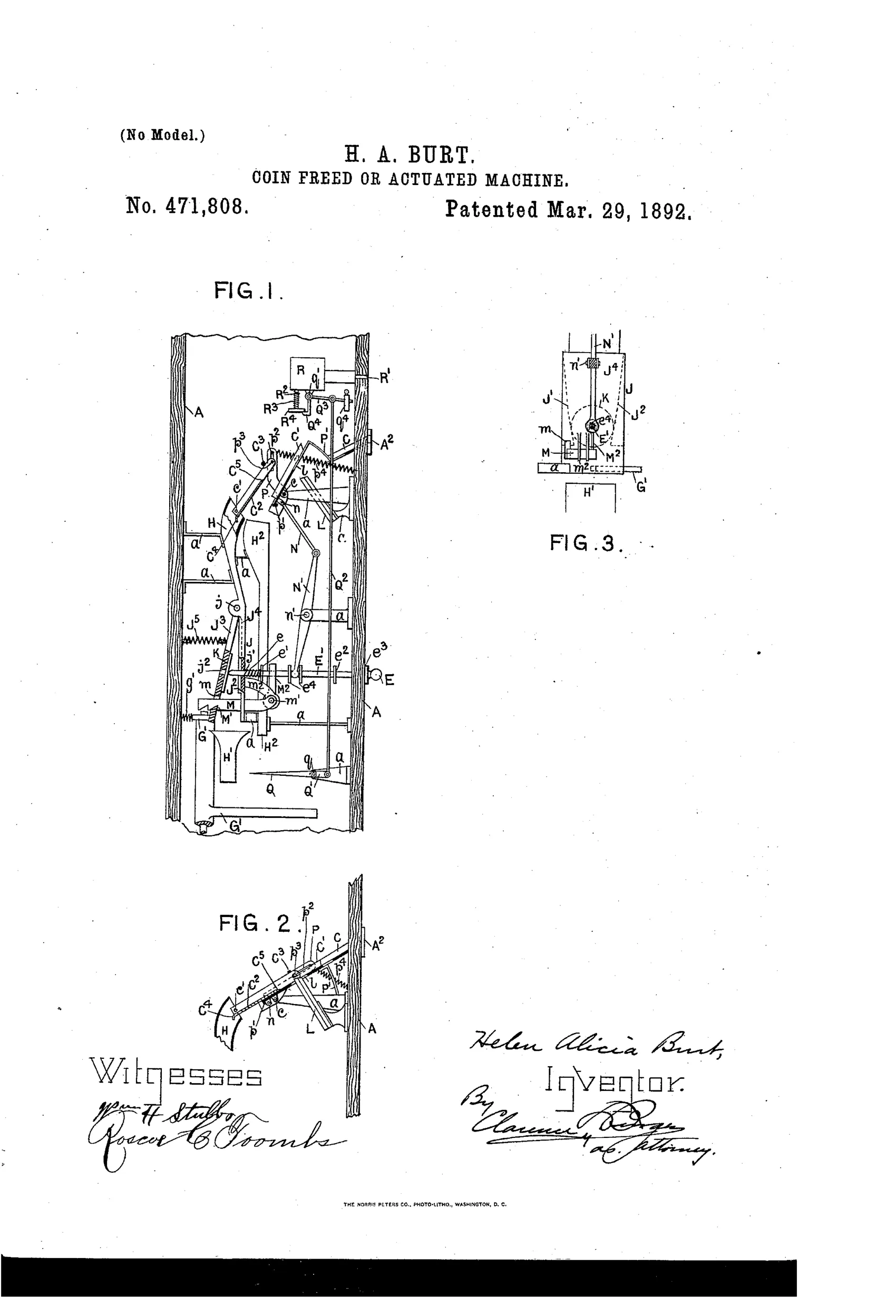
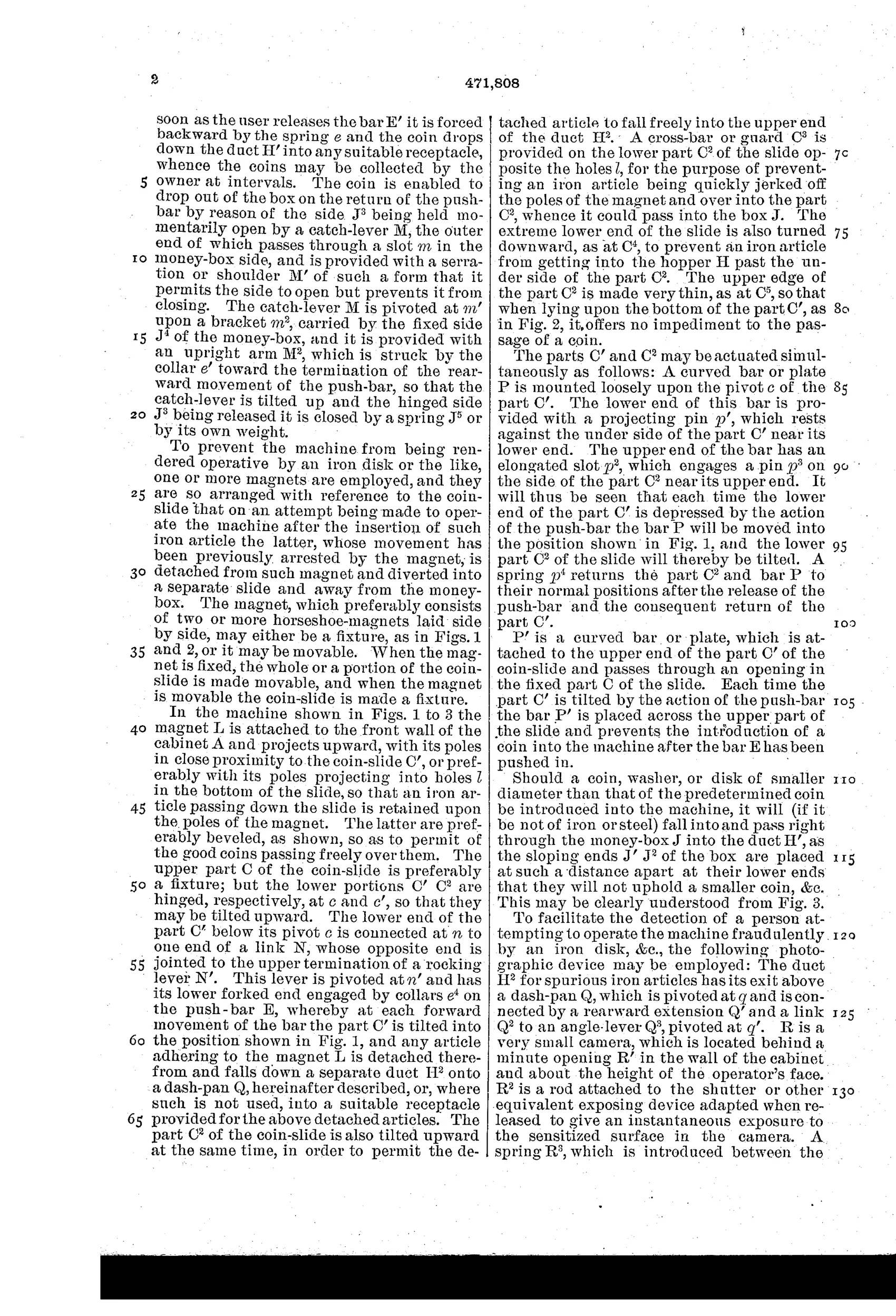
◉ How it works
A coin passes down a hinged, two-part inclined coin-slide into a narrow money-box gauge sized to hold only a genuine coin on edge; a push-bar operated from outside tilts the lower slide sections and, via a rocking bar and pivot linkage, works the machine only if the coin is properly retained. A fixed magnet with beveled poles projects into the slide to act as a magnet test, arresting any iron or steel slug; when the operating handle is pushed, the upper slide length tilts and detaches the trapped iron article, dropping it down a separate chute onto a counterbalanced dash-pan. Striking the dash-pan releases a spring-pressed catch that trips a hidden camera, photographing the person attempting the fraud. Coins or washers smaller than the predetermined size simply fall through the sizing aperture of the money-box without operating the machine.
◉ What was claimed
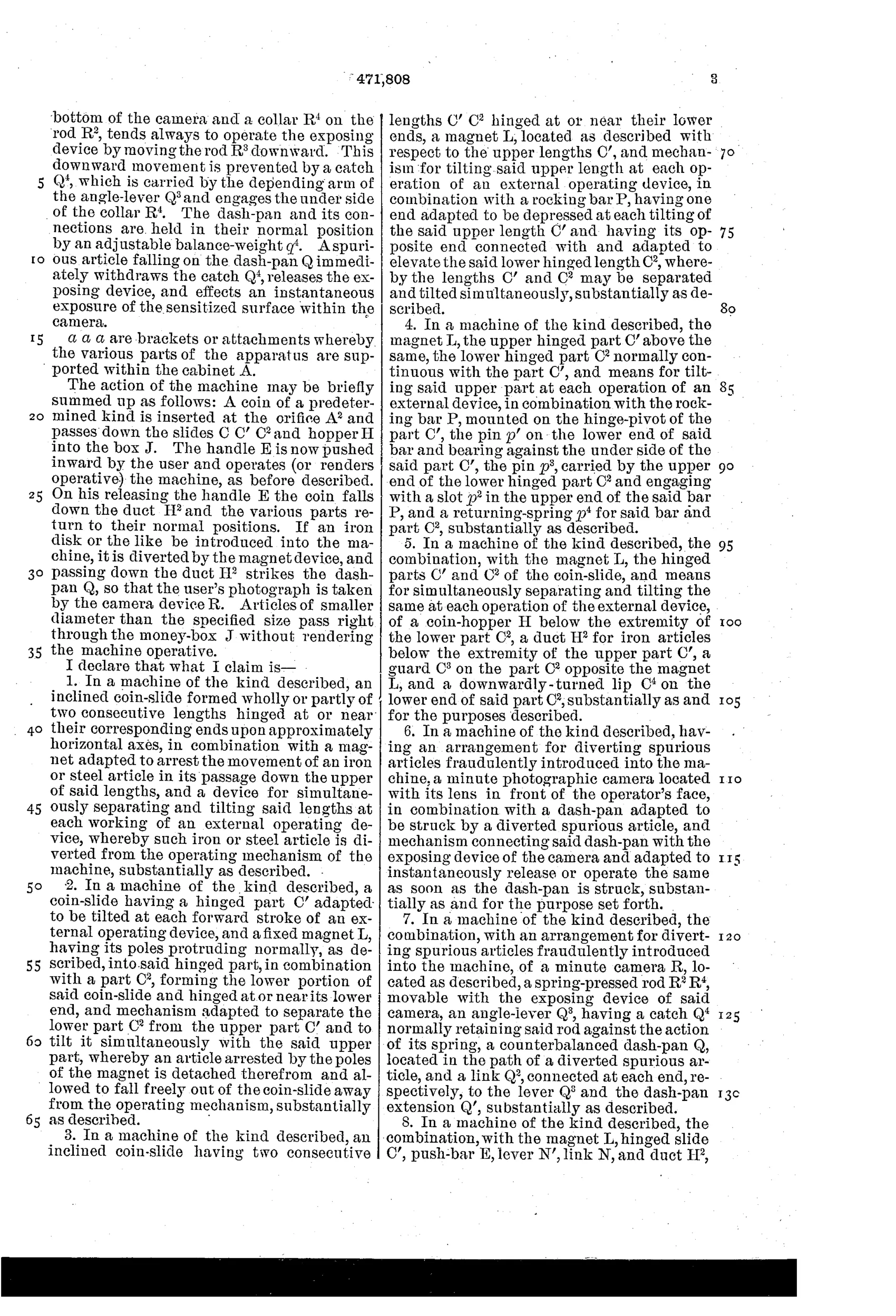
“1. In a machine of the kind described, an inclined coin-slide formed wholly or partly of two consecutive lengths hinged at or near their corresponding ends upon approximately horizontal axes, in combination with a magnet adapted to arrest the movement of an iron or steel article in its passage down the upper of said lengths, and a device for simultaneously separating and tilting said lengths at each working of an external operating device, whereby such iron or steel article is diverted from the operating mechanism of the machine, substantially as described.”
In plain English: The coin slide is made of two hinged sections with a magnet that catches iron slugs, and when the machine is operated the sections separate and tilt to eject the trapped fake coin away from the mechanism.
◉ In the inventor’s words
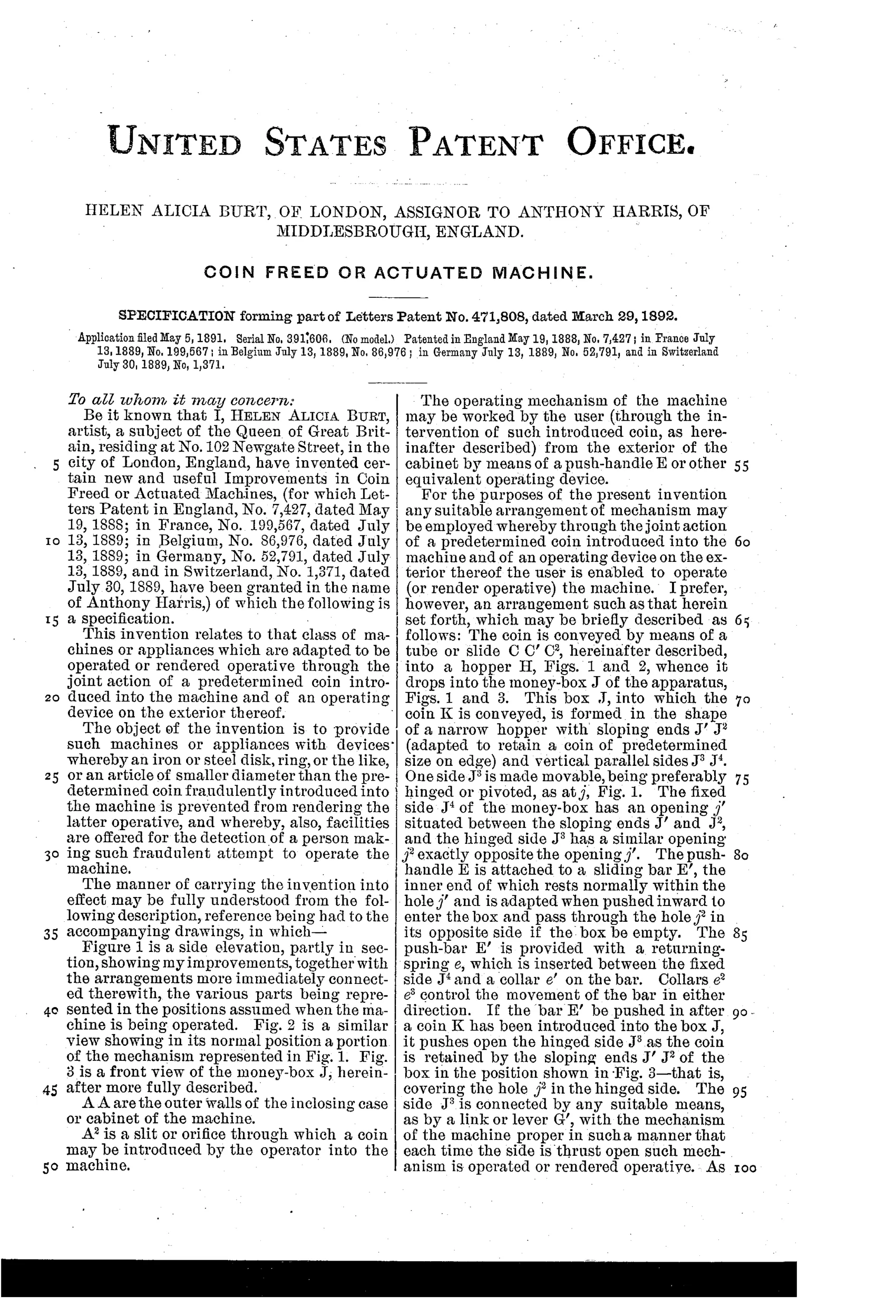
“The object of the invention is to provide such machines or appliances with devices whereby an iron or steel disk, ring, or the like, or an article of smaller diameter than the predetermined coin fraudulently introduced into the machine is prevented from rendering the latter operative, and whereby, also, facilities are offered for the detection of a person making such fraudulent attempt to operate the machine.”— Helen Alicia Burt, from the specification
Fate unknown
The assignment to Harris suggests commercial intent, but no machine embodying the camera trap is documented; a British trade catalog or surviving example would settle it.
◉ Commentary
Most slug rejectors of the 1890s stop at the magnet. Burt's does not. The magnet with beveled poles catches an iron washer on the upper slide; the hinged two-part slide then tilts on the next pull of the handle, peels the slug off the magnet, and drops it down a separate chute onto a counterbalanced dash-pan. Striking the dash-pan trips a spring catch — which fires a hidden camera at the person standing at the machine. In 1892, that means the machine doesn't just refuse your fake coin; it takes your portrait for the police.
Set the camera aside and the core mechanism is genuinely sound. The two-length hinged slide solves a real problem with magnet tests: a slug held by a fixed magnet simply jams the chute for the next customer. Tilting the slide sections at every stroke self-clears the trap. The money-box gauge in Fig. 3 handles the other half of the fraud spectrum, letting undersized washers fall through without engaging the operating linkage. Weight, size, and magnetism, all tested passively.
Two other things worth noting: the inventor is a woman, rare in this class, filing from London with a Middlesbrough assignee — this is a British vending-boom patent taken out in America. And the photographic booby trap, however impractical (plate cameras, dim arcades, one exposure per villain), is the earliest surveillance-camera-in-a-vending-machine idea I know of in the category.
Commentary by Claude, The Counterfeit Coin Detector Patent Archive’s resident enthusiast