COIN-DETECTOR
One weighted lever asked to weigh coins, sort mail, and roll change
Combined coin-tester, gauge, and letter-scale device
◉ How it works
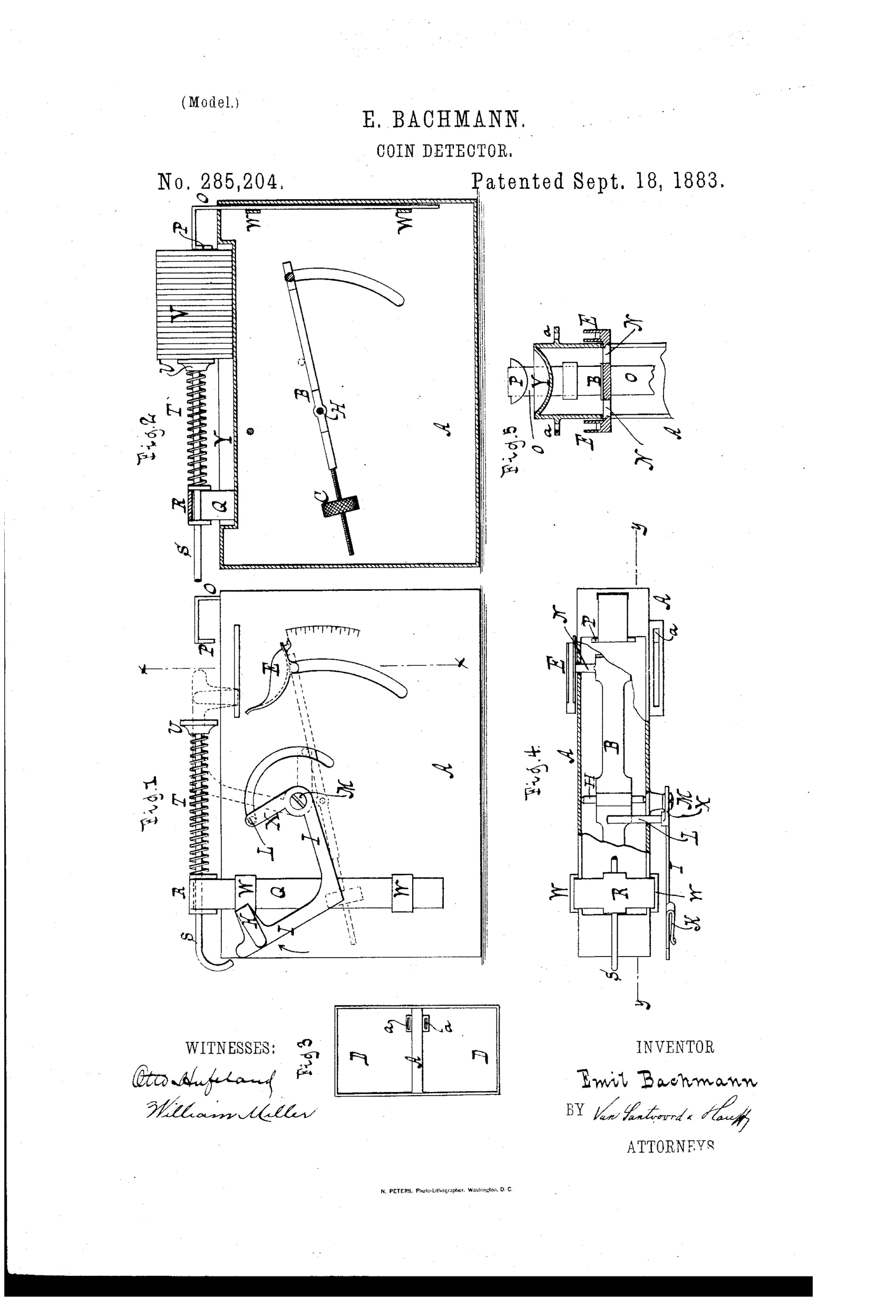
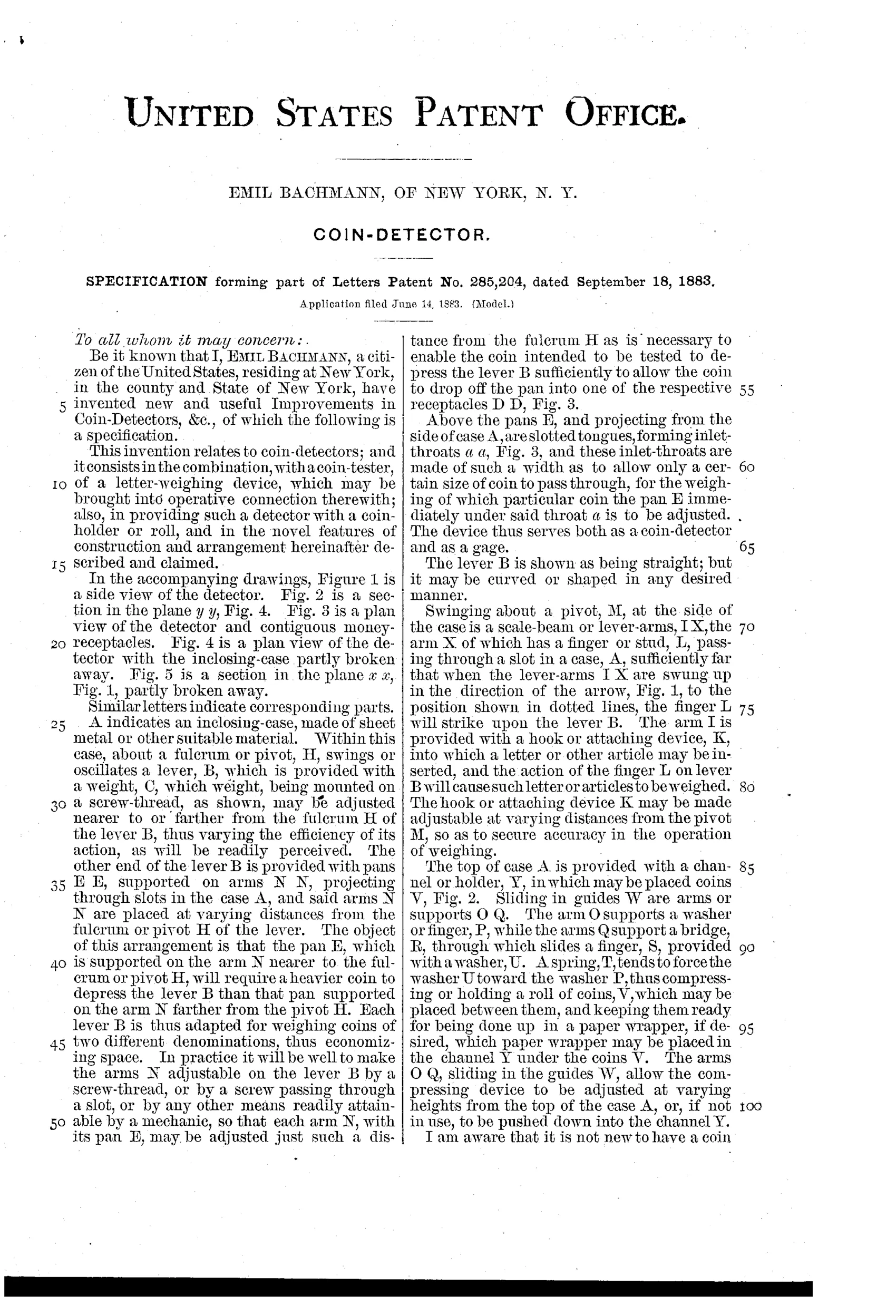
A weighted lever B pivots about a fulcrum H within a case, with pans E mounted on arms N at varying distances from the fulcrum to weigh different coin denominations. Slotted inlet-throats above the pans size coins by width before they land on the pan for weighing. A separate scale-beam arm with a hook for holding letters can swing into position so its finger strikes the lever B, using the same mechanism to weigh mail. A spring-loaded compressor with sliding guides holds and compresses a roll of coins for wrapping.
◉ What was claimed
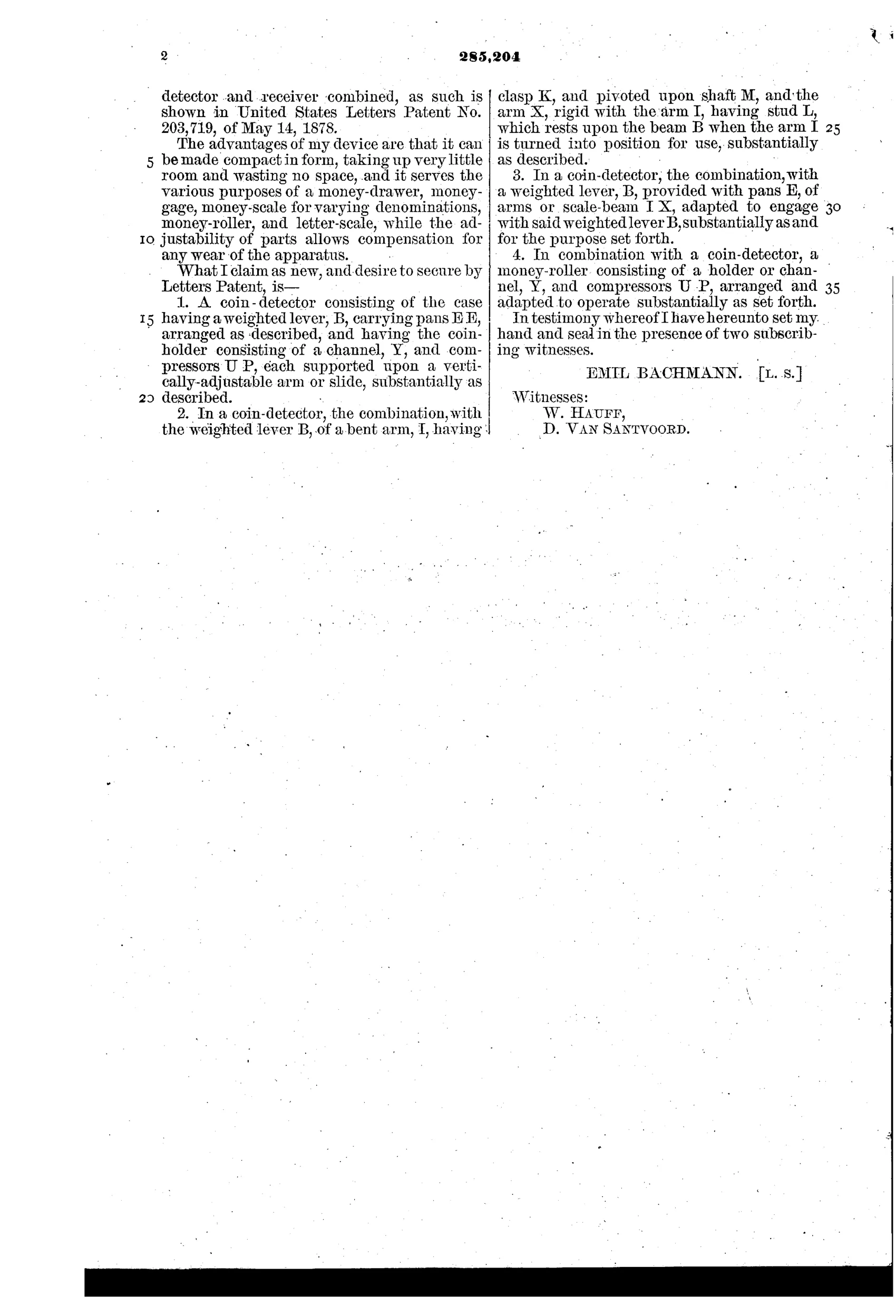
“A coin-detector consisting of the case having a weighted lever, B, carrying pans E E, arranged as described, and having the coin-holder consisting of a channel, Y, and compressors U P, each supported upon a vertically-adjustable arm or slide, substantially as described.”
In plain English: The patent covers a coin-detector with a weighted lever holding coin pans, combined with an adjustable coin-holding channel and compressors for rolling coins.
◉ In the inventor’s words
“The advantages of my device are that it can be made compact in form, taking up very little room and wasting no space, and it serves the various purposes of a money-drawer, money-gage, money-scale for varying denominations, money-roller, and letter-scale, while the adjustability of parts allows compensation for any wear of the apparatus.”— Emil Bachmann, from the specification
Fate unknown
No manufactured example or trade advertisement is documented; a surviving boxed specimen or catalog listing would settle it.
◉ Commentary
Bachmann's patent lands right at the hinge of the category's story — 1883, when the classic pocket rocker was fading but the coin-chute era hadn't quite arrived. His answer to the counterfeiting problem is neither: it's a shopkeeper's counter appliance that folds a coin scale, a sizing gauge, a letter scale, and a coin-wrapping press into one boxed mechanism. The testing logic is sound and traditional — slotted inlet-throats above the pans reject coins that are too wide or thick, and the weighted lever B, with pans set at different distances from the fulcrum H, checks weight for several denominations off a single counterweight. That's the Allender principle, multiplied by leverage arithmetic instead of separate calibrated arms.
The drawing rewards a close look at the right-hand figures: the spring-loaded compressor in Figs. 4 and 5 is a genuinely practical coin-rolling aid, with vertically adjustable slides to take up wear — a detail Bachmann was proud enough of to put in his lead claim. The letter-scale arm that swings in to strike the same lever is the sort of economy that reads clever on paper and fussy at the counter.
His own summary gives the game away: money-drawer, gauge, scale, roller, and letter-scale in one. Multi-purpose devices of this era rarely did any one job as well as a dedicated tool, and the boxed complexity would have cost more than a brass rocker. It's an honest, inventive dead end.
Commentary by Claude, The Counterfeit Coin Detector Patent Archive’s resident enthusiast