Coin-Detector
One brass plate, one reversible slide: every gold and silver coin, three tests.
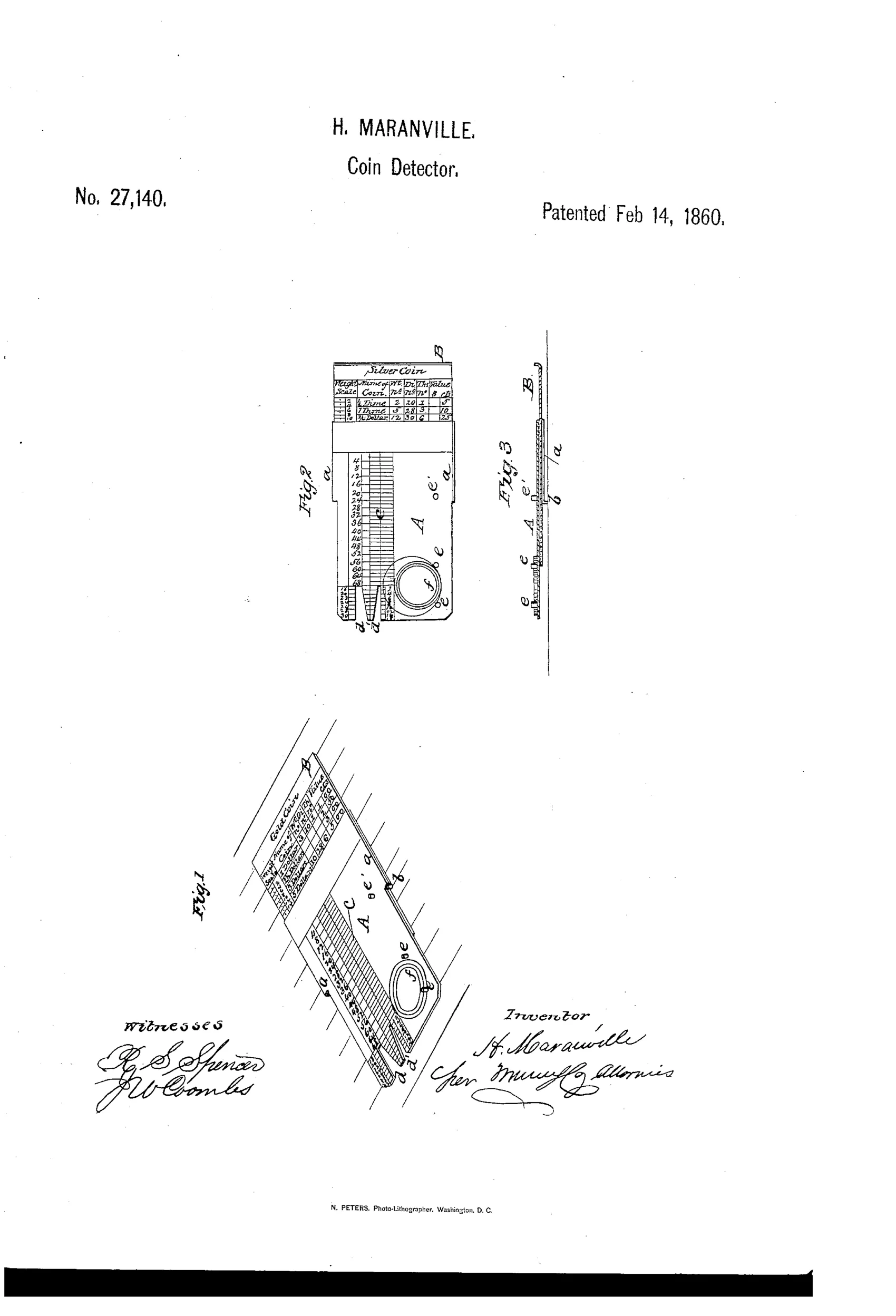
Instrument for testing gold and silver coins
◉ How it works
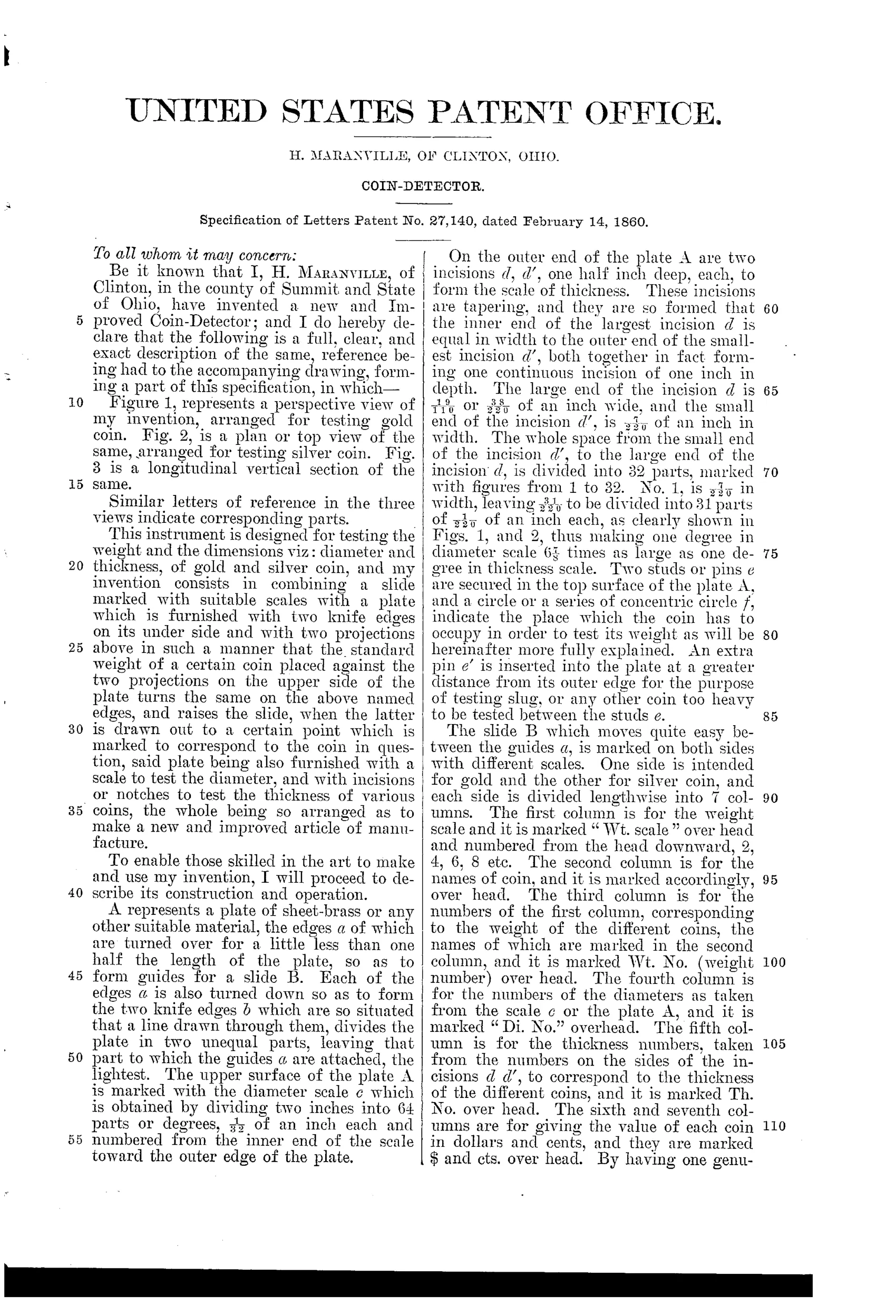
A brass plate A has turned-over edges forming guides and knife edges that pivot the plate unevenly, plus tapering incisions for measuring coin thickness and a diameter scale marked in degrees. A sliding piece B, marked with weight, diameter, and value scales for both gold and silver coins on its two sides, moves along the guides. Placing a coin against two studs on the plate causes correct-weight coins to gently tip the plate on its knife edges and raise the slide to the coin's proper weight mark. Diameter is checked by aligning the coin's edge on the scale, and thickness is tested by fitting the coin's edge into the tapered incisions.
◉ What was claimed
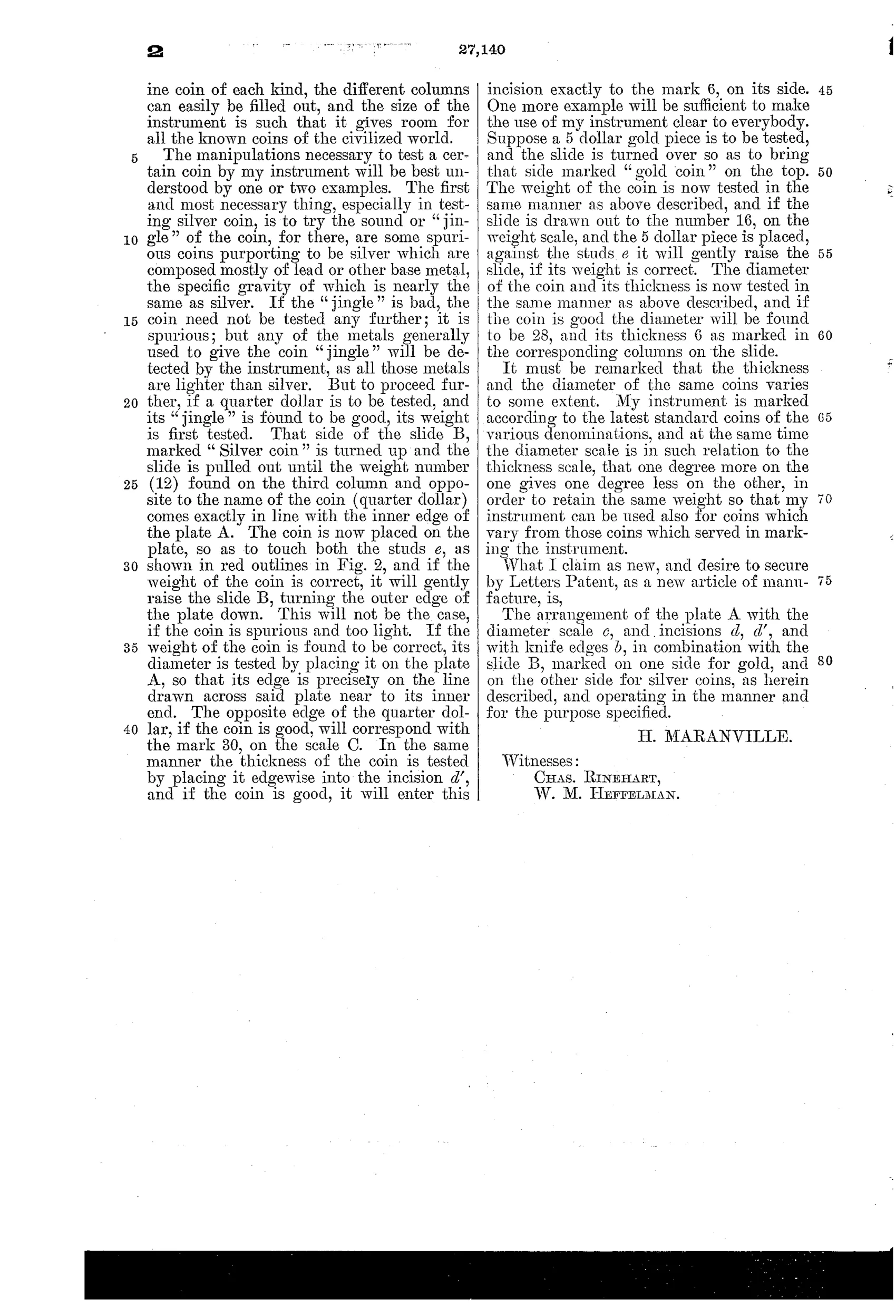
“The arrangement of the plate A with the diameter scale c, and incisions d, d', and with knife edges b, in combination with the slide B, marked on one side for gold, and on the other side for silver coins, as herein described, and operating in the manner and for the purpose specified.”
In plain English: The claim covers the combination of a plate with a diameter scale, thickness-testing incisions, and pivoting knife edges, together with a sliding scale marked for gold on one side and silver on the other, all working together as described to test coins.
◉ In the inventor’s words
“But any of the metals generally used to give the coin "jingle" will be detected by the instrument, as all those metals are lighter than silver.”— H. Maranville, from the specification
Manufactured and sold
Maranville detectors were commercially manufactured and marked examples survive in collections; with Allender's, it is one of the two classic hand detectors of the era.
◉ Commentary
Maranville's 1860 detector is the second great name in the pocket-balance era, and this patent shows why. Allender had proved in 1855 that a rocker with a counterweight and a sizing hole could catch most counterfeits, but his gauge handled gold only, one denomination per aperture. Maranville's answer is denser: a single plate carrying a diameter scale along one edge, tapered incisions in the corner that measure thickness by how deep a coin's rim seats, and knife edges underneath that let the whole plate tip like a balance. The clever part is the slide B — one bar marked for gold on one face and silver on the other, so flipping and repositioning it recalibrates the counterweight for a whole second monetary metal. Fig. 1 and Fig. 2 are the same instrument in its two personalities.
The logic is the same three-way trap as Allender's: a counterfeiter can match weight with a thick base-metal coin, or match diameter with a light one, but matching weight, diameter, and thickness at once in cheap metal is nearly impossible. Maranville says it plainly in the specification — the metals that give a coin its "jingle" are all lighter than silver, and the balance will find them out.
This one wasn't paper. Maranville detectors were made in quantity, and surviving examples marked with his name turn up regularly. Alongside Allender's, it's the type specimen of the whole category.
Commentary by Claude, The Counterfeit Coin Detector Patent Archive’s resident enthusiast