DEVICE FOR THE AUTOMATIC DETECTION OF GENUINE COINS
A coin proves itself by generating its own electricity across a heated contact
Thermoelectric coin detector that rejects fake slugs
◉ How it works
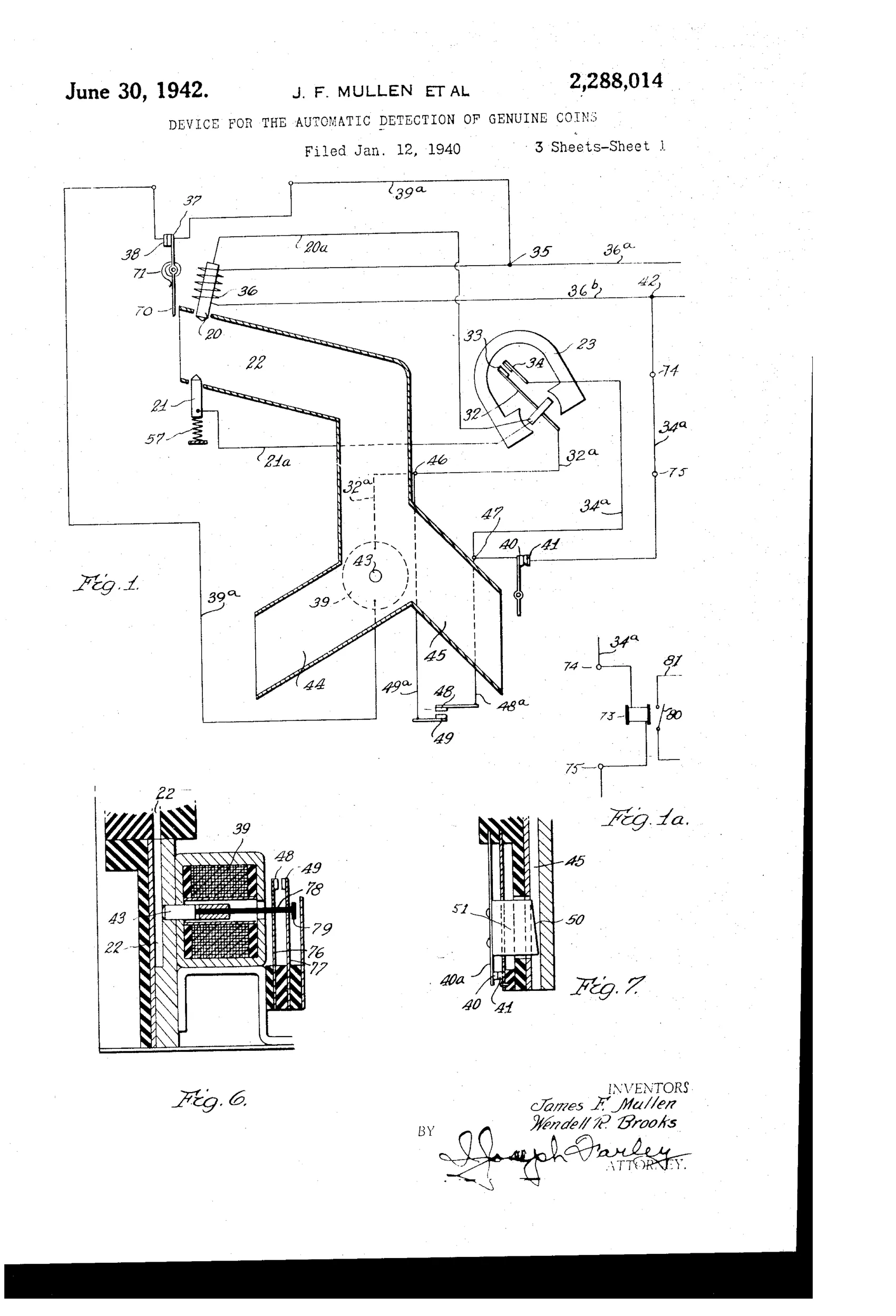
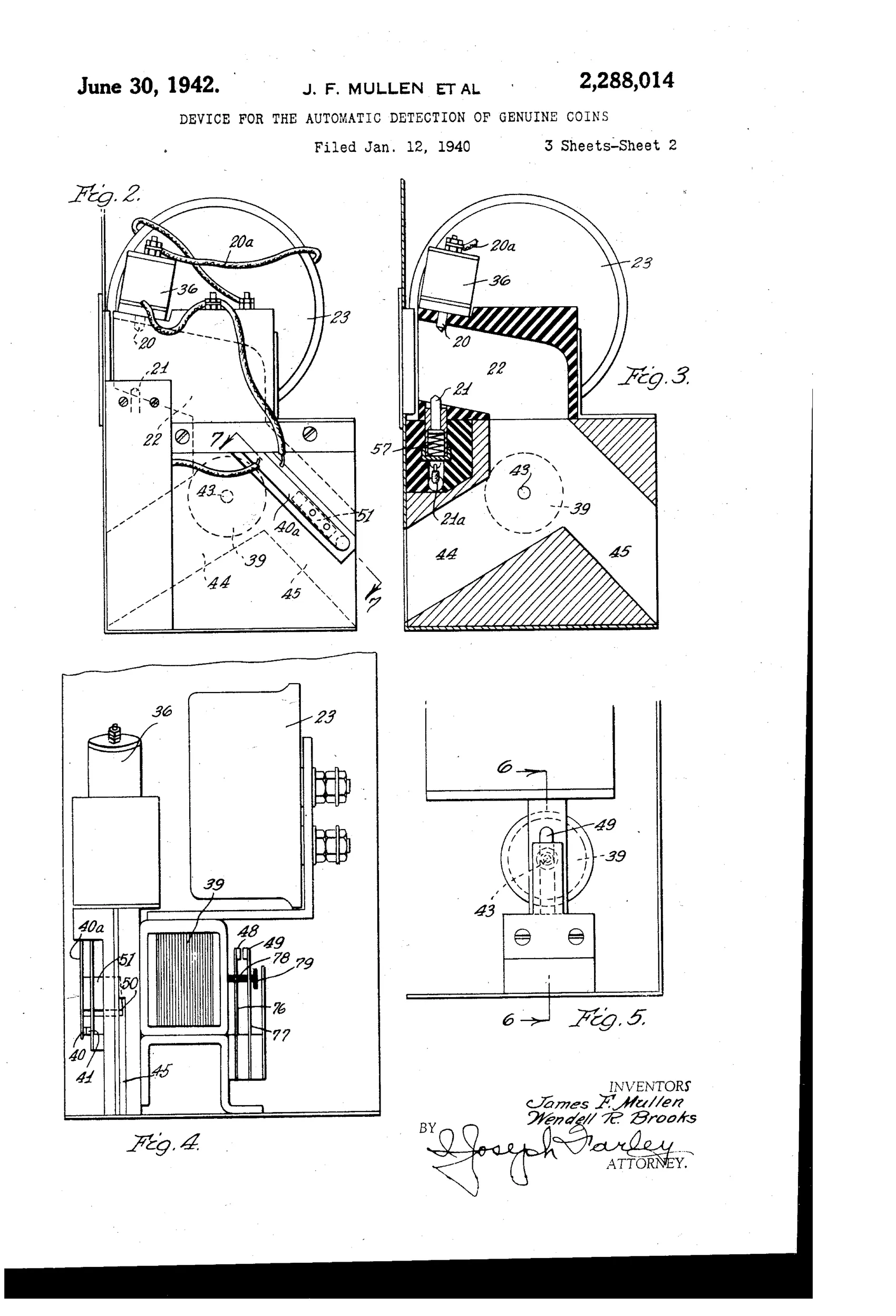
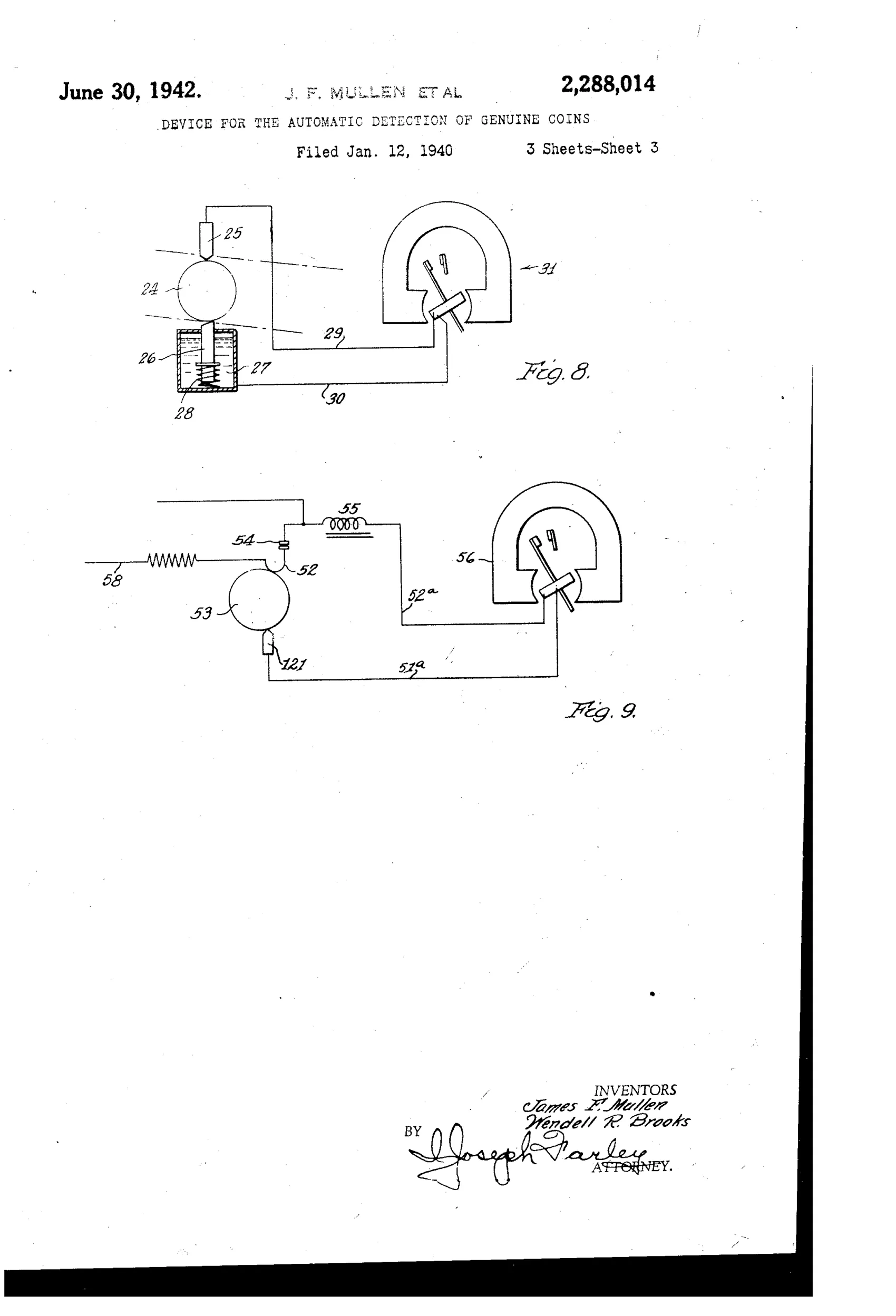
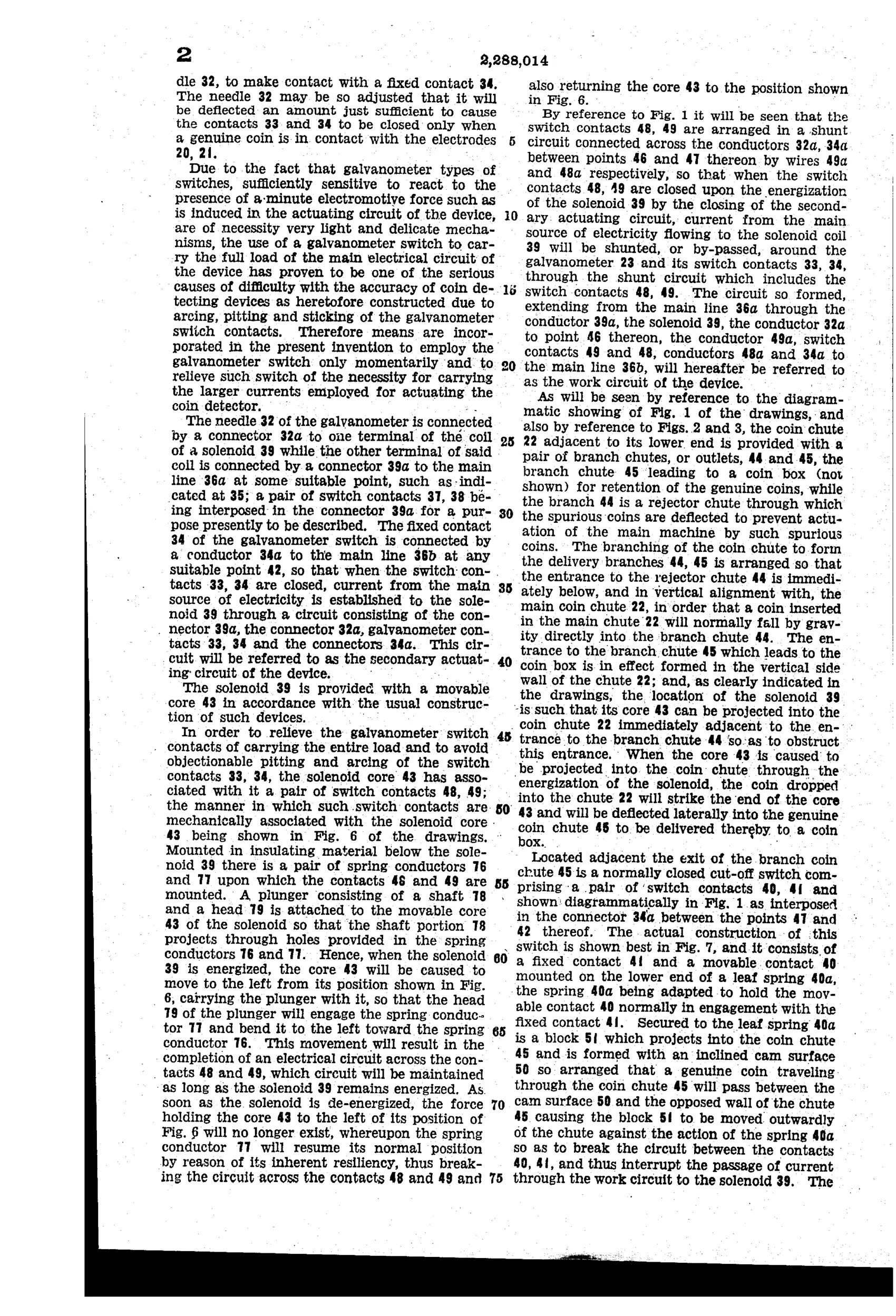
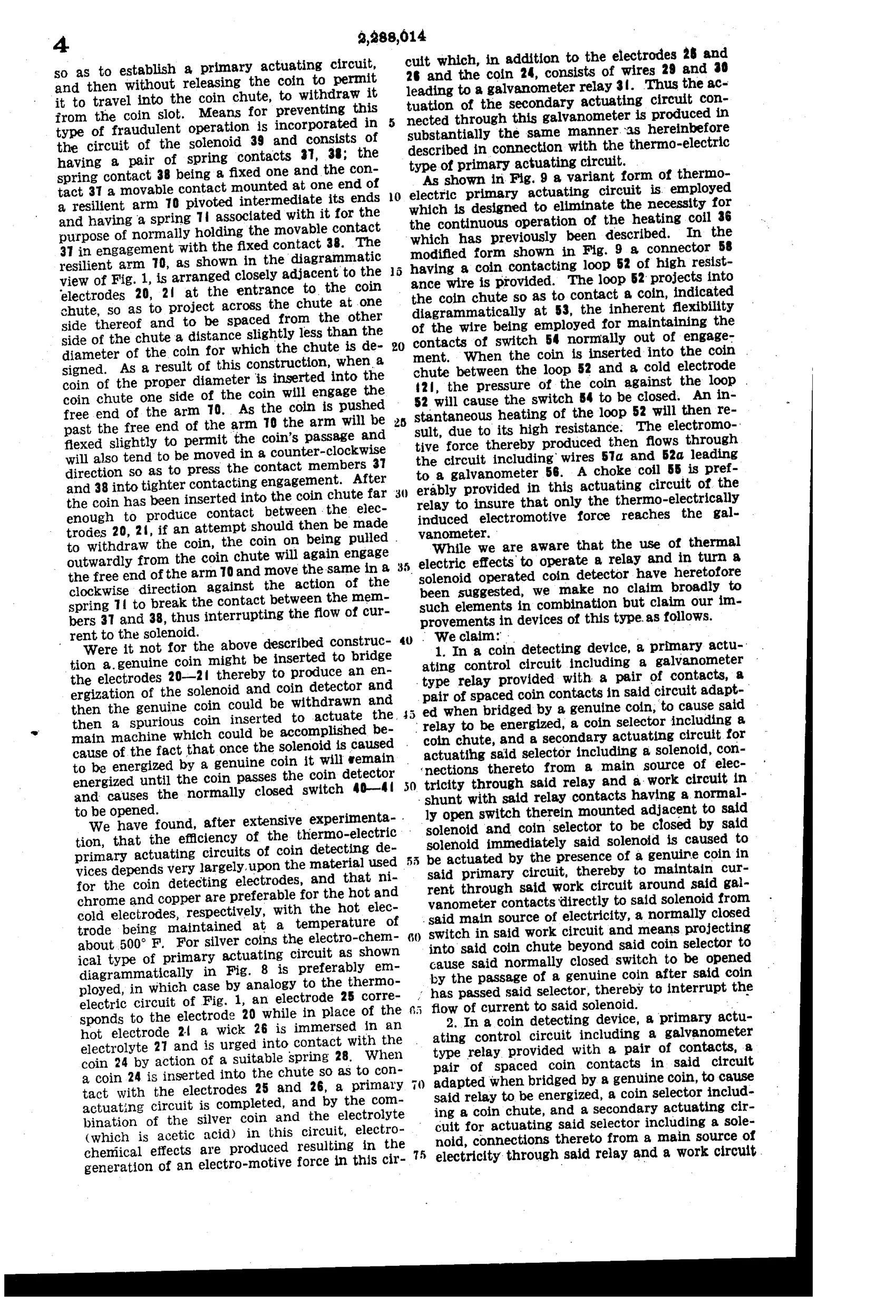
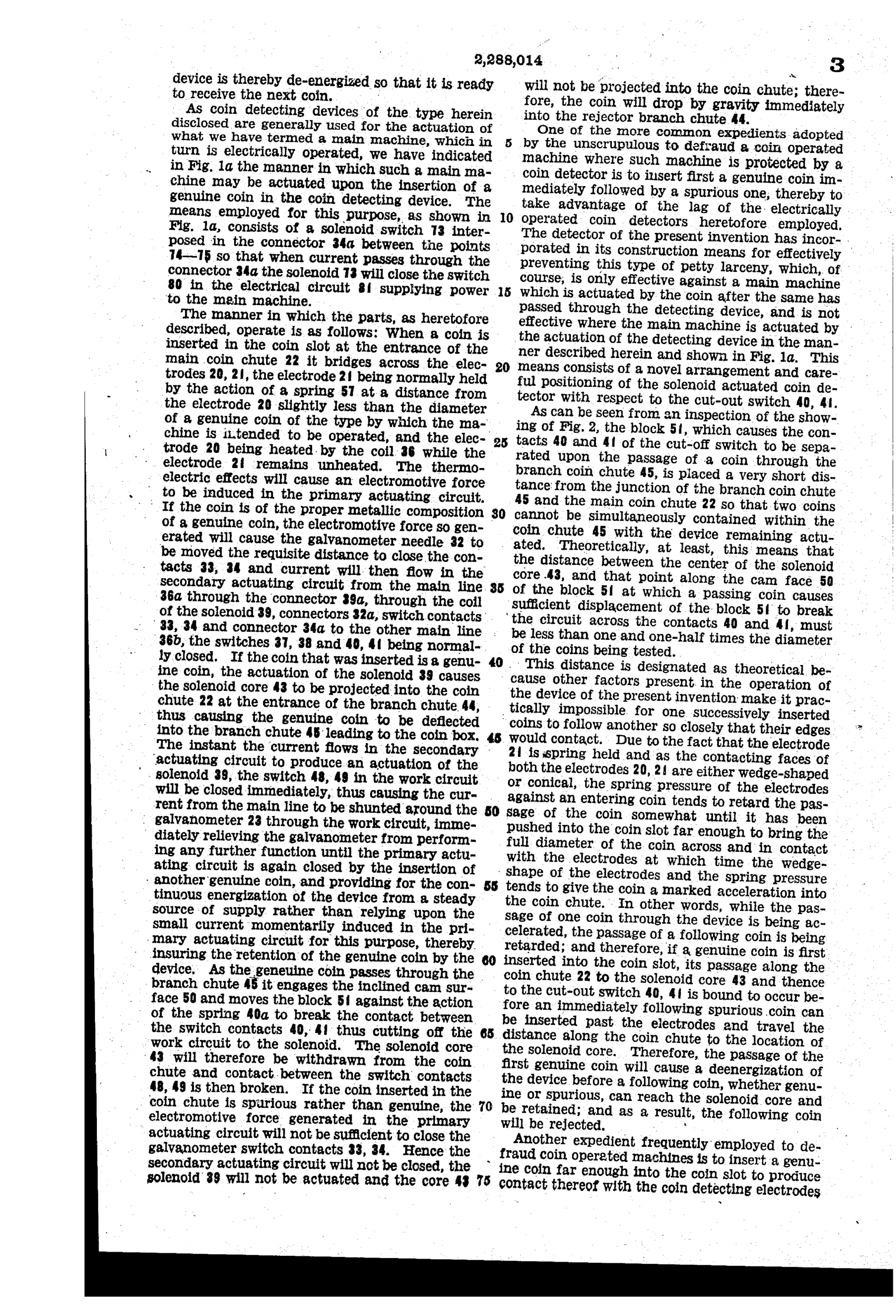
A coin bridges two spaced electrodes at the top of a coin chute, one heated and one cold, generating a small thermoelectric voltage if the coin is genuine metal. This tiny voltage deflects a sensitive galvanometer needle to close delicate contacts, which momentarily energize a solenoid. The solenoid immediately closes a heavier-duty shunt work circuit that bypasses the fragile galvanometer contacts and holds the solenoid core extended into the chute to deflect the genuine coin into a separate coin box chute, while a spurious coin (insufficient EMF) fails to trip the galvanometer and falls straight into a reject chute. A normally closed cut-off switch near the exit of the genuine-coin chute is opened by the passage of the coin itself, de-energizing the solenoid and resetting the device, and a spring-loaded contact arm at the coin slot prevents fraud by breaking the primary circuit if a genuine coin is withdrawn after triggering it.
◉ What was claimed
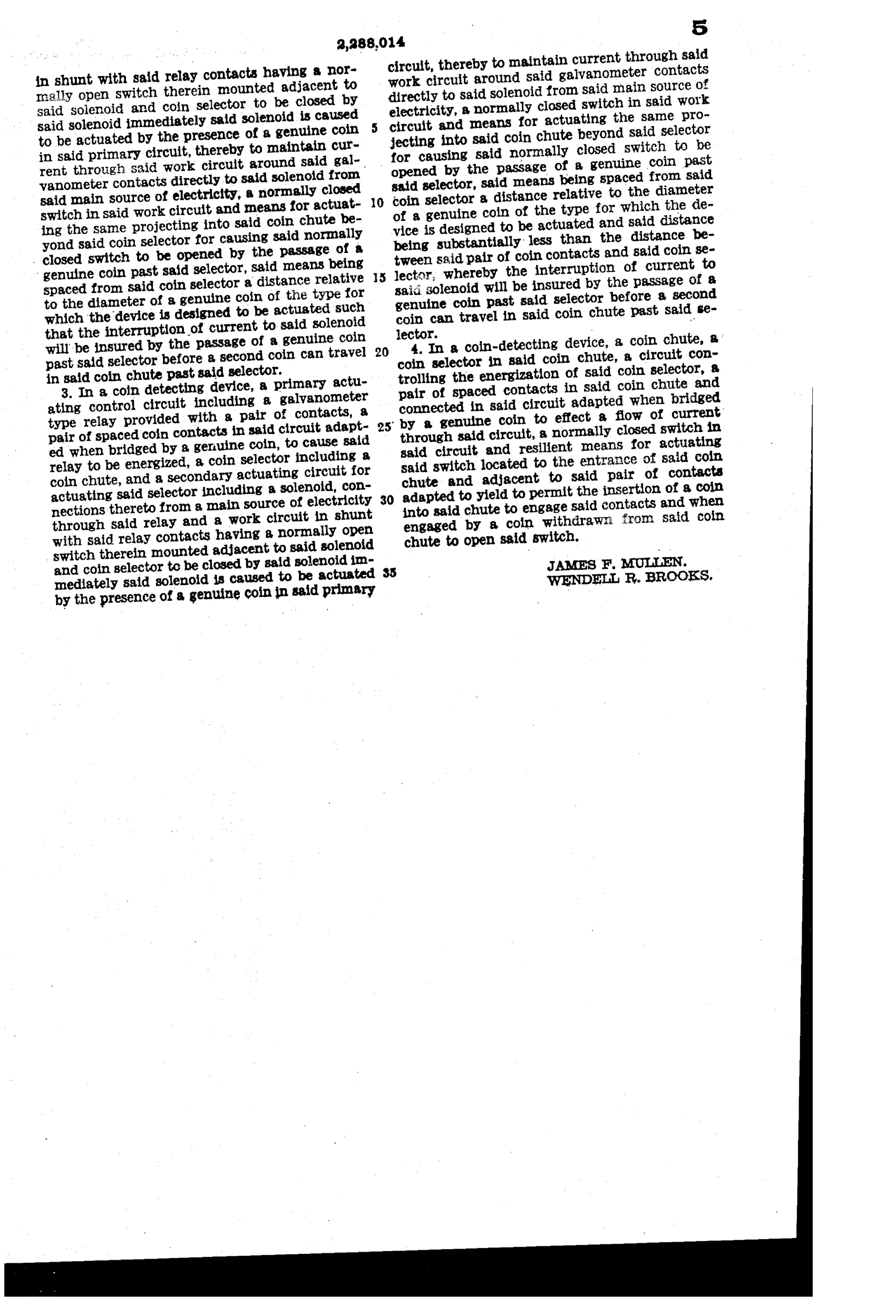
“1. In a coin detecting device, a primary actuating control circuit including a galvanometer type relay provided with a pair of contacts, a pair of spaced coin contacts in said circuit adapted when bridged by a genuine coin, to cause said relay to be energized, a coin selector including a coin chute, and a secondary actuating circuit for actuating said selector including a solenoid, connections thereto from a main source of electricity through said relay and a work circuit in shunt with said relay contacts having a normally open switch therein mounted adjacent to said solenoid and coin selector to be closed by said solenoid immediately said solenoid is caused to be actuated by the presence of a genuine coin in said primary circuit, thereby to maintain current through said work circuit around said galvanometer contacts directly to said solenoid from said main source of electricity, a normally closed switch in said work circuit and means projecting into said coin chute beyond said coin selector to cause said normally closed switch to be opened by the passage of a genuine coin after said coin has passed said selector, thereby to interrupt the flow of current to said solenoid.”
In plain English: A coin bridging two contacts triggers a galvanometer that briefly energizes a solenoid, which then switches to a separate heavy-duty circuit to deflect the genuine coin into the coin box, and a switch further down the chute shuts everything off once the coin has passed, resetting the device for the next coin.
◉ In the inventor’s words
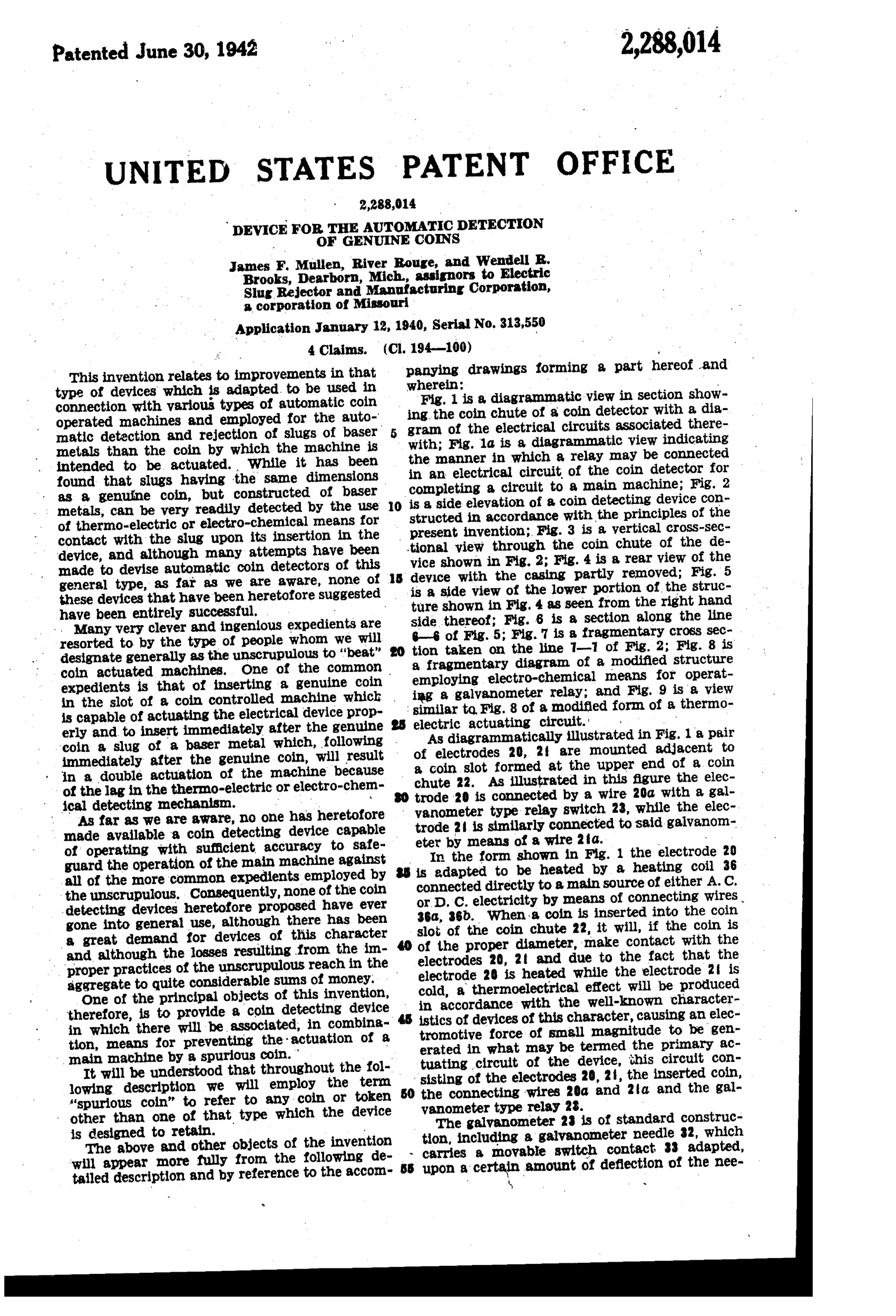
“Many very clever and ingenious expedients are resorted to by the type of people whom we will designate generally as the unscrupulous to "beat" coin actuated machines.”— James F. Mullen, from the specification
Fate unknown
The assignment to Electric Slug Rejector and Manufacturing Corp. suggests commercial intent, but no marked production unit is documented; a surviving rejector using the heated-electrode circuit would settle it.
◉ Commentary
Most slug rejectors of the vending era test what a coin does — how a magnet drags it, how a gauge weighs it. Mullen's device tests what a coin *is*, in the most physics-teacher way imaginable: the coin bridges one heated electrode and one cold one, and if it's the right metal, the temperature difference generates a thermoelectric voltage. The coin becomes half of a thermocouple. Wrong alloy, wrong voltage, no sale.
The trouble is that thermoelectric EMFs are measured in microvolts, which is why the circuit design is really the invention here. A galvanometer-type relay — a laboratory instrument, essentially — detects the whisper of current, and its fragile contacts fire a solenoid for only an instant before a shunt work circuit takes over the load and holds the deflector in the coin's path. Then a cut-off switch downstream, tripped by the coin itself, resets everything. That cascade from microvolt to muscle is genuinely elegant, and the anti-fraud contact arm at the slot (breaking the circuit if a coin-on-a-string is withdrawn) shows Mullen knew his adversaries; his line about 'the unscrupulous' is a small treat.
As practical engineering, it's a hard sell: a heater running continuously, a galvanometer surviving vending-machine abuse, thermal drift everywhere. Electrical conductivity testing did win eventually — but by induction, not thermocouples. This is a clever road not taken.
Commentary by Claude, The Counterfeit Coin Detector Patent Archive’s resident enthusiast