IMPROVEMENT IN COUNTERFEIT-COIN DETECTER AND COIN-RECEIVER.
A cashier's till that weighs every coin on its way into the drawer
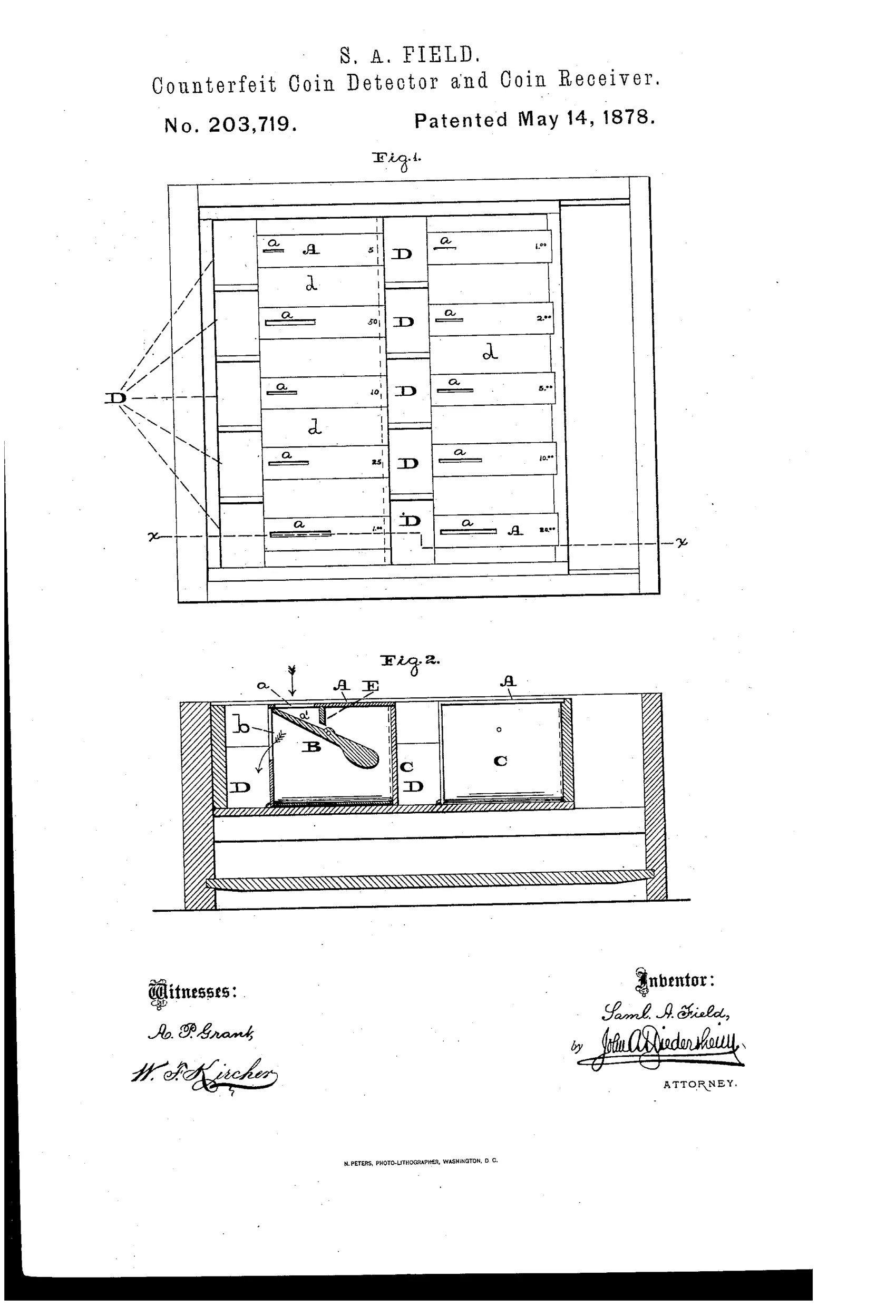
Combined coin detector and cash-sorting receiver device.
◉ How it works
A series of coin-detectors, each with its own case and weighted poise, tests coins by weight as they pass through an inlet-throat and roll onto a face-poise. Genuine coins depress the poise sufficiently to roll through a discharge-throat into a corresponding box below, while spurious coins fail to depress the poise, exposing their nature. A bar E projects near the inlet-throat to direct coins to the correct part of the poise so the weighing action is unfailing. Boxes D are arranged in a row beneath the discharge-throats so that each denomination of genuine coin is automatically sorted into its own separate receptacle.
◉ What was claimed
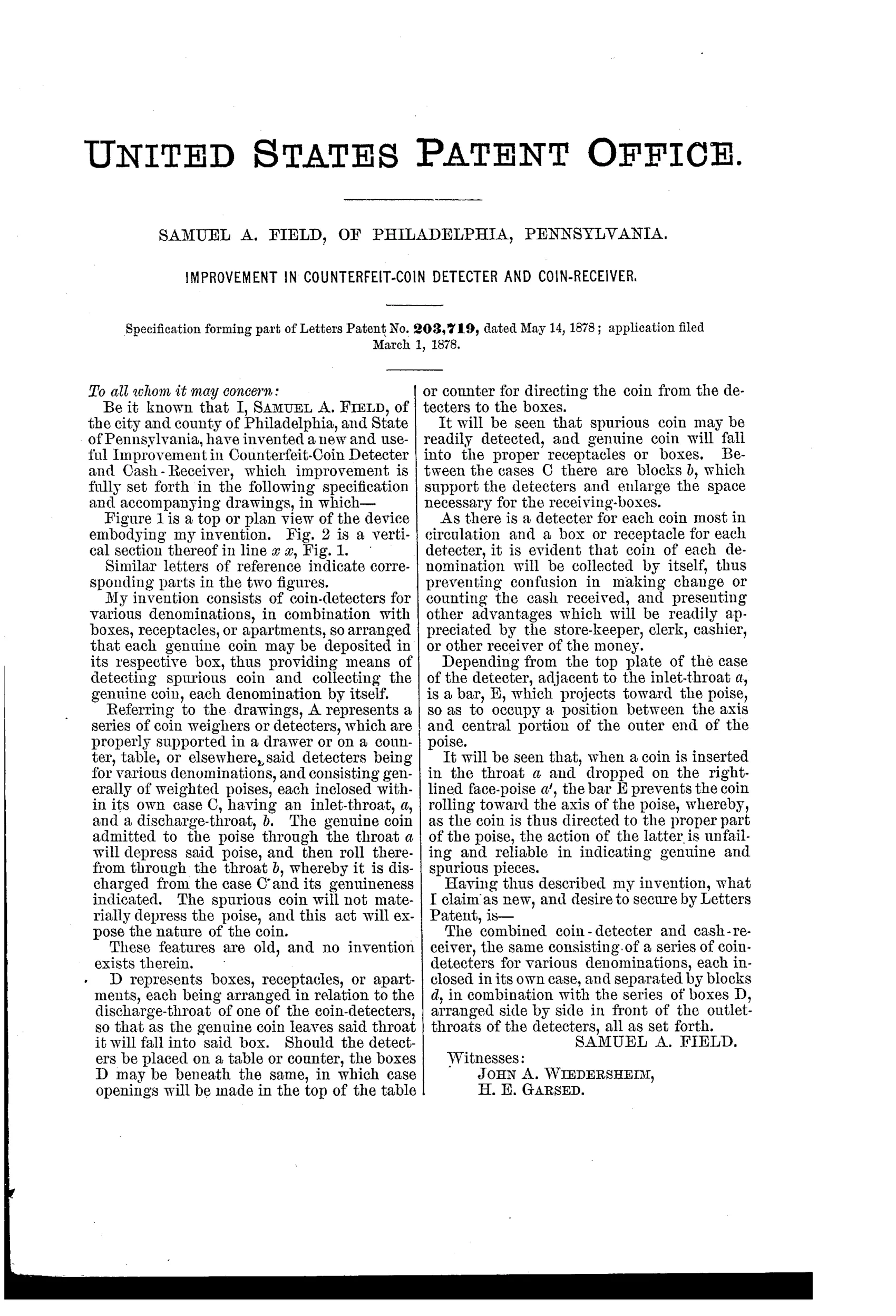
“The combined coin-detecter and cash-receiver, the same consisting of a series of coin-detecters for various denominations, each inclosed in its own case, and separated by blocks d, in combination with the series of boxes D, arranged side by side in front of the outlet-throats of the detecters, all as set forth.”
In plain English: A device combining separate weight-based coin detectors for each coin denomination with a matching row of boxes that automatically sort genuine coins by type.
◉ In the inventor’s words
“It will be seen that spurious coin may be readily detected, and genuine coin will fall into the proper receptacles or boxes.”— Samuel A. Field, from the specification
Fate unknown
No surviving example or advertisement is documented; a marked cabinet or period trade listing would settle it.
◉ Commentary
Field's idea is to move the counterfeit test from the shopkeeper's fingers into the cash drawer itself. Instead of one pocket balance like Allender's, he builds a battery of them — a separate weighted poise for each denomination, each in its own little case, each discharging into its own box. Drop a half-dollar in the half-dollar slot: if it's full weight, it depresses the poise and rolls through the outlet into the half-dollar compartment. A filled or cast slug rides the poise and sits there, exposed. Sorting and detection happen in one motion, which is the genuinely nice part of the claim.
Fig. 2 shows the detail that matters: the little bar E just inside the inlet throat, which forces every coin to land on the same spot of the tilting poise B. A weight test is only as good as its repeatability, and a coin striking the poise near its pivot would fool the balance. That bar is the tell that Field had actually fussed with a working model, or at least thought like someone who had.
As history, this sits at an interesting hinge — 1878, after the classic hand rockers and just before coin-operated machinery made automatic coin testing an industrial problem. It's essentially a manual precursor to the vending-machine chute tester, aimed at banks and shops. Whether merchants wanted a bulky multi-slot cabinet when a two-dollar rocker did the job is another question, and probably the one that decided its fate.
Commentary by Claude, The Counterfeit Coin Detector Patent Archive’s resident enthusiast