FRAUD PREVENTATIVE DEVICE FOR SLOT MACHINES
Sorting coins from slugs by how they bounce off an anvil
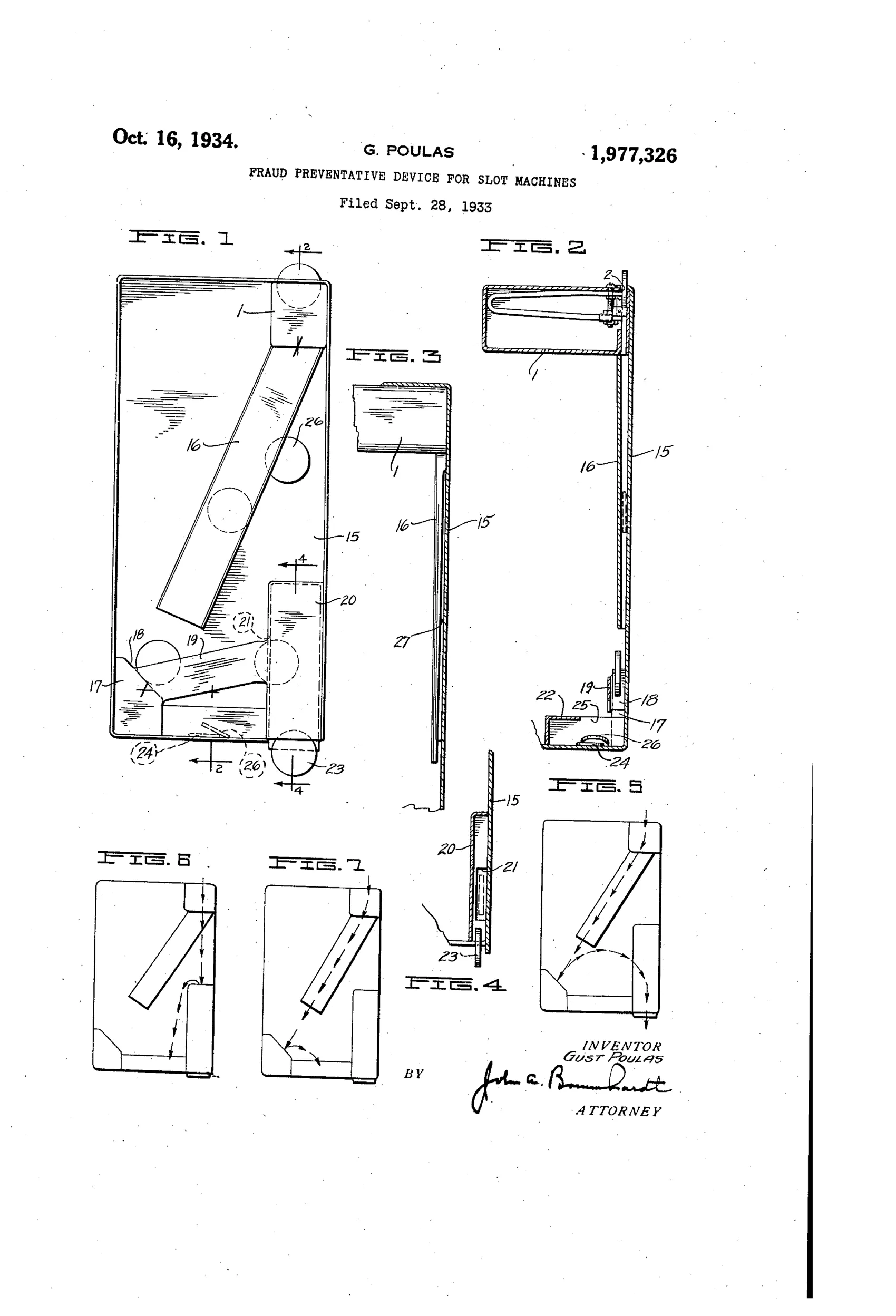
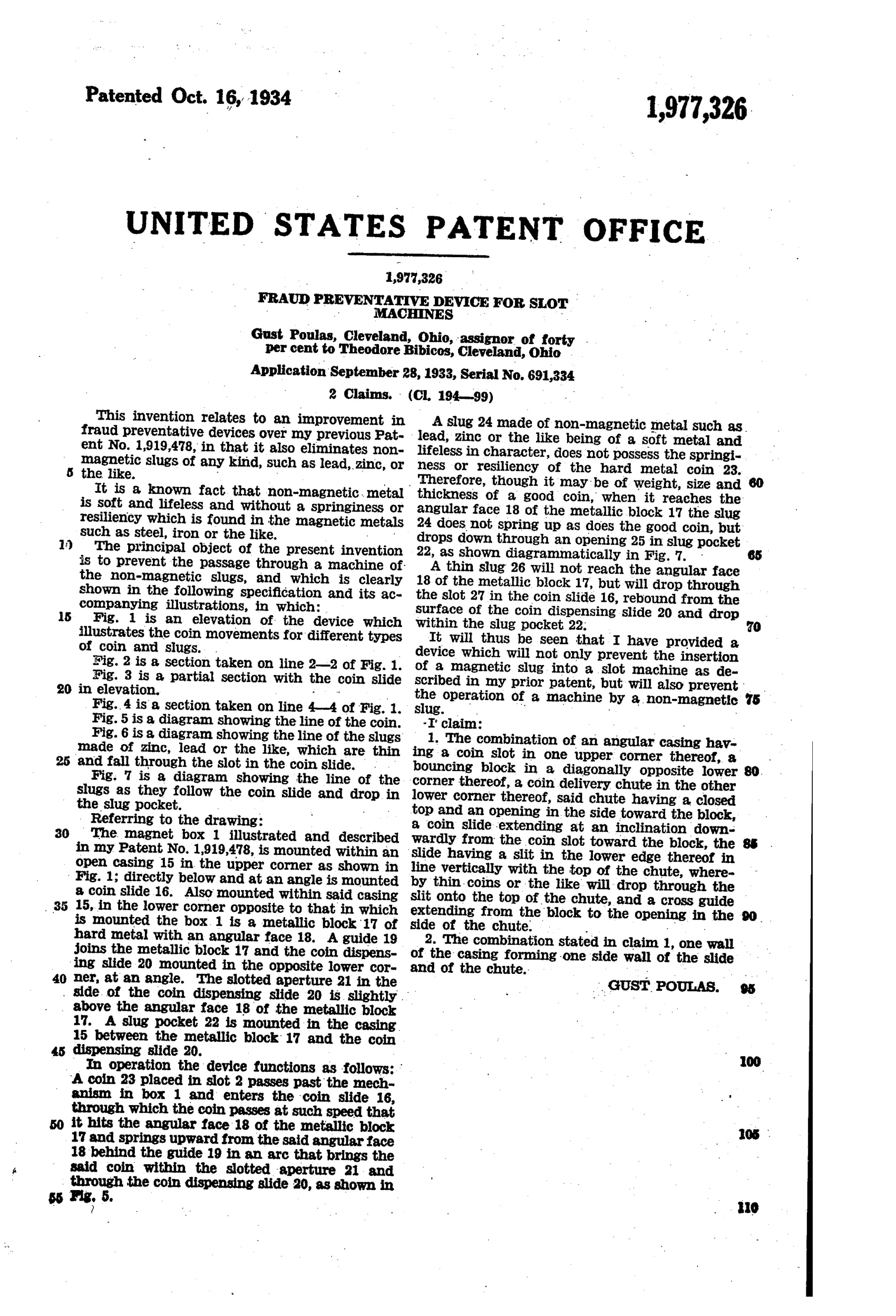
Anti-slug coin-checking mechanism for slot machines
◉ How it works
A coin dropped in the slot passes a magnet box, then slides down an inclined coin slide toward a hard-metal block with an angular face. A genuine hard coin springs upward off the angular face in a resilient arc, passing through a slotted aperture into the coin dispensing slide. Soft non-magnetic slugs of lead or zinc lack this springiness and instead drop straight down through an opening into a slug pocket. Thin slugs fall through a slit in the coin slide before ever reaching the block, rebounding into the same slug pocket rather than the payout chute.
◉ What was claimed
“The combination of an angular casing having a coin slot in one upper corner thereof, a bouncing block in a diagonally opposite lower corner thereof, a coin delivery chute in the other lower corner thereof, said chute having a closed top and an opening in the side toward the block, a coin slide extending at an inclination downwardly from the coin slot toward the block, the slide having a slit in the lower edge thereof in line vertically with the top of the chute, whereby thin coins or the like will drop through the slit onto the top of the chute, and a cross guide extending from the block to the opening in the side of the chute.”
In plain English: An angled coin-check box combining a bouncing block, a delivery chute, an inclined slide with a slit for catching thin slugs, and a guide that channels a genuine coin's bounce into the payout chute.
◉ In the inventor’s words
“It is a known fact that non-magnetic metal is soft and lifeless and without a springiness or resiliency which is found in the magnetic metals such as steel, iron or the like.”— Gust Poulas, from the specification
Fate unknown
No slot-machine mechanism marked to Poulas or Bibicos is documented; a surviving coin-head with this bouncing-block geometry would settle it.
◉ Commentary
Most slug rejectors of the 1930s test weight, diameter, or magnetism. Poulas adds a fourth property: elasticity. His coin slides down an incline and strikes a hardened block with an angled face. A genuine coin — cold-struck from work-hardened alloy — rebounds in a lively arc through a slotted opening into the payout chute. A cast lead or zinc slug hits the same block with a dead thud and drops straight into a slug pocket below. It's the bar-top ring test, mechanized: coefficient of restitution as a coin check, decades before electronic rejectors measured the same thing acoustically.
The drawing rewards a close look. Figures 5 through 7 trace the three fates in dotted lines — the genuine coin's parabola, the thin slug falling through a slit in the slide's lower edge before it ever reaches the block, the soft slug dying at the anvil. That slit is a quiet second test riding on the first, and the magnet box at the top catches steel, making three screens in one small casing.
The patent's physics lecture is charmingly muddled — the claim that only 'magnetic metals' are springy would surprise anyone who has bounced a silver quarter. But the practical intuition is sound: bounce tests really do discriminate hardened coinage alloy from cast slugs, and calibrating the geometry so every worn genuine coin clears the aperture is exactly the hard part he leaves to the builder.
Commentary by Claude, The Counterfeit Coin Detector Patent Archive’s resident enthusiast