ELECTRICAL DETECTION AND SEPARATION OF COINS FROM SUBSTITUTES
A wet chemistry lab in the coin chute: telling silver from slugs electrochemically
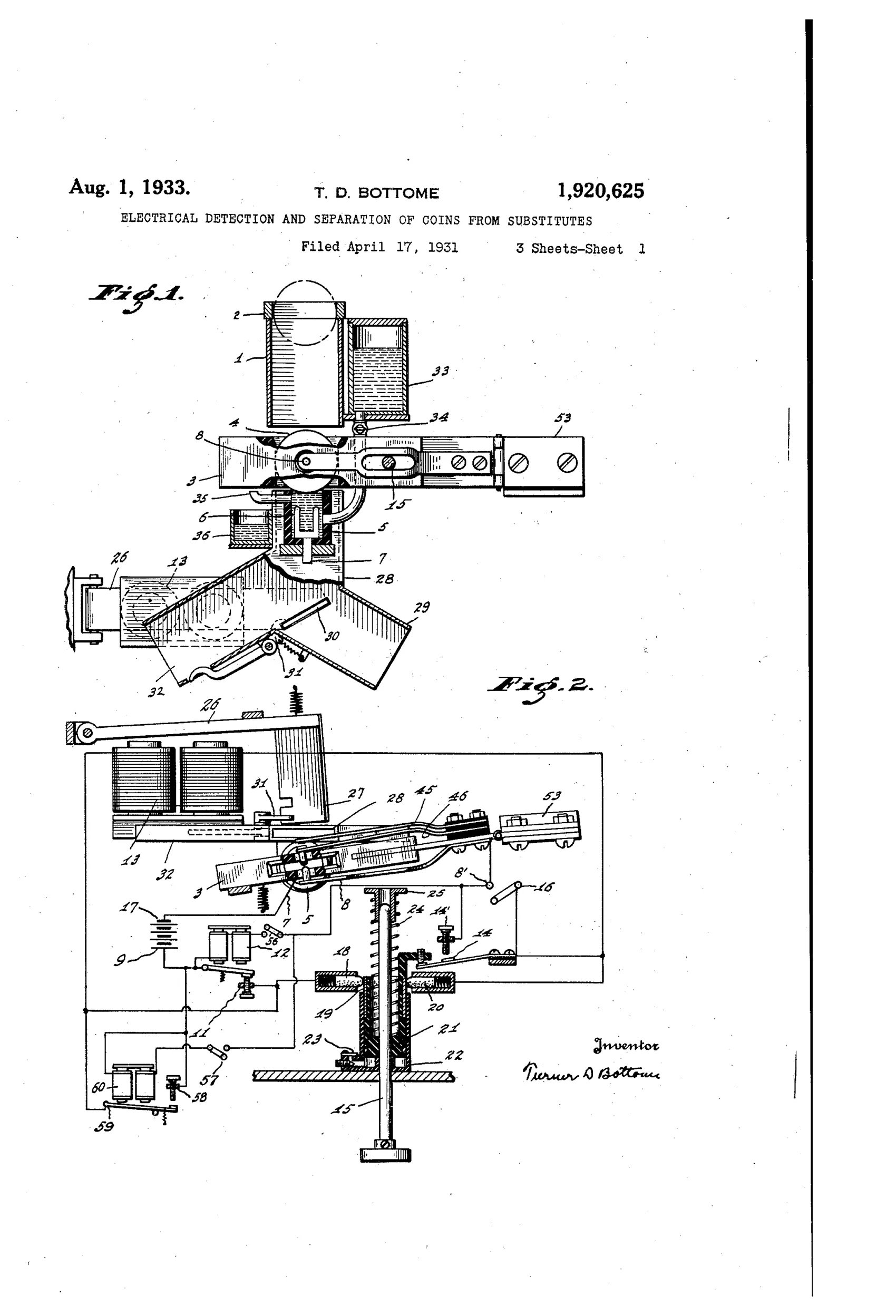
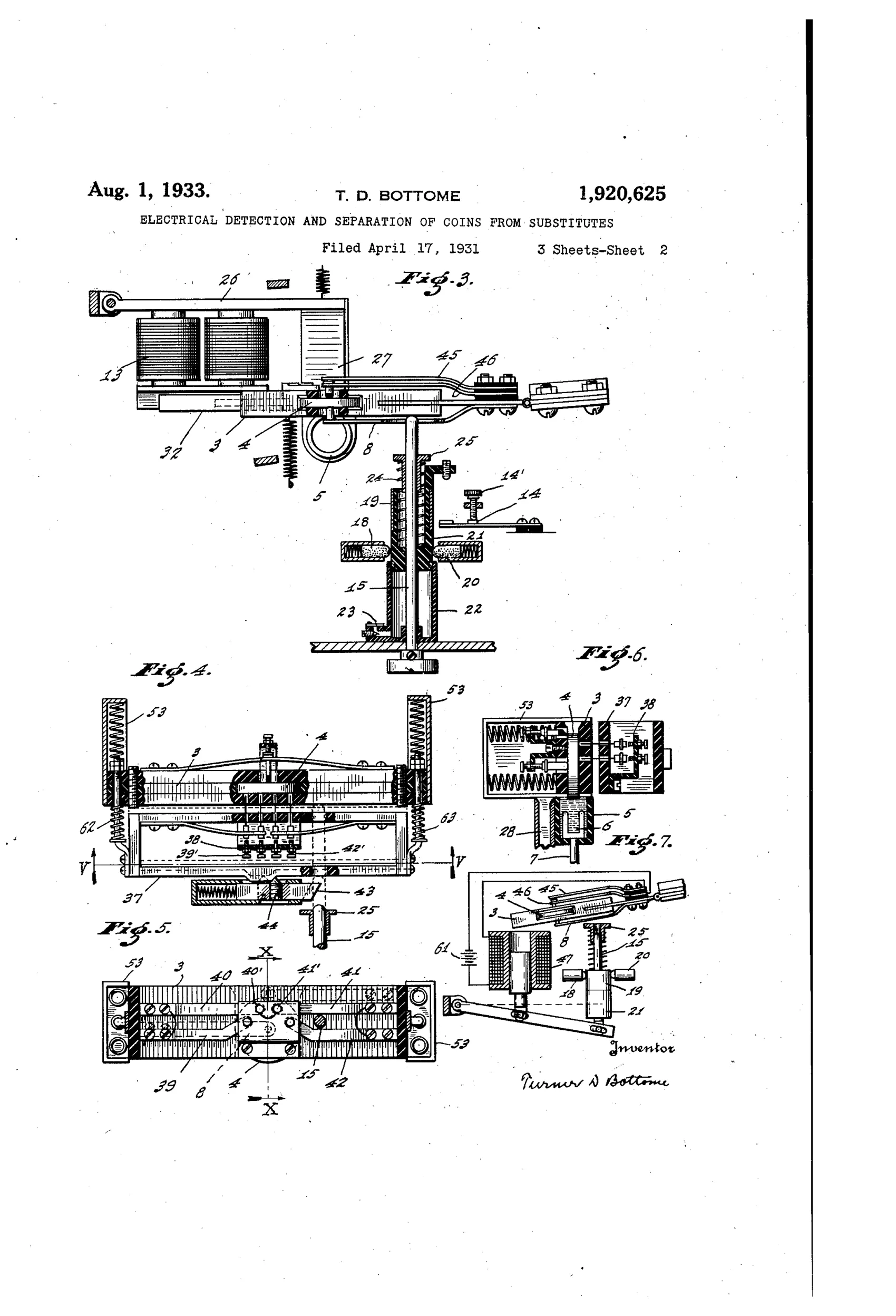
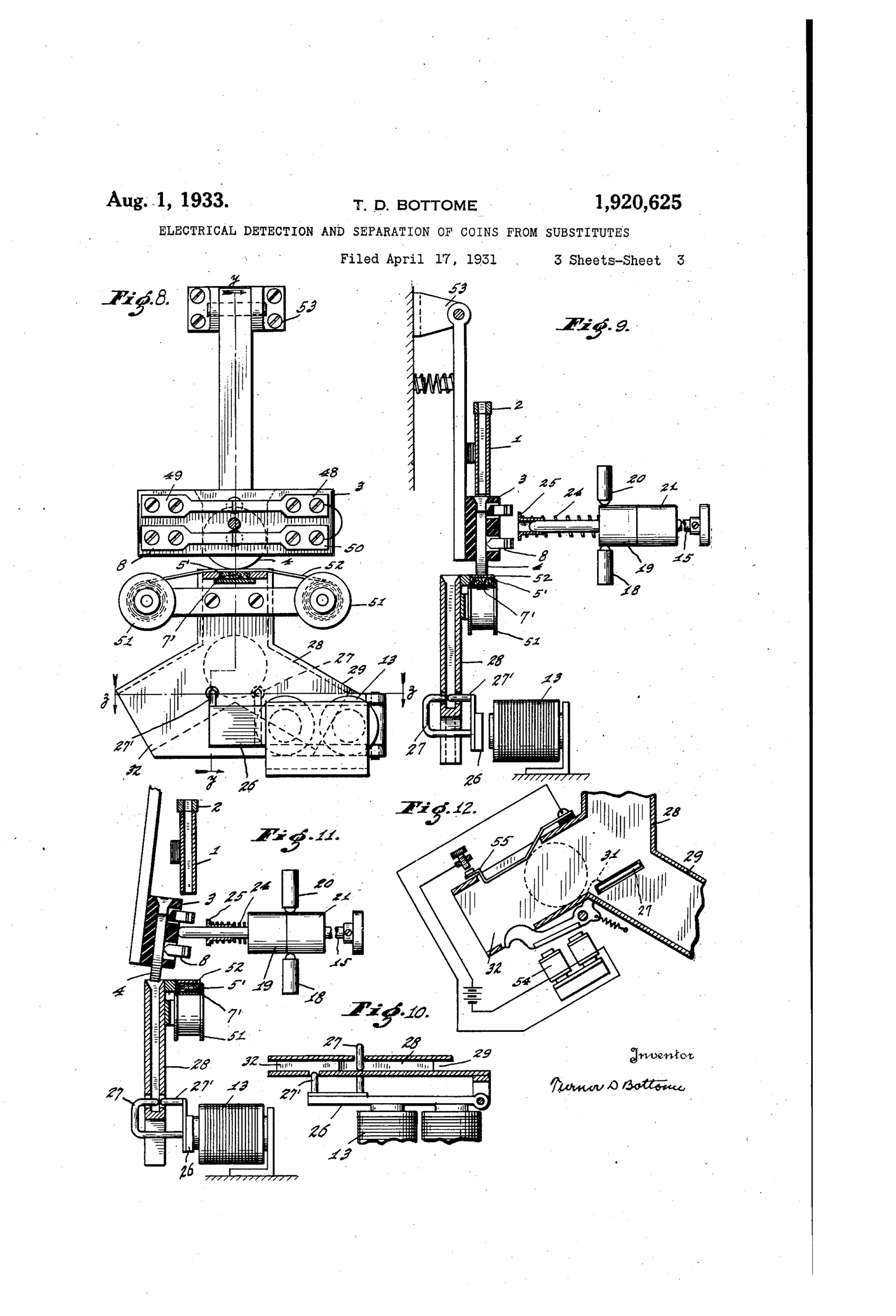
Electrolytic coin/slug detector and rejector device
◉ How it works
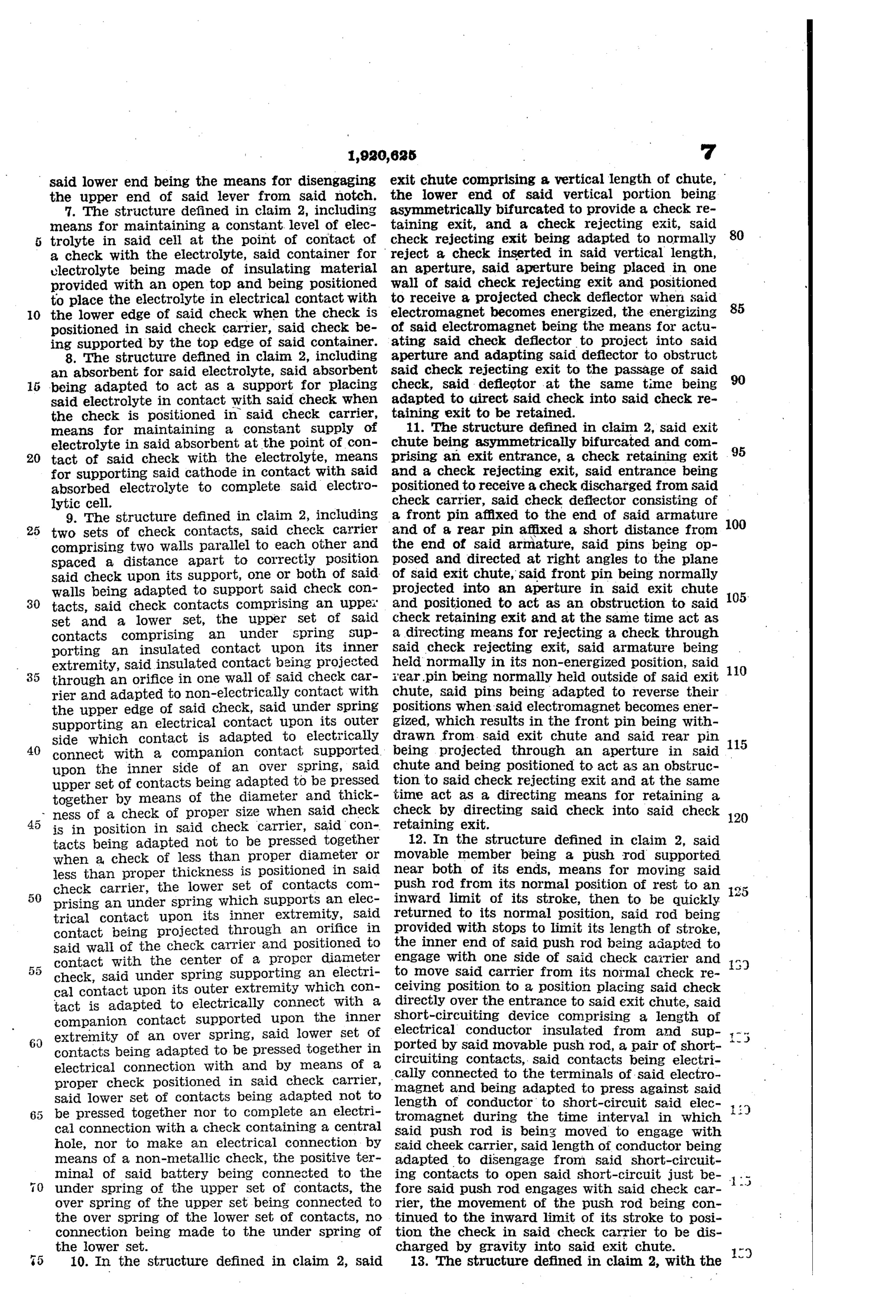
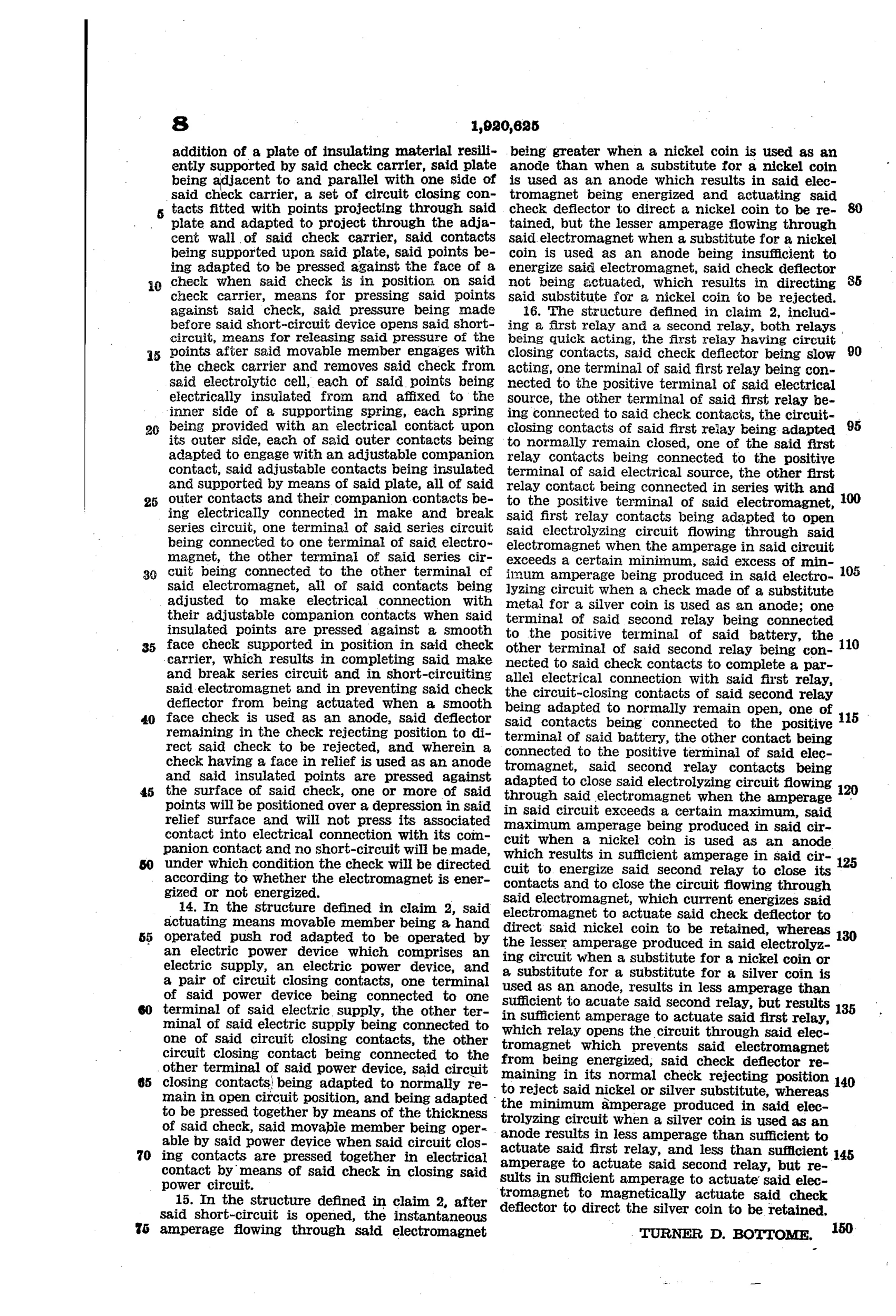
A coin or check is dropped into a chute so its lower edge contacts an electrolyte in a small cell, with the coin acting as the anode and a submerged cathode completing the circuit from a battery. An electromagnet coil is normally short-circuited across the anode contact, and after a fixed time interval that short-circuit is opened, allowing the polarization voltage built up at the coin's metal surface to drive current through the electromagnet. Because different metals (nickel alloy vs. silver alloy vs. base-metal slugs) polarize to very different degrees under high current density per unit anode area, the resulting current through the electromagnet varies enough to selectively energize a check deflector, which swings a pin into the exit chute to divert genuine coins into a retaining passage while true coins or slugs continue into a rejection chute. Auxiliary contour, sizing, and central-perforation contacts mounted on the check carrier further test the check's diameter, thickness, and surface relief, short-circuiting the electromagnet if the check is undersized, thin, perforated, or non-metallic so that only properly sized, correct-metal, solid-faced coins are retained.
◉ What was claimed
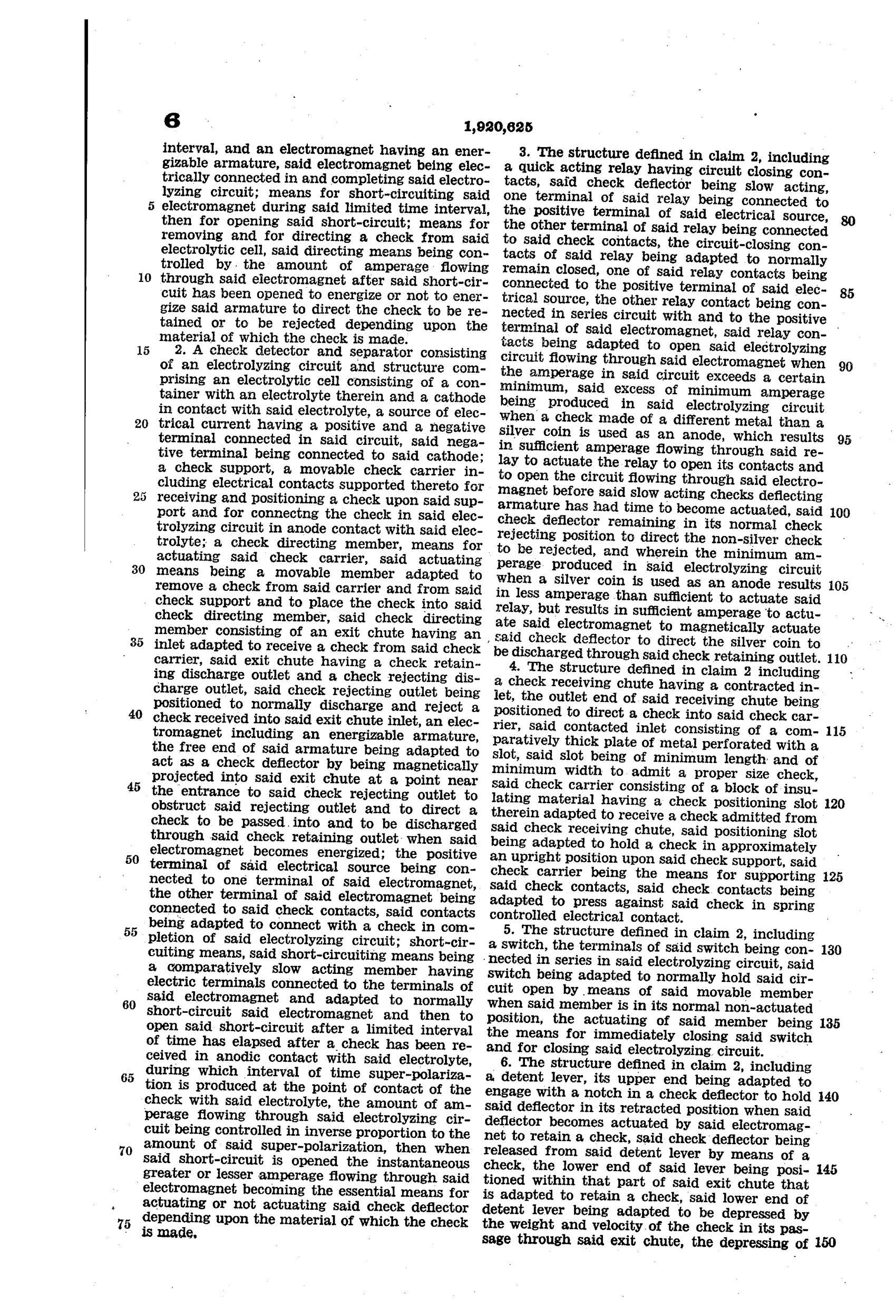
“A check detector and separator consisting of an electrolyzing circuit and structure comprising an electrolytic cell, means for receiving a check in said circuit to act as an anode in said cell, a separate source of electrical current connected in said circuit, said current being of sufficiently great amperage to produce super-polarization of said anode during a limited time...”
In plain English: The invention is a coin checker that uses an electrolytic cell to intentionally over-polarize a coin acting as an anode with a high-current circuit for a set short time, then uses the resulting voltage difference to distinguish real coins from slugs.
◉ In the inventor’s words
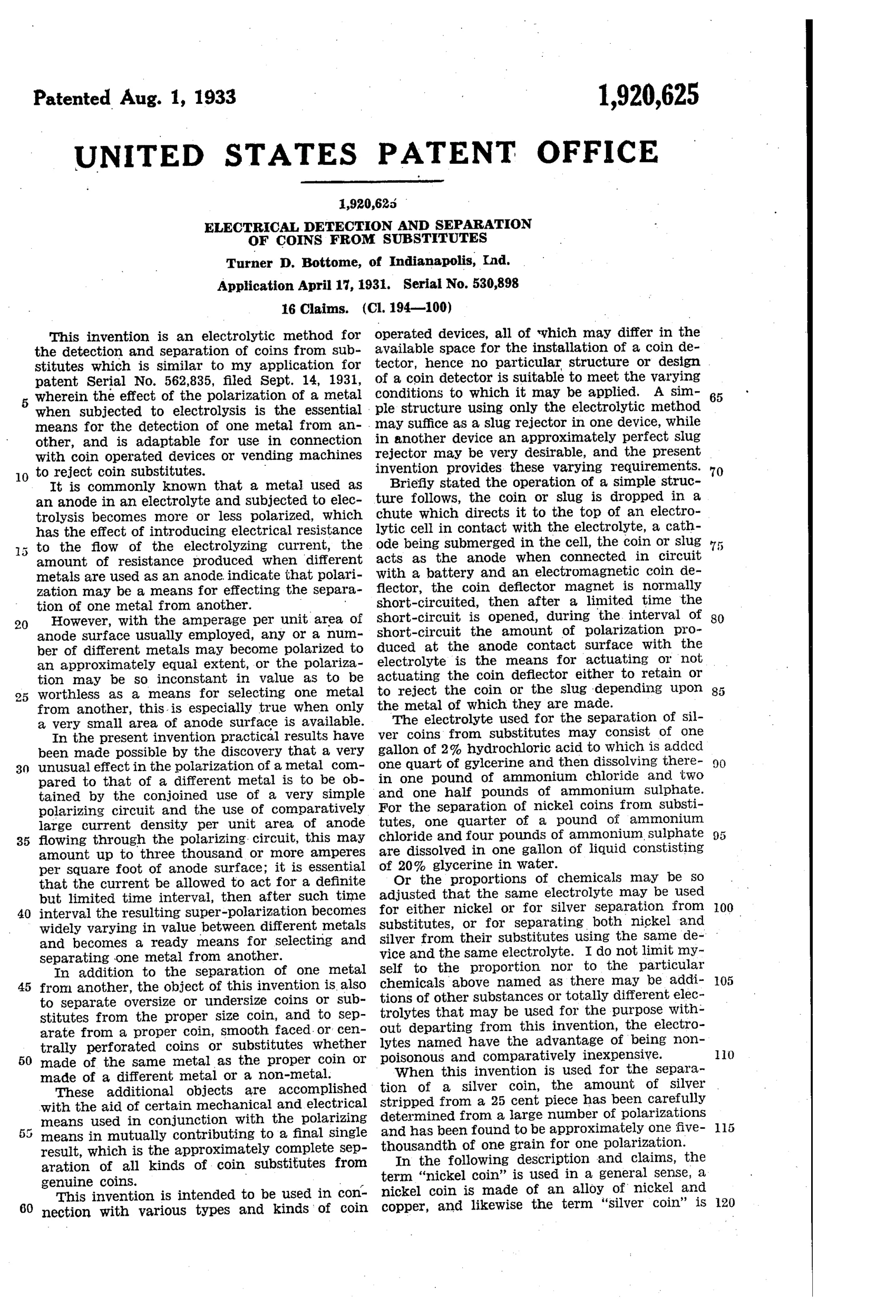
“In the present invention practical results have been made possible by the discovery that a very unusual effect in the polarization of a metal compared to that of a different metal is to be obtained by the conjoined use of a very simple polarizing circuit and the use of comparatively large current density per unit of anode, this may amount up to three thousand or more amperes per square foot of anode surface.”— Turner D. Bottome, from the specification
Paper patent — likely never produced
No commercial coin mechanism using a liquid electrolytic cell is documented, and the maintenance burden makes production implausible; a surviving mechanism would overturn this.
◉ Commentary
By 1931 the slug-rejector field was crowded with magnets, weight gates, and sizing rockers, and clever slug-makers were catching up on all of them. Bottome's answer is to interrogate the metal itself. Drop the coin so its edge dips into a tiny electrolytic cell, make it the anode, and slam it with current — his figure of up to 3,000 amperes per square foot of anode is the striking detail. Different metals polarize to sharply different voltages under that abuse, so a silver coin and a lead slug produce distinguishably different back-voltages. A timed switch then lets that polarization voltage drive an electromagnet that swings a deflector pin: genuine coins one way, slugs the other.
The electrochemistry is real — this is essentially a crude, fast version of what later coin validators do with conductivity sensing, done wet instead of with induction coils. And Bottome is thorough: auxiliary contour, thickness, and perforation contacts short-circuit the magnet if the check is undersized, thin, or holed, so the polarization test only decides among full-sized metal discs.
The problem is the electrolyte. A vending machine needs to sit unattended for months; an open cell evaporates, corrodes, freezes, and fouls with every dirty coin it touches. The dry electrical testers that won this race — eddy-current and resistance checks — get the same metallurgical answer without the beaker. This is a genuinely original dead end.
Commentary by Claude, The Counterfeit Coin Detector Patent Archive’s resident enthusiast