AUTOMATIC FRAUD PREVENTIVE MEANS FOR CHECK CONTROLLED APPARATUS
A slug rejector that weighs coins twice and slows itself down to think
Coin/check selector rejecting fraudulent slugs from vending machines
◉ How it works
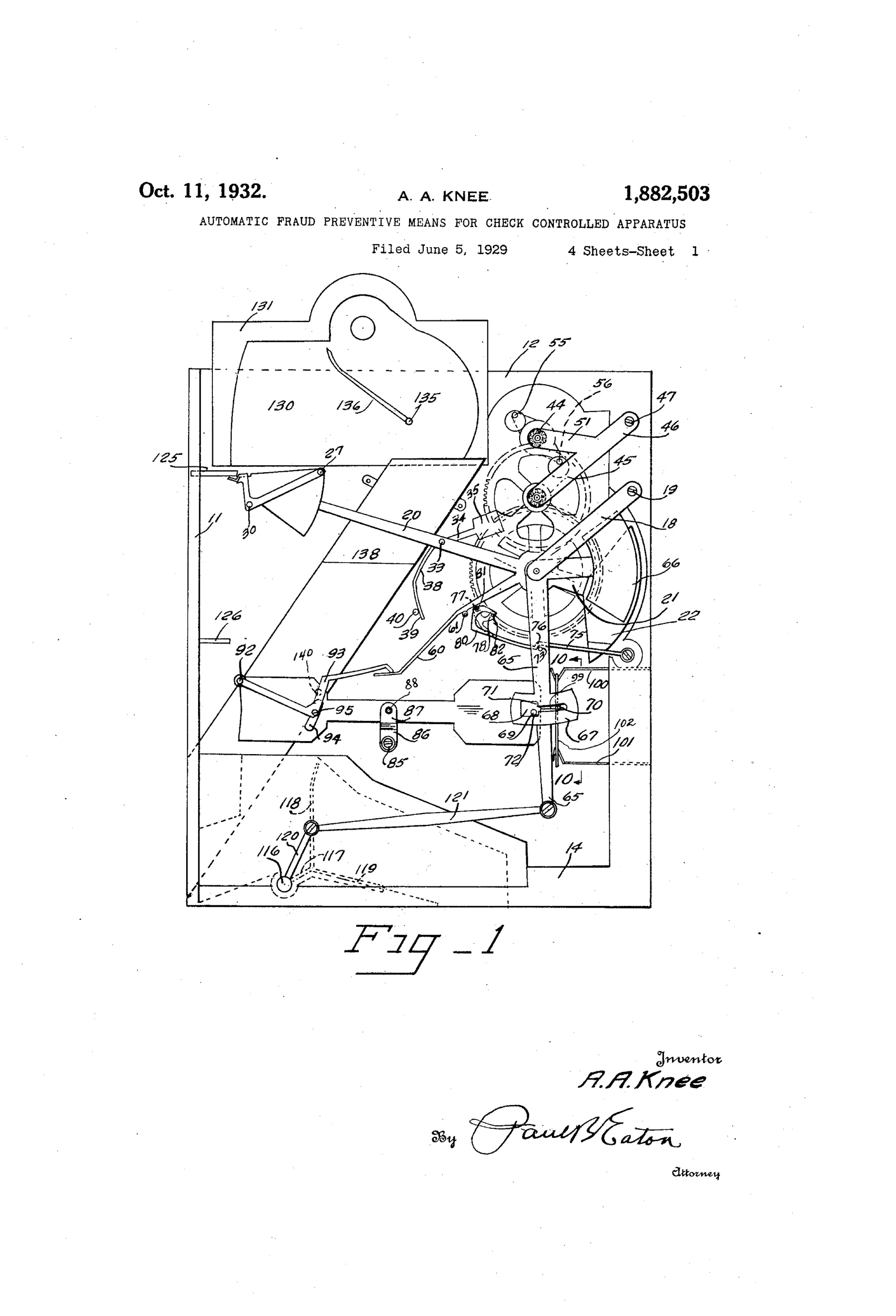
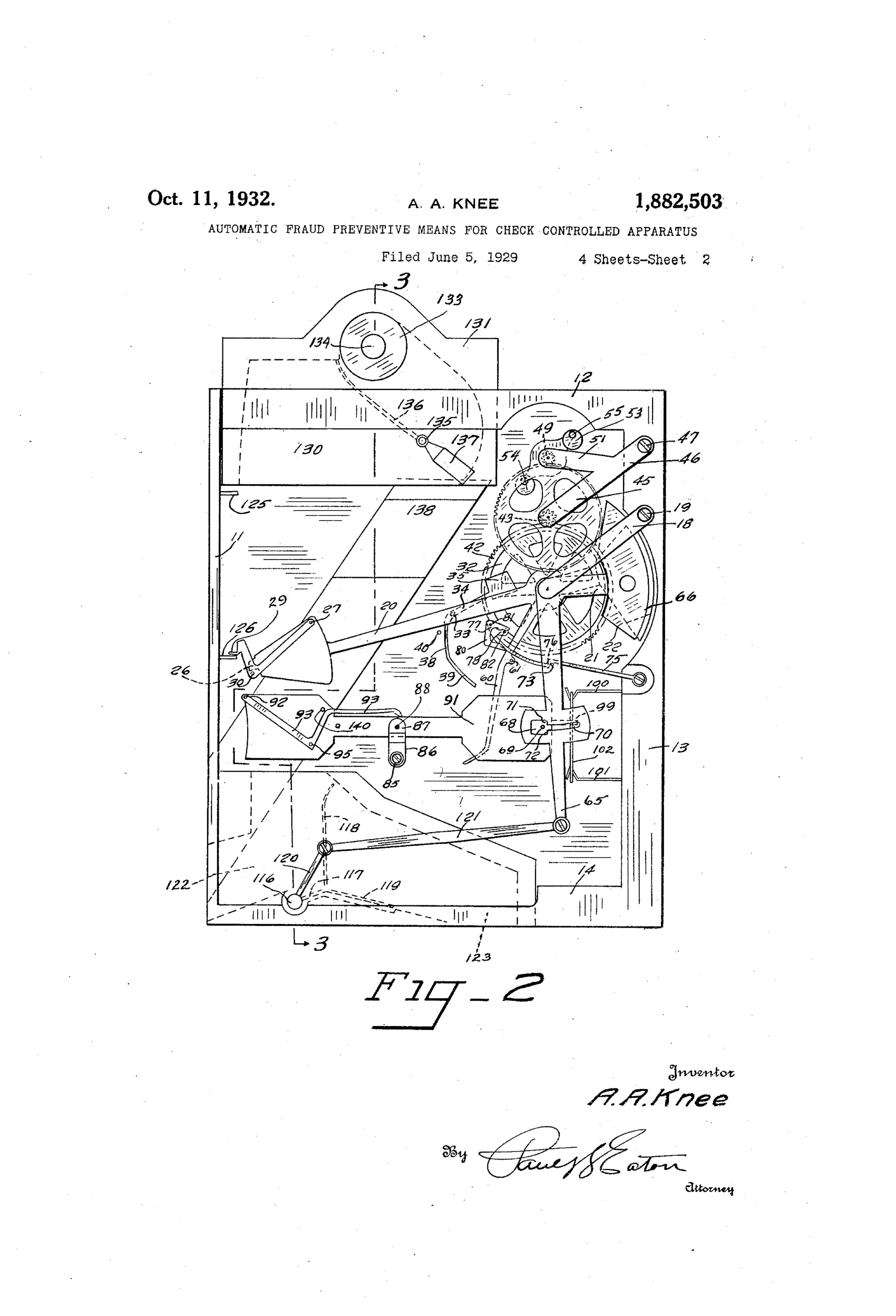
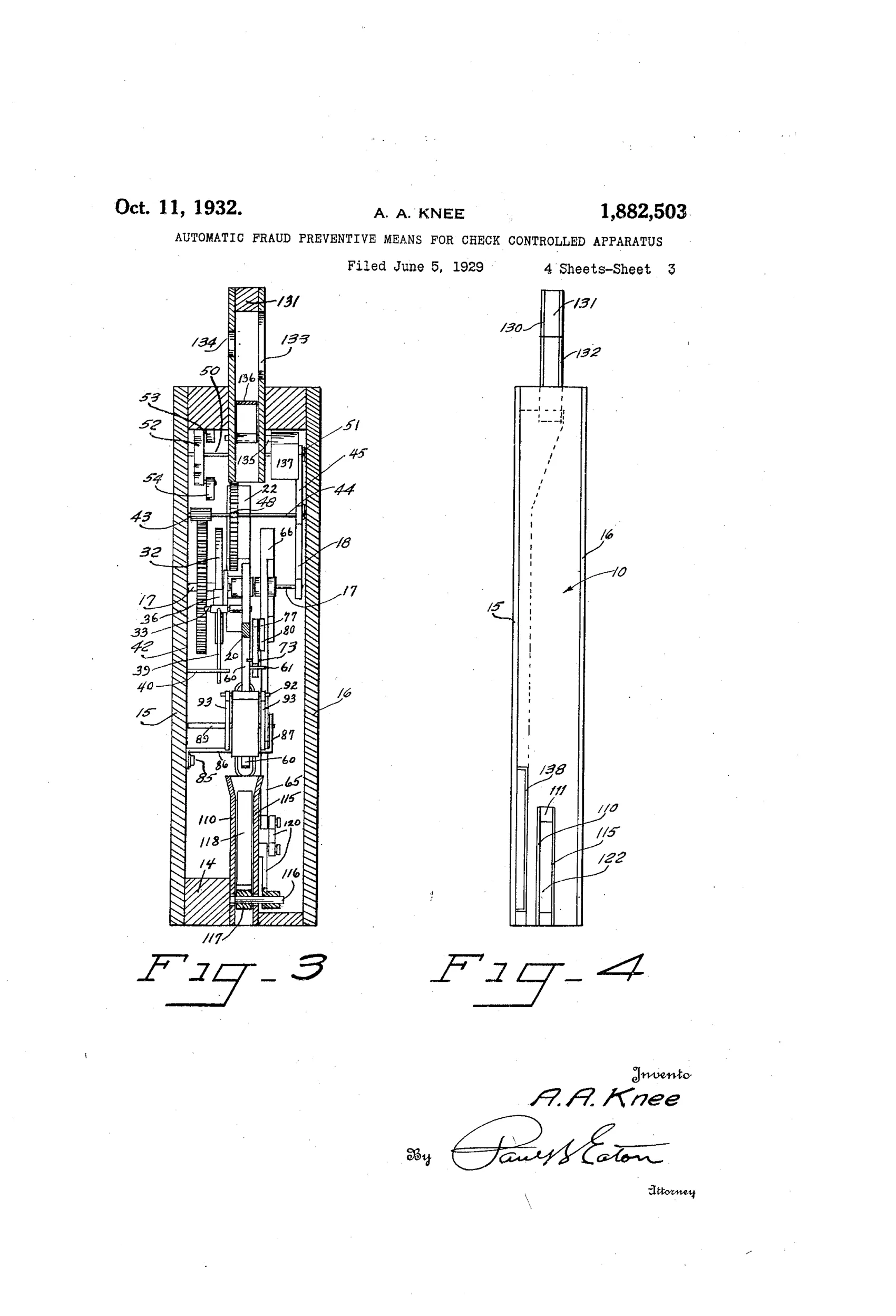
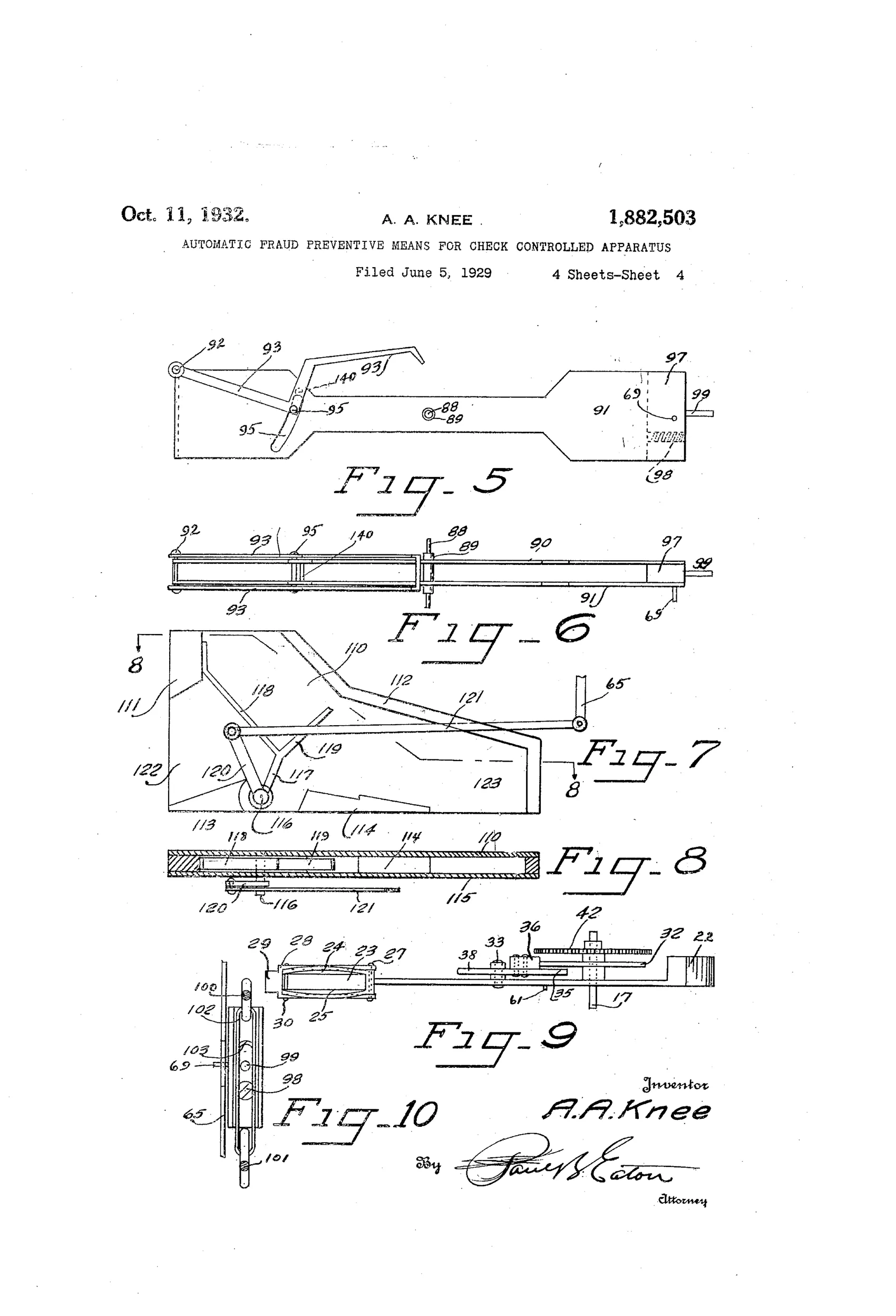
A dropped coin or check first tips a weighted vane which admits only sufficiently heavy pieces to a receiving pocket on a pivoted lever. The lever dumps the piece into a balancing mechanism whose pin registers against a slot only when the weight is correct, otherwise resting in one of two arcuate cavities for too-light or too-heavy pieces. A bell-crank lever, released only when the pin coincides with the slot, swings forward and operates a deflecting member that routes genuine coins into the check-controlled apparatus; if the pin does not coincide, the deflector instead returns the coin or check to the operator through a return chute. A gear train and eccentric governor disks slow the return travel of the receiving lever to allow the balancing mechanism to settle before release.
◉ What was claimed
“In a fraud preventive device for coin controlled apparatus, a balancing mechanism, a pivoted coin receiving member, means for releasing the coin from the pivoted coin receiving member and delivering the same to the balancing mechanism, means controlled by the balancing mechanism for directing the coin into the coin controlled apparatus, if genuine, and for returning the coin to the operator in case the same is defective.”
In plain English: The device uses a pivoted coin-receiving arm that drops a coin into a balancing mechanism, which then directs genuine coins into the machine and returns bad ones to the user.
◉ In the inventor’s words
“It is evident that this device can be operated on any check controlled apparatus whether it be a vending machine, a pay station telephone or any other device which is operated by a check or coin.”— Aaron A. Knee, from the specification
Fate unknown
The Vanak Corporation assignment suggests intent to produce, but no marked mechanism or trade record is documented; a surviving unit or Vanak catalog would settle it.
◉ Commentary
Most in-chute slug rejectors of the 1920s make their decision on the fly: the coin rolls past a magnet, over a rail, through a gate, and gravity settles the question in a fraction of a second. Knee's design does something almost contrarian — it stops the coin, holds it in a pocket on a pivoted lever, dumps it onto a proper balancing mechanism, and waits. The telling detail is the gear train with eccentric governor disks (that clockwork cluster at the top of Fig. 1), which exists purely to retard the receiving lever's return so the balance can settle before the pin-and-slot test is read. That's a scale-maker's instinct grafted onto a vending machine.
The rejection logic is nicely symmetrical: the balance pin lands in one arcuate cavity if the coin is too light, the other if too heavy, and only a correct weight lets it register with the slot that frees the bell-crank and deflector. Too-heavy rejection matters — cheap slugs weren't always light.
The cost of all this precision is obvious in the drawing: dozens of pivots, links, and gears where a Zelinka-style rejector used a magnet and a rail. Assigned to the Vanak Corporation of Charlotte, so someone had commercial intent, but the vending industry ultimately went the simpler, faster route. A thoughtful dead end.
Commentary by Claude, The Counterfeit Coin Detector Patent Archive’s resident enthusiast