IMPROVEMENT IN DEVICES FOR DETECTING COUNTERFEIT COIN.
Bend it and see: a slot plate for snapping suspect coins by thumb
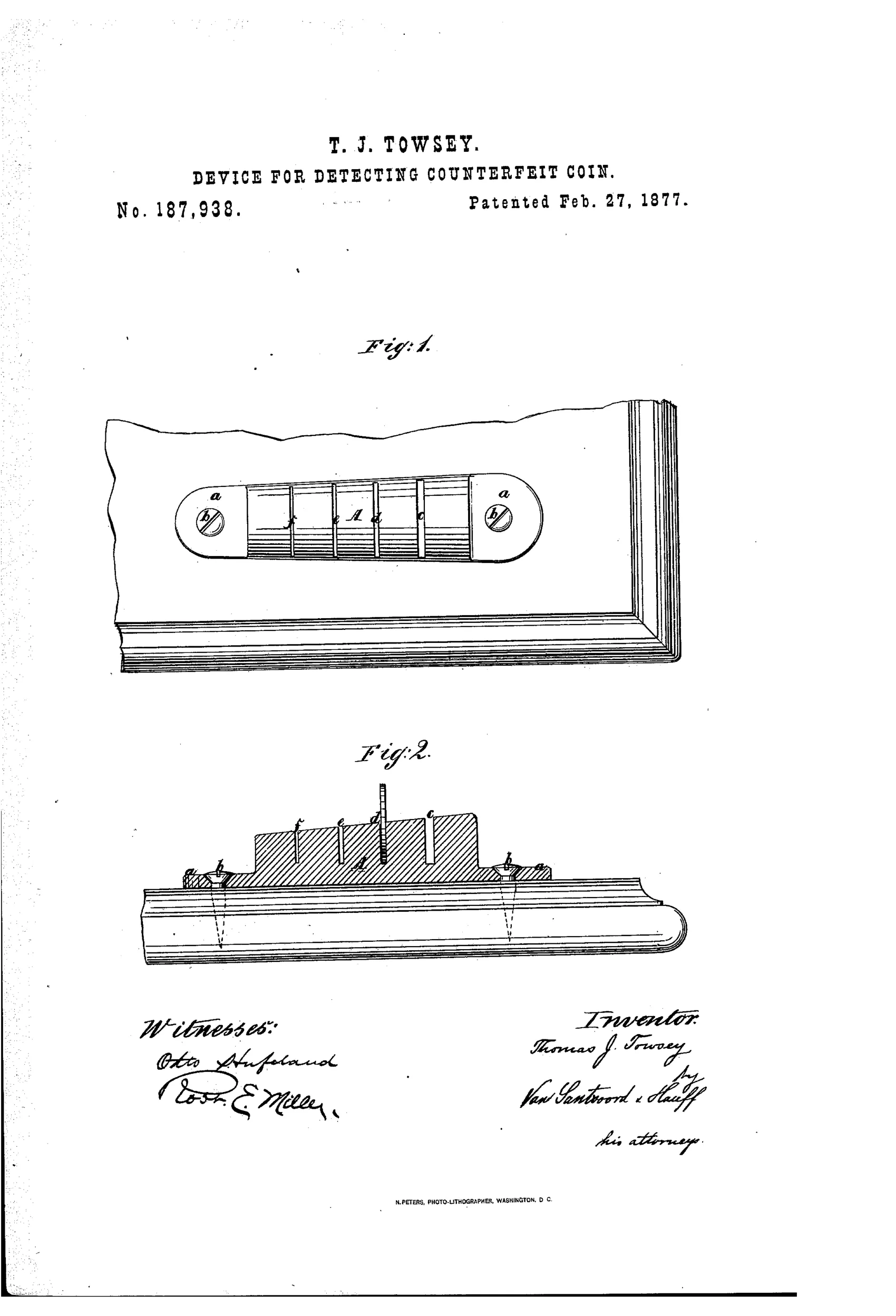
A device for testing coin breaking resistance.
◉ How it works
The device consists of a cast-iron receiver plate with flanges at each end pierced for screws so it can be fastened to a counter or table. The body of the receiver contains a series of vertical slots or recesses of gradually diminishing width and depth, each sized to fit a specific coin denomination such as a silver dollar, half-dollar, or quarter. A coin is dropped into the recess matching its size so that an edge of it projects above the surface. The user then presses against the projecting edge of the coin with a thumb to test its breaking resistance, revealing base-metal counterfeits that match the weight and ring of genuine coin but lack its true strength.
◉ What was claimed
“The receiver A, formed at each end with a perforated flange, a, for the passage of screws, to secure it to a counter or table, and provided in its body with a series of vertical recesses, c d e f, of different width and depth, substantially as and for the purpose herein described.”
In plain English: A coin-testing plate with screw-mounting flanges and a series of differently sized vertical slots for holding various coin denominations while testing their strength.
◉ In the inventor’s words
“By these means the spurious nature of such coins can be ascertained which are made of base metal, and which have the same weight and ring as genuine coin, but not the same breaking resistance.”— Thomas J. Towsey, from the specification
Fate unknown
The casting would have been cheap to produce, but no marked example is documented; a surviving plate or trade advertisement would settle it.
◉ Patented the same day
- IMPROVEMENT IN DETECTERS OF COUNTERFEIT COIN — John A. Thompson
◉ Commentary
Most detectors of the 1870s weigh, measure, or ring a coin. Towsey went blunter: clamp the coin in a slot and lean on it with your thumb. His cast-iron plate screws to the counter and carries a row of vertical recesses, each cut to grip a denomination — dollar, half, quarter — with an edge left standing proud of the surface. Press on that edge: a genuine silver coin resists; a base-metal casting bends or snaps. His own specification makes the interesting admission — this is aimed at counterfeits with the same weight and ring as the real thing, coins that would sail past an Allender balance.
The cross-section in Fig. 2 is worth a look. The recesses diminish in both width and depth, so each coin is held to a consistent depth and the exposed lever arm — the part your thumb works against — is roughly proportioned to the coin's size. That is the whole engineering content of the patent, and it is not nothing: without a fixed grip and a controlled overhang, a strength test is just guessing.
Still, this is a dead end, and an instructive one. The test is destructive to the counterfeit, uncomfortable to the genuine coin, and dependent on how hard the shopkeeper pushes. Calibrated balances survived because they gave a yes-or-no answer; Towsey's plate gives an argument at the counter. But as a snapshot of how good the counterfeits had gotten by 1877 — good enough to beat weight and ring — it earns its place.
Commentary by Claude, The Counterfeit Coin Detector Patent Archive’s resident enthusiast