METHOD OF AND MEANS FOR TESTING COINS
Eddy currents kick the good coin away — 1929's active silver test
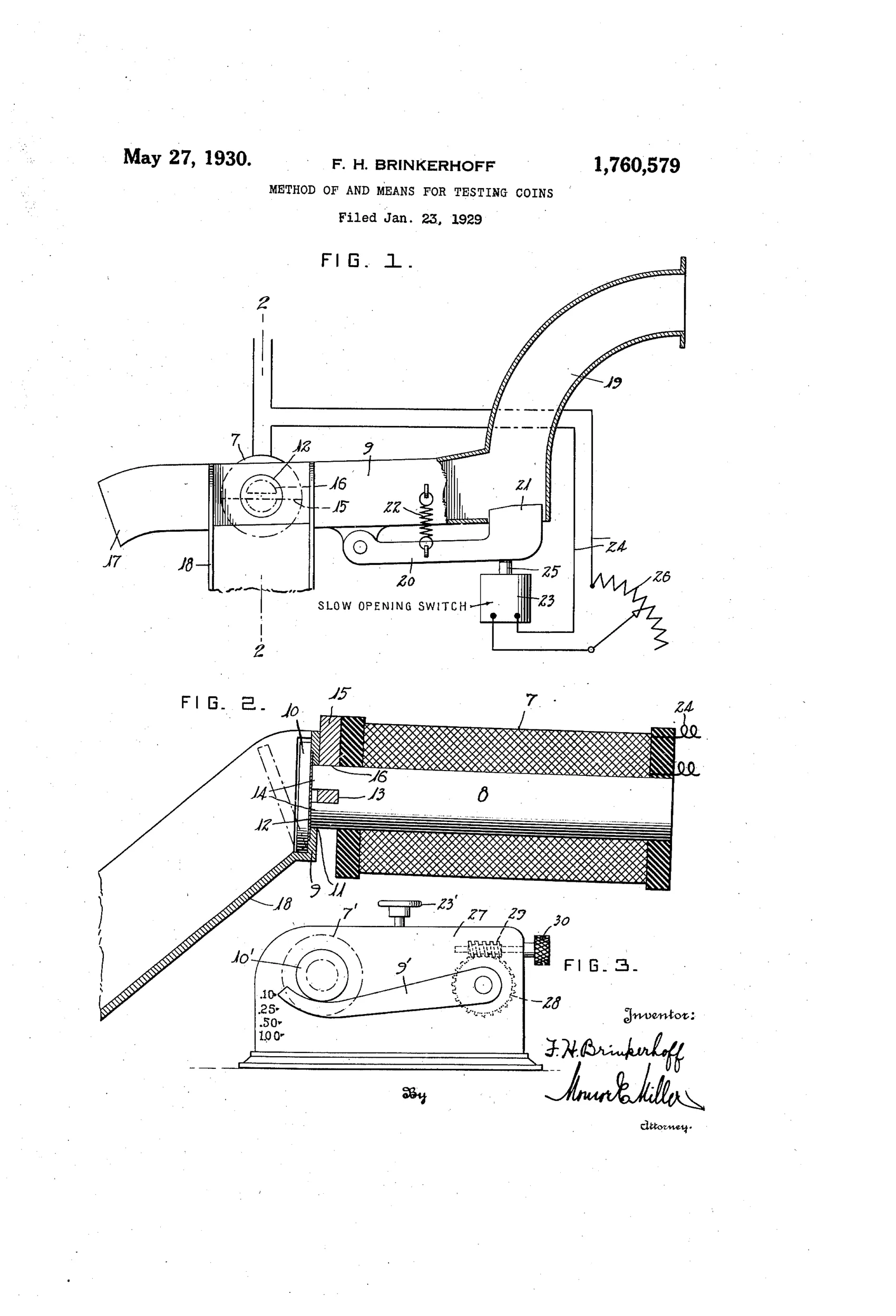
Alternating-current electromagnet coin/slug rejector device
◉ How it works
A coin rolls down an inclined chute past the pole of an alternating-current electromagnet, leaning against the chute wall toward the magnet. Genuine silver (or aluminum) coins are kicked or tilted away from the magnet by the alternating magnetic field, dropping into a separate discharge chute, while brass, nickel, iron, and other base-metal disks or slugs are not so deflected and continue past unaffected. A slow-opening switch, tripped by the falling coin striking a lever, closes the electromagnet circuit only long enough for the coin to pass, preventing overheating; a rheostat regulates current. An alternate bench-model form supports the coin on an adjustable arm graduated for dime, quarter, half-dollar, and dollar sizes in front of a similar electromagnet, operated by a push-button switch.
◉ What was claimed
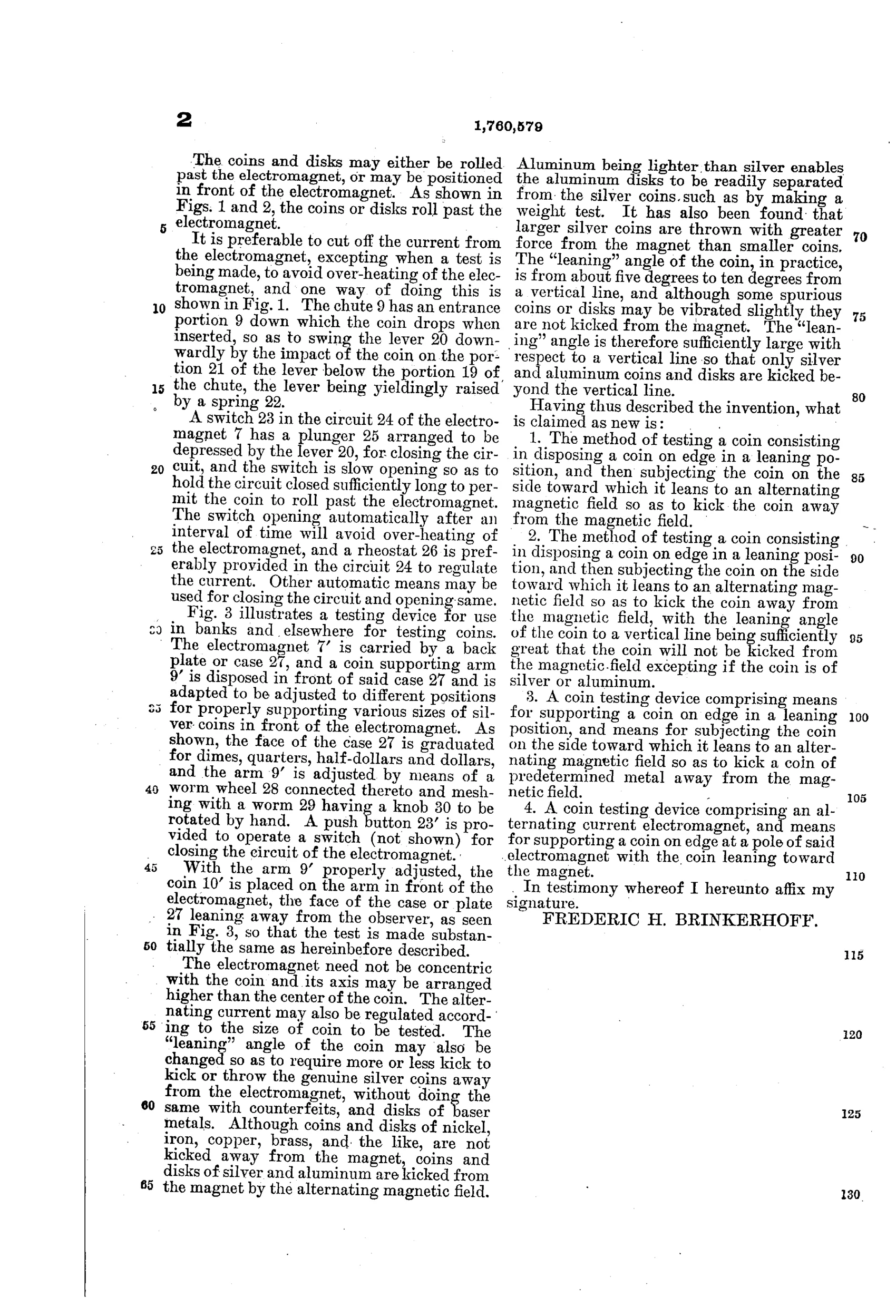
“The method of testing a coin consisting in disposing a coin on edge in a leaning position, and then subjecting the coin on the side toward which it leans to an alternating magnetic field so as to kick the coin away from the magnetic field.”
In plain English: The method involves tilting a coin on its edge and exposing its leaning side to an alternating magnetic field, which knocks genuine coins away while leaving base-metal fakes unaffected.
◉ In the inventor’s words
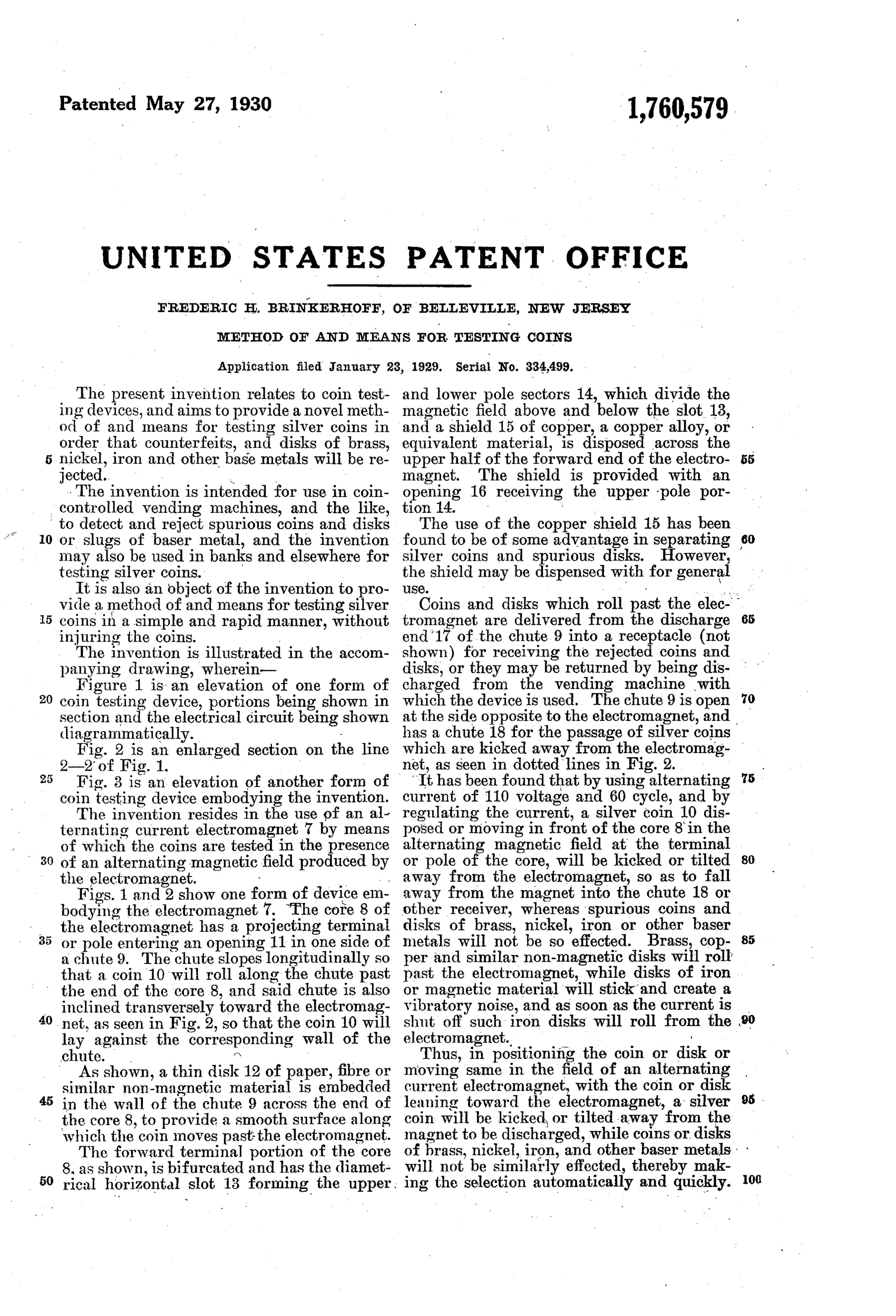
“Brass, copper and similar non-magnetic disks will roll past the electromagnet, while disks of iron or magnetic material will stick and create a vibratory noise, and as soon as the current is shut off such iron disks will roll from the electromagnet.”— Frederic H. Brinkerhoff, from the specification
Fate unknown
No commercial device or assignee is documented; a surviving bench-model tester or a vending mechanism traceable to this patent would settle it.
◉ Commentary
Most magnet tests in this class are passive: a permanent magnet grabs or brakes steel slugs while everything else rolls by. Brinkerhoff turned the logic inside out. His alternating-current electromagnet induces eddy currents in whatever passes it, and by Lenz's law a highly conductive disk — silver, or aluminum — gets physically repelled. So the genuine coin is the one that gets kicked sideways off the chute wall into the acceptance passage, while brass and nickel slugs, too resistive to be shoved, roll blandly past into rejection. Iron slugs simply stick to the pole and buzz until the current cuts off.
That's a real conductivity test, decades before electronic coin validators made conductivity the standard discriminant, done here with nothing but a coil, house current, and gravity. Fig. 1 repays a close look: the falling coin trips a lever on a slow-opening switch, energizing the magnet only for the moment of passage — a practical dodge against overheating a coil that would otherwise cook itself. Fig. 3 is the charming part: a bench-top tester with an adjustable arm graduated for dime through dollar, a push-button counterfeit detector for the shopkeeper rather than the vending machine.
The weakness is calibration. The repulsive kick depends on coin mass, conductivity, speed, and line voltage, and the rheostat is doing a lot of quiet work. But as a principle, this points straight at where the field eventually went.
Commentary by Claude, The Counterfeit Coin Detector Patent Archive’s resident enthusiast