COIN-TESTER FOR SLOT-MACHINES.
A tester that torques the coin — soft slugs bend, hard silver passes
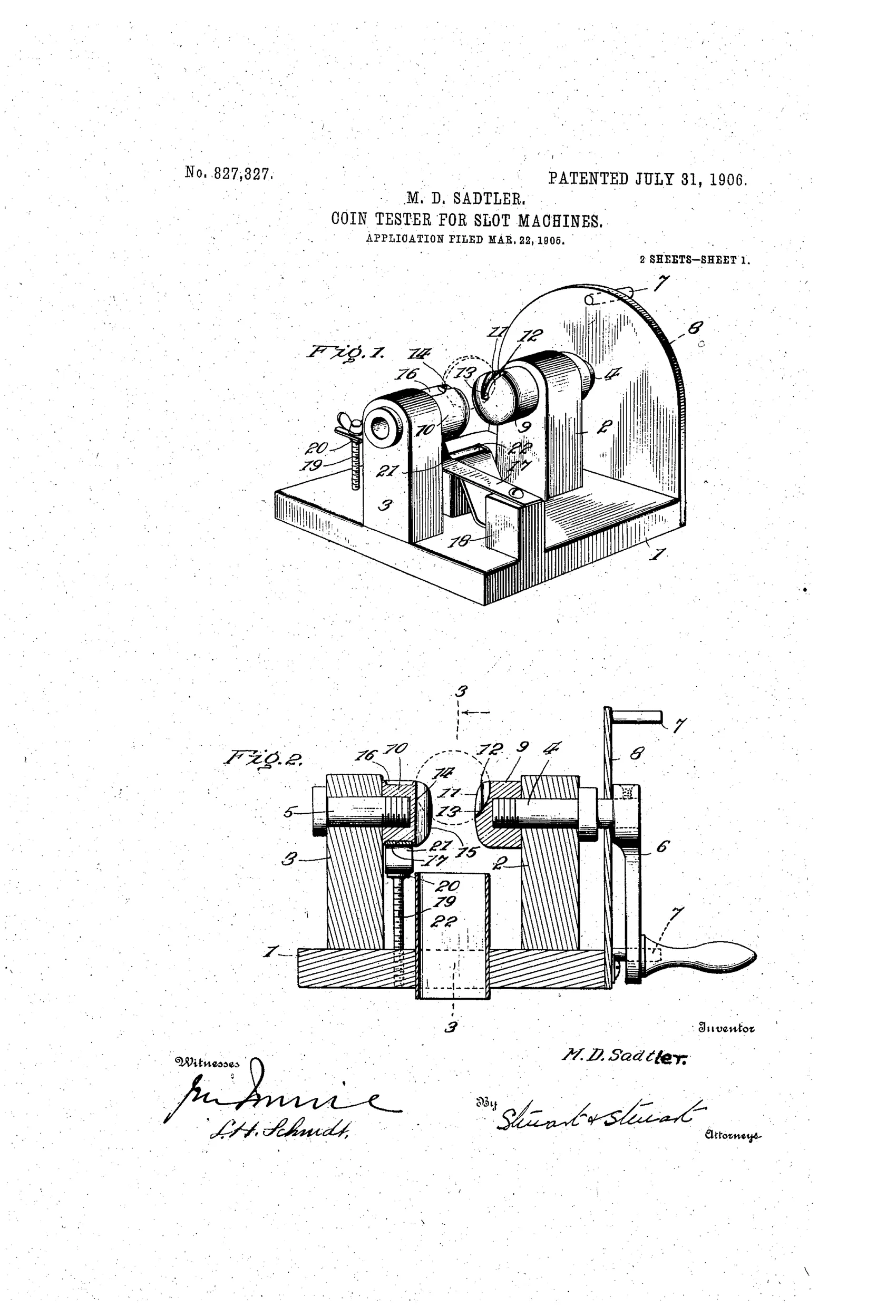
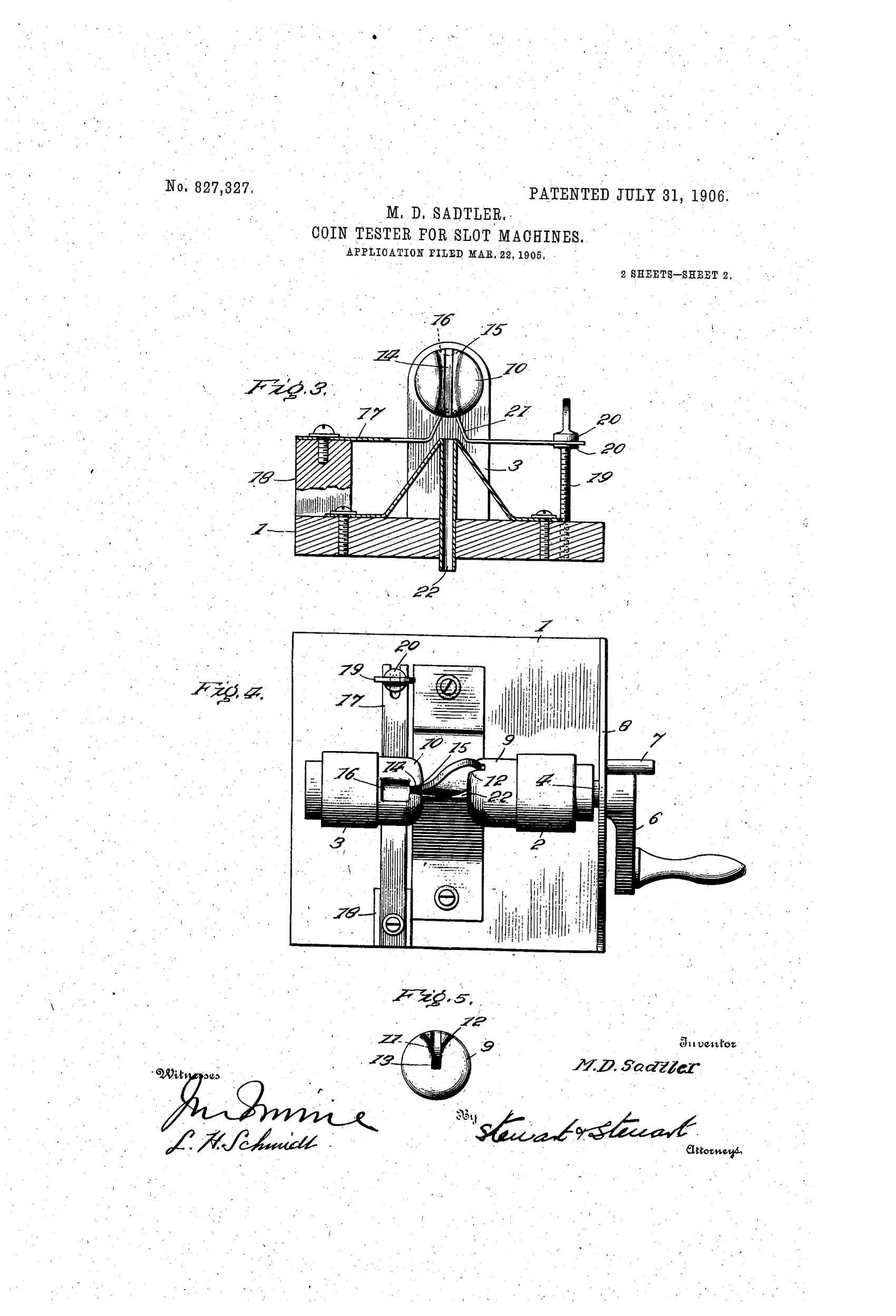
Mechanical coin tester for slot machines
◉ How it works
A pair of spaced heads each carry a slot in their adjacent faces, forming jaws that receive a coin between them near its periphery, leaving the center unsupported. One head is turned by a crank handle while a spring-loaded projection engaging notches resists the initial rotation of the other head, subjecting the coin to a gripping and twisting resistance. A genuine coin of proper hardness, size, and thickness is gripped and carried around by friction until released into a coin-receiving slot below. A soft lead or iron slug of improper hardness will instead bend, twist out, or spring free from the beveled slot walls and be rejected to the side rather than passed into the machine.
◉ What was claimed
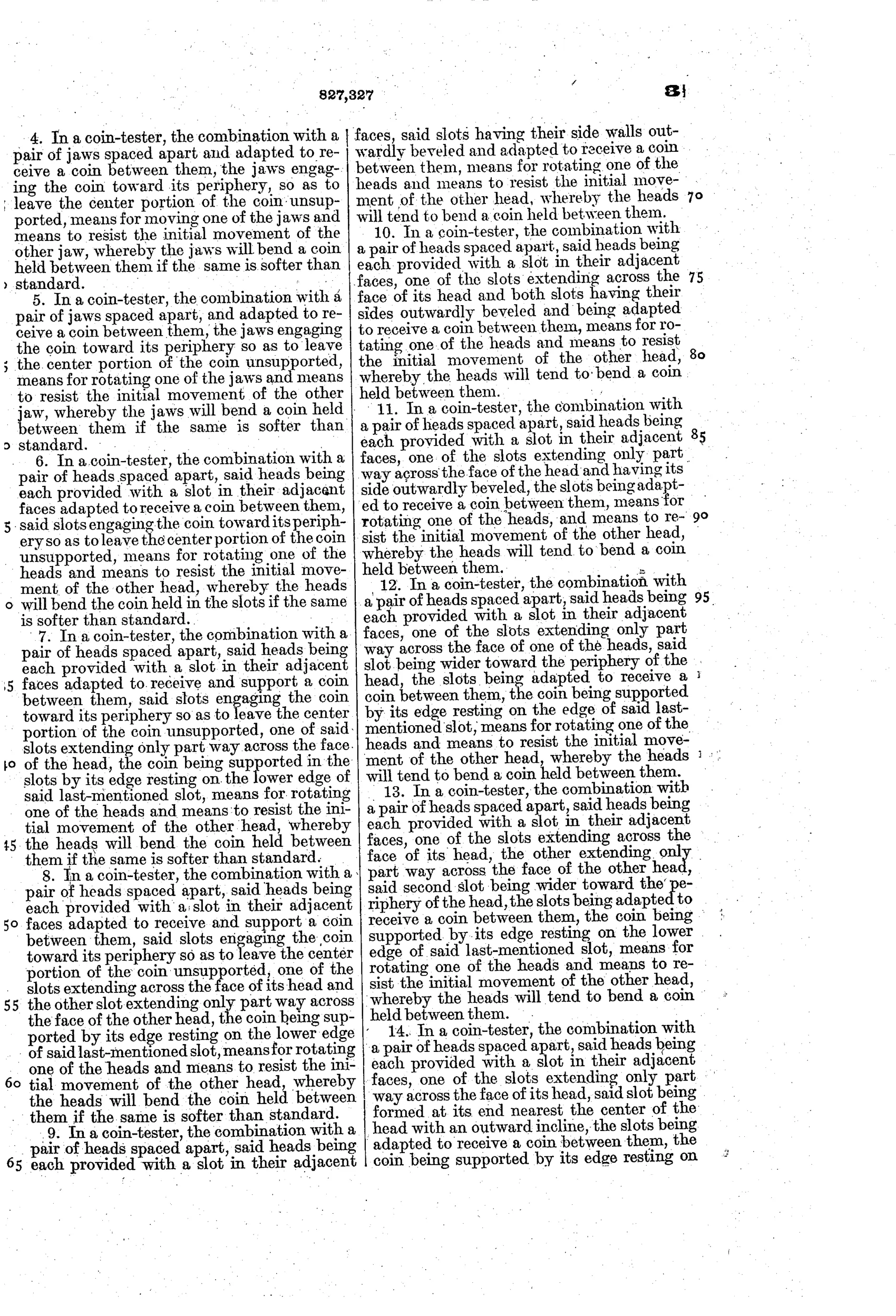
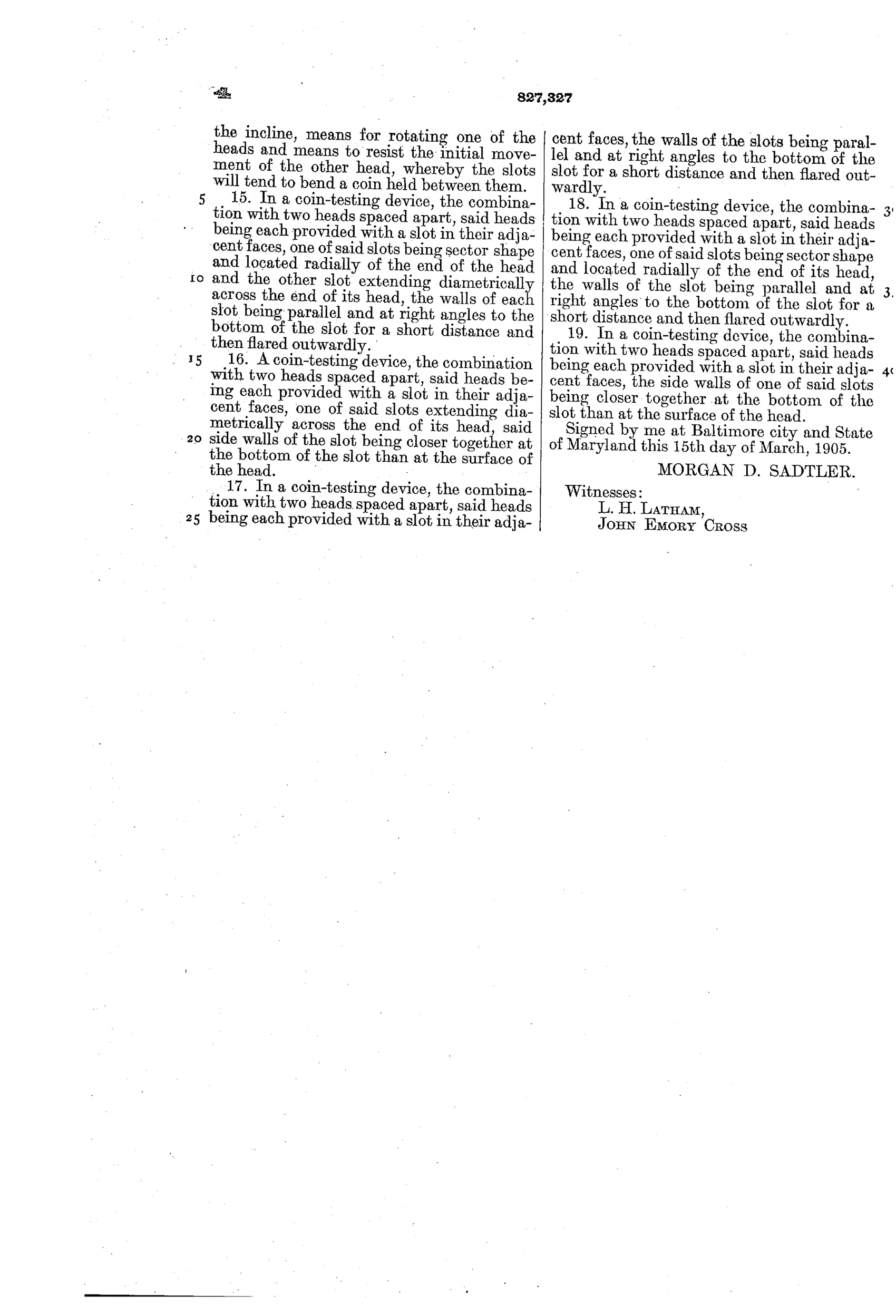
“3. In a coin-testing machine, the combination of a pair of heads spaced apart, said heads being each provided with a slot in their adjacent faces adapted to receive a coin between them, means for subjecting one of the heads to a resistance sufficient to bend anything of less hardness than the coin to be tested and means for turning the head not subject to tension whereby the coin or token will either turn the head subject to tension or be bent.”
In plain English: Two spaced heads with facing slots hold a coin; one head resists turning with spring tension while the other is cranked, so a genuine coin turns both heads together but a softer slug just bends and is rejected.
◉ In the inventor’s words
“It will thus be seen that I have devised a mechanism which will prevent the passage of anything but a coin of the proper character to operate the machine—that is to say, it will prevent the use of lead or iron slugs, even though they be of the proper size and thickness, the metal of which they are constructed causing the machine to cast them out and prevent them from being passed along into the coin-slot.”— Morgan D. Sadtler, from the specification
Fate unknown
The assignment hints at commercial intent, but no slot machine incorporating this crank-tester is documented; a surviving mechanism or trade catalog listing would settle it.
◉ Commentary
Most anti-slug patents of this era test what a coin is by proxy: its weight, its diameter, whether a magnet grabs it. Sadtler tests something almost nobody else touches — hardness. His two slotted heads grip a coin around its rim, leaving the center unsupported, and then one head is cranked while the other resists with spring tension. A genuine silver coin is stiff enough to transmit the torque and turn both heads together, dropping cleanly into the machine. A cast lead slug of exactly the right size and thickness simply bends and gets spat out sideways. Fig. 4 shows the money shot: the twisted lead disc, the failure mode drawn as a feature.
It's a genuinely clever discrimination principle, and the destructive rejection is a bonus — the slug comes out mangled, useless for a second try. But look at Fig. 1 and you see the catch: there's a crank handle. This isn't a passive in-chute gate; it demands a deliberate turning motion, either from the patron or geared to the machine's operating lever. That adds cost, friction, and a jam point, which is exactly what vending operators were trying to eliminate. The trade absorbed the passive testers — magnets, rockers, weight gates — and left torque-testing behind.
A smart dead end, then: right diagnosis of the slug problem, wrong price of admission. The assignment to Forrester suggests someone thought it worth backing, but I know of no machine that carried it.
Commentary by Claude, The Counterfeit Coin Detector Patent Archive’s resident enthusiast