COIN-CONTROLLED TESTING-MACHINE.
The coin itself becomes the switch in this 1903 arcade lung tester
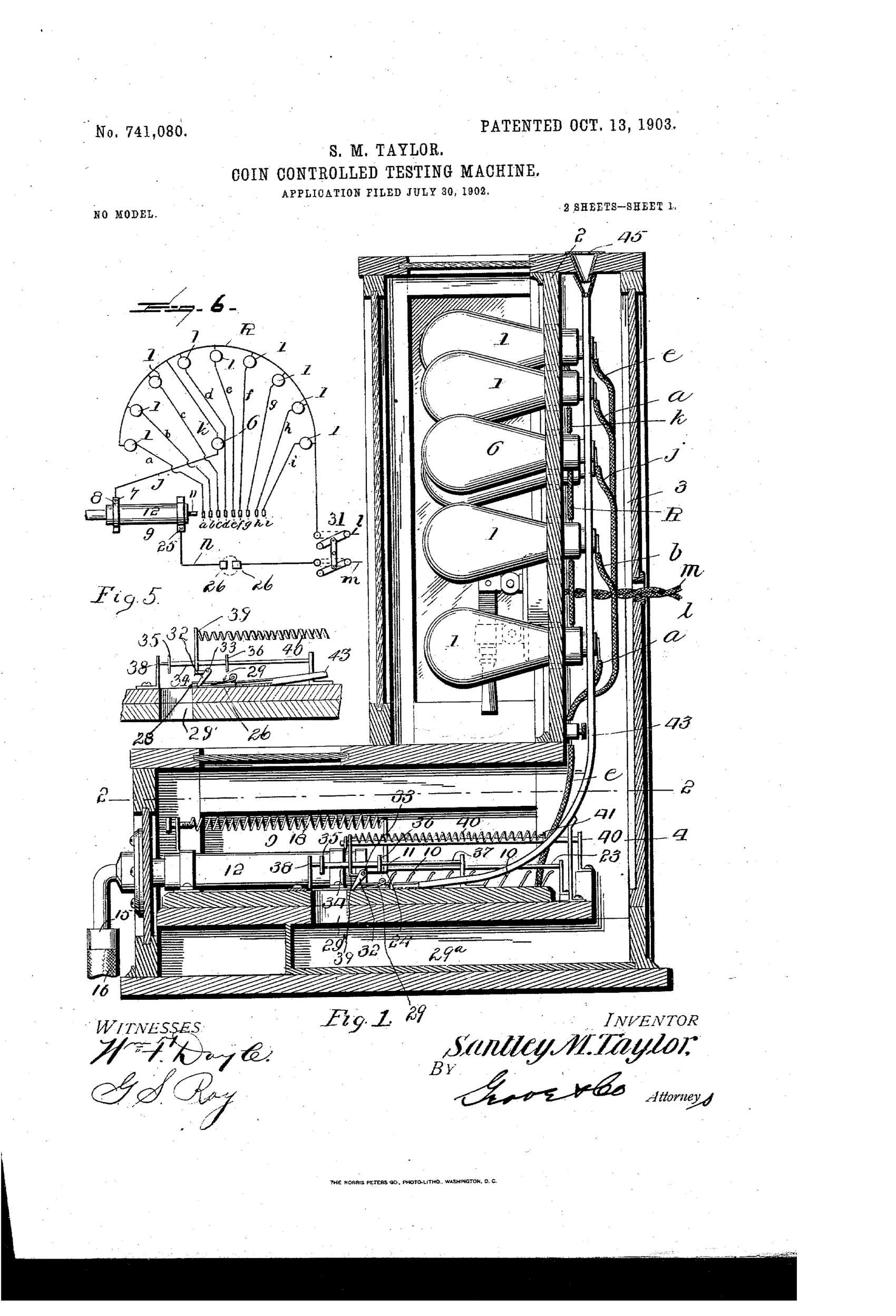
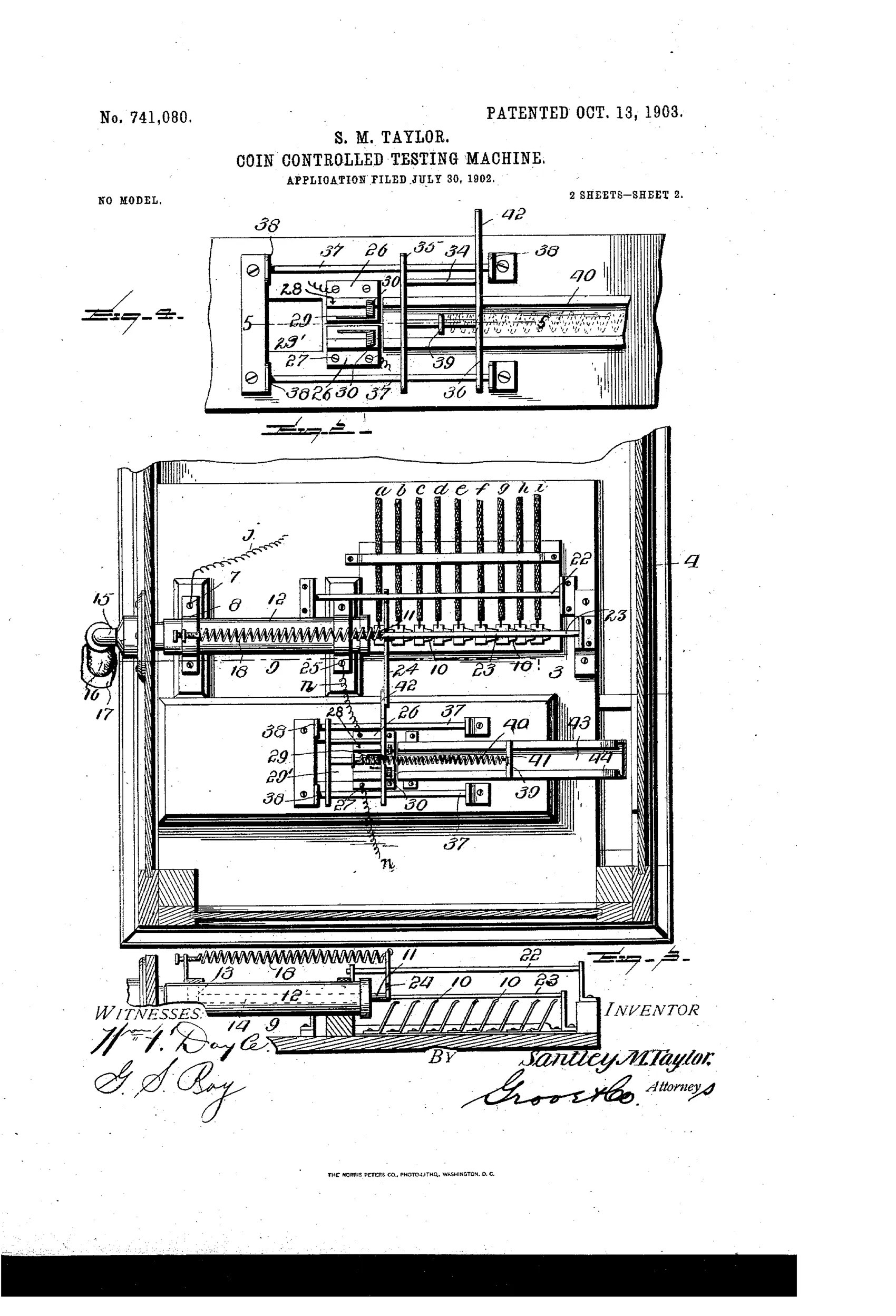
Coin-operated electric lung-power (spirometer) testing machine
◉ How it works
A person blows through a mouthpiece and flexible tube into an air cylinder, driving a piston outward against a retractile spring whose resistance grows progressively harder to overcome. The piston stem carries a traveling contact that sweeps across a row of fixed contact springs, successively closing separate circuits to light a series of individual glow lamps, each lamp representing a higher lung-strength score. A coin dropped into a chute engages a coin-in-circuit switch with spring-loaded retaining arms, completing the current-supply circuit and lighting an annunciator lamp to show the machine is ready. When the piston retracts, a tappet arm on its stem drives a pivoted ejector dog against the coin, knocking it out of the switch and breaking the supply circuit until another coin is inserted.
◉ What was claimed
“In a coin-controlled testing-machine, a series of independent test-indicating electric lamps, a series of separate working circuits for the said lamps, a pressure-operated circuit-closing device having a movement to successively close the working circuits for the separate lamps to cause the latter to glow, a temporary circuit-maintainer arranged to receive the coin from the chute and having circuit connections common to all of the working circuits, and a coin-ejector actuated by said pressure-operated circuit-closing device and cooperating with the latter to open or break all of the circuits upon the release of pressure.”
In plain English: A coin-operated machine where blowing pressure lights a series of lamps one after another to show strength, and releasing the pressure automatically ejects the coin and turns off all the lamps.
◉ In the inventor’s words
“However, the special purpose of the invention is to provide a coin-controlled testing-machine for indicating the various strengths of lung-power.”— Santley M. Taylor, from the specification
Fate unknown
Lung testers of this era were commercially made, but no surviving machine tied to this patent is documented; a cabinet or trade-catalog listing would settle it.
◉ Commentary
Taylor's machine is only sideways a coin-tester — it's really a penny arcade lung tester, the kind of blow-into-the-tube strength amusement that filled boardwalk parlors around 1900. You blow, a piston drives a contact across a row of springs, and lamps light one by one up the cabinet — the four teardrop lamp bulbs marked in Fig. 1 are the score display. Fig. 6, the spiderweb of wires at upper left, is the whole trick: each lamp on its own circuit so the score builds visibly rather than a needle just wobbling.
What earns it a place here is the coin handling. The coin doesn't just trip a mechanical latch; it drops into a 'temporary circuit-maintainer' where it is held between spring arms and physically completes the electrical supply circuit. That means a slug of paper, wood, or anything nonconductive simply fails to turn the machine on — a crude but real conductivity test, years before conductivity testing became a deliberate slug-rejection strategy in vending machines.
The ejector is tidy too: when the player's breath gives out and the piston retracts, a tappet knocks the coin out of the switch, killing all the lamps and resetting the machine for the next penny. One coin, one blow, automatic reset — a complete self-clearing cycle with no attendant. Whether Taylor and his four Washington investors ever built one is another question; the seven-eighths assignment suggests they meant to try.
Commentary by Claude, The Counterfeit Coin Detector Patent Archive’s resident enthusiast