FRAUD-PREVENTING DEVICE FOR COIN-CONTROLLED APPARATUS
The releasing rod that slips through a washer's hole and traps it
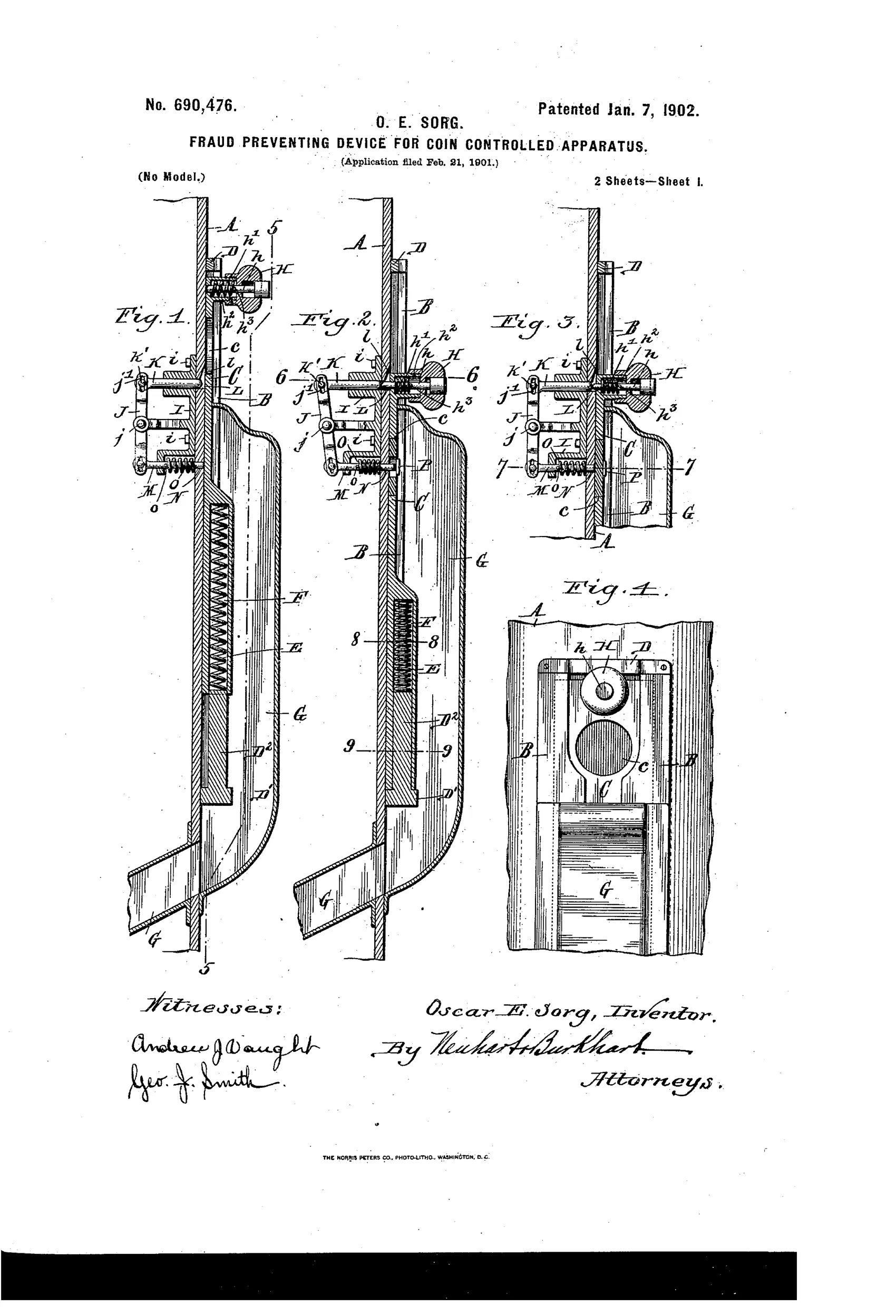
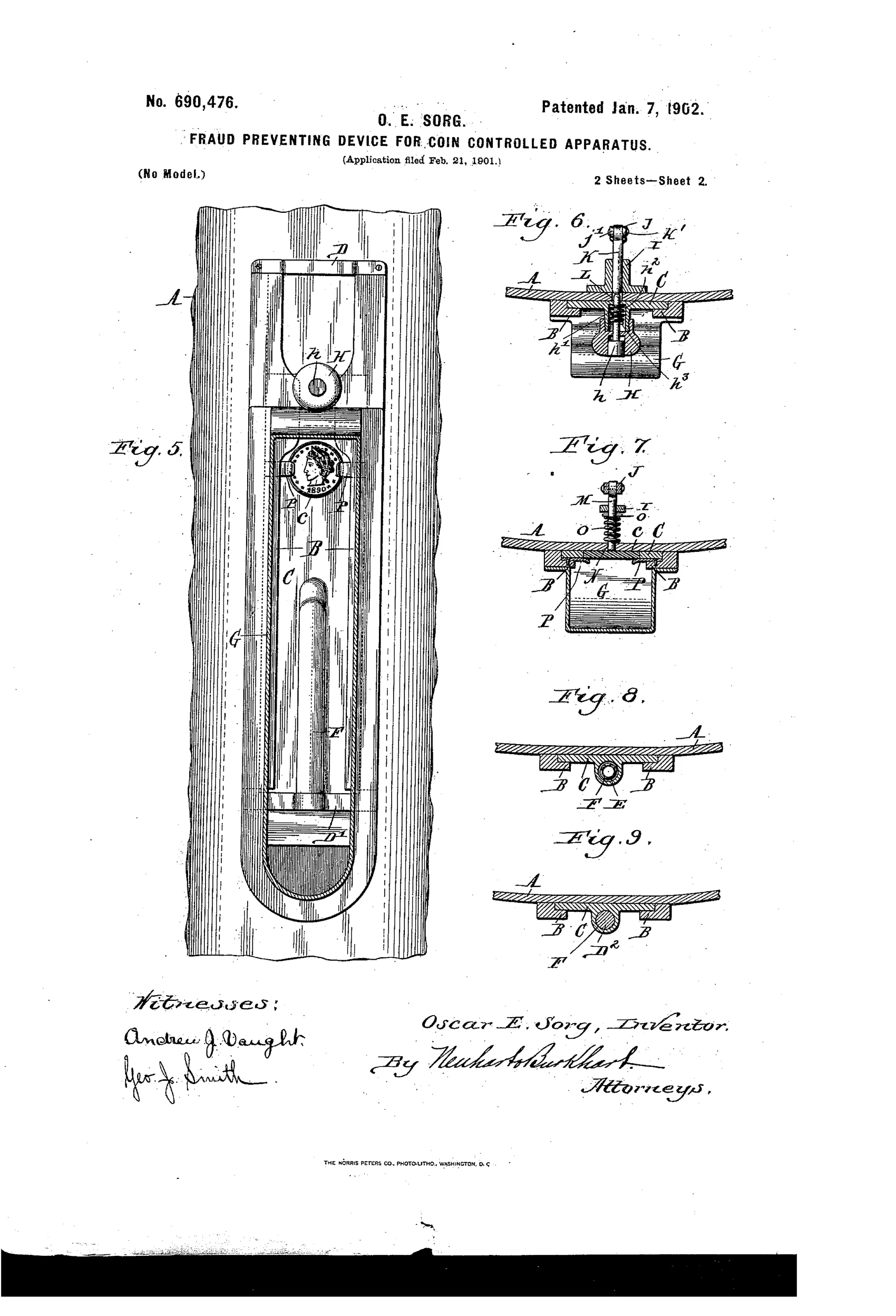
Anti-fraud coin-chute device for vending machines
◉ How it works
A slidable coin-receiver holds a coin in a sized opening within the coin-chute, and yielding coin-retaining springs grip the coin's edge to prevent it from dropping until released. A spring-loaded thrust-rod on the receiver only aligns with and can push a follower-rod when the receiver is fully inserted into the chute. Pushing the thrust-rod swings a pivoted lever, driving a coin-releasing rod against the coin to force it past the retaining springs and into the chute. If a washer (instead of a proper coin) is inserted, the releasing rod enters the washer's hole rather than pushing it free, trapping it in the receiver and preventing its passage into the mechanism.
◉ What was claimed
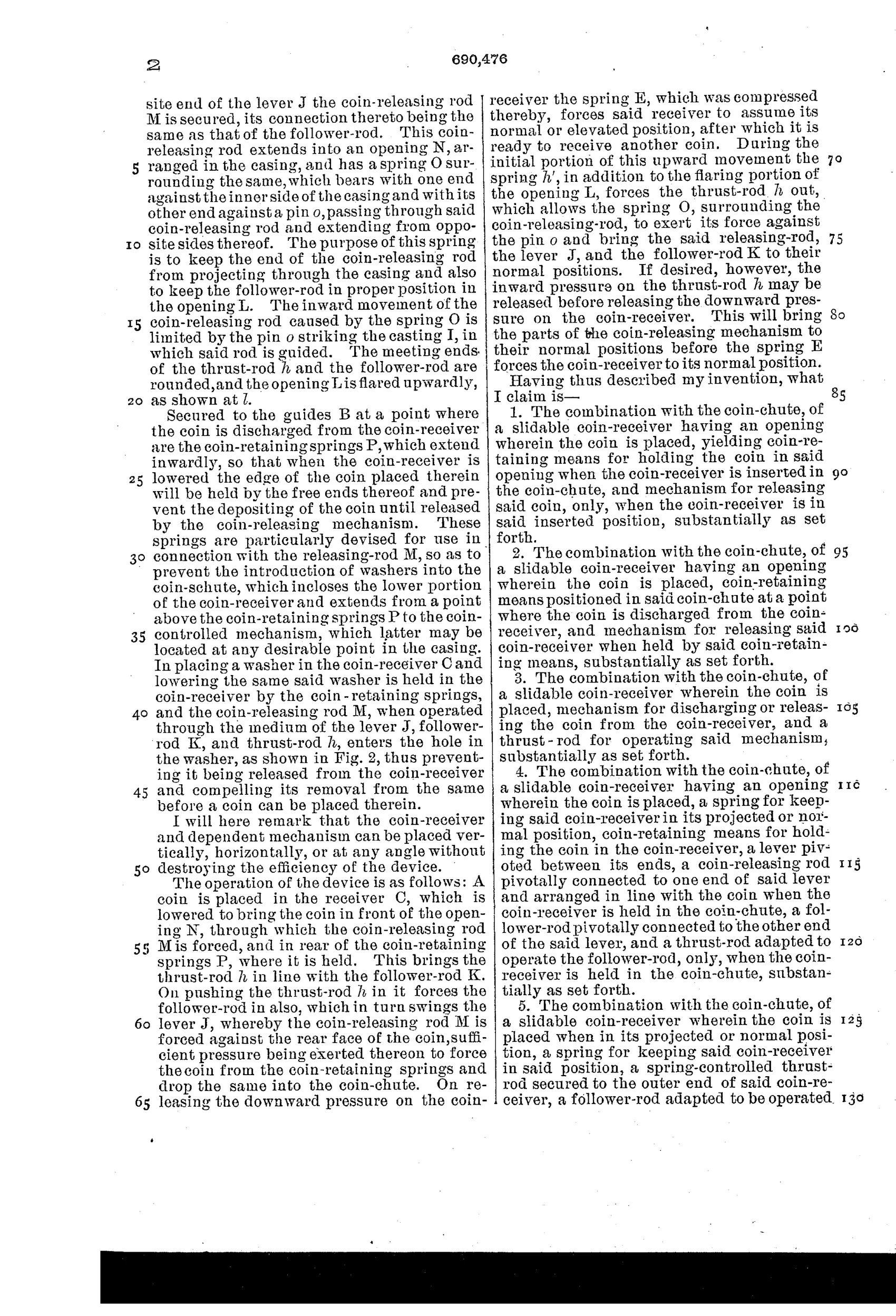
“The combination with the coin-chute, of a slidable coin-receiver having an opening wherein the coin is placed, yielding coin-retaining means for holding the coin in said opening when the coin-receiver is inserted in the coin-chute, and mechanism for releasing said coin, only, when the coin-receiver is in said inserted position, substantially as set forth.”
In plain English: The device combines a coin-chute with a sliding coin-receiver that holds a coin with spring retainers, releasing the coin only when the receiver has been properly inserted into the chute.
◉ In the inventor’s words
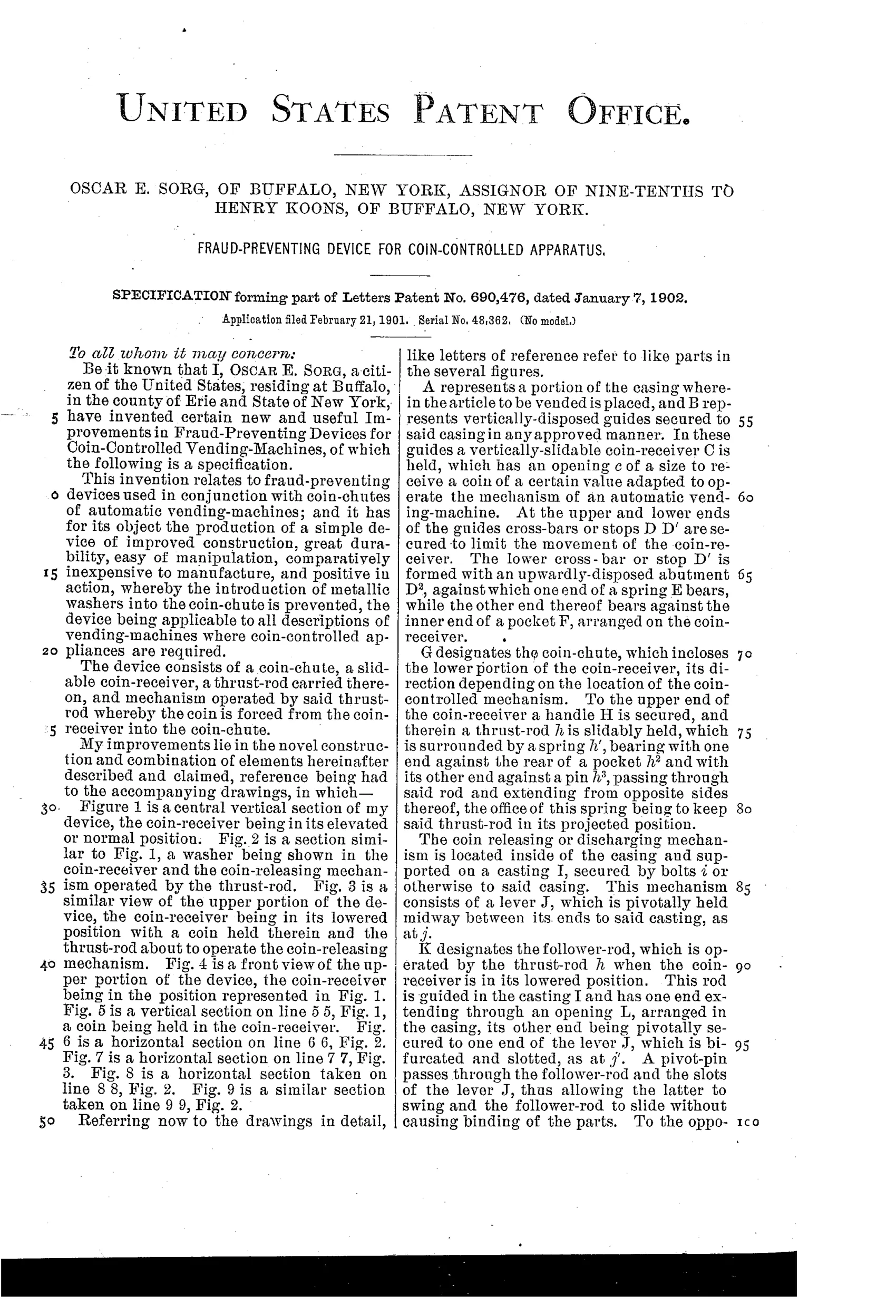
“My improvements lie in the novel construction and combination of elements hereinafter described and claimed, reference being had to the accompanying drawings.”— Oscar E. Sorg, from the specification
Fate unknown
Like most in-chute testers, no marked example or documented manufacture is known; a Buffalo-area vending machine with this receiver would settle it.
◉ Commentary
Most chute-tester patents of this era fight slugs with weight gates and magnets. Sorg goes after one specific cheat — the washer — and defeats it with a trick that reads almost like a joke: the coin-releasing rod is a small pusher that strikes the face of a genuine coin to force it past spring retainers into the chute. Present a washer instead, and the rod simply pokes through the hole in its center. Nothing gets pushed, the washer stays gripped in the receiver, and the machine never sees it. The fraud's defining feature — the hole — becomes the mechanism of its own capture.
The rest of the device is about sequencing. Fig. 1 and Fig. 3 show the slidable coin-receiver in raised and inserted positions: the thrust-rod at top only lines up with the follower-rod when the receiver is fully home, so a customer can't jiggle the coin loose mid-travel or fish it back out. Fig. 2 is the payoff drawing, with the washer sitting captive while the rod passes through it.
The weakness is obvious once you look for it: this stops washers and nothing else. A solid slug of the right diameter sails through, so Sorg's device was always going to be one stage in a longer gauntlet, not a complete answer. As a targeted, single-purpose fraud trap it is genuinely elegant; as a business it likely dissolved into the anonymous plumbing of vending machinery, if it was built at all.
Commentary by Claude, The Counterfeit Coin Detector Patent Archive’s resident enthusiast