BONUS-DETERMINING DEVICE.
The coin itself is the flywheel: a gravity-track spinner that pays double or nothing.
Coin-actuated bonus-determining spinner device
◉ How it works
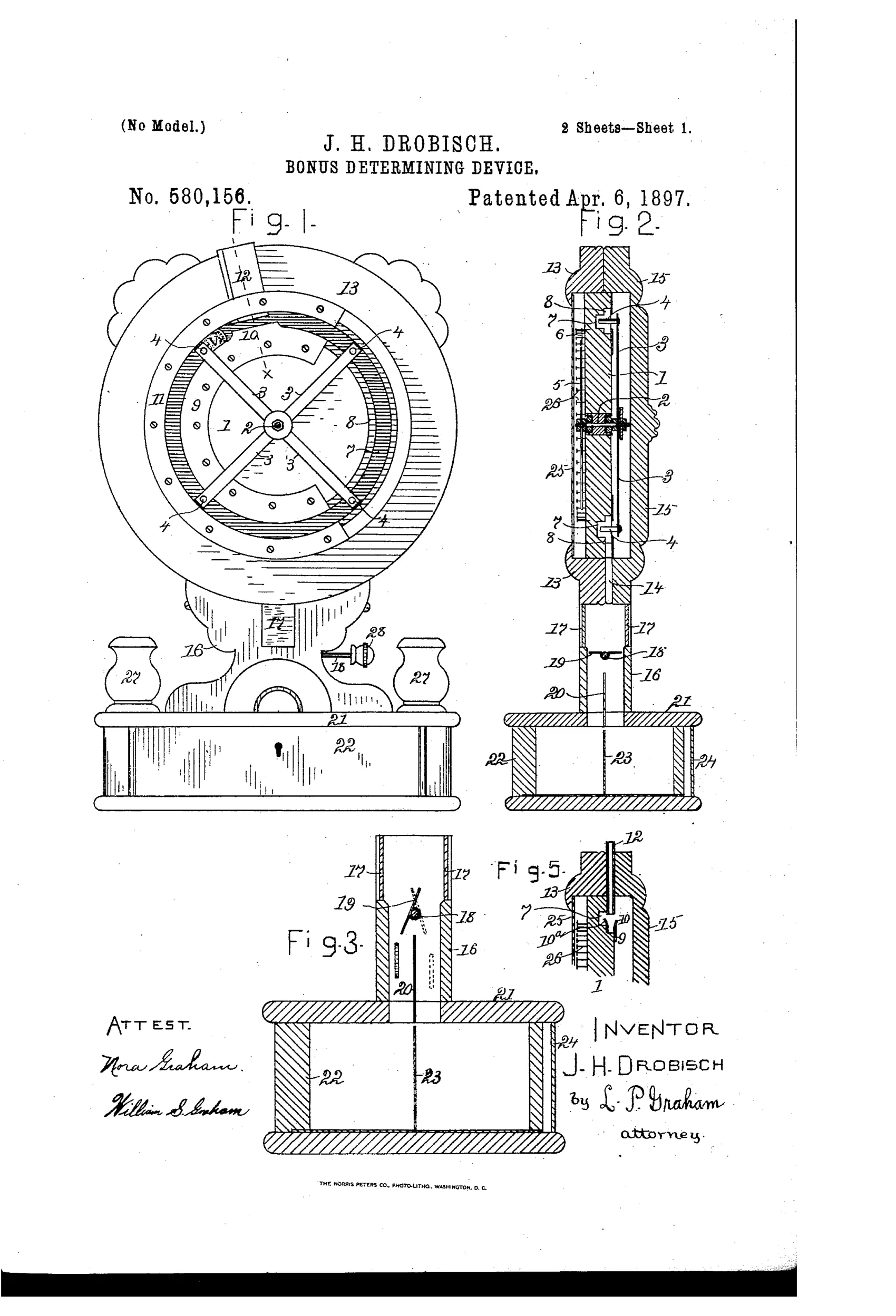
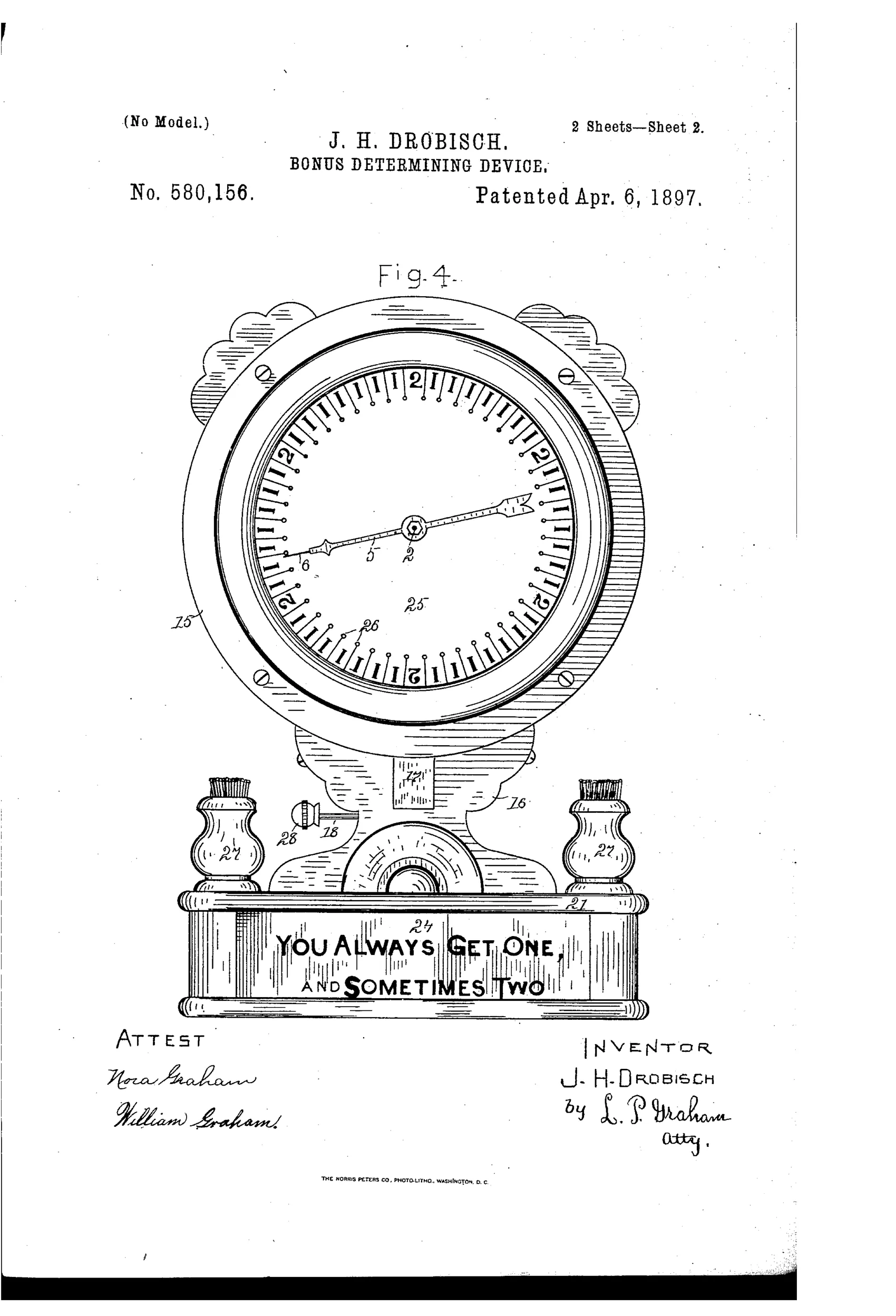
A vertical disk mounted on a central shaft has an annular groove that forms a coin track, with a spider of radial arms bearing pins projecting into the groove. A coin dropped through an admission slot rolls down the arc-formed track under gravity, strikes a pin, and rotates the spider and shaft. On the reverse gradated face, a pointer mounted on the shaft's end swings with the spinning shaft and comes to rest between two pins over a numeral (1 or 2), while a rocking valve beneath intercepts the spent coin and, via a partitioned drawer, sorts it into one of two compartments depending on the bonus outcome.
◉ What was claimed
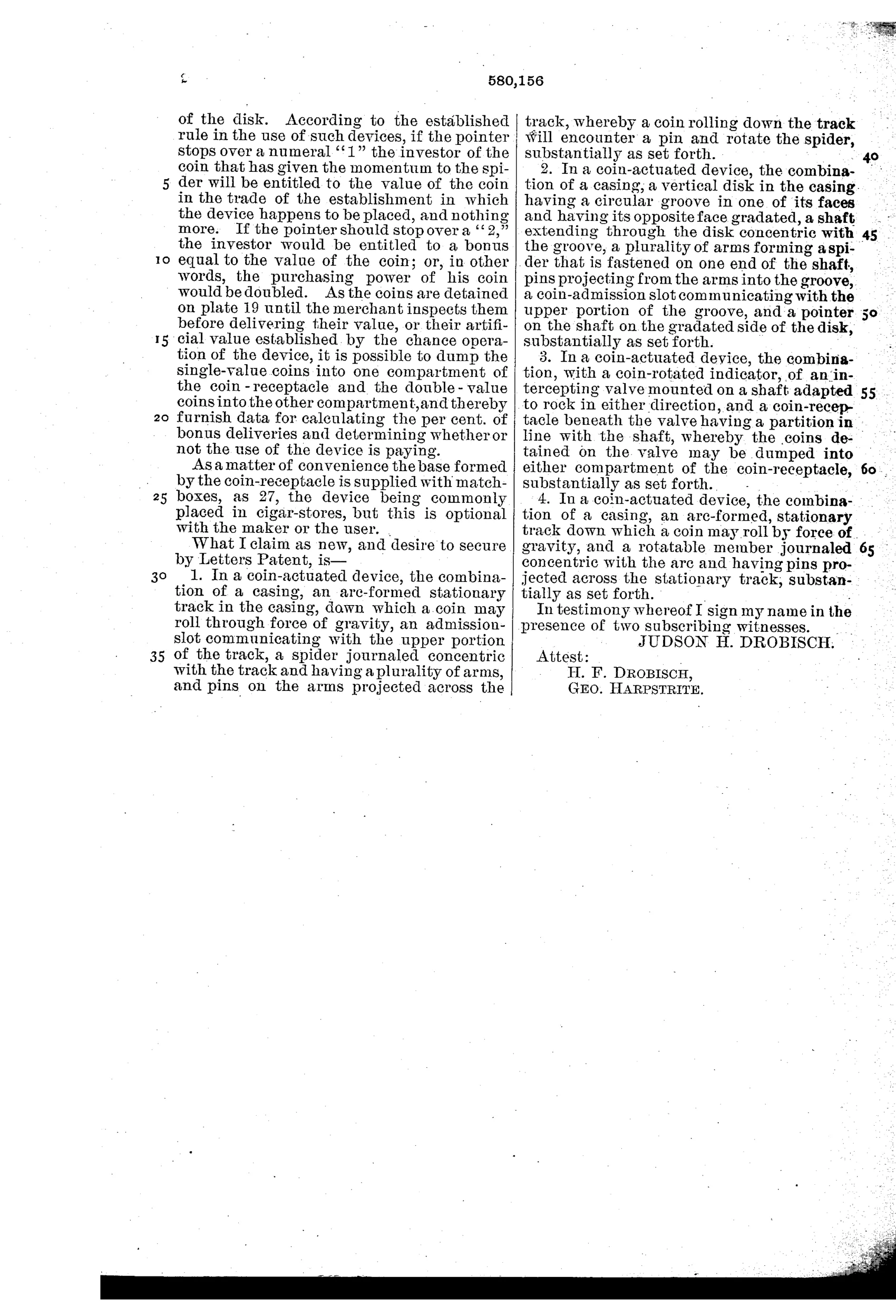
“In a coin-actuated device, the combination of a casing, an arc-formed stationary track in the casing, down which a coin may roll through force of gravity, an admission-slot communicating with the upper portion of the track, a spider journaled concentric with the track and having a plurality of arms, and pins on the arms projected across the track, whereby a coin rolling down the track will encounter a pin and rotate the spider, substantially as set forth.”
In plain English: A coin rolling down a curved gravity track inside the casing strikes a pin on a rotating spider's arm, spinning it.
◉ In the inventor’s words
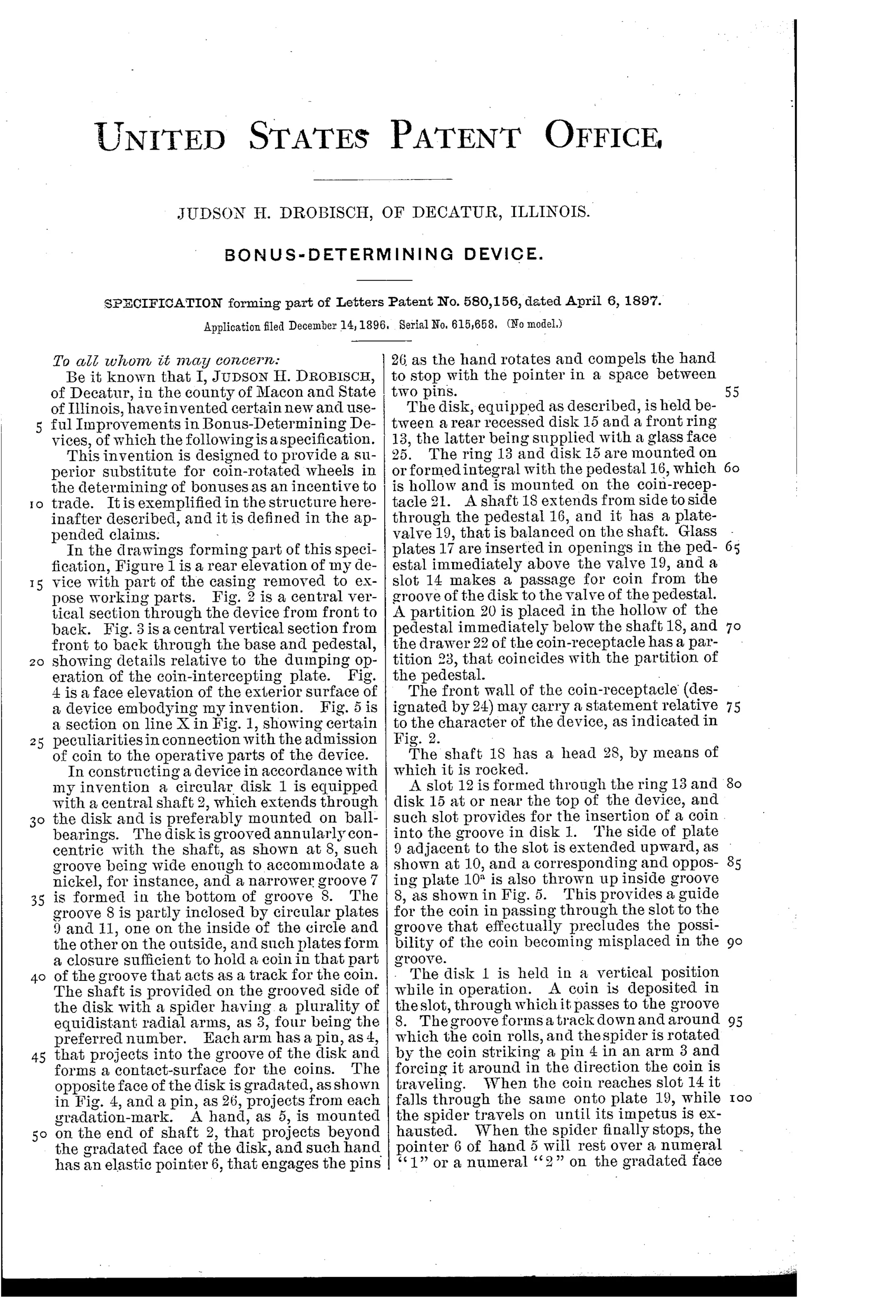
“If the pointer should stop over a "2," the investor would be entitled to a bonus equal to the value of the coin; or, in other words, the purchasing power of his coin would be doubled.”— Judson H. Drobisch, from the specification
Manufactured and sold
Drobisch of Decatur was an established trade-stimulator manufacturer, and coin-spinner wheels of this pattern from his firm survive in slot-machine collections.
◉ Commentary
This one sits at the edge of our category — it's not a detector at all but a trade stimulator, the cigar-counter cousin of the coin-op family. Still, it earns its place because of how it uses the coin. Instead of a spring or a hand crank, the dropped coin rolls down an arc-shaped track under its own weight, slams into a pin on a four-armed spider, and spins the whole shaft. The coin is the motive power and the randomizer at once, and the pointer on the reverse dial settles between pins over a 1 or a 2 — face value, or purchase doubled.
The detail a casual reader will miss is in Fig. 3: the rocking valve and partitioned drawer beneath. The spent coin is sorted into one of two compartments depending on the outcome, so the shopkeeper gets automatic bookkeeping of how many bonuses were won. That's a shrewd touch — merchants distrusted these machines' arithmetic as much as customers distrusted slugs.
Notice what's absent: any coin test whatever. Anything of the right diameter and enough mass to spin the spider gets a play. In 1897, while the vending men were filling this class with magnets and weight gates, the trade-stimulator men were happy to accept anything round. Drobisch was a Decatur maker with a real shop behind him, and the pedestal base flanked by matchbox holders in Fig. 1 tells you exactly what counter this was drawn for.
Commentary by Claude, The Counterfeit Coin Detector Patent Archive’s resident enthusiast