COIN-CONTROLLED ELECTRICAL MUSICAL INSTRUMENT.
The nickel itself is the switch: coin as circuit-closer in an 1893 player piano
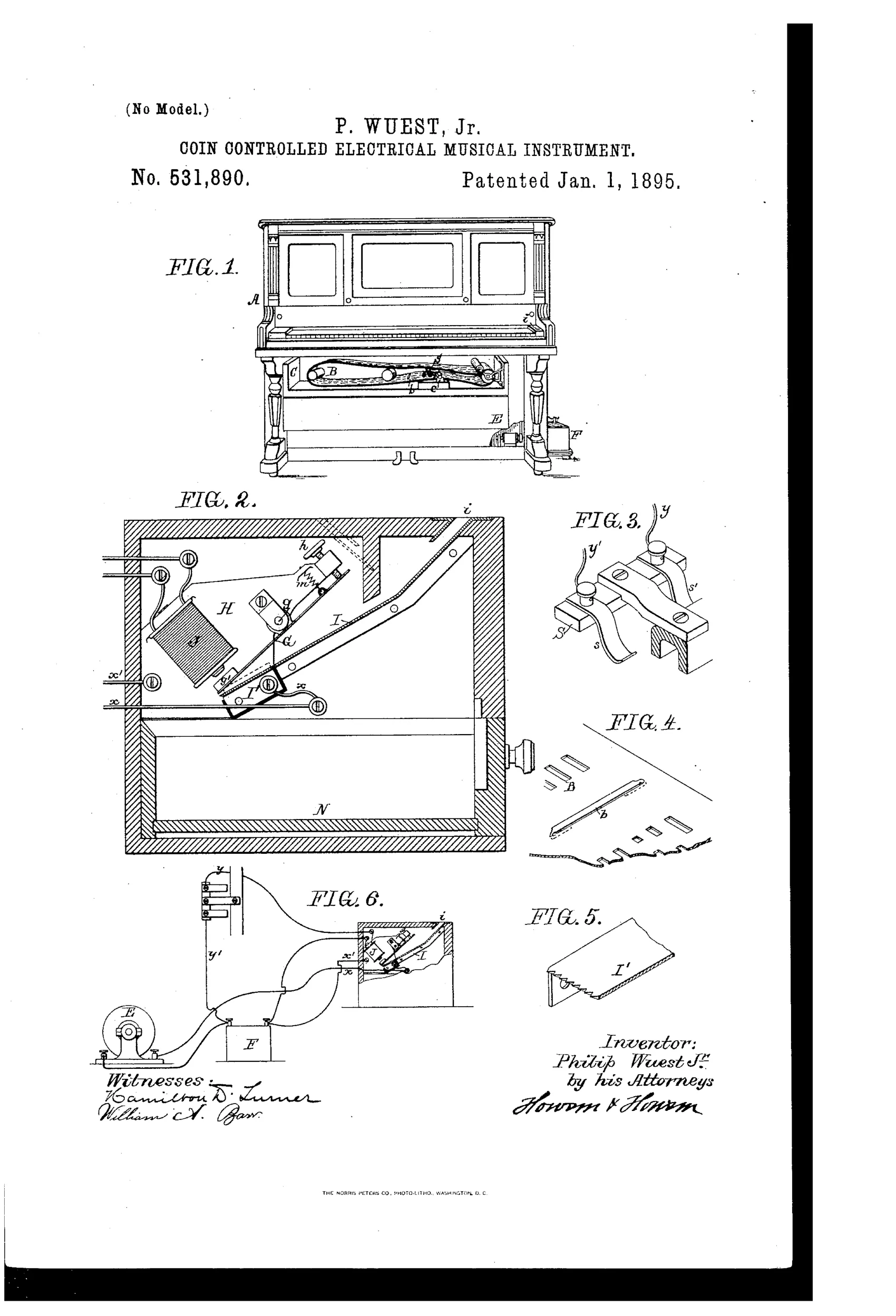
Coin-operated device that starts and stops a player piano.
◉ How it works
A coin dropped through a slot slides down an inclined plate and lodges between an insulated lower plate and a spring-loaded pivoted lever, closing an electrical circuit that runs through a battery to a motor driving the piano's perforated-paper playing mechanism. The motor drives selectors through perforations in the paper roll to play the tune. A bar attached to the paper roll is positioned so that, when the tune ends, it contacts spring fingers on a cross bar, closing a separate circuit to an electro-magnet; the magnet pulls an armature and its lever away from the plate, releasing the coin into a receptacle and breaking the motor circuit, stopping the piano. A set screw and light spring regulate the gap between lever and plate so only a nickel (not a penny) is properly caught to complete the circuit, and a serrated edge on the slide plate cuts any string attached to a coin used fraudulently.
◉ What was claimed
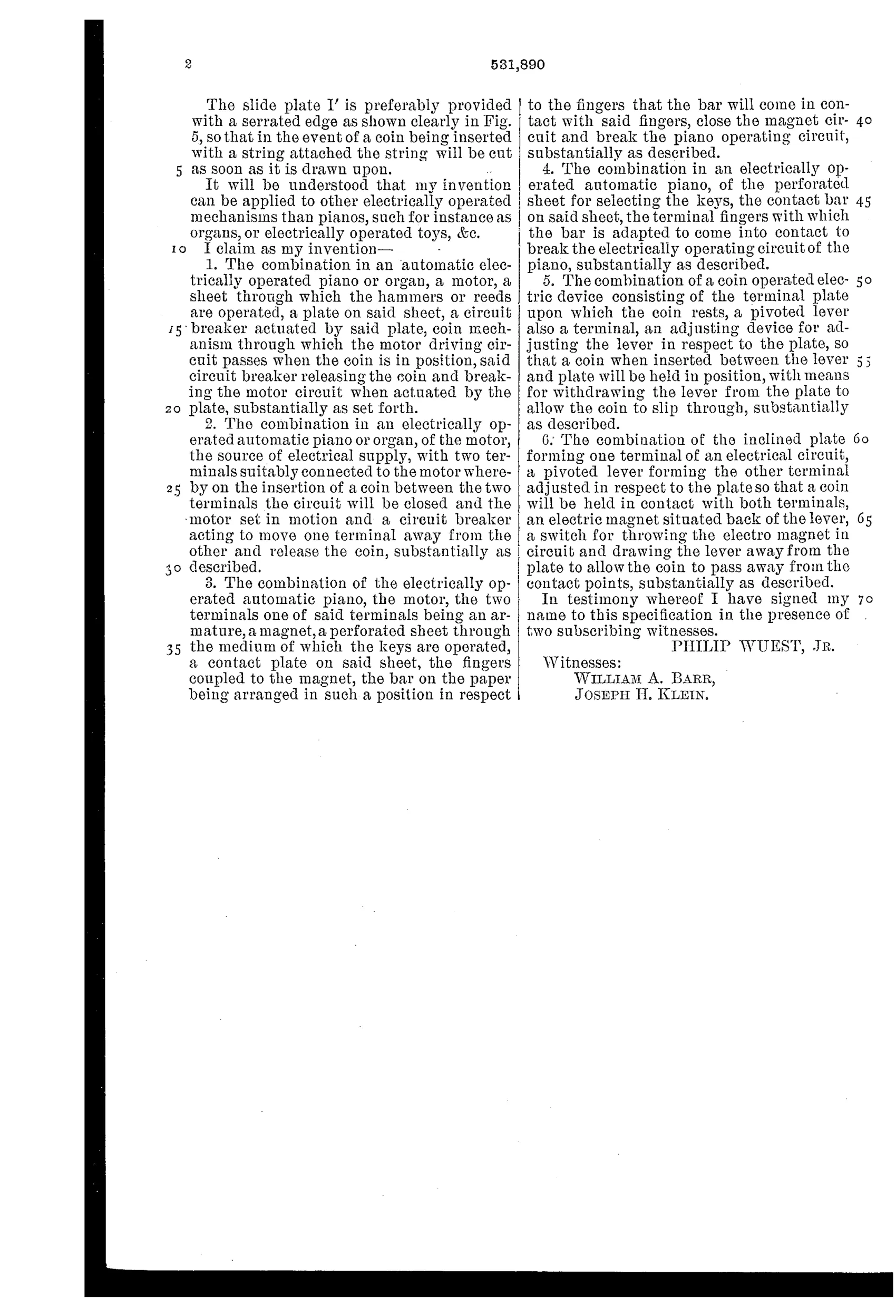
“1. The combination in an automatic electrically operated piano or organ, a motor, a sheet through which the hammers or reeds are operated, a plate on said sheet, a circuit breaker actuated by said plate, coin mechanism through which the motor driving circuit passes when the coin is in position, said circuit breaker releasing the coin and breaking the motor circuit when actuated by the plate, substantially as set forth.”
In plain English: The invention combines a motor-driven player piano, a coin mechanism that completes the motor's circuit when a coin is in place, and a circuit breaker triggered by a plate on the music roll that releases the coin and stops the motor once the tune ends.
◉ In the inventor’s words
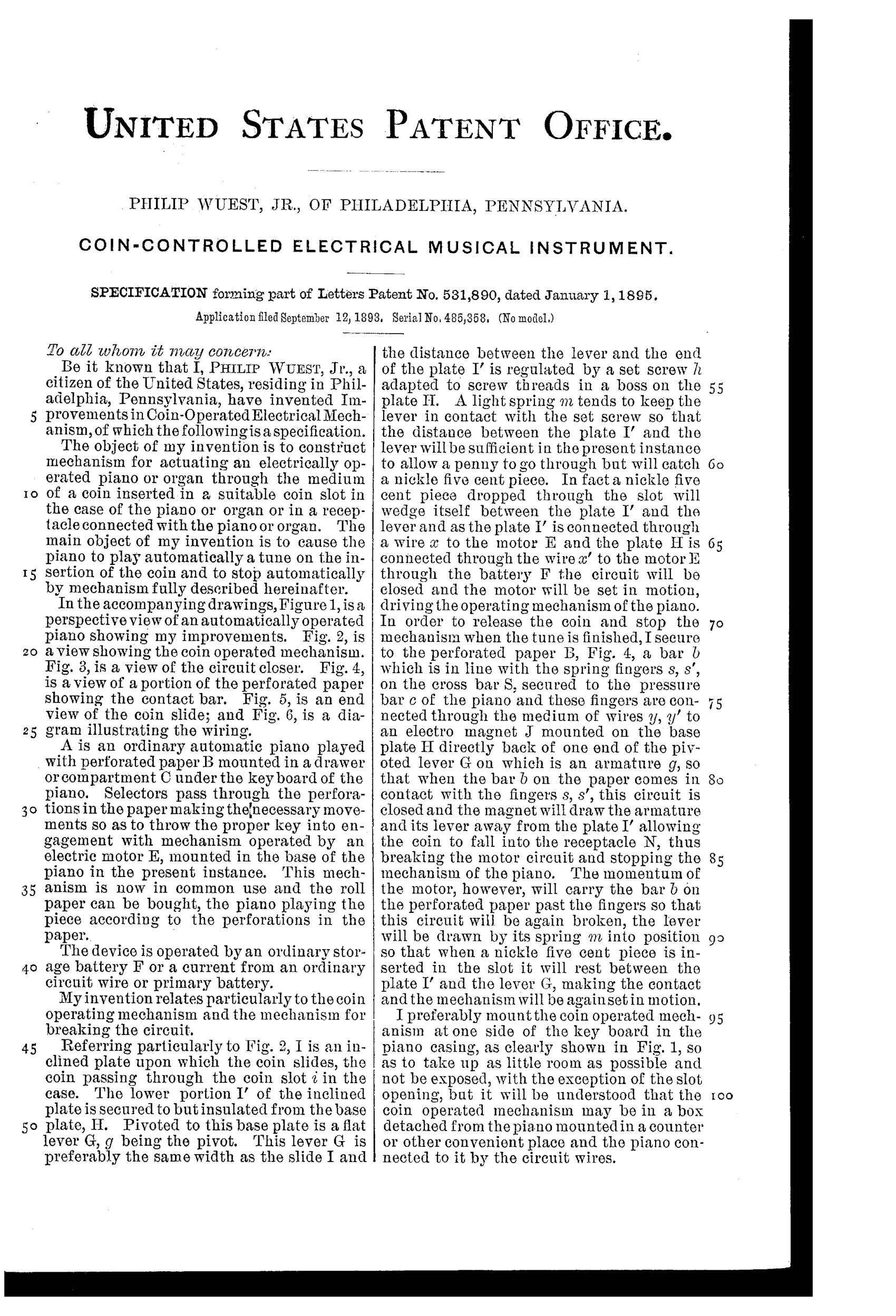
“In fact a nickle five cent piece dropped through the slot will wedge itself between the plate I' and the lever and as the plate I' is connected through a wire x to the motor E and the plate H is connected through the wire x' to the motor E through the battery F the circuit will be closed and the motor will be set in motion, driving the operating mechanism of the piano.”— Philip Wuest, Jr., from the specification
Fate unknown
Coin pianos were later manufactured in quantity, but no surviving instrument or trade record tied to Wuest's specific circuit-closing design is documented; a marked example or licensing record would settle it.
◉ Commentary
Most in-chute testers in this category treat the coin as a problem to be vetted before it trips something mechanical. Wuest does something more elegant: the nickel IS the switch. Dropped through the slot, it wedges between an insulated plate and a spring-loaded lever, and its own conductive body completes the motor circuit. The coin isn't just paying for the tune — it's physically carrying the current that plays it. A set screw regulates the gap so a penny sits too loose to make contact, which is a crude but honest form of coin discrimination by thickness.
The stop mechanism is the other half of the trick, and it's shown in Figs. 4 and 6: a metal bar fixed to the end of the paper roll brushes spring fingers when the tune runs out, energizing an electromagnet that pulls the lever back, drops the nickel into the cash box, and breaks the motor circuit in one motion. Coin release and shutoff are the same event — no separate timer, no governor.
And note the small anti-fraud touch a casual reader would miss: the coin slide has a serrated edge, expressly to sever a string tied to the nickel. The coin-on-a-string cheat was evidently already a known nuisance in 1893. Coin-operated pianos became a real industry a decade later; Wuest is here early, working out the fundamentals with a battery and a bar of brass.
Commentary by Claude, The Counterfeit Coin Detector Patent Archive’s resident enthusiast