COIN OR CHECK CONTROLLED DELIVERY APPARATUS
A trade stimulator that pays out coins — and never checks what you feed it
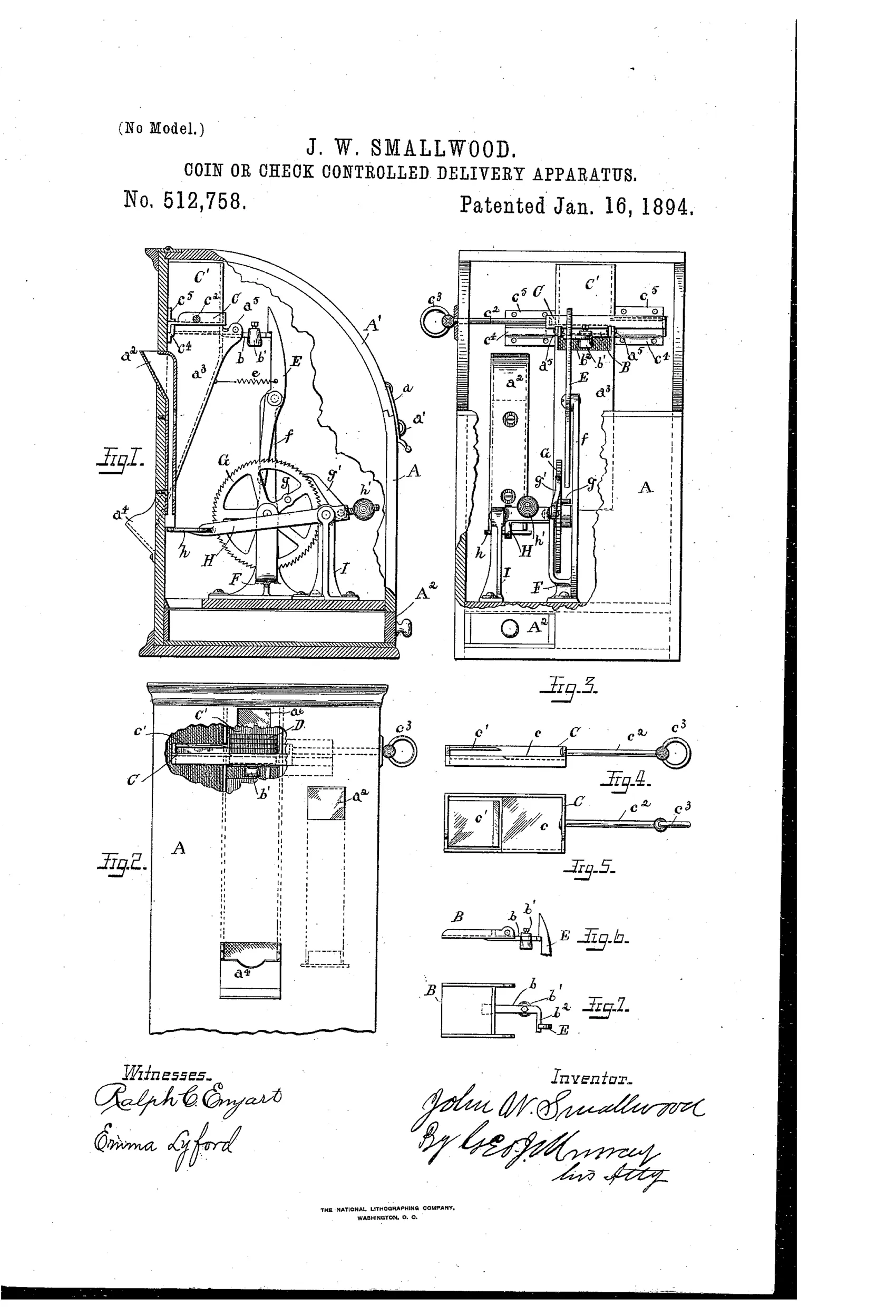
Coin/token-actuated tray mechanism for retail vending rewards
◉ How it works
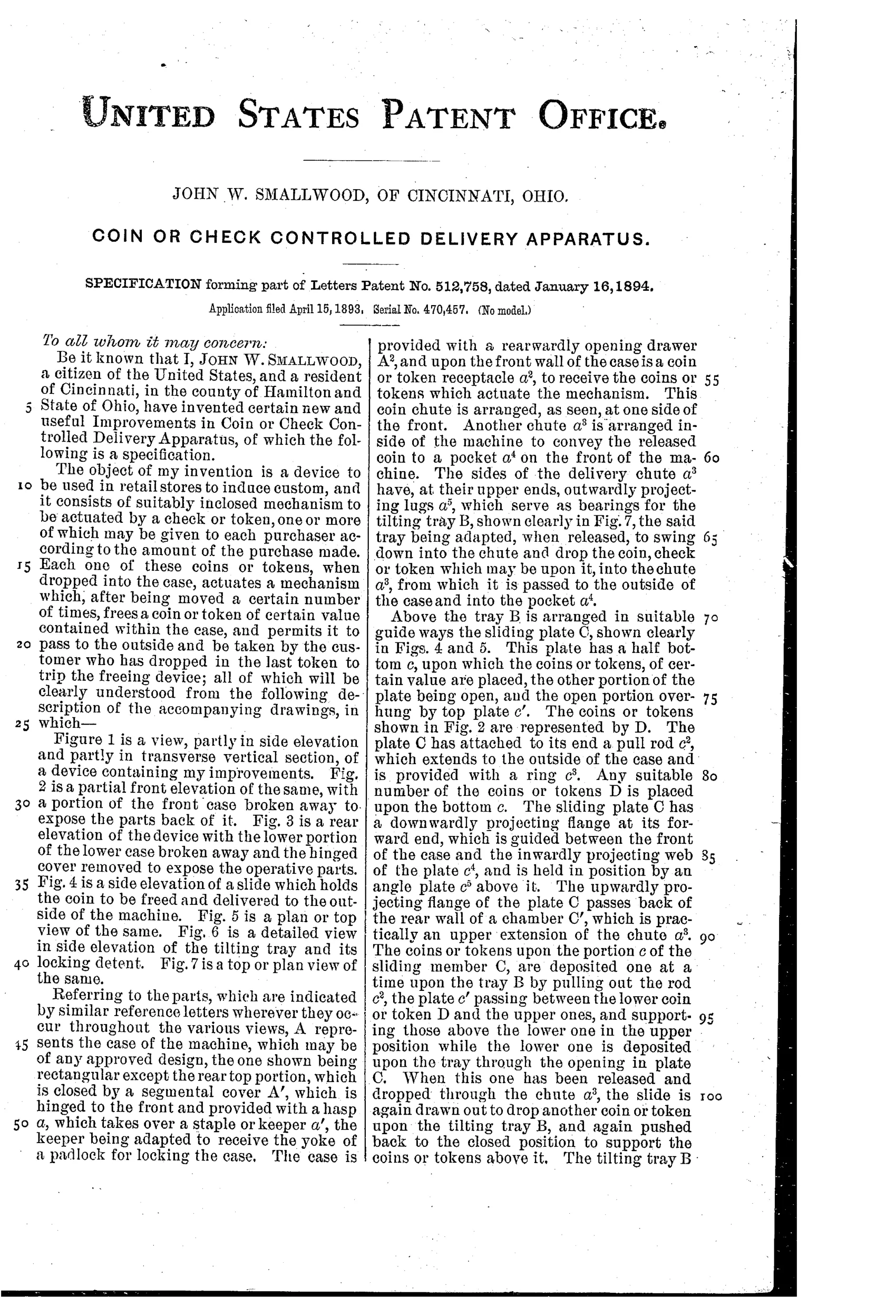
A pivoted tilting tray held horizontal by a spring-returned detent arm releases a coin into a delivery chute after a ratchet wheel, advanced one tooth per dropped coin or token, strikes the detent arm loose with a projecting pin. A counterweighted lever platen under the receiving chute rocks each time a coin falls on it, driving the pawl and ratchet forward one notch. A separate sliding plate with a half-bottom feeds a single coin at a time from an upper receptacle onto the tilting tray, restocking it after each release. A counterweight on the tray's arm brings it back to horizontal once the coin drops, resetting the detent via spring action for the next cycle.
◉ What was claimed
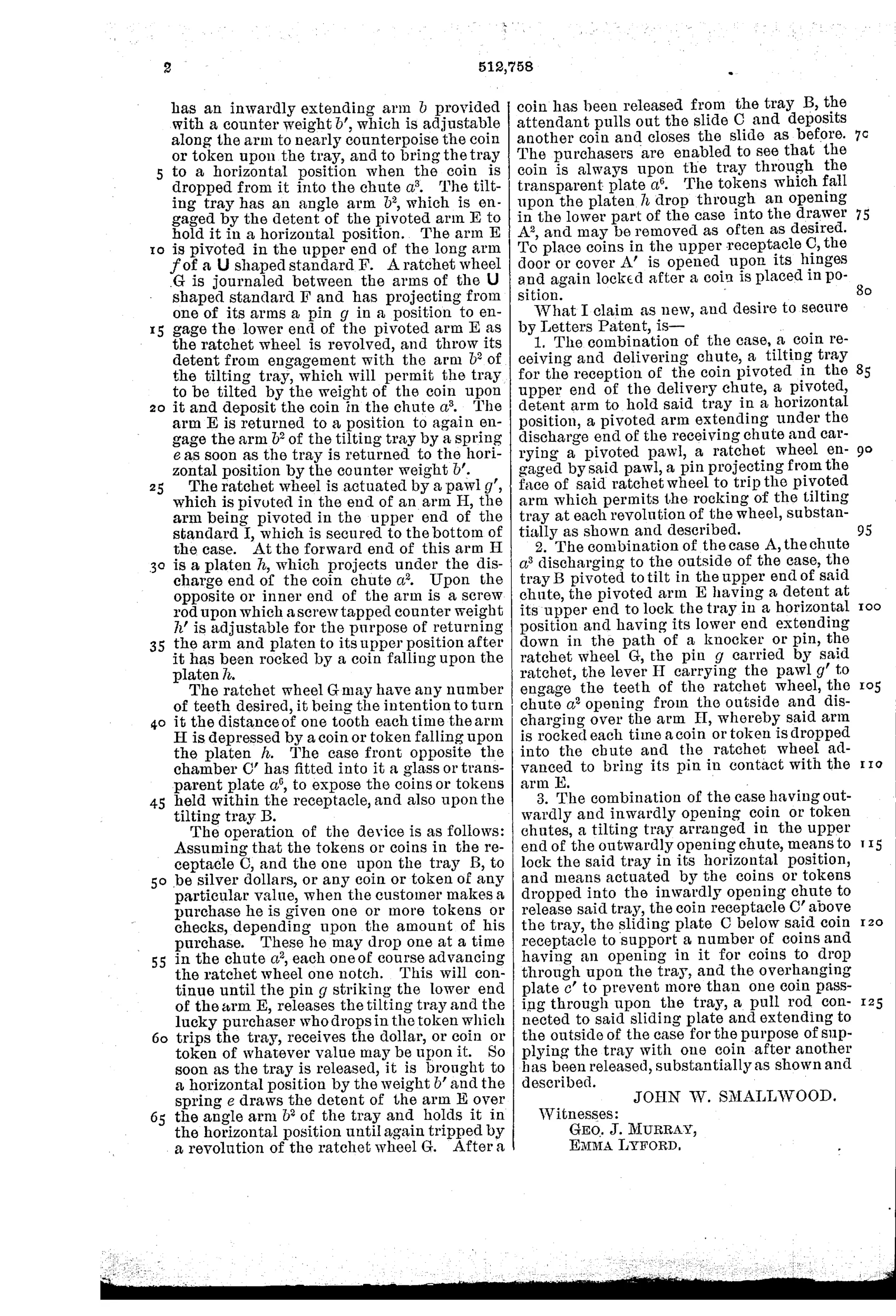
“The combination of the case, a coin receiving and delivering chute, a tilting tray for the reception of the coin pivoted in the upper end of the delivery chute, a pivoted, detent arm to hold said tray in a horizontal position, a pivoted arm extending under the discharge end of the receiving chute and carrying a pivoted pawl, a ratchet wheel engaged by said pawl, a pin projecting from the face of said ratchet wheel to trip the pivoted arm which permits the rocking of the tilting tray at each revolution of the wheel, substantially as shown and described.”
In plain English: The device combines a case, coin chutes, a pivoted tilting tray held level by a spring detent, and a ratchet-and-pawl mechanism advanced by each dropped coin that eventually trips the detent to release the reward coin from the tray.
◉ In the inventor’s words
“The object of my invention is a device to be used in retail stores to induce custom, and it consists of suitably inclosed mechanism to be actuated by a check or token, one or more of which may be given to each purchaser according to the amount of the purchase made.”— John W. Smallwood, from the specification
Fate unknown
No manufactured example or trade listing of Smallwood's device is documented; a surviving cabinet or period advertisement would settle it.
◉ Commentary
Smallwood's machine sits at the odd edge of this category: it's not a detector at all, but a coin-controlled payout device — and its complete lack of any slug-testing is exactly what makes it instructive. Drop a token, and a counterweighted platen under the receiving chute rocks, driving a pawl that advances a ratchet wheel one tooth. A pin on the wheel's face eventually knocks a spring-held detent loose, tipping a pivoted tray and dumping a reward coin into the delivery chute. A sliding half-bottom plate then feeds a fresh coin from the reservoir onto the tray. It's a mechanical counter that pays off every N-th insertion — essentially a trade stimulator, the merchant handing out tokens with purchases to 'induce custom,' as Smallwood candidly puts it.
The drawing repays a close look at Figs. 6 and 7: the tray and detent are a neat little escapement, with the tray's own counterweight resetting the system after each payout. That's tidy work. But the whole scheme trusts the merchant's proprietary tokens for security, and anything of the right weight would rock that platen. Within a few years, the vending trade learned the hard way that this was naive, and the magnet-and-gauge chute testers that dominate this class from the mid-1890s onward are the direct answer to machines like this one.
As a payout mechanism it would work; as a business proposition it was a slug magnet, in the wrong sense.
Commentary by Claude, The Counterfeit Coin Detector Patent Archive’s resident enthusiast