COIN-FREED APPARATUS FOR EXHIBITING OPTICAL ILLUSIONS
A penny buys ten seconds of ghost: Pepper's ghost miniaturized into a coin cabinet
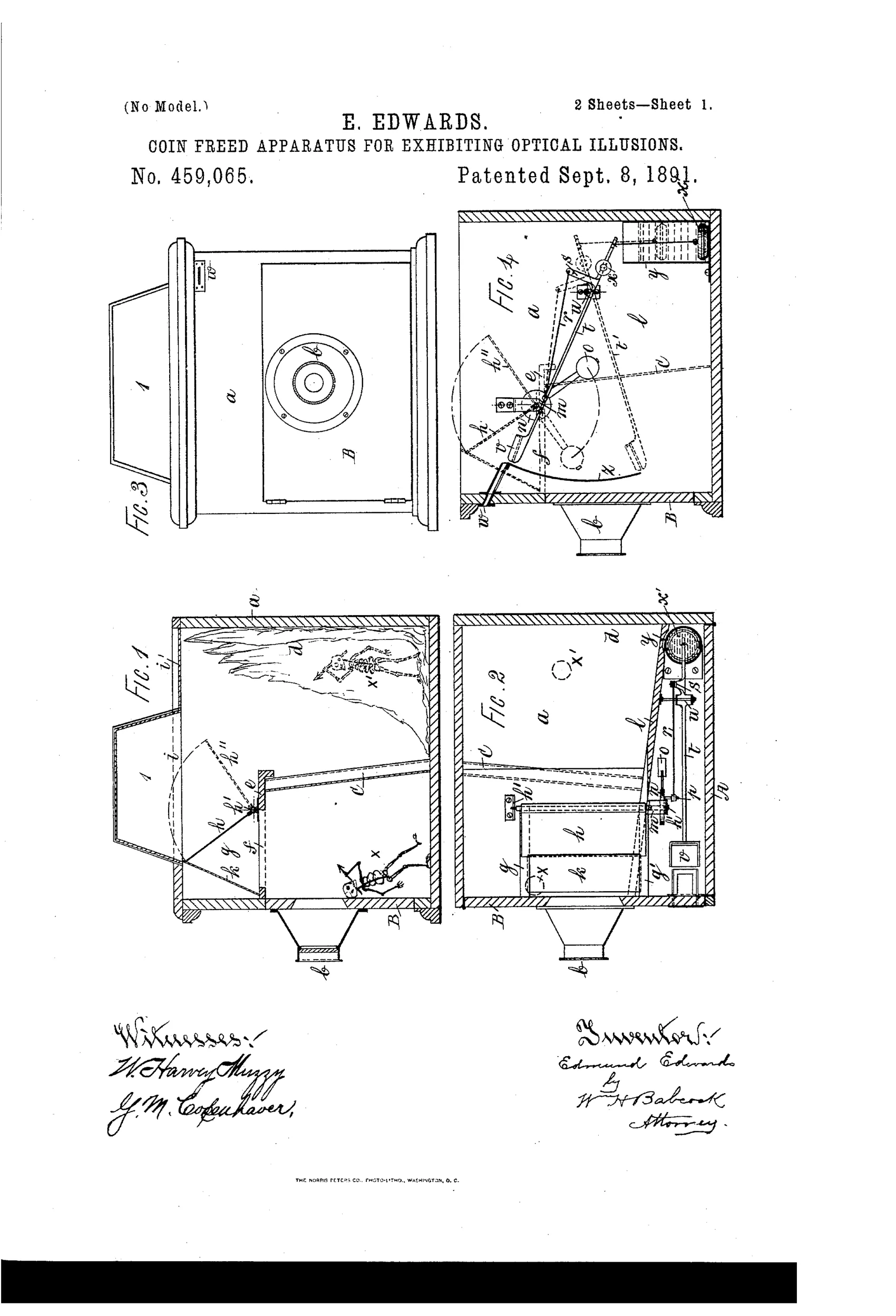
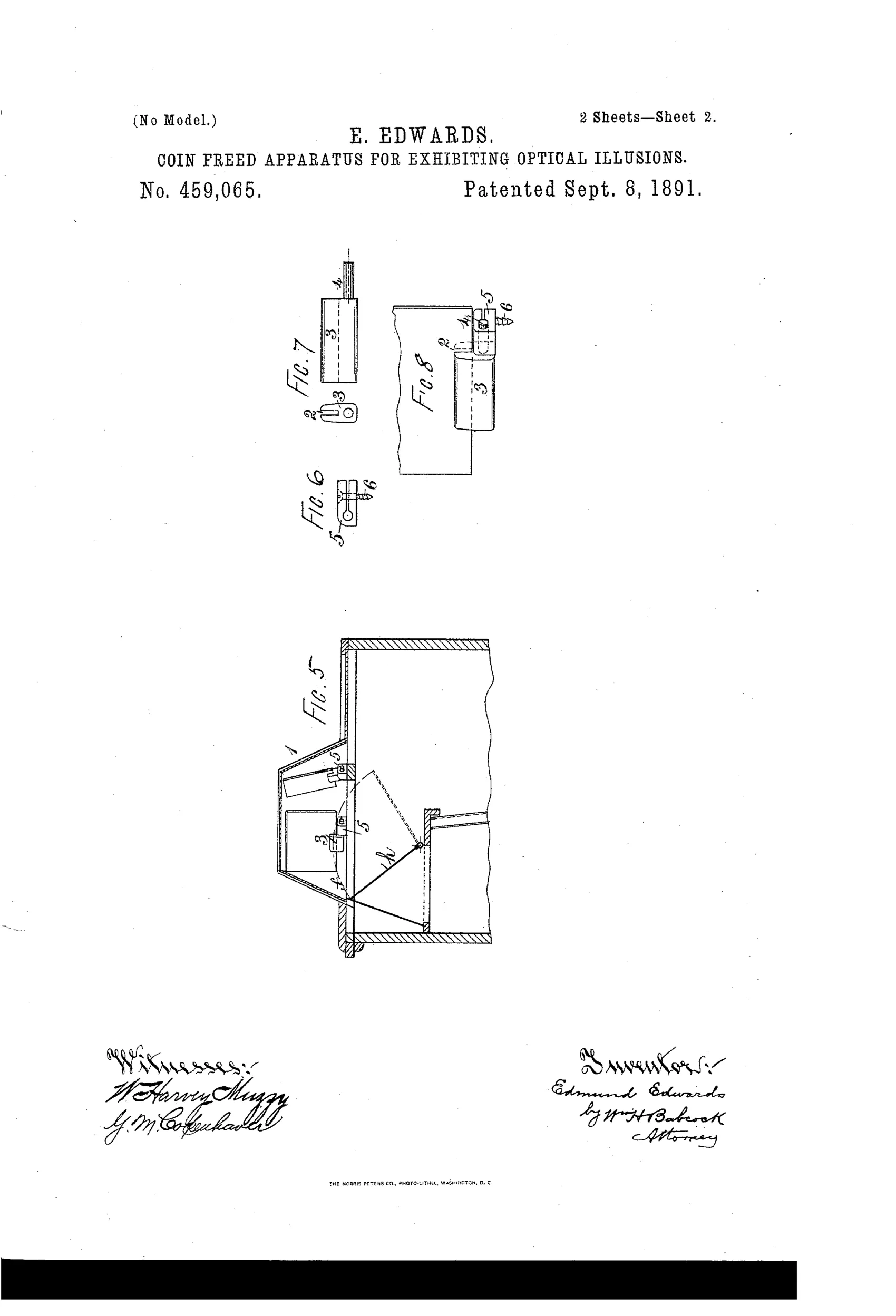
Coin-operated cabinet showing a ghostly optical illusion
◉ How it works
A box contains a transparent inclined glass sheet placed between an eyepiece and a hidden figure such as a skeleton, so that light reflected off the glass makes the figure appear as a spectral image over a background seen through the glass. A shutter above the figure normally stays closed, blocking light from illuminating it, and is opened only when a coin dropped through a slot falls into a receptacle on one end of a pivoted lever, causing that end to descend and the opposite arm to lift the shutter. A cylinder containing a piston immersed in oil or glycerine is hung from the lever to act as a dashpot, retarding the shutter's movement so it stays open for a timed interval before a counterweight returns the lever and closes the shutter. Adjustable mirrors, held by a slotted clip-and-pin fastening, can be positioned to direct daylight or artificial light onto the figure through the opening.
◉ What was claimed
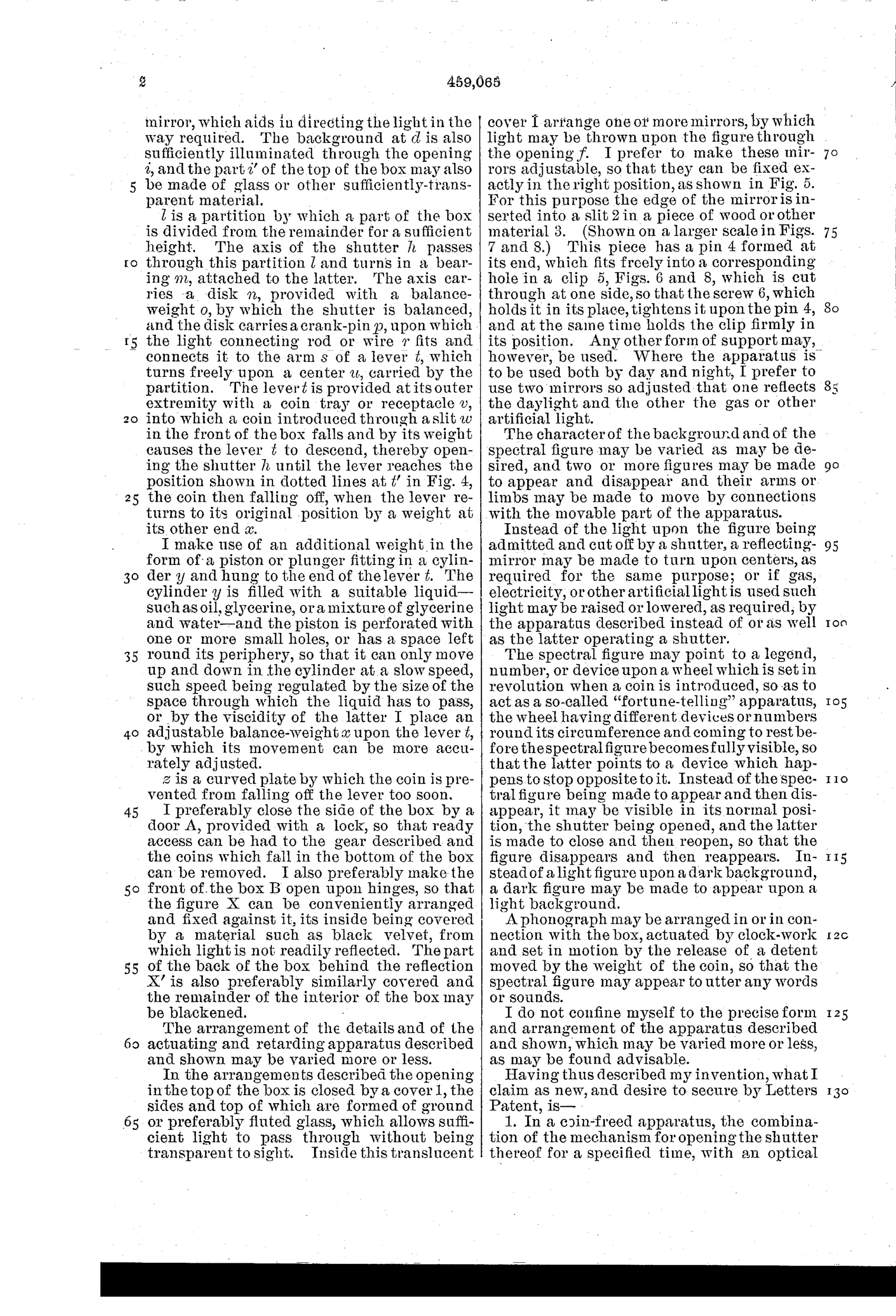
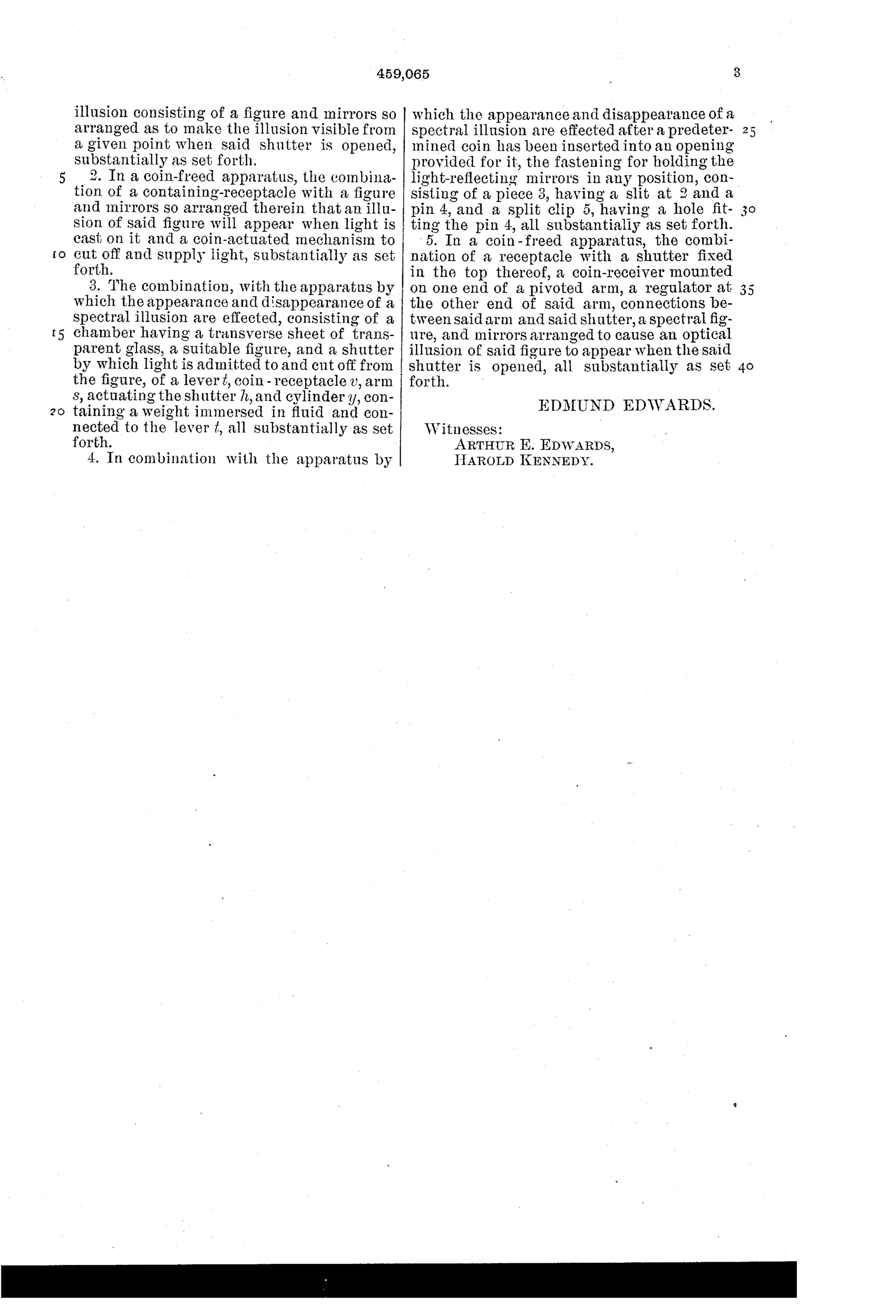
“In a coin-freed apparatus, the combination of the mechanism for opening the shutter thereof for a specified time, with an optical illusion consisting of a figure and mirrors so arranged as to make the illusion visible from a given point when said shutter is opened, substantially as set forth.”
In plain English: The invention combines a timed coin-operated shutter mechanism with a figure-and-mirror arrangement that reveals an optical illusion to a viewer only while the shutter is open.
◉ In the inventor’s words
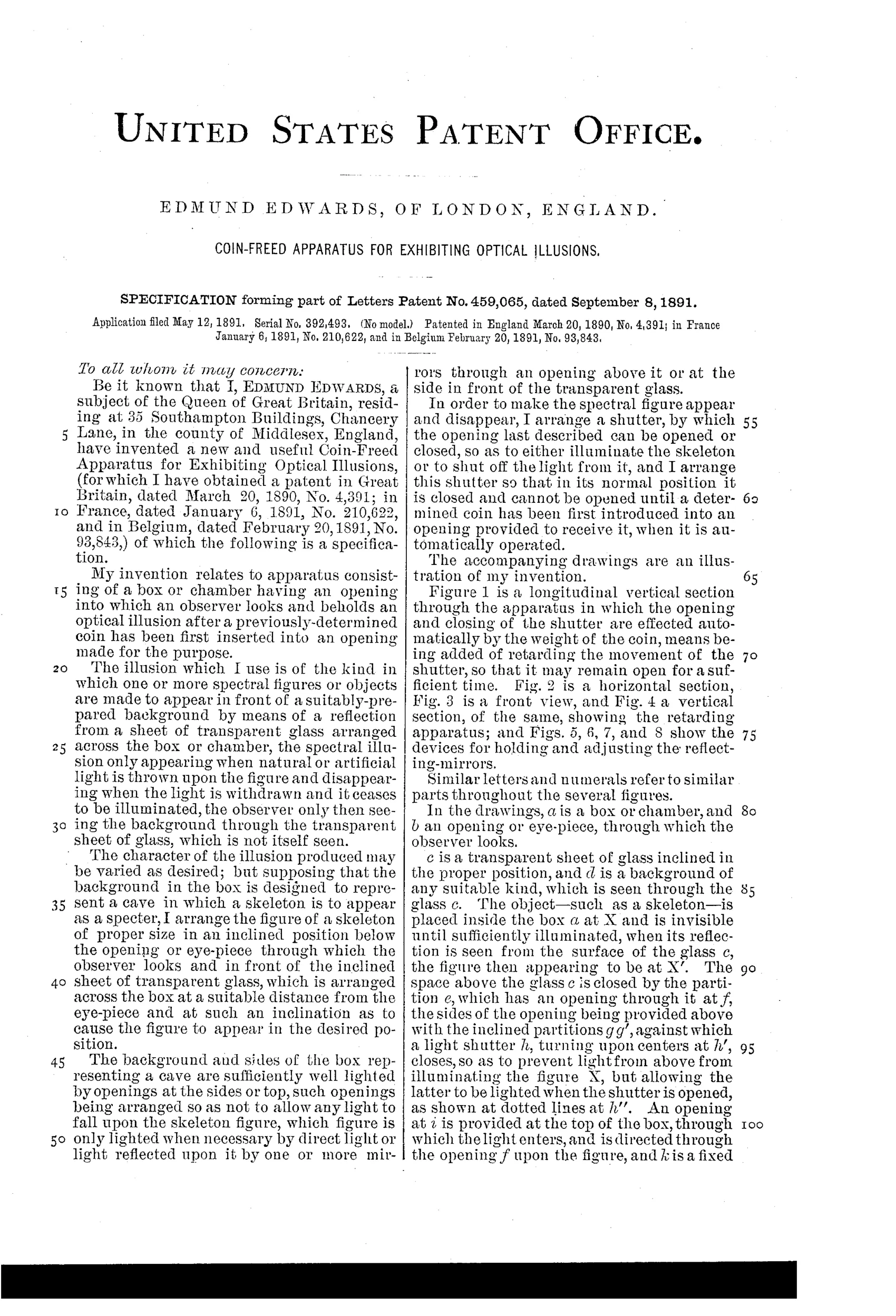
“The illusion which I use is of the kind in which one or more spectral figures or objects are made to appear in front of a suitably-prepared background by means of a reflection from a sheet of transparent glass arranged across the box or chamber, the spectral illusion only appearing when natural or artificial light is thrown upon the figure and disappearing when the light is withdrawn and it ceases to be illuminated, the observer only then seeing the background through the transparent sheet of glass, which is not itself seen.”— Edmund Edwards, from the specification
Fate unknown
Coin-freed illusion cabinets of this type existed in period arcades, but no example marked to Edwards or this patent is documented; a surviving cabinet or trade listing would settle it.
◉ Commentary
This is Pepper's ghost — the Victorian stage illusion of an inclined glass sheet superimposing a hidden, illuminated figure over a visible background — shrunk into a peep-show cabinet and put on a coin timer. Edwards's insight is that the illusion has a natural on/off switch: the spectral skeleton exists only while light falls on it. So he doesn't need to move the figure, the glass, or anything the viewer sees. He just needs to open a light shutter for a paid interval, and a shutter is about the cheapest thing a penny can lift.
The timing mechanism is the part worth studying in Fig. 4. The coin drops into a receptacle on a pivoted lever, whose far arm lifts the shutter; a piston in a cylinder of oil or glycerine hangs from the lever as a dashpot, so the counterweight can only close the shutter slowly. No clockwork, no escapement — viscous drag as a duration meter. It is crude (temperature will change the oil's viscosity and thus your ghost's lifespan) but nearly unbreakable.
From this category's standpoint, note what's missing: any coin test at all. A steel washer works exactly as well as a penny, since the coin is merely dead weight. Edwards belongs to the 1890s wave that created the slug problem the in-chute testers then spent decades solving. A charming ancestor, not a detector.
Commentary by Claude, The Counterfeit Coin Detector Patent Archive’s resident enthusiast