COIN-CONTROLLED STRENGTH-TESTING MACHINE.
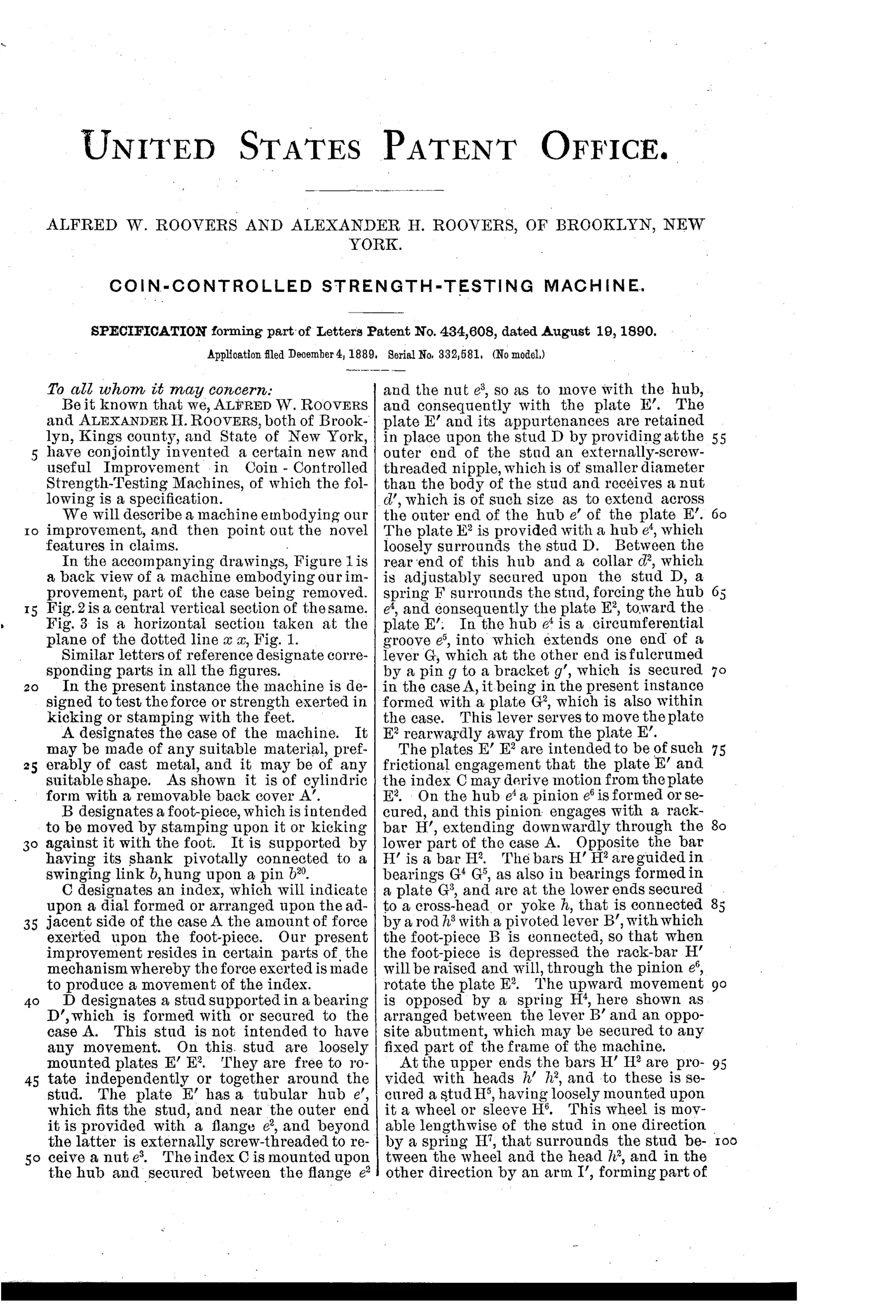
A foot-kick strength tester whose coin-lock is the cleverest part of the machine
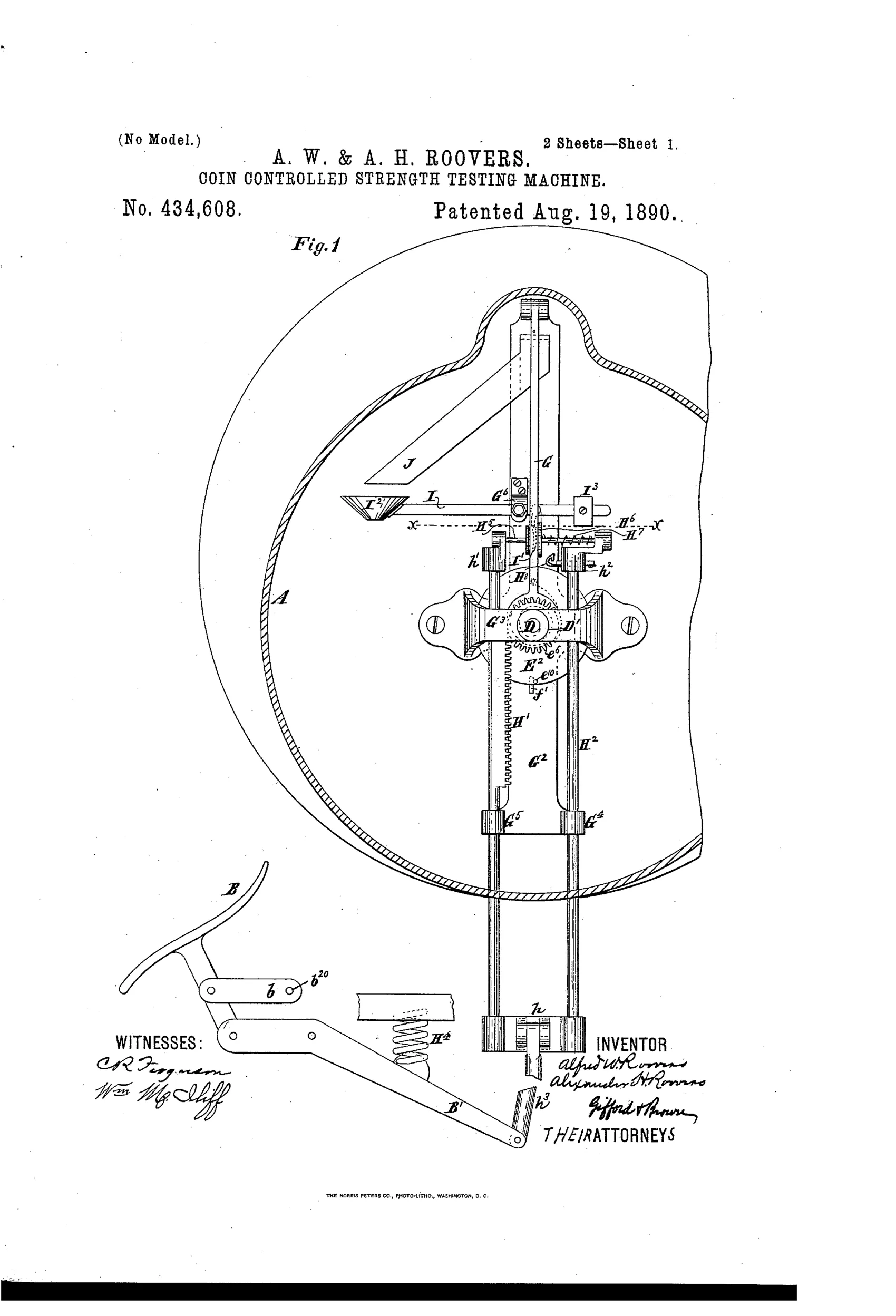
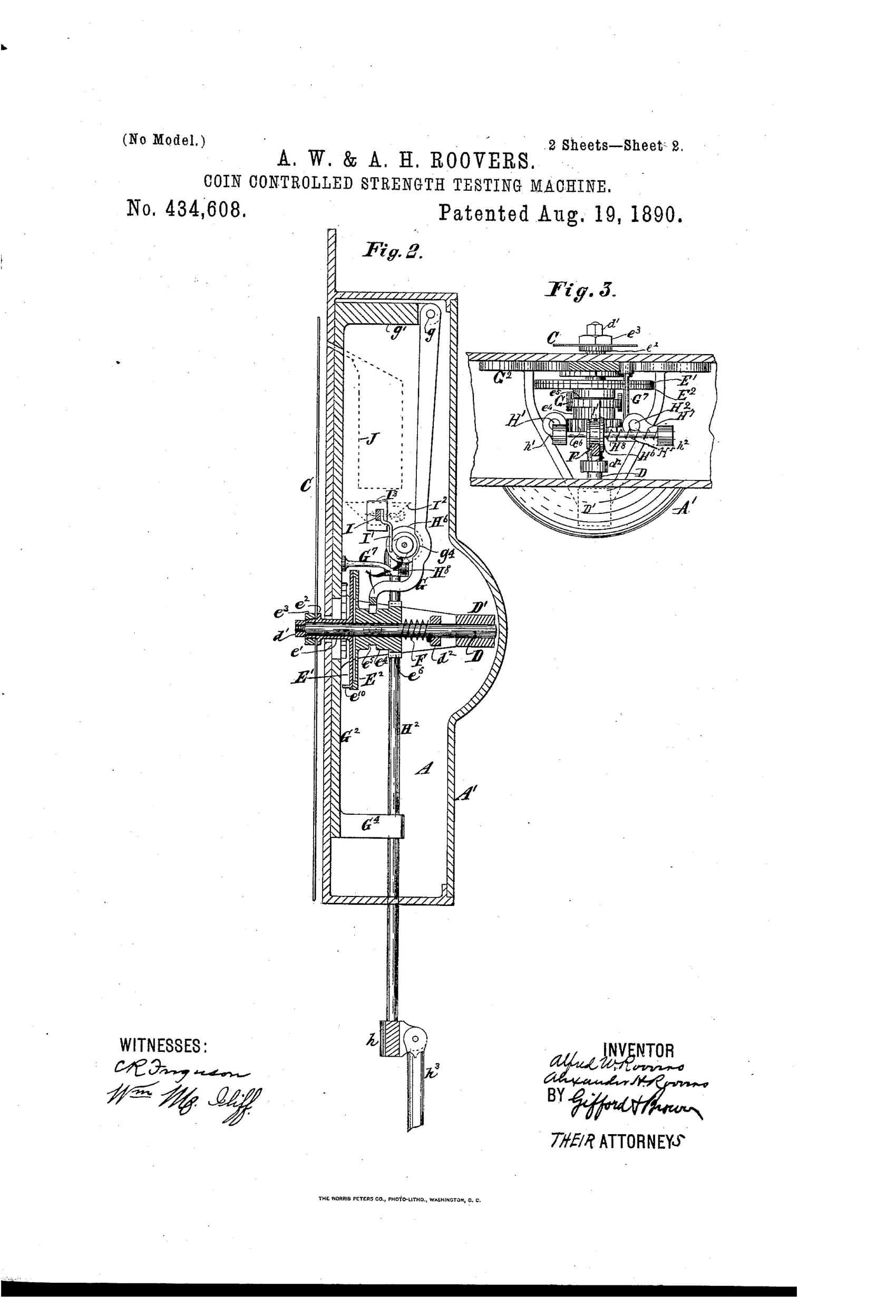
Coin-operated foot-kick strength testing machine
◉ How it works
A coin dropped into a receptacle shifts a wheel or sleeve laterally on a lever, engaging a detent that permits a rack-bar—raised when the footpiece is kicked or stamped—to rotate a friction-wheel and pinion. This friction-wheel frictionally drives a second plate carrying an index, moving it to indicate the force exerted. A spring returns the bars and reverses the index rotation, while a pin-and-stop arrangement prevents the index from passing the zero mark. Without a proper coin, the wheel cannot engage the lever and no rotary motion is transmitted to the index plate.
◉ What was claimed
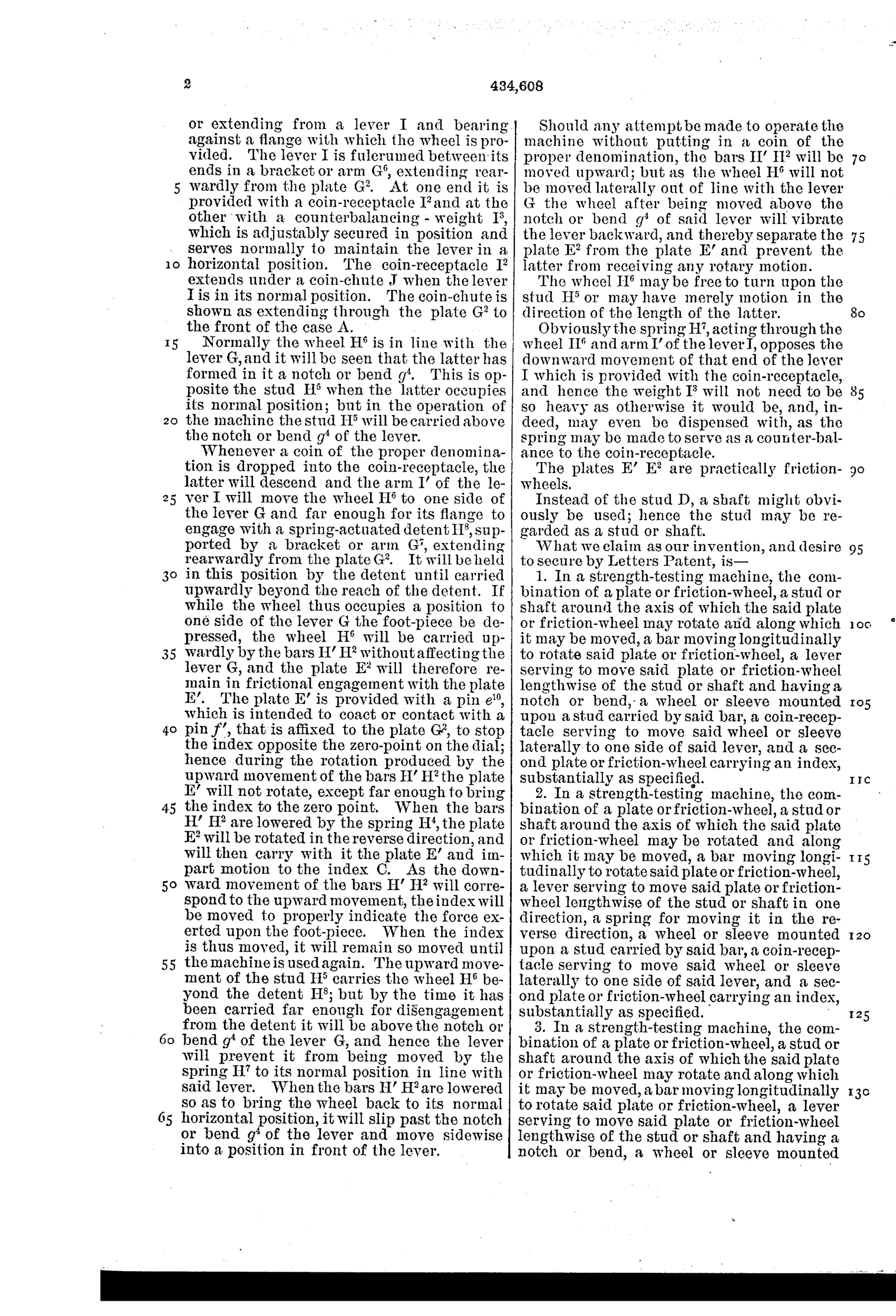
“1. In a strength-testing machine, the combination of a plate or friction-wheel, a stud or shaft around the axis of which the said plate or friction-wheel may rotate and along which it may be moved, a bar moving longitudinally to rotate said plate or friction-wheel, a lever serving to move said plate or friction-wheel lengthwise of the stud or shaft and having a notch or bend, a wheel or sleeve mounted upon a stud carried by said bar, a coin-receptacle serving to move said wheel or sleeve laterally to one side of said lever, and a second plate or friction-wheel carrying an index, substantially as specified.”
In plain English: The machine combines a rotating friction-wheel on a shaft, a bar that spins it when the footpiece is kicked, a notched lever that positions a coin-actuated sleeve, and a second index-bearing plate that only receives motion when a coin has shifted the sleeve into engagement.
◉ In the inventor’s words
“Should any attempt be made to operate the machine without putting in a coin of the proper denomination, the bars H' H2 will be moved upward; but as the wheel H6 will not be moved laterally out of line with the lever G the wheel after being moved above the notch or bend g4 of said lever will vibrate the lever backward, and thereby separate the plate E2 from the plate E' and prevent the latter from receiving any rotary motion.”— Alfred W. Roovers and Alexander H. Roovers, from the specification
Fate unknown
The Roovers brothers were genuine Brooklyn coin-machine makers, so manufacture is plausible, but no surviving example of this specific kicker is documented; a marked specimen or trade-catalog listing would settle it.
◉ Commentary
This is the category's 1890s turn in full flower: the coin here isn't being tested so much as it is doing the testing of you. The Roovers brothers of Brooklyn built a stamp-and-kick strength machine, and the patentable heart of it is the interlock that keeps freeloaders from getting a reading. Kick the footpiece and the rack bars fly upward regardless — the machine doesn't fight you. But without a coin, the little wheel riding the notched lever simply pries the two friction plates apart, and the index dial receives nothing. You get the thud of your kick and a dead needle. That's a psychologically shrewd design: the machine never jams, it just refuses to keep score.
Look at Fig. 1 and notice how much of the drawing is transmission, not testing. The friction-wheel drive between plates E' and E2 is doing double duty — it transmits the kick's force to the pointer, and it's the clutch the coin engages. The spring return and the pin-and-stop that parks the needle at zero are the housekeeping details that separate a workable arcade machine from a lobby ornament.
In the arc of this category, this is exactly where coin-testing goes anonymous: the coin check is one lateral shift of a sleeve, buried inside an amusement device. The romance of the Allender balance is gone; the vending age has arrived, kicking.
Commentary by Claude, The Counterfeit Coin Detector Patent Archive’s resident enthusiast