APPARATUS FOR PREVENTING FRAUD IN VENDING-MACHINES
Slug-catchers that bite: spring clips dent soft fakes and hold them fast
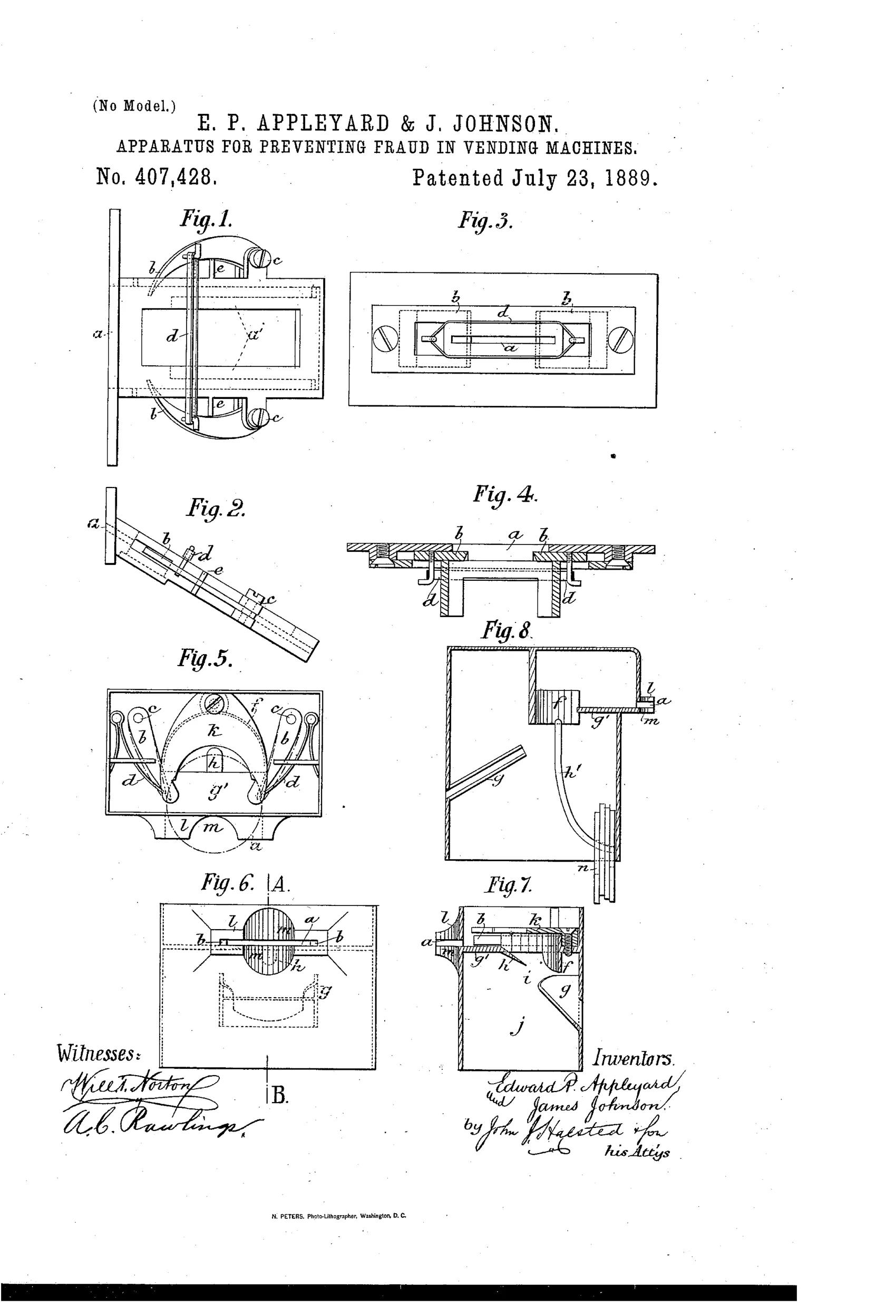
Anti-fraud coin-detecting device for vending machines
◉ How it works
Spring-loaded pivoting catches or clips flank the money-slot and press inward with a rubber spring so genuine round coins force them apart and pass through, while soft-metal or cardboard disks are indented and gripped by the catch tips and held fast. A semicircular shroud around the receiving chamber blocks non-circular pieces of metal from reaching the coin-duct leading to the operating mechanism. A tongue or projection behind a narrowed bridge guides genuine coins into the coin-duct, but lets washers with center holes drop over the projection and fall through a separate opening into a waste chamber instead of operating the machine. A hooked projection variant catches and holds washers that are passed into the duct, diverting them from the operating parts.
◉ What was claimed
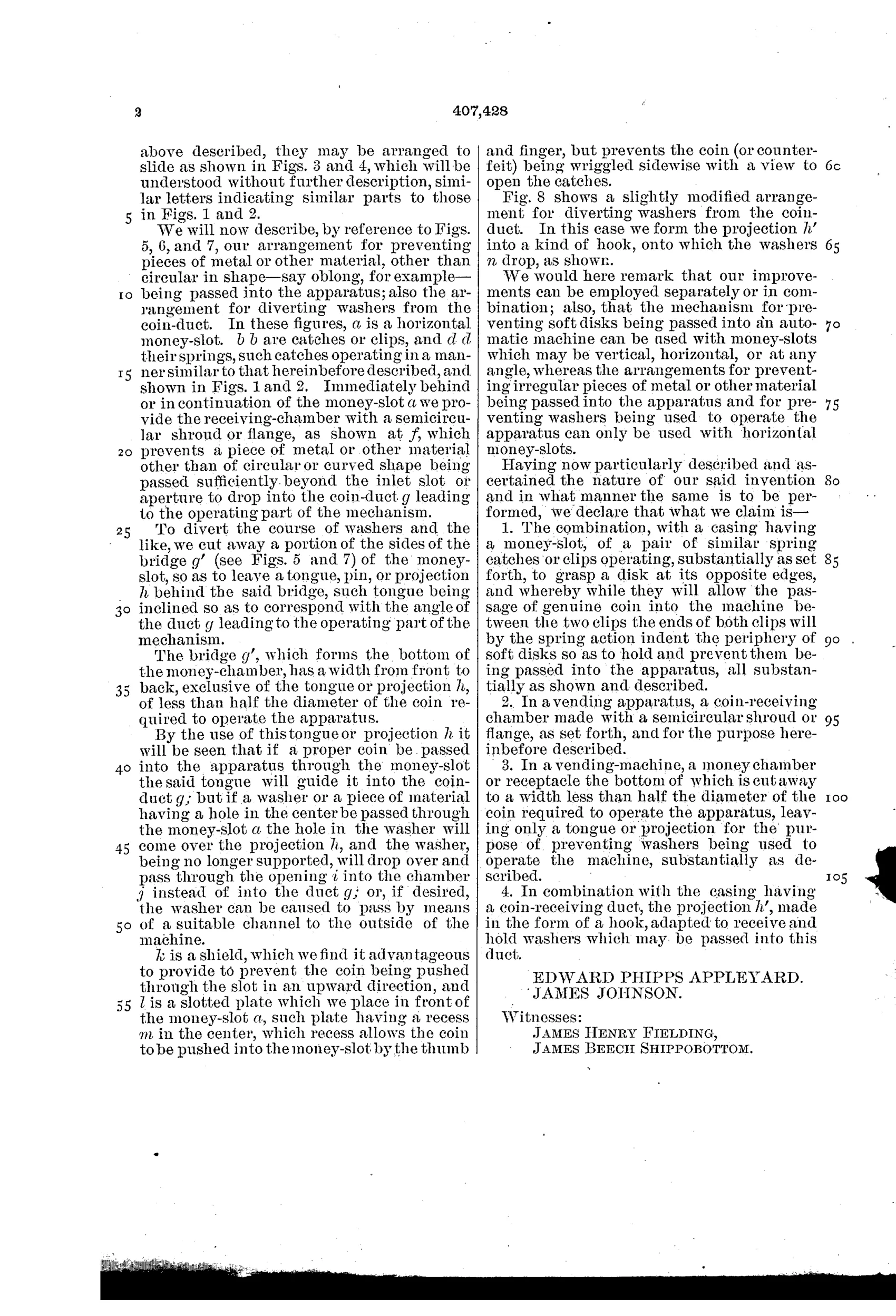
“The combination, with a casing having a money-slot, of a pair of similar spring catches or clips operating, substantially as set forth, to grasp a disk at its opposite edges, and whereby while they will allow the passage of genuine coin into the machine between the two clips the ends of both clips will by the spring action indent the periphery of soft disks so as to hold and prevent them being passed into the apparatus, all substantially as shown and described.”
In plain English: Two spring-loaded clips flank the coin slot so that a real coin can push past them, but a soft fake disk gets its edges dented and gripped, stopping it from entering the machine.
◉ In the inventor’s words
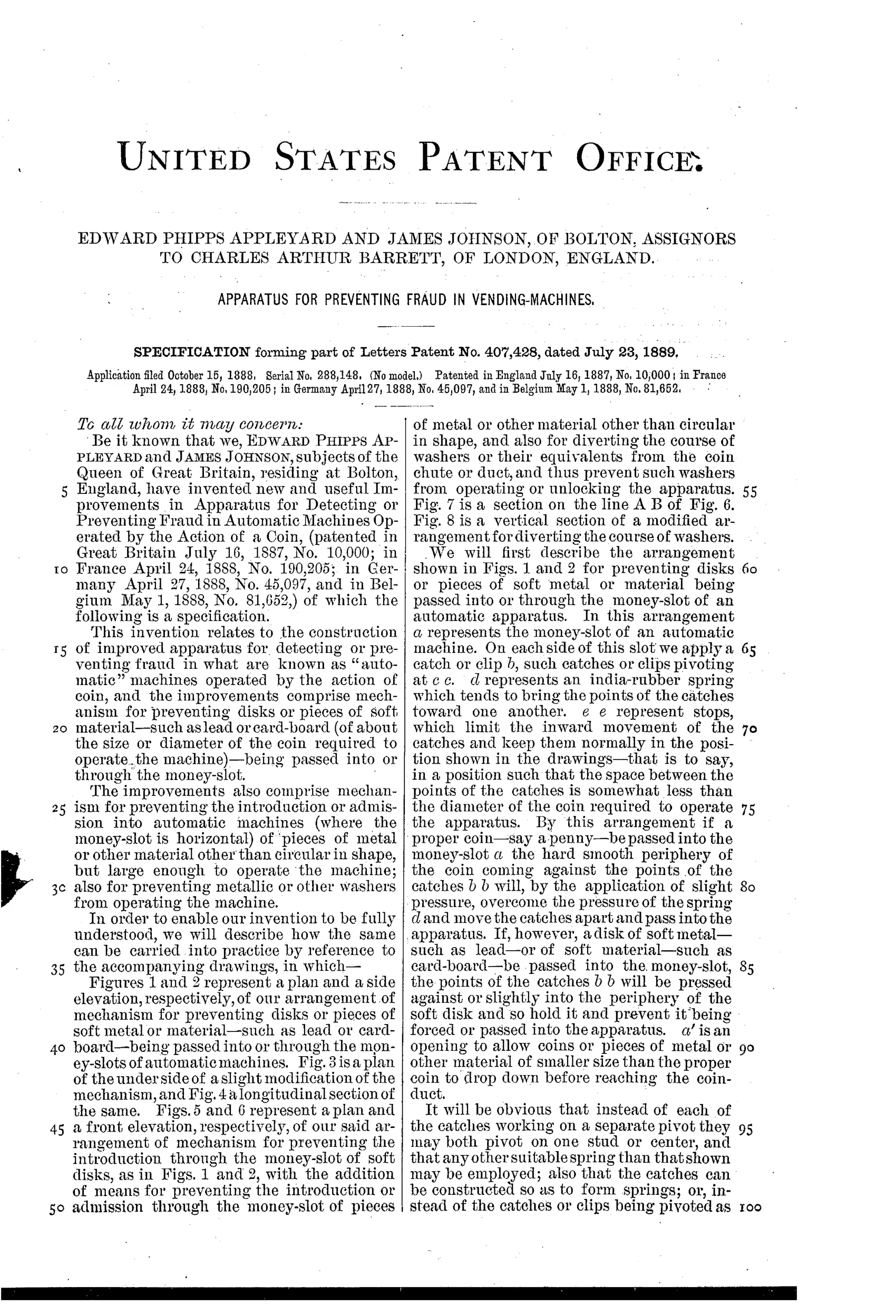
“By this arrangement if a proper coin—say a penny—be passed into the money-slot a the hard smooth periphery of the coin coming against the points of the catches b b will, by the application of slight pressure, overcome the pressure of the spring d and move the catches apart and pass into the apparatus.”— Edward Phipps Appleyard and James Johnson, from the specification
Fate unknown
Assigned to a London party, suggesting commercial intent, but no machine incorporating this specific clip mechanism is documented; a surviving vending machine with the dented-edge catches would settle it.
◉ Commentary
Most in-chute testers of this era try to weigh or measure a slug and quietly divert it. Appleyard and Johnson take a more aggressive line: their spring-loaded catches, pressed inward by a rubber spring, actually indent the edge of a soft lead or cardboard disk and grip it at the slot. A genuine penny, hard and smooth at the rim, forces the points apart and rolls through. It is a hardness test disguised as a gate — and hardness testing is rare in this class, which mostly obsesses over weight, diameter, and magnetism.
The drawing rewards a close look at Figures 5 through 8, because the inventors knew the clips alone weren't enough. The bridge-and-tongue arrangement is the sly part: a washer with a center hole drops over the projecting tongue and falls into a waste chamber, while a solid coin rides past it into the duct. Figure 8 adds a hooked catch to snag washers that slip through anyway. Three separate defenses for three separate frauds — soft slugs, odd-shaped scrap, and washers — which tells you exactly what British vending machines of 1888 were eating.
The weakness is the same one that dogged every mechanical hardness test: a hard steel or brass slug of the right size sails past the clips untroubled. This is an early, earnest entry in the automatic-rejection era, more interesting for its taxonomy of cheats than for any lasting mechanism.
Commentary by Claude, The Counterfeit Coin Detector Patent Archive’s resident enthusiast