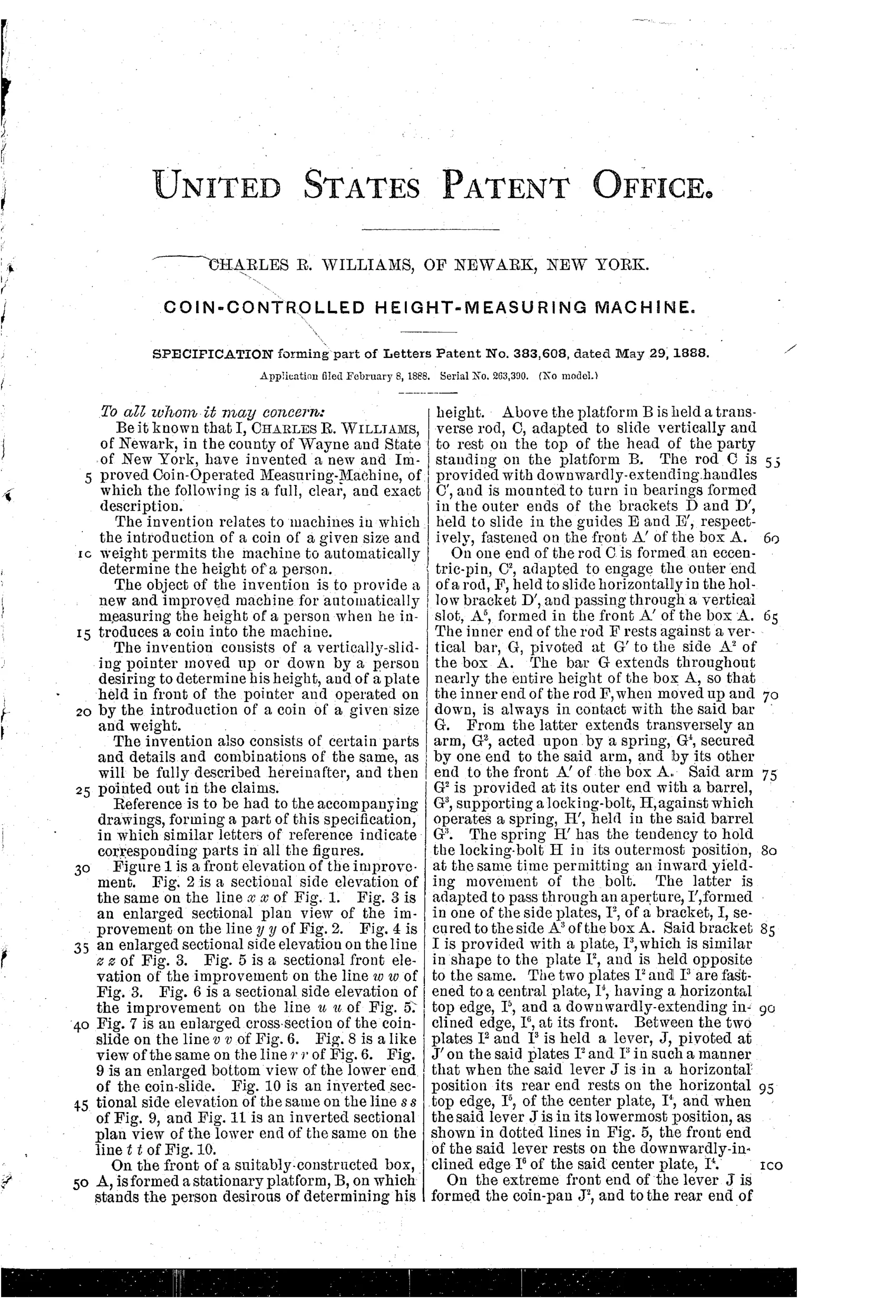
COIN-CONTROLLED HEIGHT-MEASURING MACHINE.
The measurement is free; a coin only unlocks the answer
Coin-operated machine that measures a person's height
◉ How it works
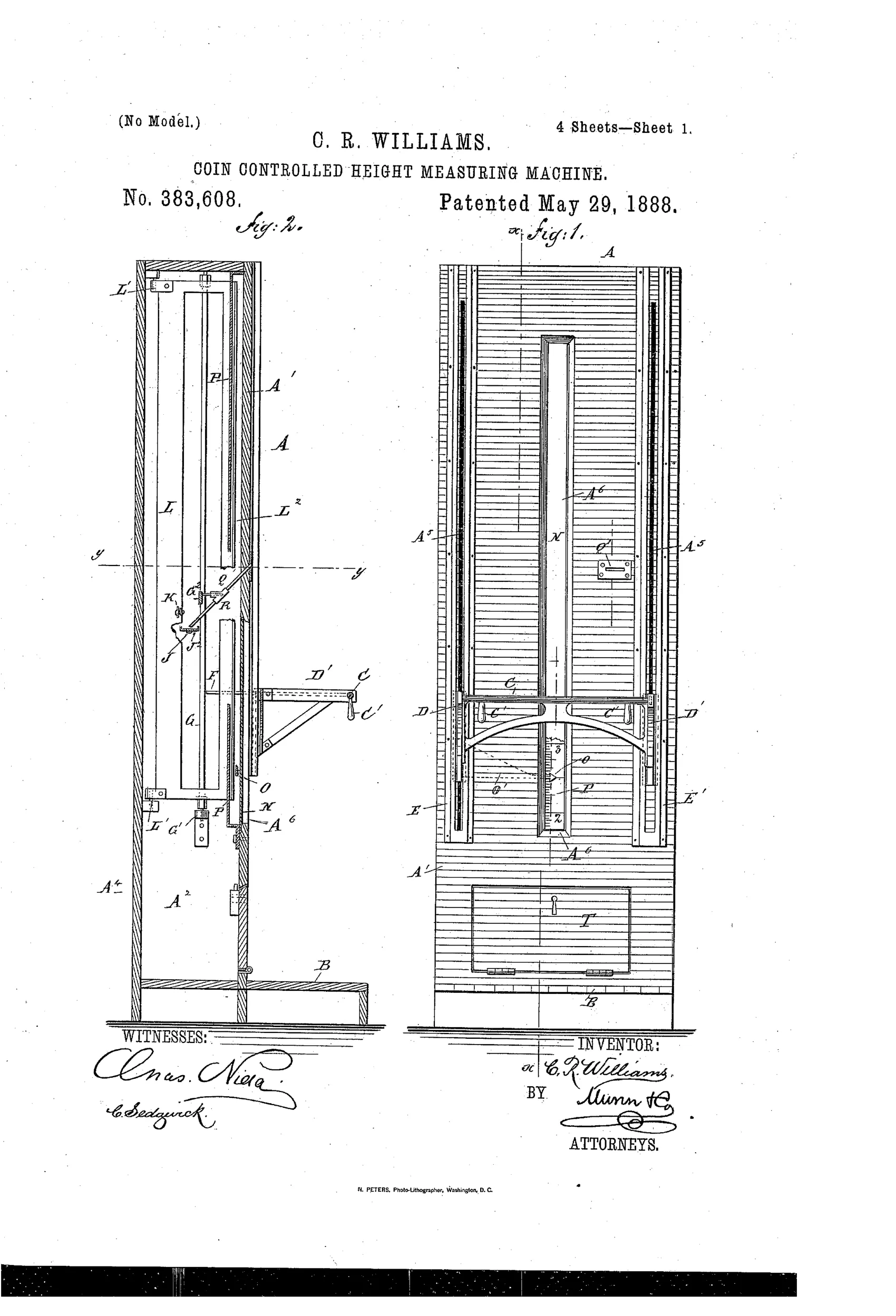
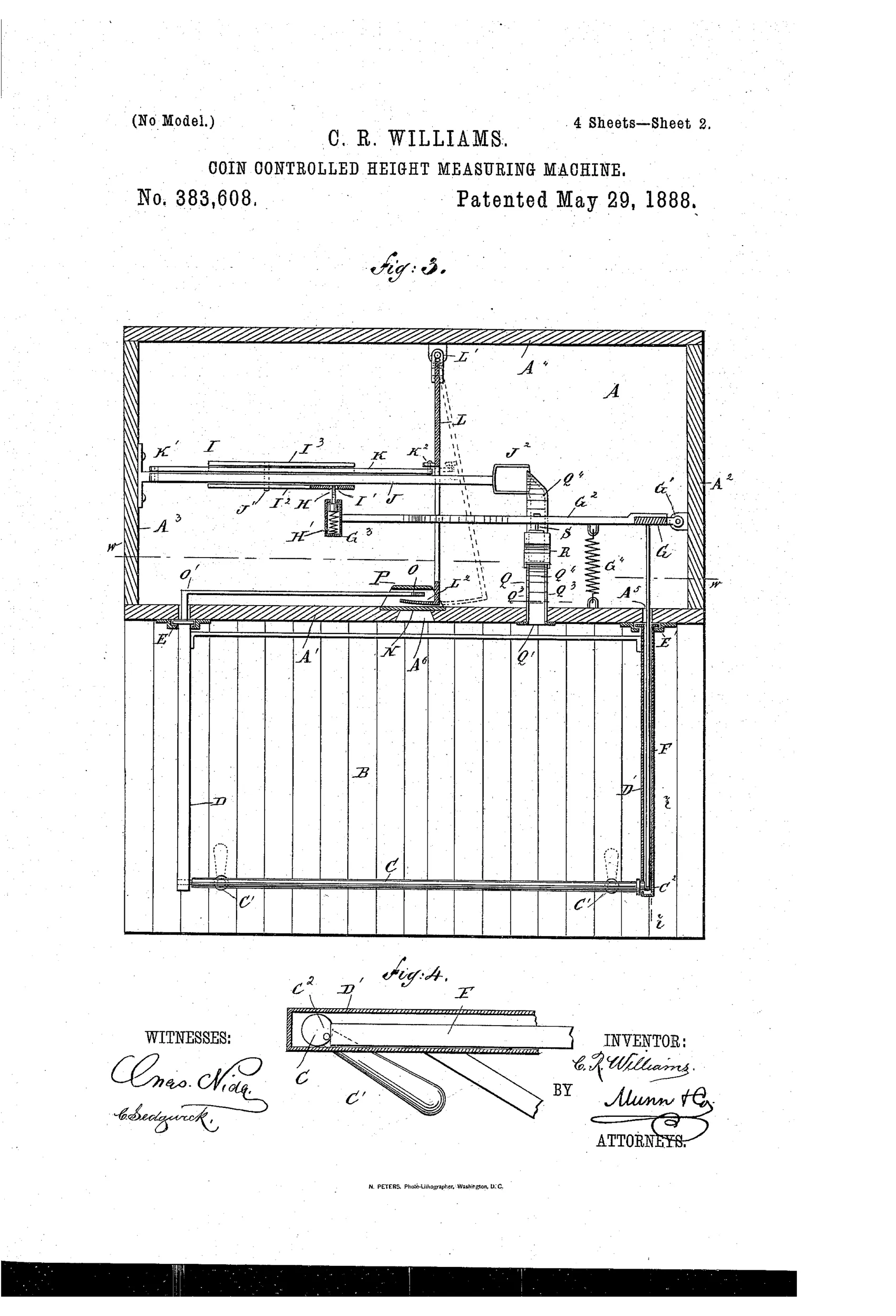
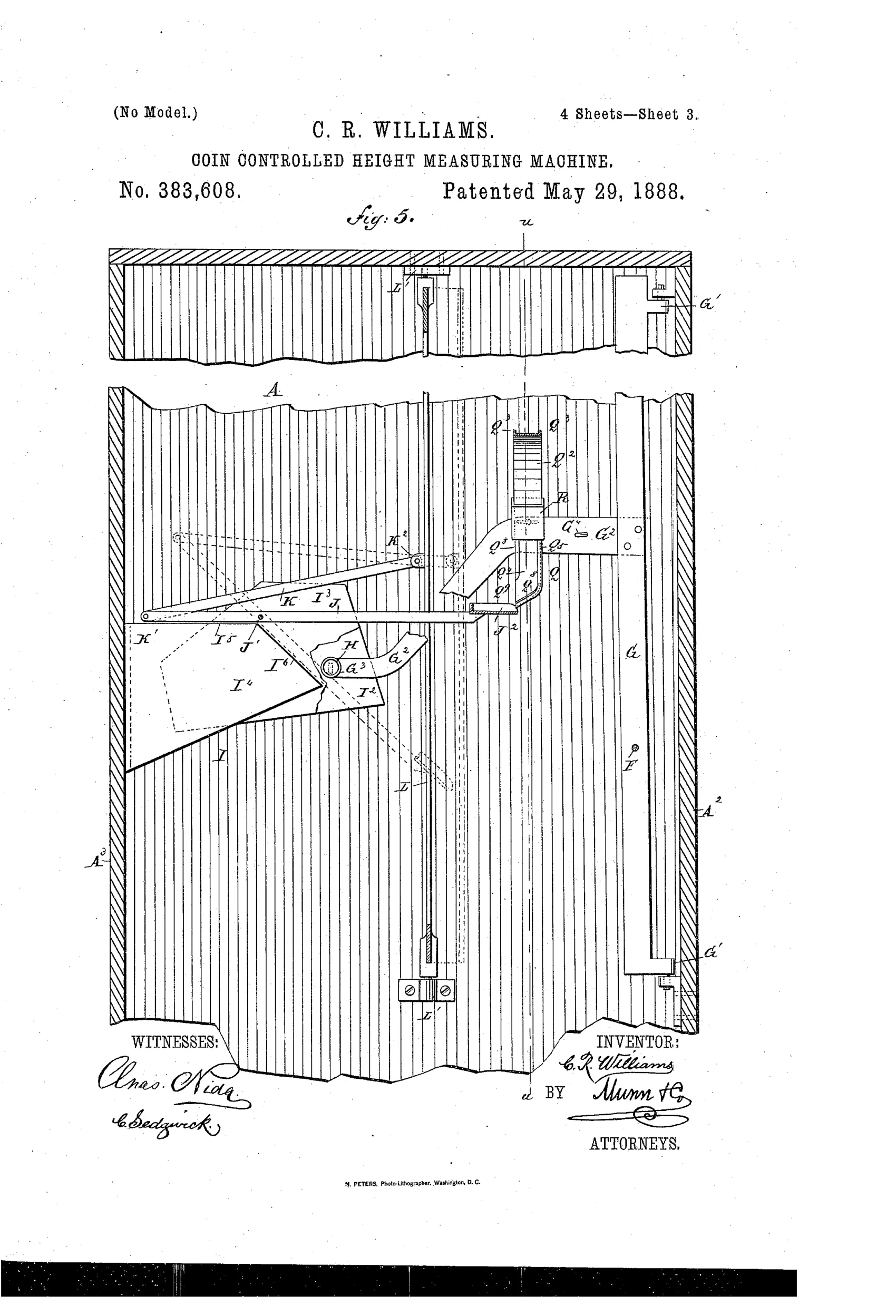
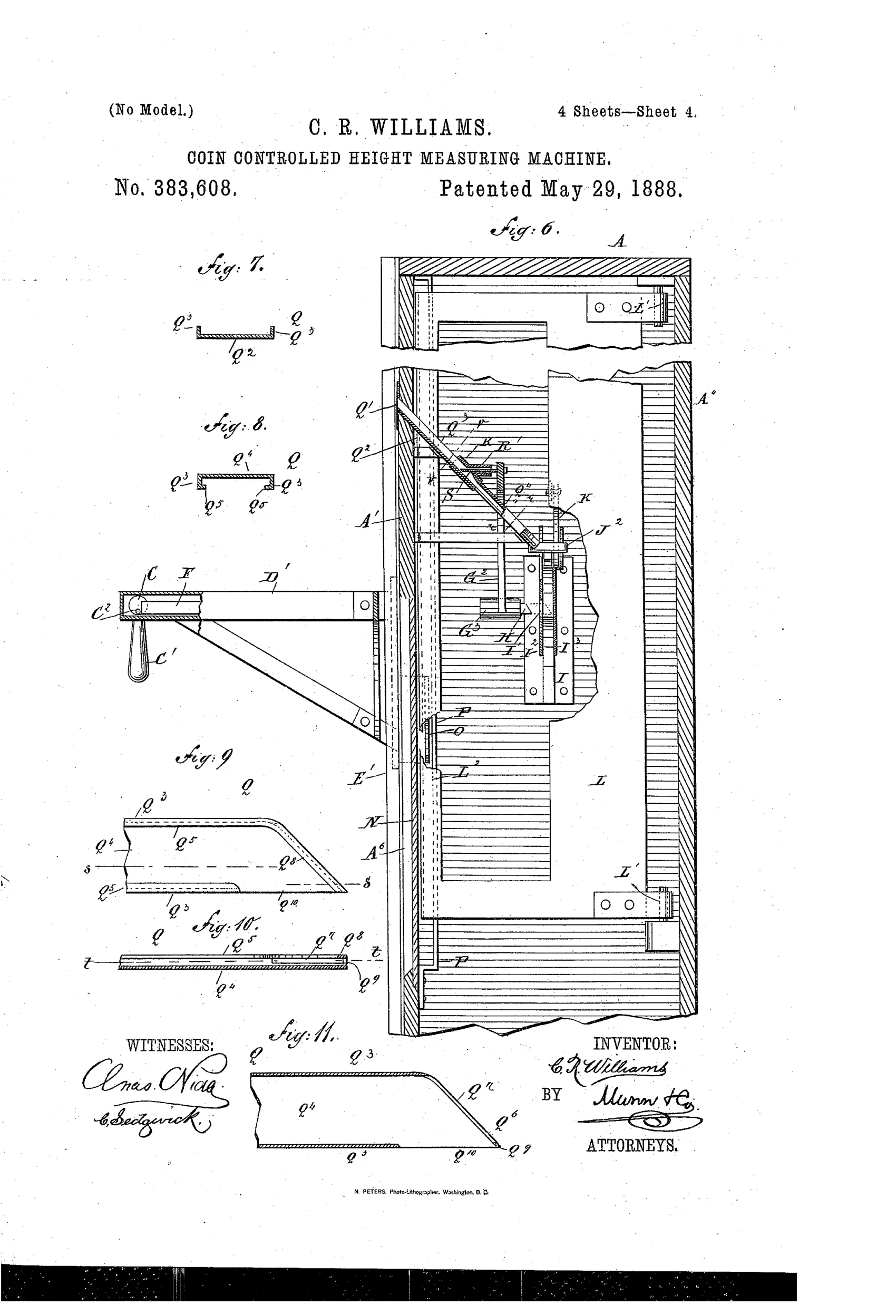
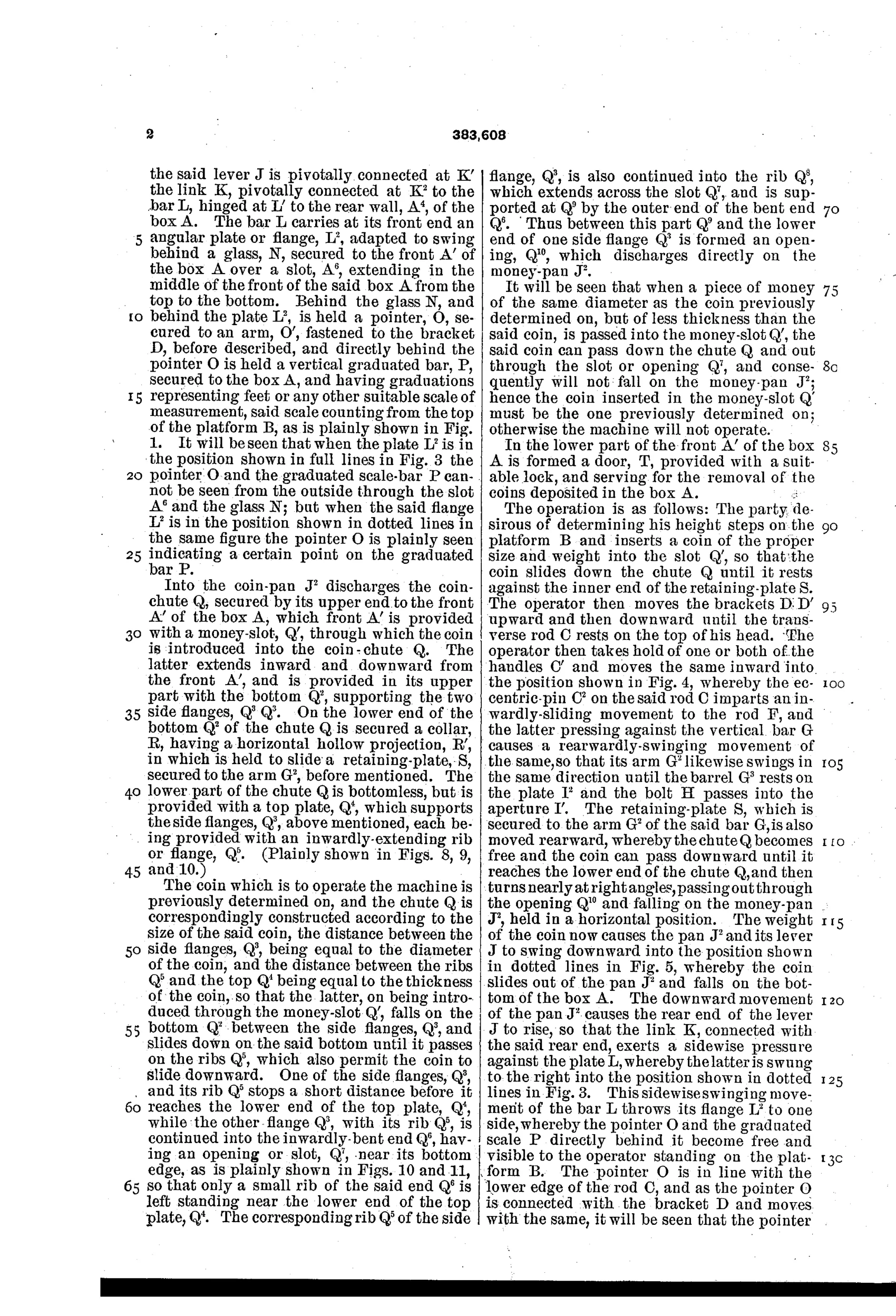
A person stands on a fixed platform and slides a transverse rod down until it rests on top of their head, the rod being mounted on brackets that slide vertically outside the box. Inserting a coin of the correct diameter and thickness into a slot lets it pass down a specially sized chute onto a money-pan, which tips a lever that unlocks a hinged flange covering an internal pointer and graduated scale. Once unlocked, the pointer (linked to the sliding brackets) becomes visible through a glass window, showing the person's height on the graduated bar. Coins of the wrong size or thickness fall through openings in the chute without reaching the pan, so the mechanism will not unlock unless the correct coin is used.
◉ What was claimed
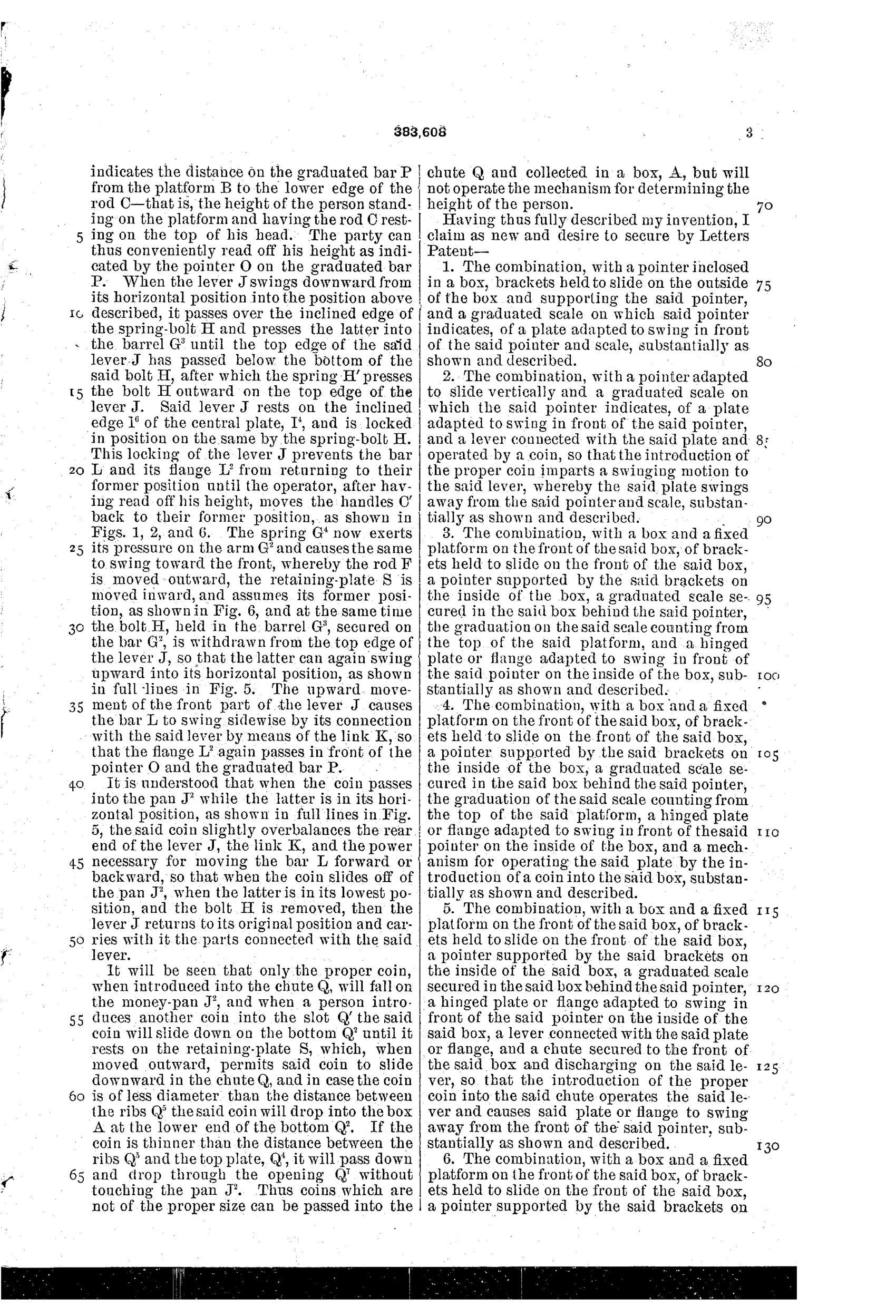
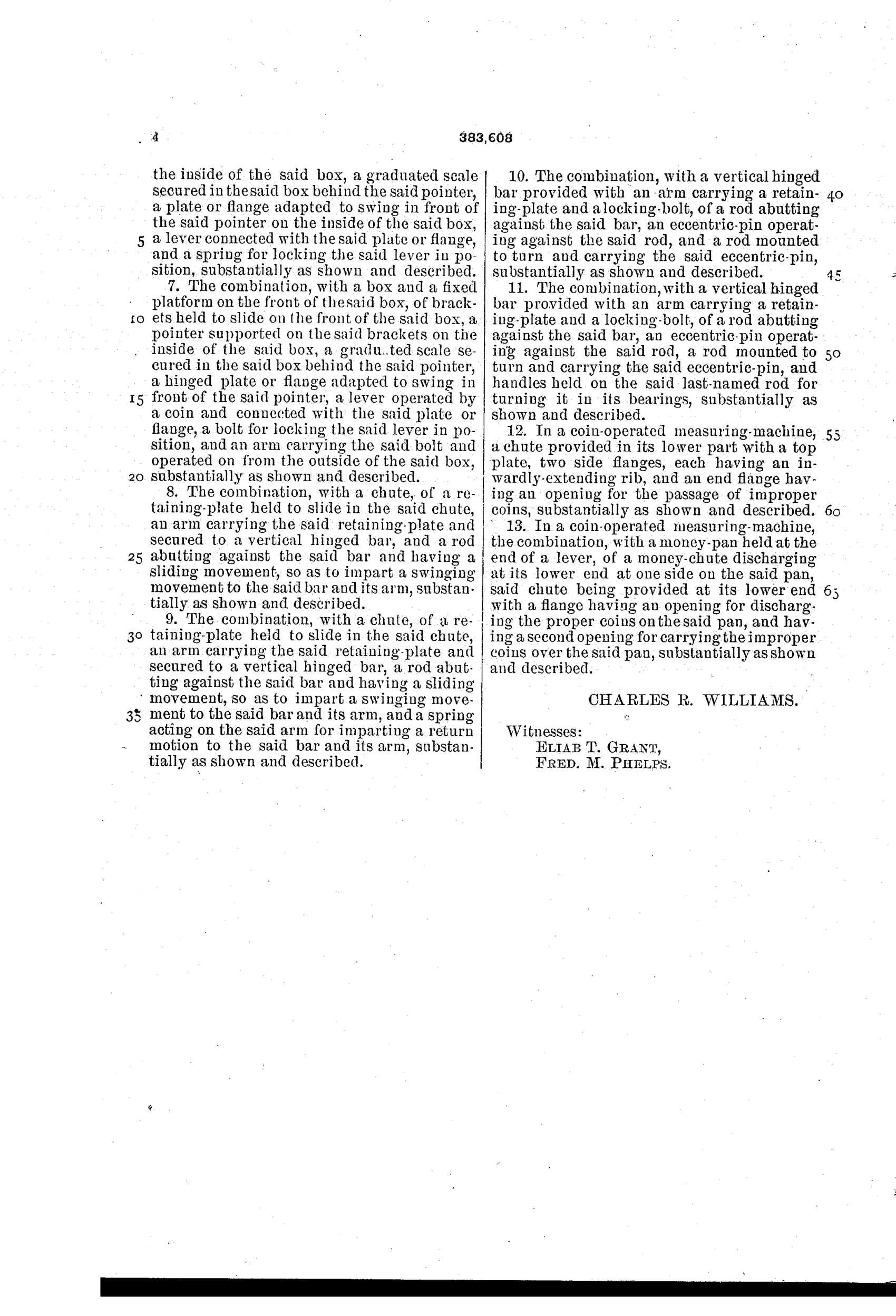
“1. The combination, with a pointer inclosed in a box, brackets held to slide on the outside of the box and supporting the said pointer, and a graduated scale on which said pointer indicates, of a plate adapted to swing in front of the said pointer and scale, substantially as shown and described.”
In plain English: The invention combines a height pointer and scale hidden inside a box with a hinged plate that swings away to reveal the reading only when triggered.
◉ In the inventor’s words
“The object of the invention is to provide a new and improved machine for automatically measuring the height of a person when he introduces a coin into the machine.”— Charles R. Williams, from the specification
Fate unknown
Coin-op height measurers did appear in arcades, but no surviving machine or trade advertisement tied to Williams's design is documented; a marked example would settle it.
◉ Commentary
Williams inverts the usual coin-op logic, and it's worth pausing on. Most 1880s coin machines use the coin to release a mechanical action — drop a gumball, start a phonograph. Here the machine measures you for nothing: you stand on the platform and slide the crossbar down onto your head whether you've paid or not. The pointer inside the cabinet moves regardless. What the coin buys is knowledge — it tips a money-pan, which swings a hinged flange away from the pointer and graduated scale so you can finally read your height through the glass. He's selling information, not motion, which is a cannier business model than it looks.
The coin-testing side is why the patent lands in this category, and it's a textbook in-chute rejector of the passive sort: a chute dimensioned to the correct diameter and thickness, with openings along the way so undersized or wrong coins fall through and never reach the pan. No magnet, no balance — just geometry doing the gatekeeping. Figs. 7 through 9, the coin-slide cross-sections, are where the real invention lives; the tall cabinet is mostly carpentry.
A slug of the right size would fool it, of course, and by the 1890s the trade knew it. But in 1888, penny-arcade scales and measurers were a fresh idea, and Williams's contribution — hide the reading, not the mechanism — sits right at the start of that wave.
Commentary by Claude, The Counterfeit Coin Detector Patent Archive’s resident enthusiast