COIN-OPERATED MACHINE FOR TESTING MUSCULAR POWER.
Everitt lets the coin's own weight unlock the dial — and trusts it completely.
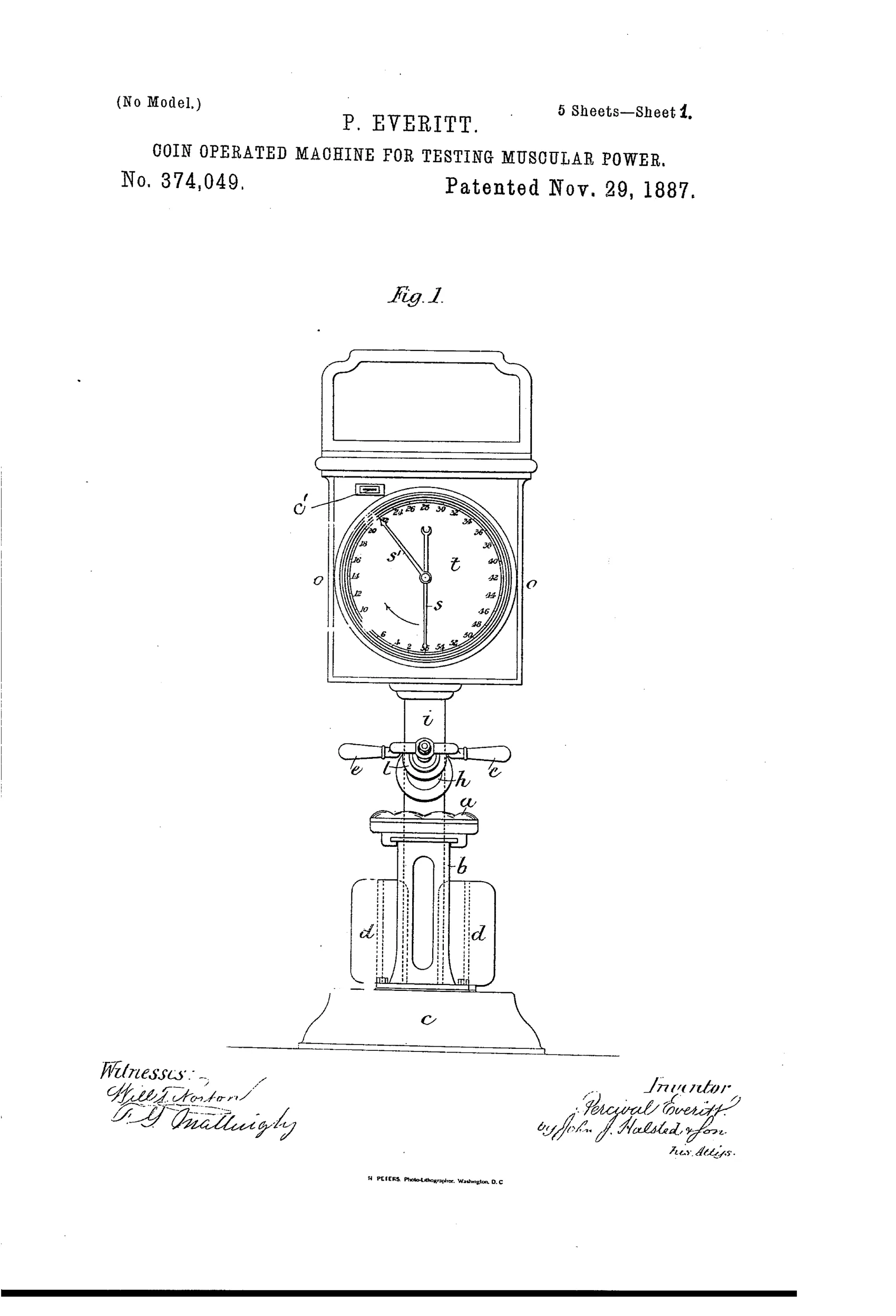
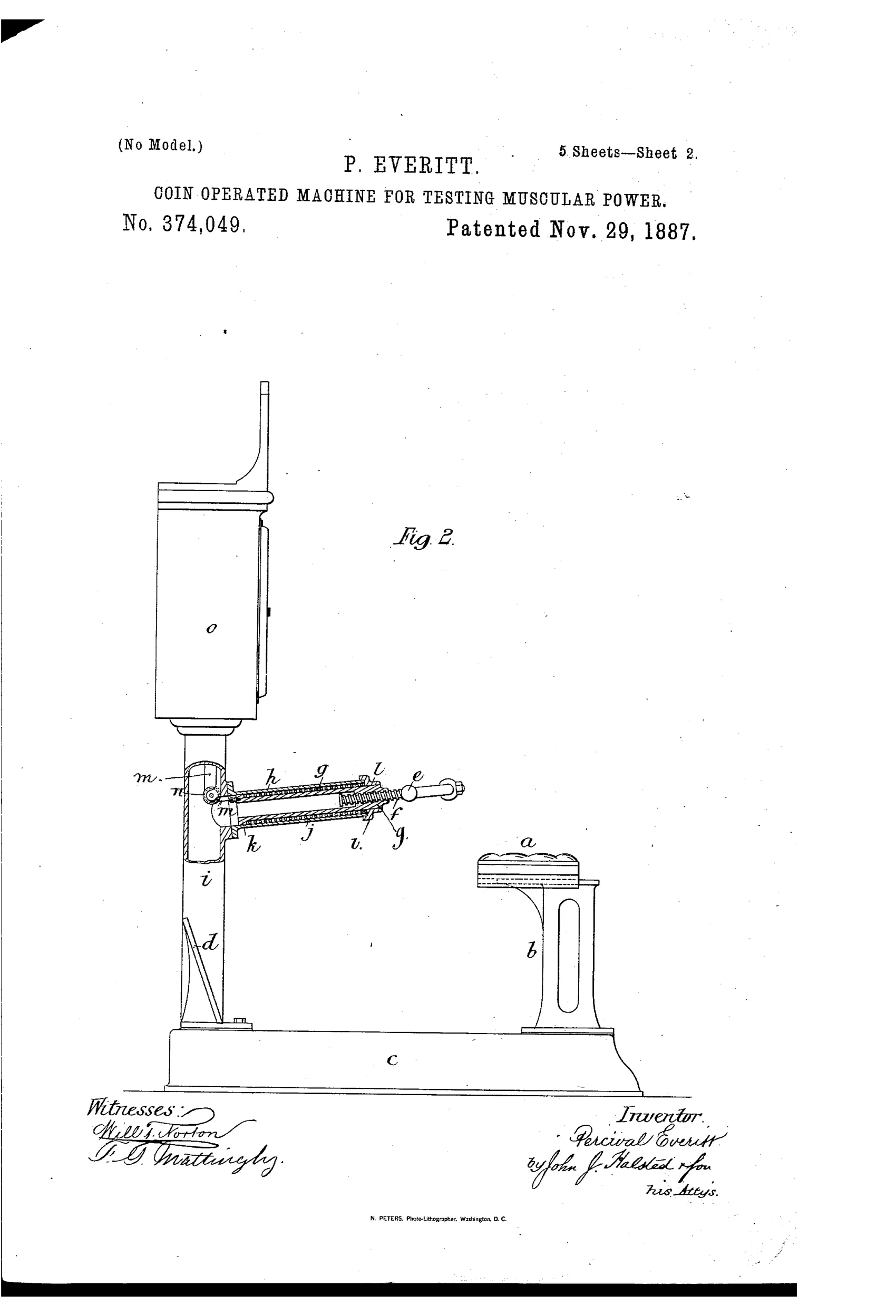
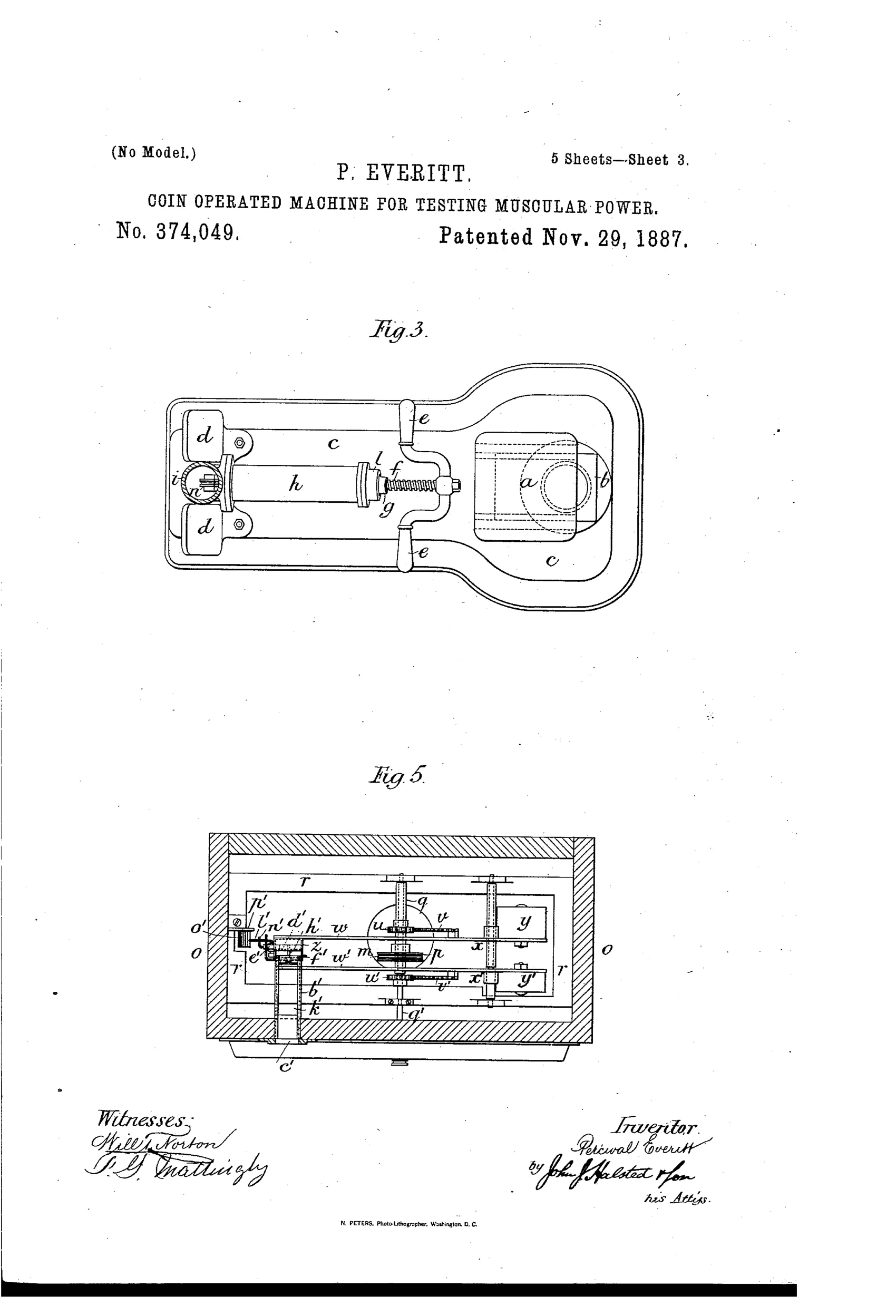
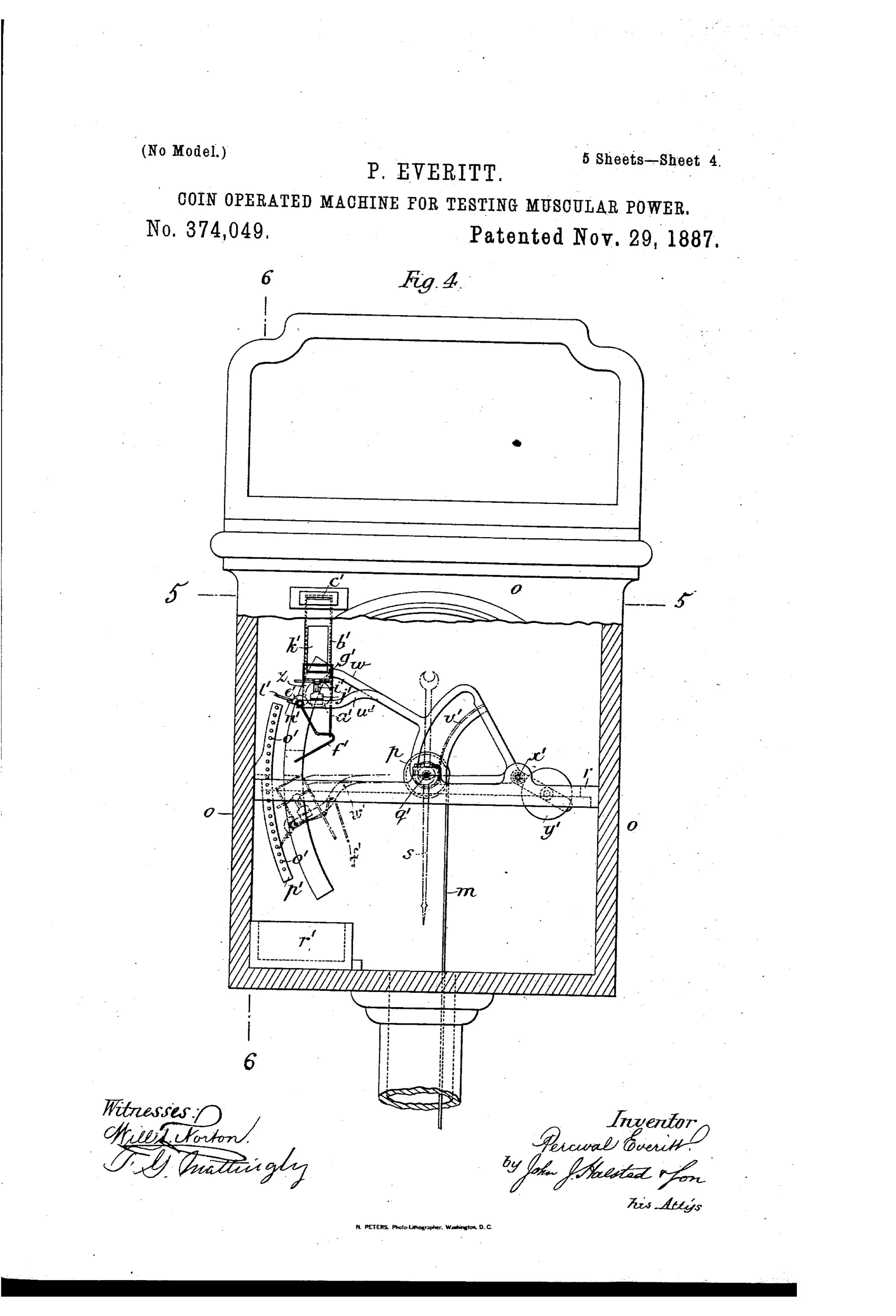
Coin-operated arcade grip-strength testing machine
◉ How it works
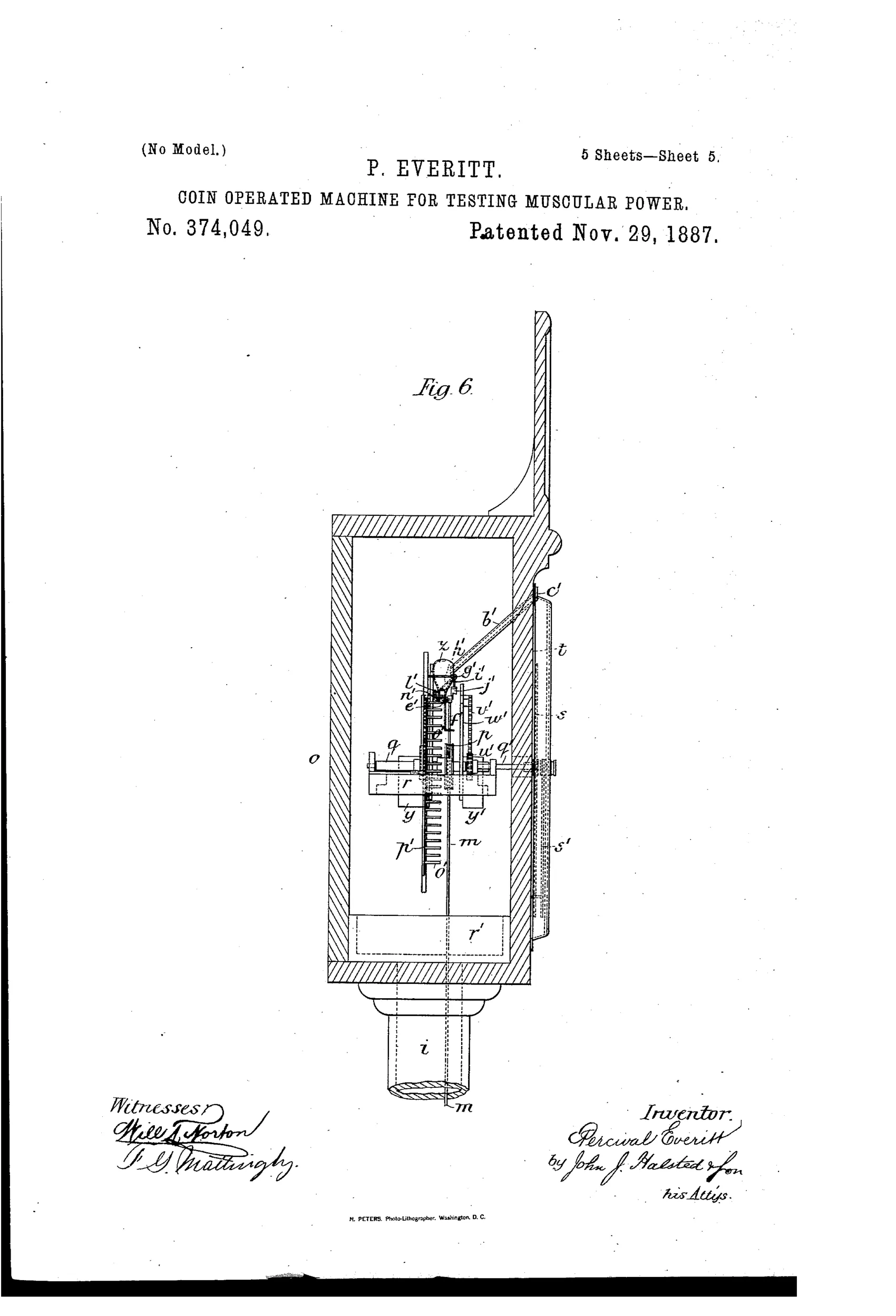
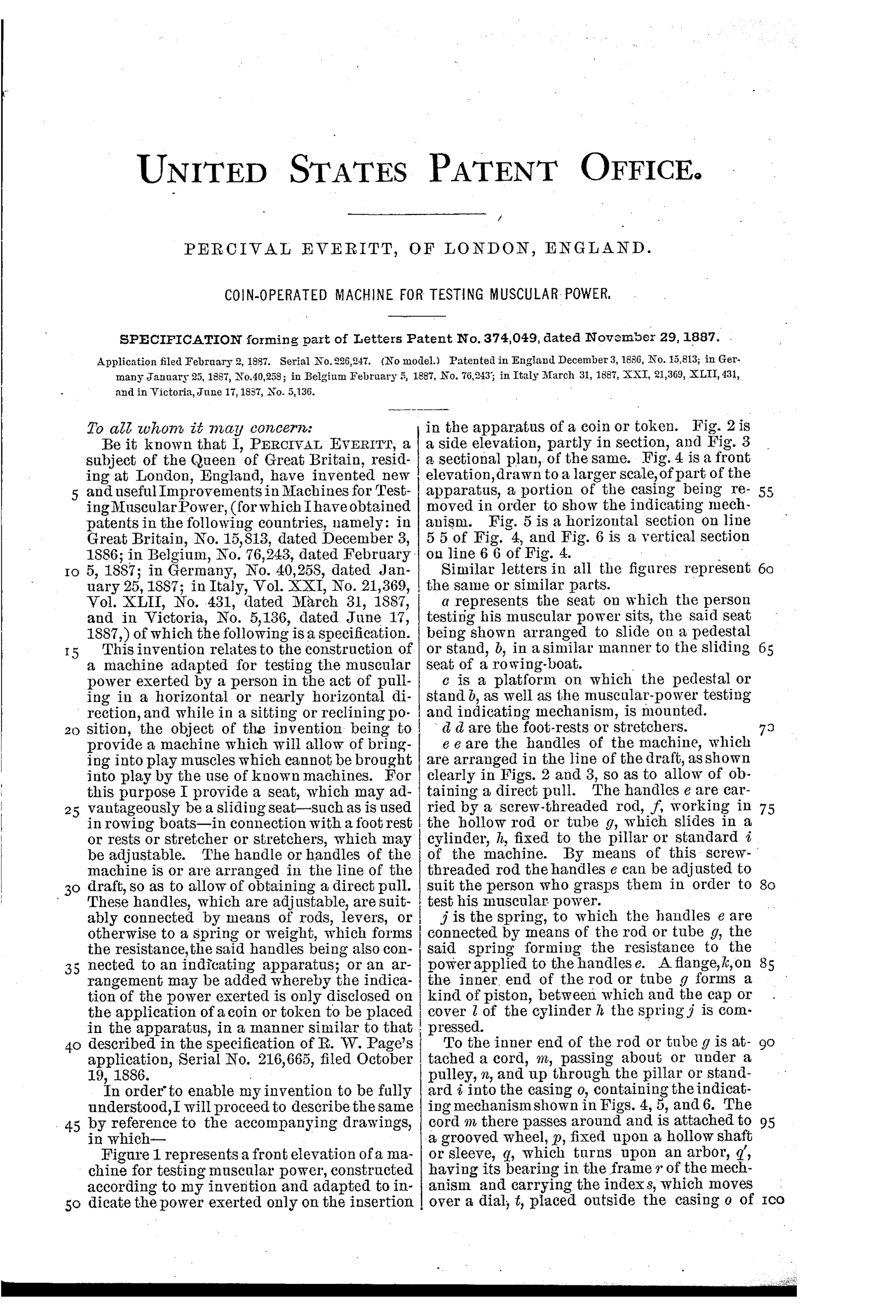
A person sits on a sliding seat and pulls handles connected to a screw-threaded rod sliding within a spring-loaded tube, compressing a spring in proportion to the force exerted. The extent of movement is transmitted by a cord and grooved wheel to counterweighted arms and a rack-and-pinion mechanism that drives an index hand across a dial. A coin dropped through a slot falls into a bucket, shifting a counterweight so that the coin-carrying lever locks with the indicator lever, allowing the force reading to be displayed only when a coin has been deposited. Upon release of the handles, springs and counterweights return the mechanism to zero and the coin is discharged into a drawer via a pivoted block and catch mechanism.
◉ What was claimed
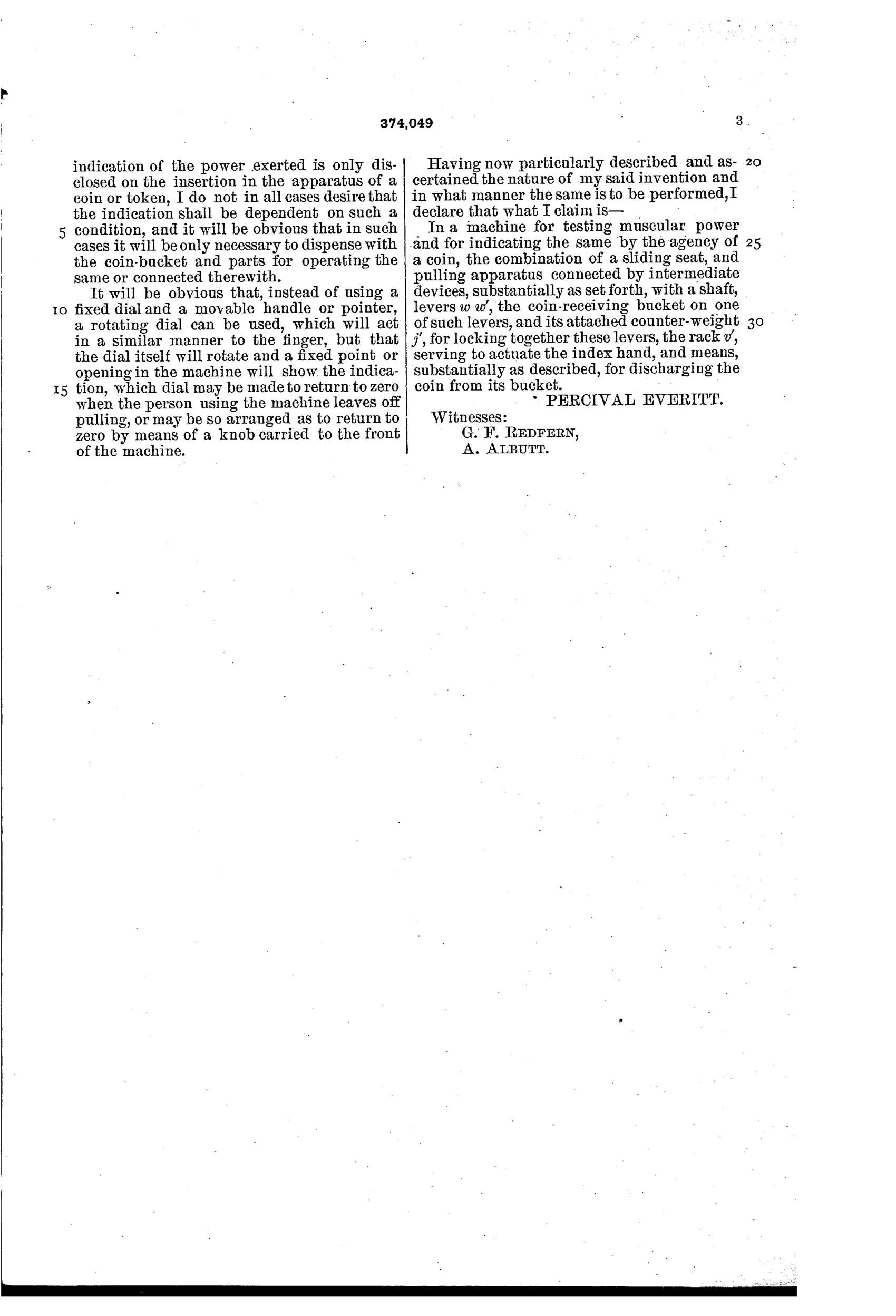
“In a machine for testing muscular power and for indicating the same by the agency of a coin, the combination of a sliding seat, and pulling apparatus connected by intermediate devices, substantially as set forth, with a shaft, levers w w', the coin-receiving bucket on one of such levers, and its attached counter-weight j', for locking together these levers, the rack v', serving to actuate the index hand, and means, substantially as described, for discharging the coin from its bucket.”
In plain English: The machine combines a sliding seat and pull handles with a coin-activated locking mechanism that only allows the force indicator to register a reading when a coin has been deposited, after which the coin is automatically discharged.
◉ In the inventor’s words
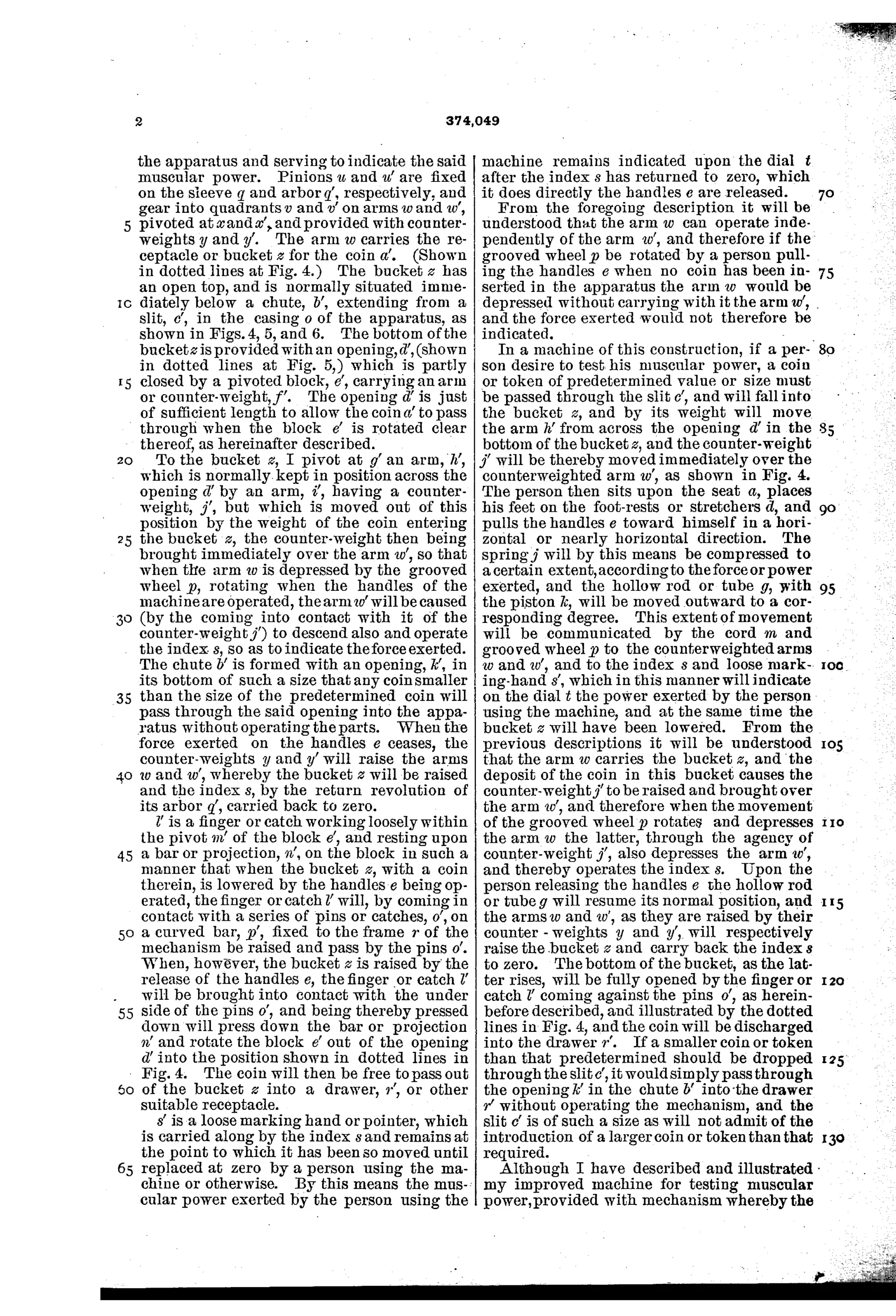
“If a person desire to test his muscular power, a coin or token of predetermined value or size must be passed through the slit c', and will fall into the bucket z, and by its weight will move the arm h' from across the opening d' in the bottom of the bucket z, and the counter-weight j' will be thereby moved immediately over the counterweighted arm w', as shown in Fig. 4.”— Percival Everitt, from the specification
Manufactured and sold
Everitt's coin-operated testing and vending machines were manufactured and deployed commercially in 1880s Britain, and his strength testers are documented among them, though survivors of this exact model are scarce.
◉ Commentary
Percival Everitt is the closest thing coin-operated machinery has to a founding father — his 1883 postcard vender at Mansion House station in London is generally credited as the first practical modern vending machine. Here, four years on, he applies the same commercial logic to a pub-and-railway-platform amusement: pay a penny, sit down, haul on the handles, and see what you're made of.
The mechanically interesting part is not the strength gauge — spring compression read out by cord, counterweighted arms, and a rack-and-pinion driving the dial hand is straightforward dynamometer work. It's the coin logic. The deposited coin falls into a bucket on one lever, and its weight alone swings a counterweight into position, locking the coin lever to the indicator lever so the hand can register. No coin, no lock, no reading — you can pull all you like and the dial stays dumb. Release the handles and a pivoted block dumps the coin into the drawer and resets everything to zero.
Notice what's missing: any test of the coin itself. A washer of the right weight works exactly as well as a penny. Everitt's generation invented the coin as a key; the next generation of patents in this class — the magnets, rocking gauges, and weight gates — exists precisely because keys this crude were forged by every schoolboy with a pocketful of slugs. This patent is the problem statement for the whole later category.
Commentary by Claude, The Counterfeit Coin Detector Patent Archive’s resident enthusiast